
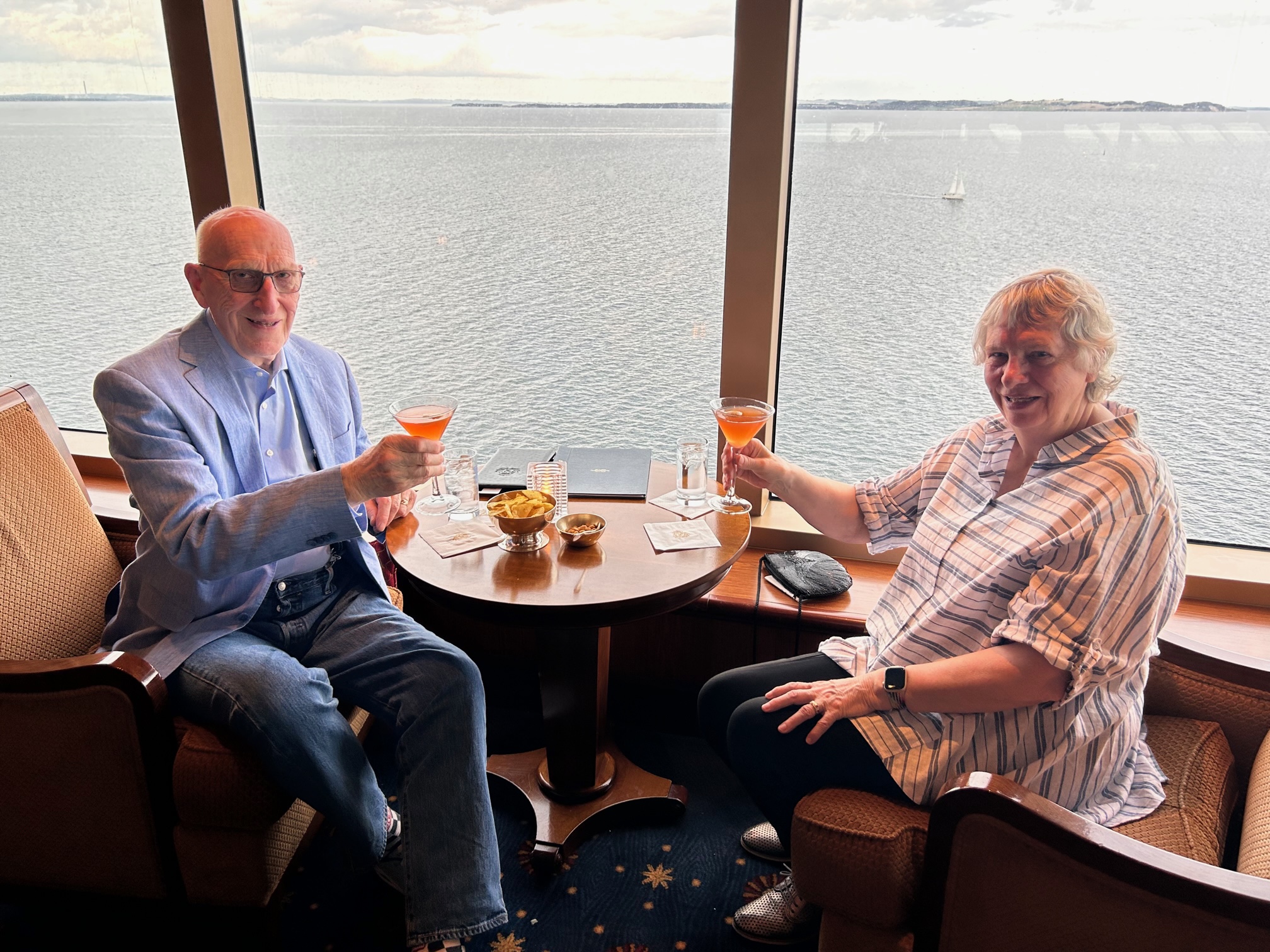
On the Cunard Queen Victoria one expects everything, including coffee to be just so. For example, picture us seated thus: In the Commodore club, sipping an Atlantic Love Affair cocktail, to the romantic Guitar of Andrew Scott as the sun goes down
Now to coffee. I admit to being a coffee snob. And worse, an ignorant coffee snob. However, I do enjoy a good cup of coffee. Many of you have heard my ramblings about “magic” coffee. The Queen Vic has the staff and the facilities to produce very good coffee. But, understandably, they have not heard of “Magic” which originated in Lygon Street Carlton, considered by many to be the current coffee centre of the world. The first attempt to introduce Magic to the Queen Vic staff failed dismally. Won’t bore you with the details. But on the second take, Barista Raul fine tuned the necessary Ristretto to produce a very nice Magic.
Without exception the Queen Vic staff are lovely people. They come from around the world. Often spending months away from their families and friends in order to send money home for life’s essentials. A happy outcome for all concerned. The Nigerian Pizza lady behind the counter beams – “I love my work” she chortles with enthusiasm.
Bornholm
This is the first time the Queen Vic has docked at Bornholm. A Danish island about the size of the Isle of Man situated bang in the middle of the Baltic. Delightful place dotted with cute little cottages around the three small towns. Rolling pastures with a steep drop down to the harbour. Could be the subject for a pastoral symphony. However, being in such a strategic position has made it an attractive target for ambitious raiders. Germany occupied Bornholm for most of WWII to secure control of the Baltic. Toward the end the Germans begged the British to send someone to accept their surrender before the Russians arrived. Bornholm again became Danish after the war, surviving a brief overture from Sweden.
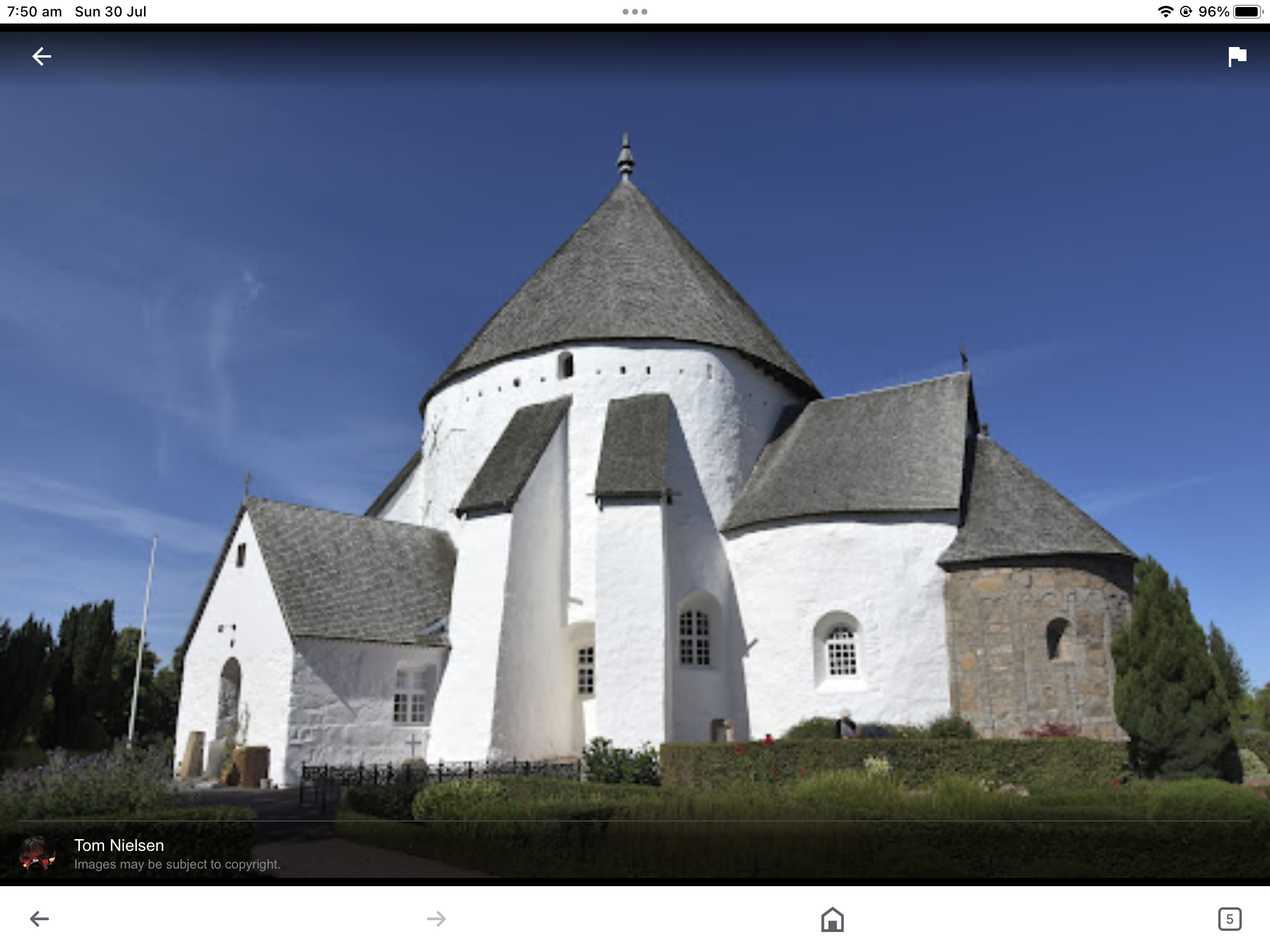
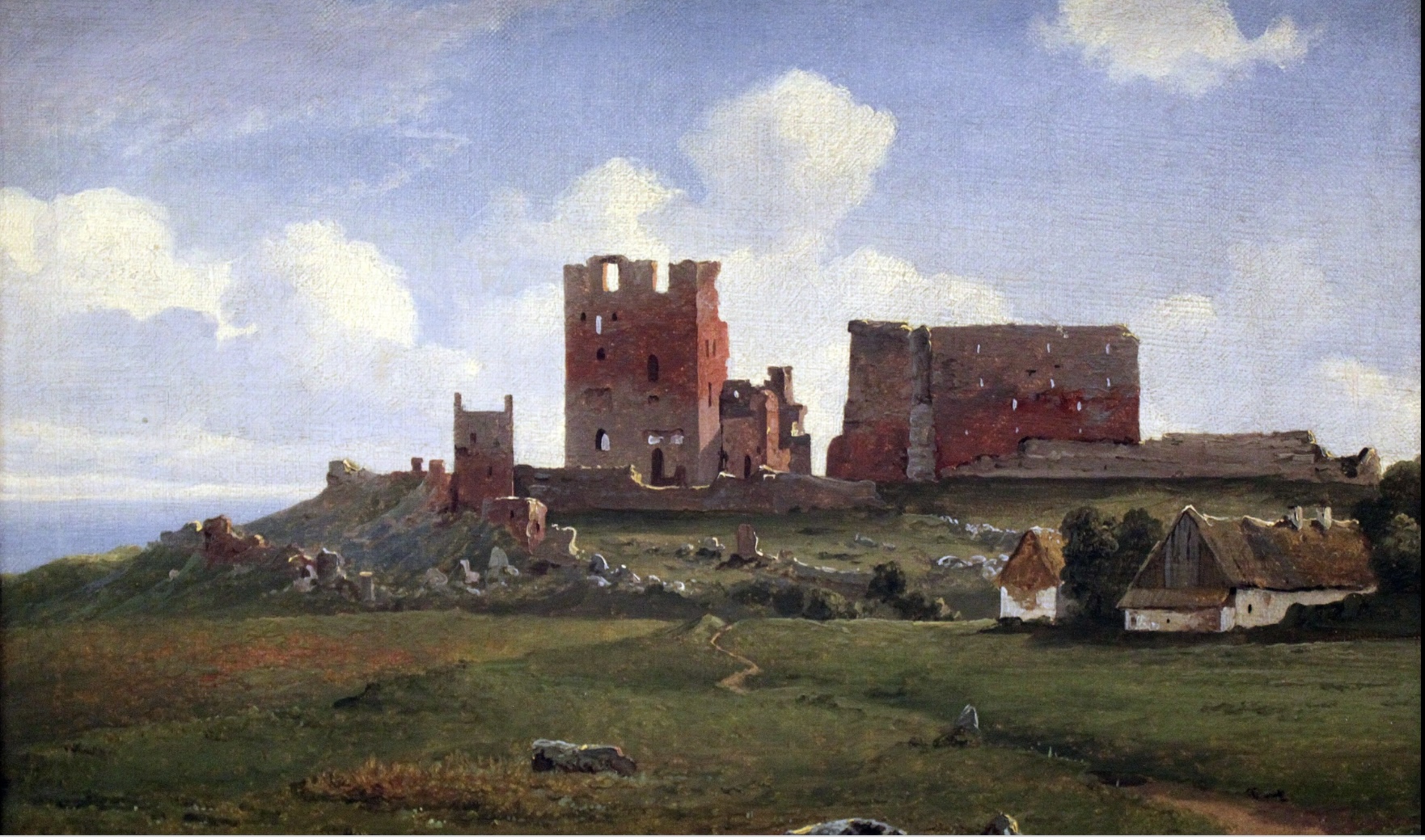
The early pagan Danes took their time in converting to Catholicism and eventually evangelical Lutheranism. The unusual Osterlars round church was fortified and built about the year 1200 at a time of conflict between the church and the king. While the king built the Lilleborg Castle about that time, the archbishop of Lund chose to build the much larger imposing Hammershus castle. Hammershus played an important part in the many wars of the Middle Ages. It was deserted in 1745 and fell into ruins. Mainly because it was a great source of building materials which could be better used elsewhere. It was only as recently as 1900 that the historical significance of the site was recognised and some restoration began.
Hammershus is such a vast area of crumbling masonry that it is difficult to gain a good perspective. The following painting from the year 1848 gives an impression of what was involved.
Helsinki
Finland was part of the kingdom of Sweden from the 13th cent til 1809 when it became an autonomous duchy of the Russian empire until 1917 when it declared independence. The composer Jean Sibelius was born into this period of Russian oppression/suppression and his music often reflected a wish for his homeland to at last be independent. In 2015 on the 150th anniversary of his birth, Finland staged a series of Sibelius concerts and events. The Flinders Quartet were invited to come from Australia to perform all of his string quartets as part of this celebration.
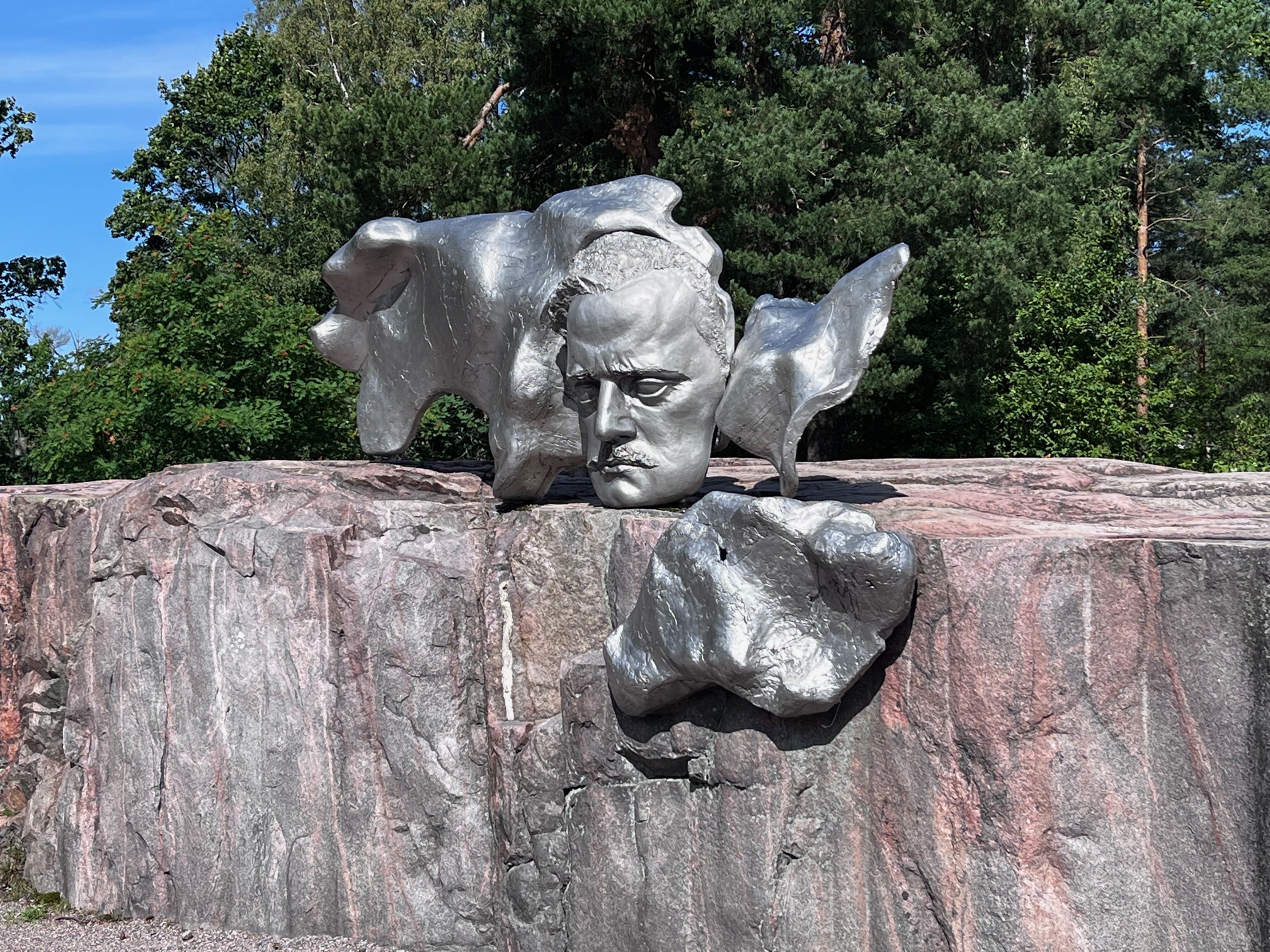
In Helsinki now, there are two monuments to Sibelius. One by the Sculptor Kuvanveistaja is simply the head of Sibelius surrounded by clouds representing Russian oppression.
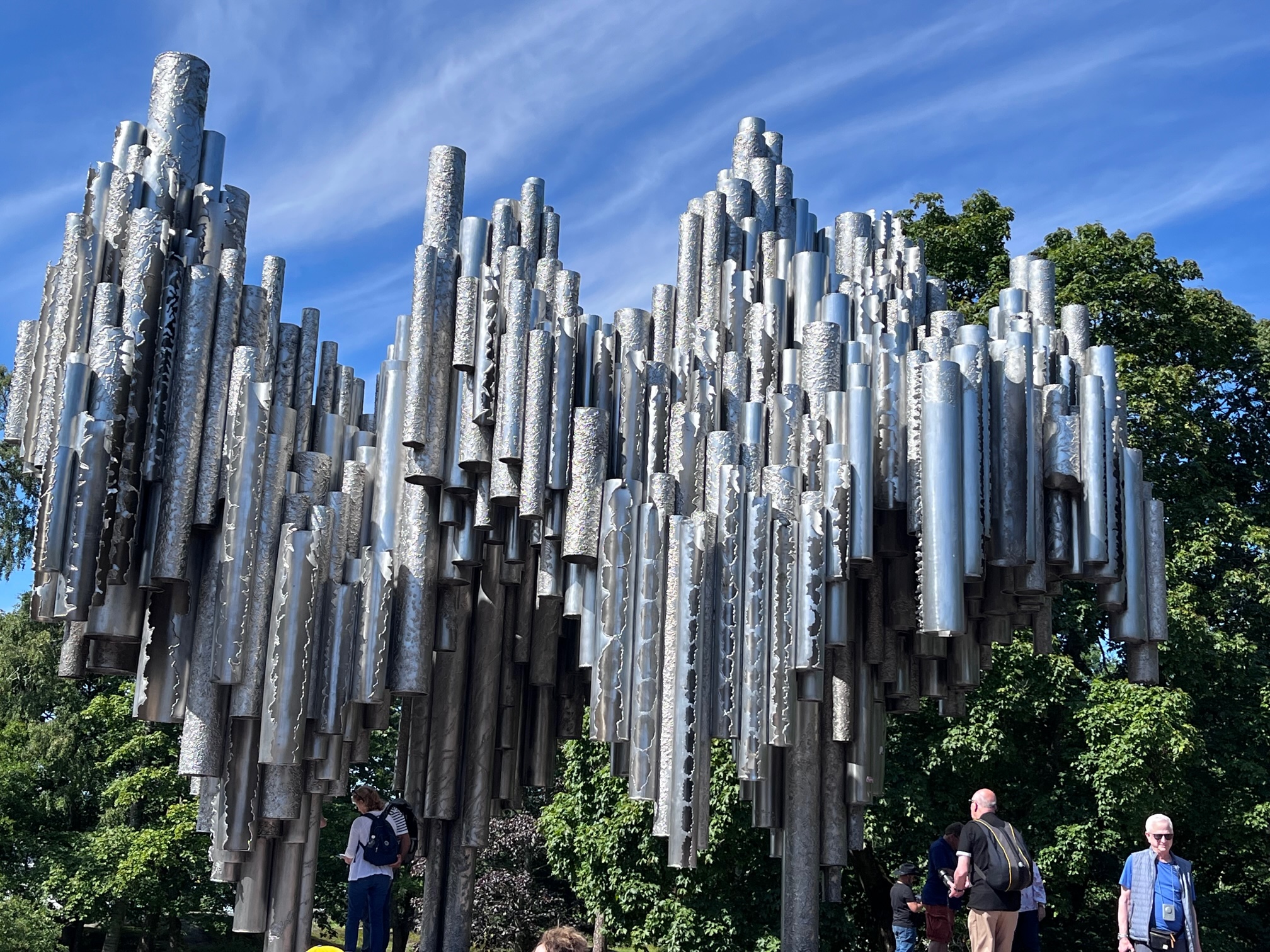
The other is a massive assembly of 800 stainless steel pipes. Alluding to Sibelius’ organ music, the work took 6 years for the artist Elia Hiltunen to build. It was completed in 1967 to commemorate the decade after the death of Sibelius. His widow Aino lived on for another two years and died at the age of 97. The famous Australian polymath, Barry Jones had long been an admirer of Sibelius and his work. After the death of Sibelius, Barry visited Finland to possibly pay his respects the aging Aino. Authorities told him he shouldn’t visit because Mrs Sibelius is so frail and old. Undeterred, Barry knocked on the door anyway. When she opened the door, Aino said with delight “Barry Jones! – what a surprise. Do come in” Such is his fame.
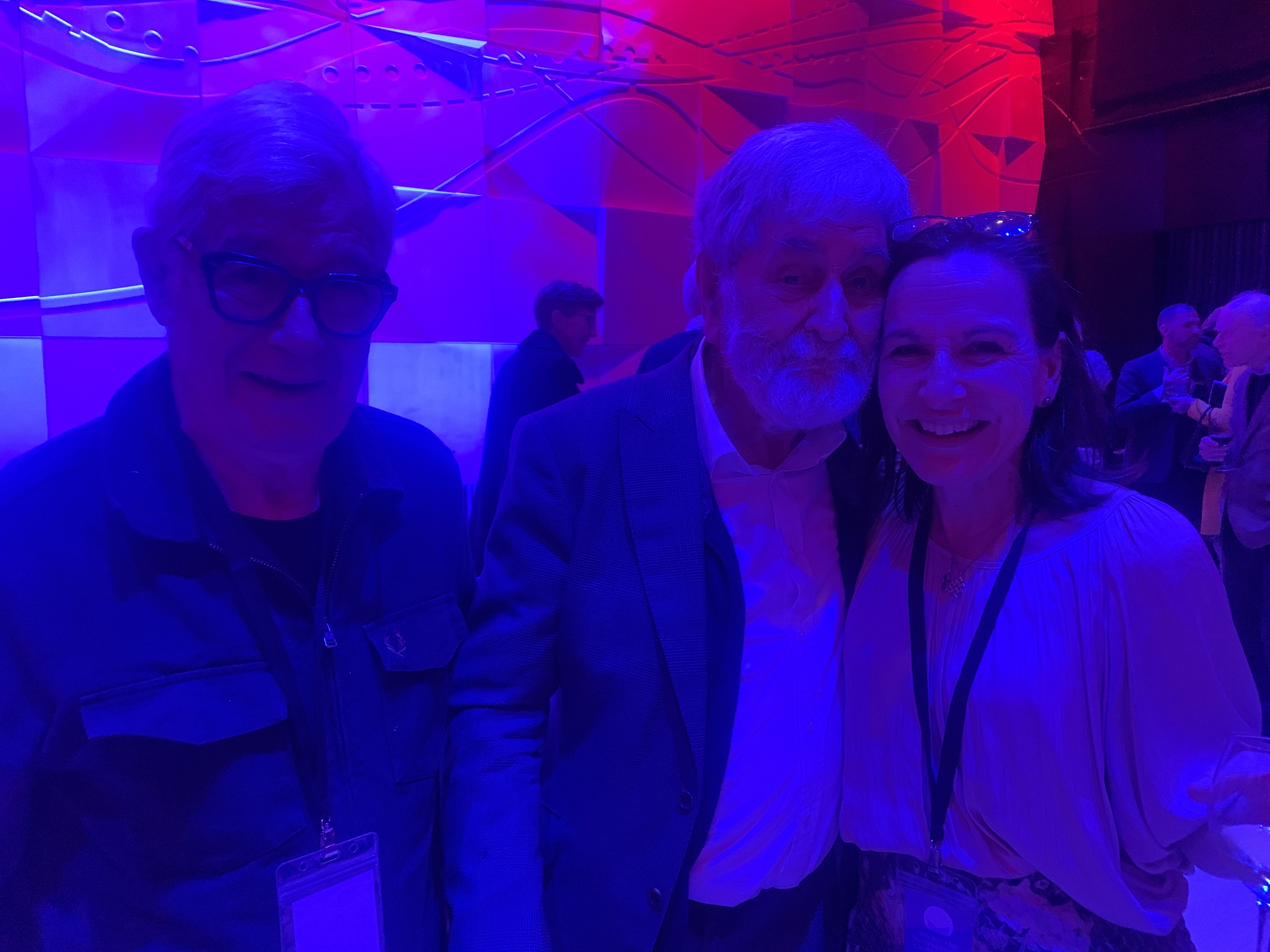
Technical quality is a bit ropey but the best that I could do on short notice. Following pic shows Barry, shortly after turning 90 having a good time at the recital centre with Zoe Knighton and mutual friend Julian Burnside.
 scatterbrook
Wow! We love following your adventures. Keep them coming. Love Heather & Nick
Loved this post. Beautiful photos especially the metal pipes. And wonderful Flinders Quartet story. Rob beware, you are becoming the scourge of baristas internationally. XX Kerry
>
Thanyou for your interesting experiences Rob & Helen. Keep enjoying and safe travels
. Allan & Joy Clark
Thoroughly endorse your comment about coffee Rob. In 2015 when living in a lovely town in Connecticut for four months, the only reasonably acceptable coffee choice was Starbucks. Took me weeks to ‘train’ the staff on what was a strong long black.
Enjoy the rest of your trip, sounds wonderful.
Great blog Rob, aways very informative and enticingly written. A pleasure to read. The first record I ever bought years ago was Sibelius’ Finlandia so a pleasure to read your comments on his commemoration. Helen must be relishing the northern latitudes and their long summer nights! Enjoy the rest of your trip.
Catching up! Sounds like an amazing trip. Looking forward to more stores on your return.