Breeze Music Cafe

Biking home from coffee recently with the Breeze Bandits on a pleasant sunny morning, I fainted or blacked out and crashed, breaking a few ribs. In the painful and boring rehab of the next couple of months I had plenty of time to go trawling through YouTube for interesting music. I found a clip of a drunken Russian accordion player who made an impressive start to Bach’s iconic Toccata and Fugue that dissolved into a silly mess. On a quest for more serious takes on that piece, I came across versions by a brass quintet, Sinfonity and a Glass Harmonica duet. Using the DaVinci video editing app I stitched all of that into a composite that I posted on YouTube as “Bach Toccata Medley“. The brass quintet is from the Royal Concertgebouw. Sinfonity is the world’s first electric guitar symphony orchestra. The 16 members look and dress like a rock band but play the Bach with expression ranging from the delicate and sensitive through to a rampaging barely contained storm and back again. All authentic straight Bach from memory. GlassDuo play on an instrument made with custom made wine glasses which is the largest professional Glass Harp in the world.

The rehab passed quickly enough with the support and encouragement of the Breeze Village community. So, I had the time ferret out more quirky and interesting entertainment on YouTube. Folk, Jazz, Rock, Classic, Choral, Big Band, Blues, Street Music, Gypsy, Comedy and the bizarre. Played an hour-long selection of this stuff in the village cinema as a thank you for my rescuers. And so, the Breeze Music Cafe was born. This session appears now on YouTube as Breeze Music Cafe 2

Now that we are doing less international travel, and on the insistence of the community, less bike riding, there will be more time for simply enjoying the local sunsets, cloud formations and walks along the beach. Certainly, more editions of the Breeze Music Cafe. Please let me know if you would like to be alerted as to their posting on YouTube.

Posted in category | Tagged | Leave a comment

Kyoto, Nara & Osaka

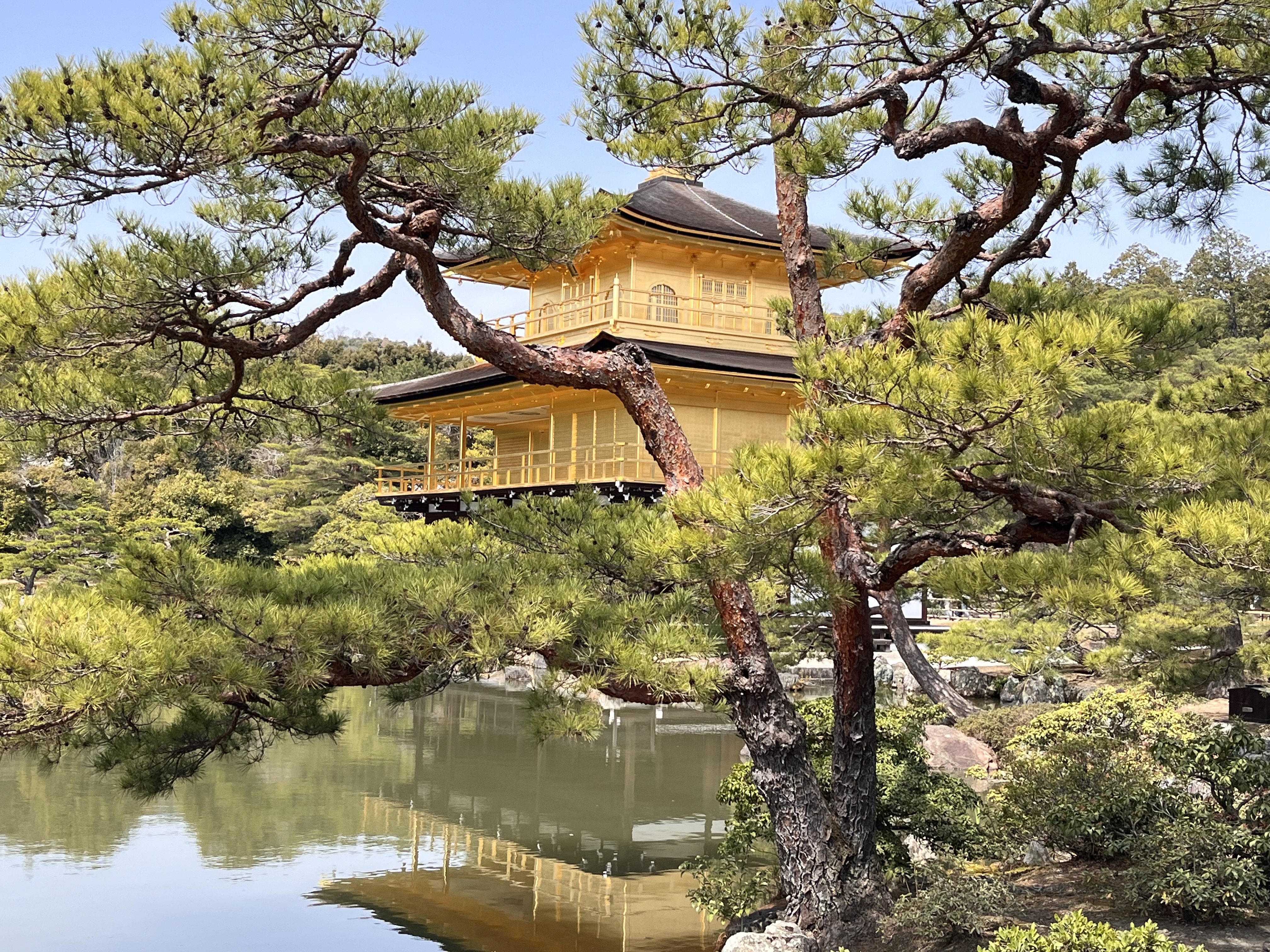
There is an infinite number of Shinto Deities, in practical terms about 8000. So, together with the 3000 Buddhist deities there is a need for lots of Temples, Shrines and removing of shoes. Due reverence and respect are paid to the deities with carefully raked rock gardens and liberal use of gold leaf decoration. 12 kg of gold on the Kinkakujicho Temple alone. Somewhere about AUD 1.5 million.

After a walk of a kilometer through grand Kyoto train station past many platforms and shops our guide Hajime (Jim) lead us around a corner into an authentic 1950’s style Japanese restaurant. The deal is “all you can eat and drink in an hour”. Sake is served hot; the food is varied and good. A digital display at each table gives a count down of remaining eating and drinking time. With five minutes to go the excitement is like the final overs of big bash cricket. 

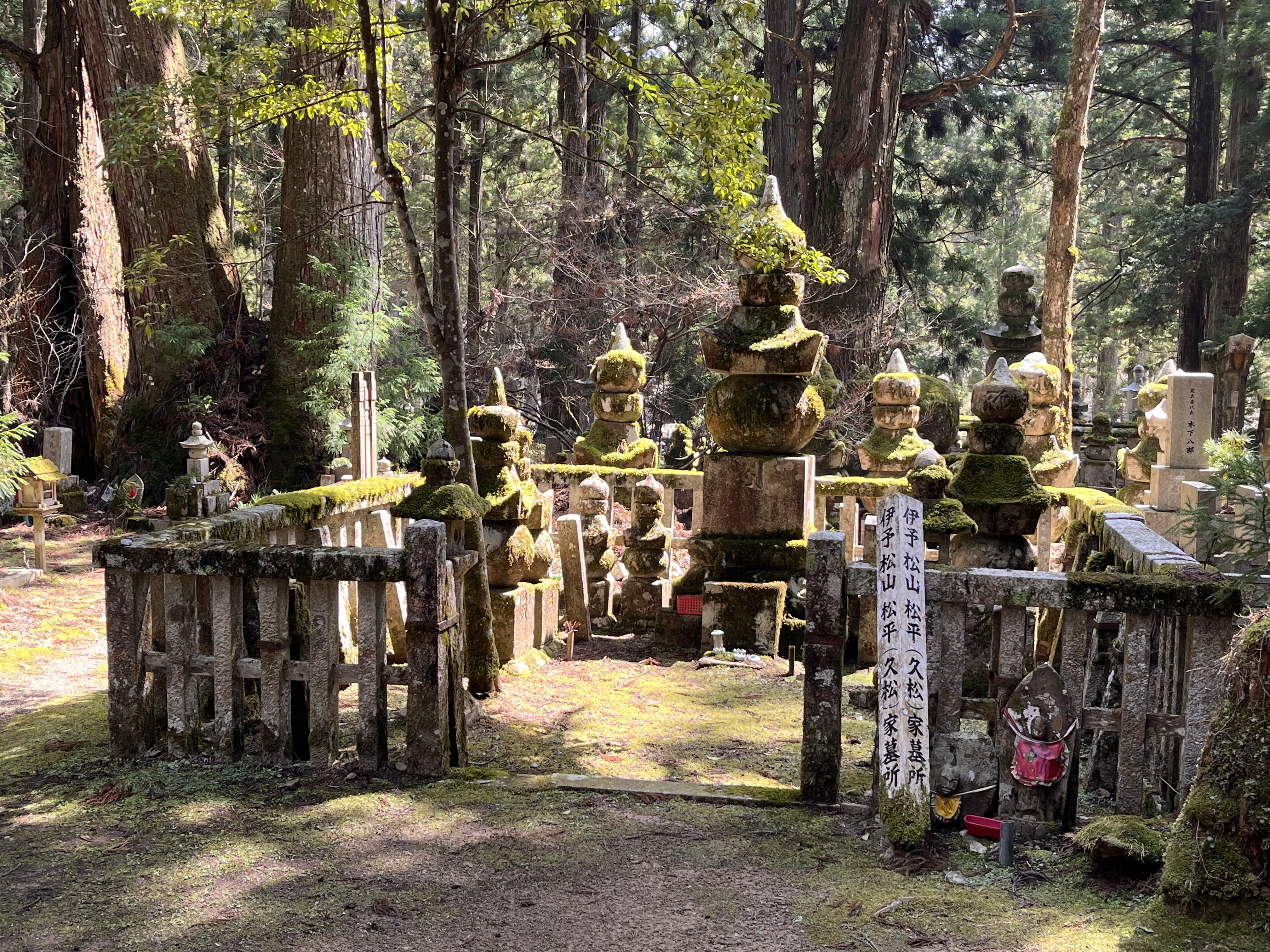
From the year 710 CE Nara was Japan’s first capital and the seat of the emperor. On a hill at the edge of Nara there is a mausoleum that now accommodates the ashes of some 200,000 bodies. Some of the moss covered tombs have, for hundreds of years, been maintained in a forest of 250 ft high very old Cyprus trees.   

Recently, the tombs and mausoleums have become more grandiose. Previously, employees of large corporations enjoyed lifetime tenure with the company, being treated as family members. The pic shows the memorial installed by Nissan recognising and respecting the passing of employees.

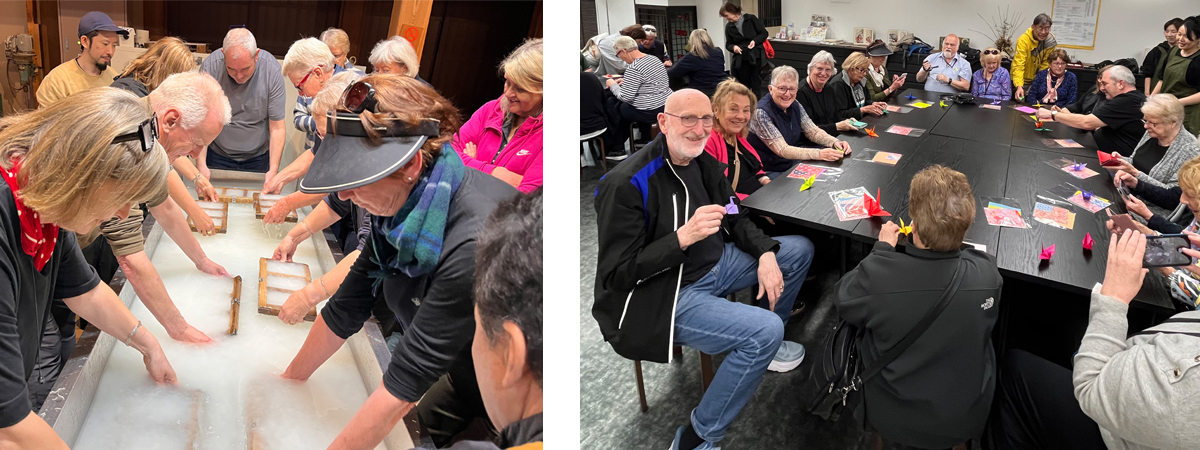
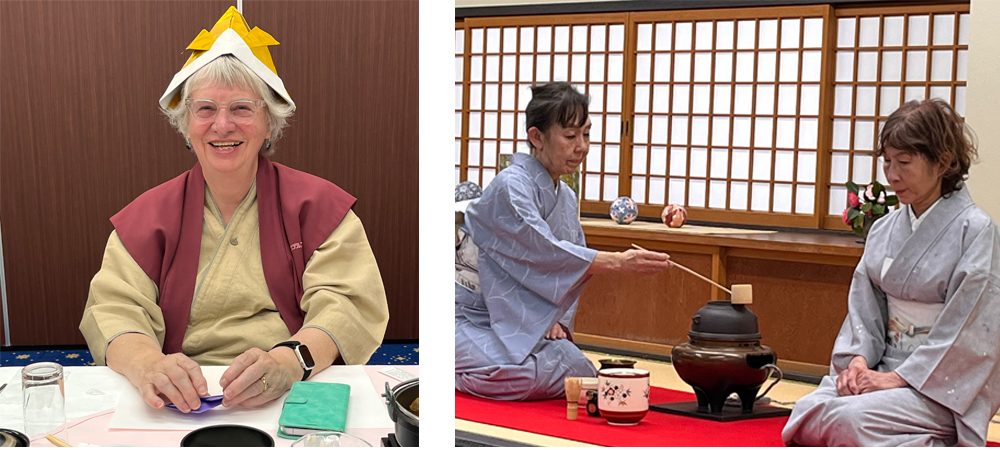
We had the pleasure of hands-on participation in the arts of paper making, origame, gold leaf decoration of chop sticks and a tea ceremony. And after dinner guide Jim showed us how to make origame warriors’ helmets.

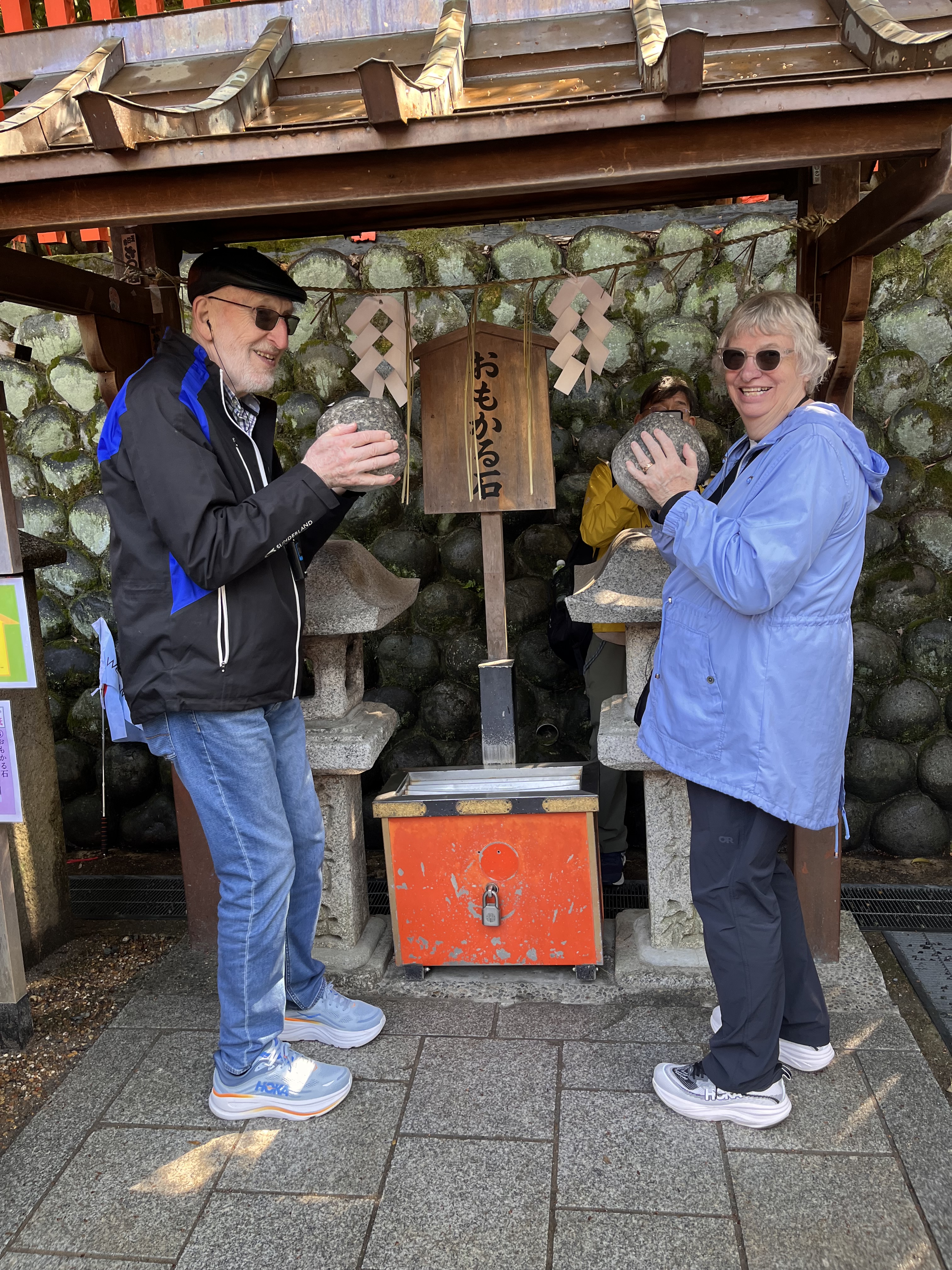
At one of the temples there was a test by rock. Quite a big rock. You pick up the rock. If the weight feels about right, you are OK. If the rock feels heavier than you expected, the cosmic message is that you must try harder. Sweetiepie magaged just fine, guess that I’m a bit slack.

And then there was food

Not to be outdone, Osaka lifted the bar and offered as much as you can eat and drink for ninety minutes.

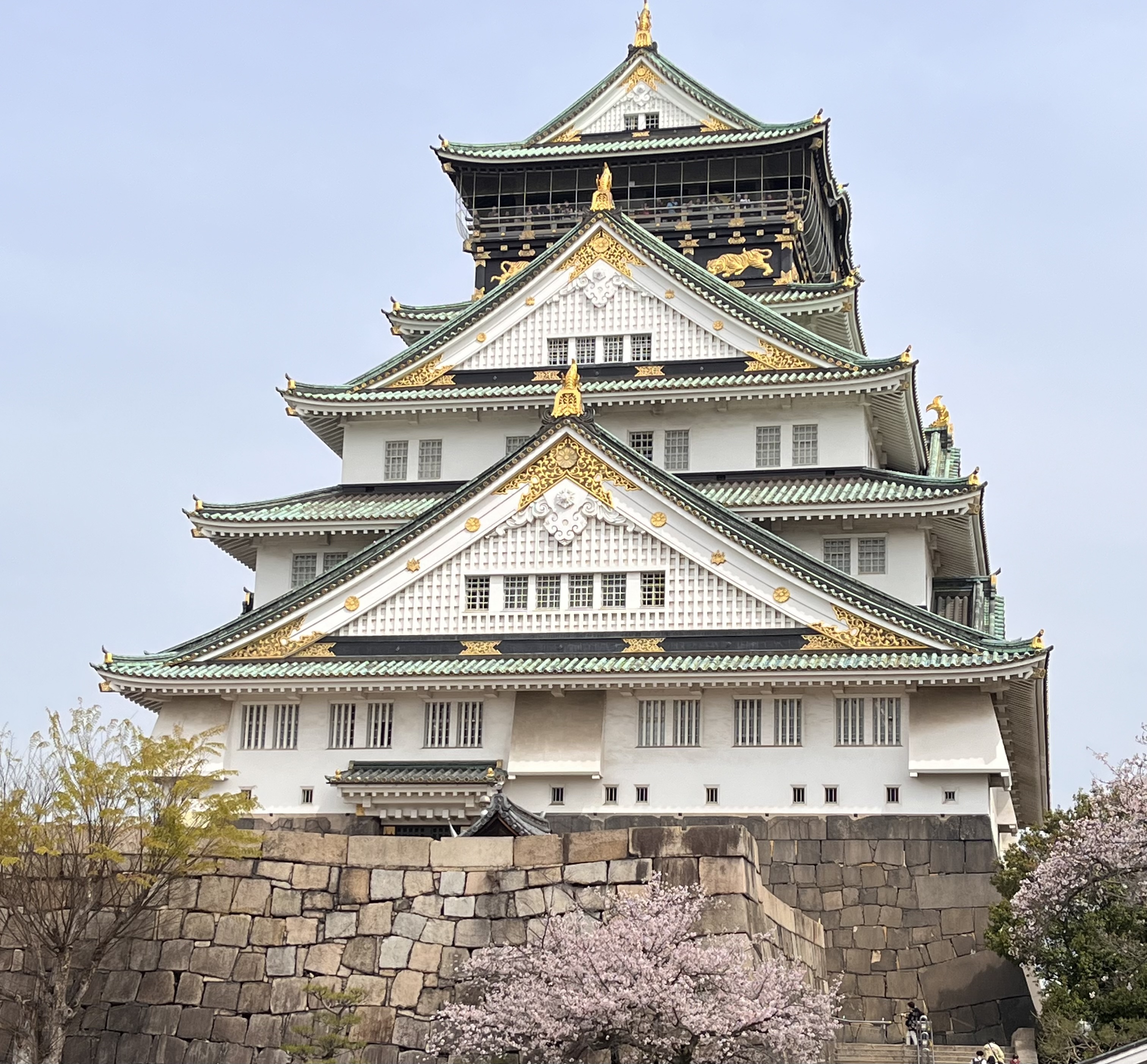
Osaka Castle is really something. A very very grand design. The fairy tale wooden castle atop acres of moats and stonework was a few centuries in the making. Way over budget of course. The pretty wooden part was bombed to oblivion in the second world war, now restored to its former appearance, this time in reo concrete.

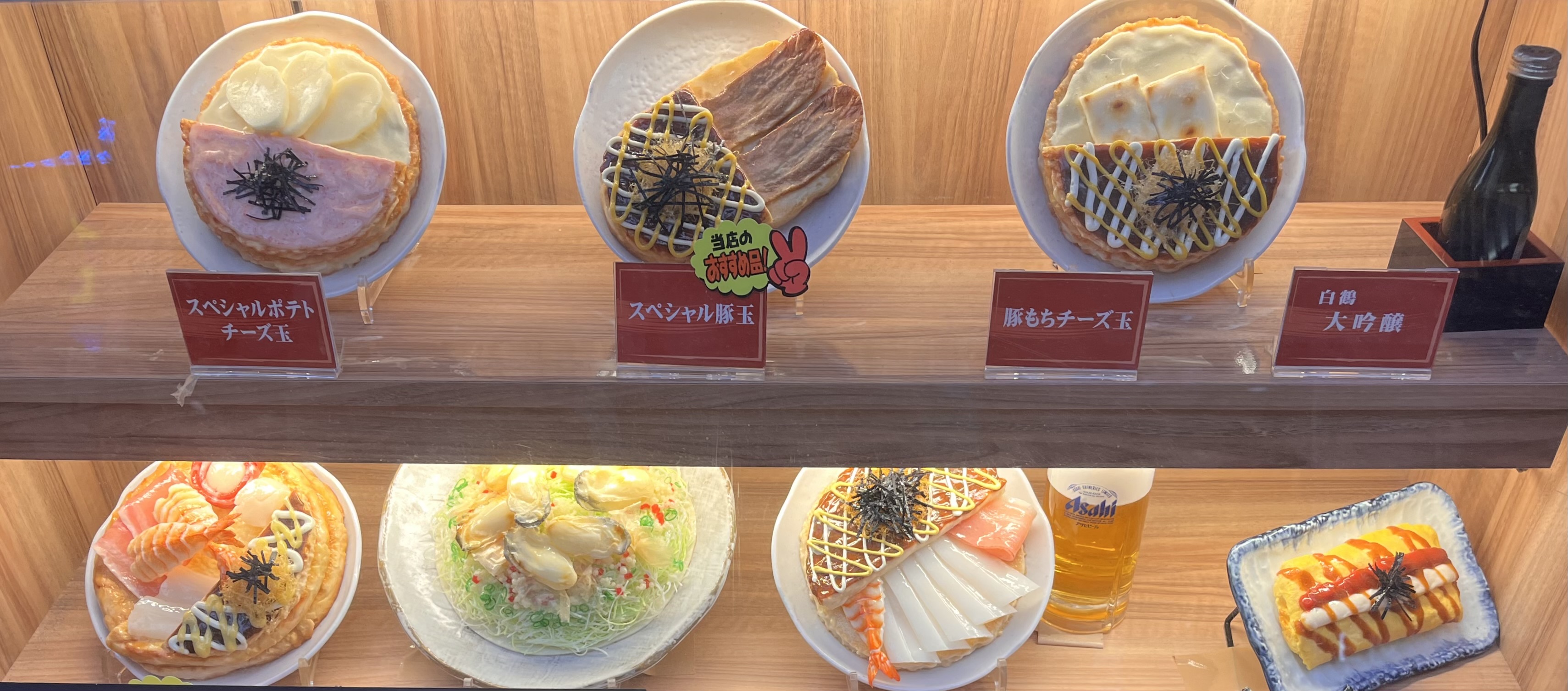
Bowing is important in Japan. 45 degrees is “Gee I’m sorry” 90 degrees is “oops, that was real bad” and 180 degrees is “How can you ever forgive me?”  Jim took us to a different sort of restaurant in Osaka. A pancake place that does things like those in the following pic. 

The chef departed from the usual list to give a treat to the Ozzies and Poms. At each table for 6 people there was large hot plate built into the table heated from somewhere below. Huge individual savoury pancakes appeared on the hotplate and we were each given chopsticks and a cute little scraper thing. Lots of onion and other stuff, we were most impressed. Back at the hotel, Jim was most apologetic, doing 90 degrees bowing. He said the chef had not followed his instructions. We approved the work of the pancake chef. Jim is a superb tour guide. Taught us to count to ten in Japanese, entertained, amused and cared for us in every way.

At this moment sitting in the Cathay lounge Hong Kong on the way home

Posted in Asia, category | 2 Comments

Tokyo

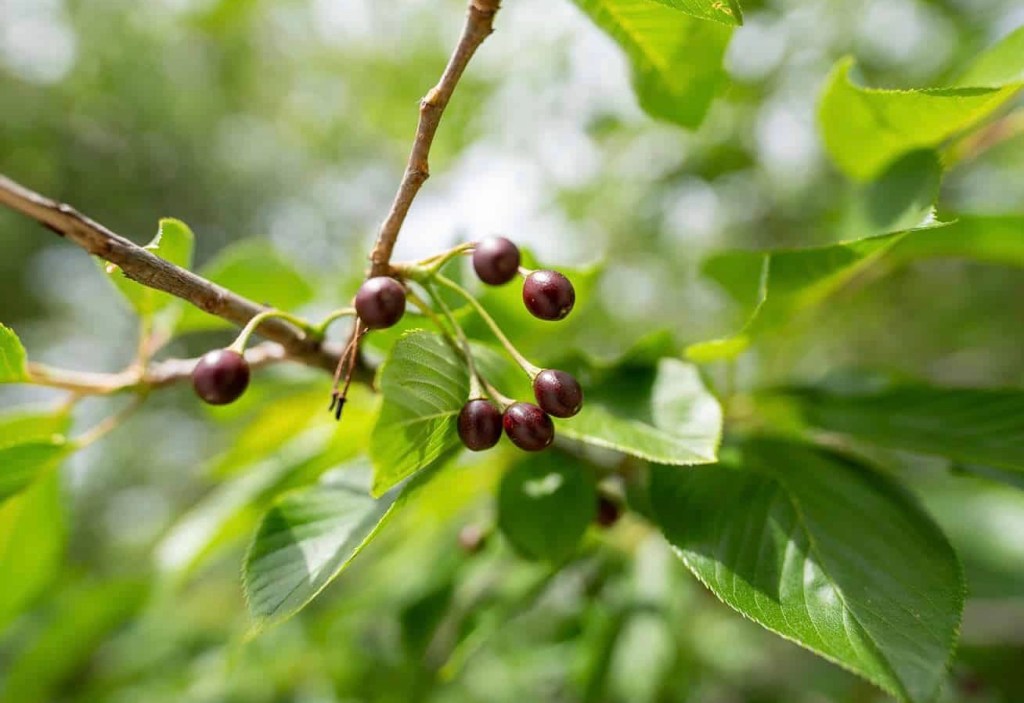
We joined the throng of travelers coming to Japan for the cherry blossom season. Luckily many of the trees are in coming to full bloom. In Tokyo some of the trees are about 20 m high. So, what happens to all the cherries? They are tiny and sour, and the birds eat them.

Ahead of us, waiting for an elevator in the hotel lobby, there was a family of 5 people with their suitcases. The elevator doors opened to reveal the lift cabin full of people, not making a move. Without hesitating the family quickly moved toward the elevator. The occupants somehow managed to keep compressing to accommodate the advancing newcomers. And their luggage. Don’t know how, but I am sure that if we had confidently advanced, they would have also made a space for us.

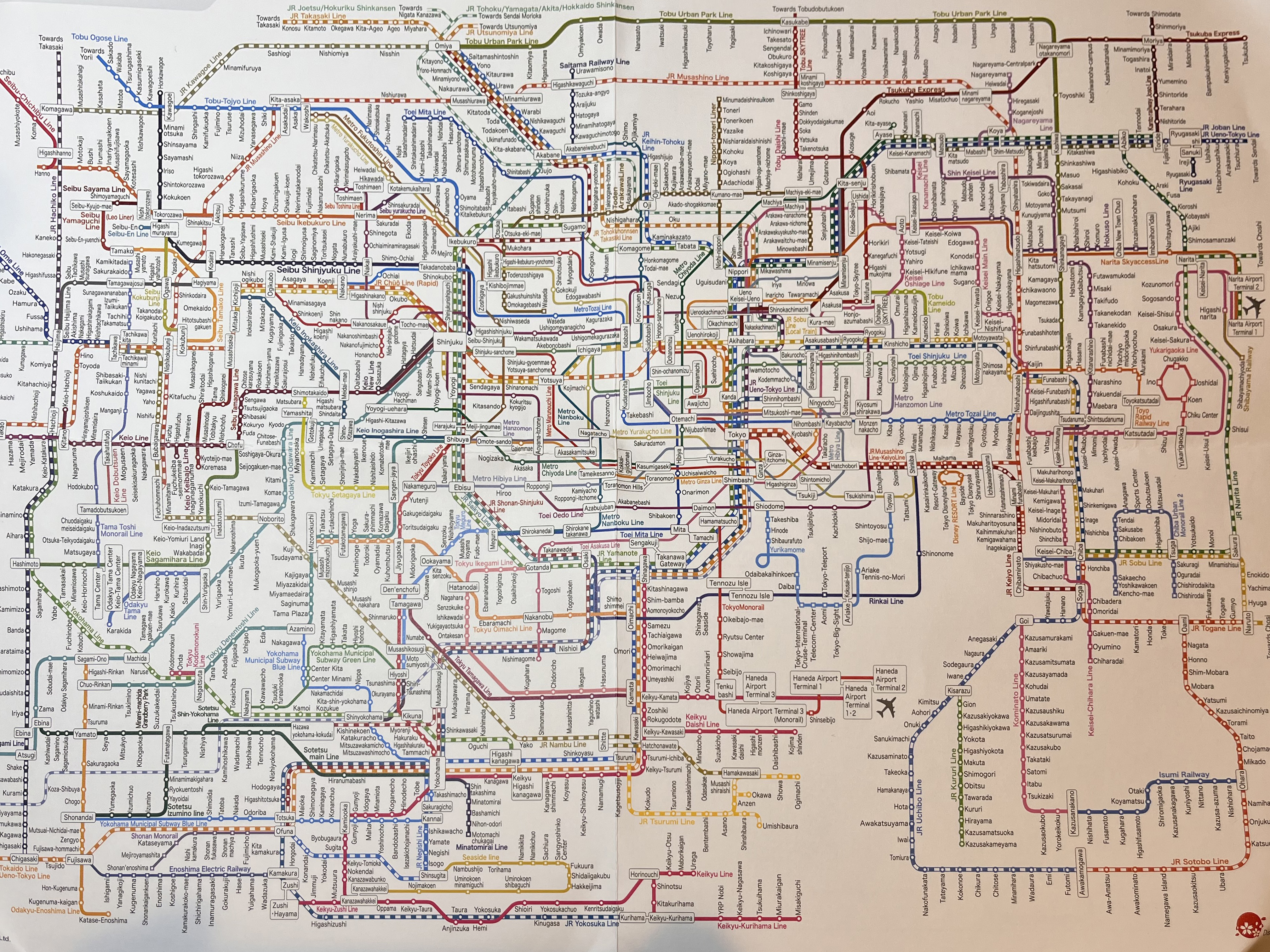
The railway system for the 37 million locals is very well organised, as you can see from the attached pic. A great achievement for an iPhone camera.

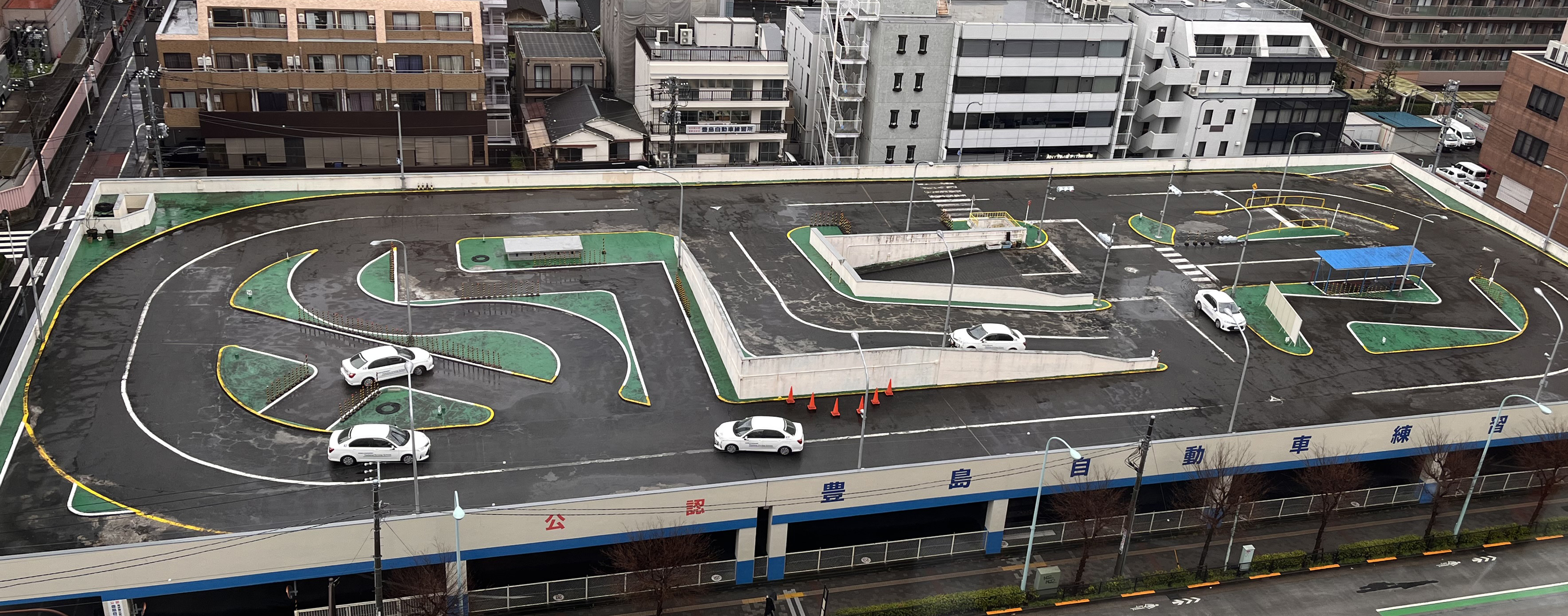
For our entertainment in the hotel room, much more amusing than TV, we look down on a roof top driving school. The school continues to run day and night. From raw beginners to those nearly ready for the real world. With a dozen inexperienced drivers in action, wondering what music I might use for the sound track of a movie of the action.

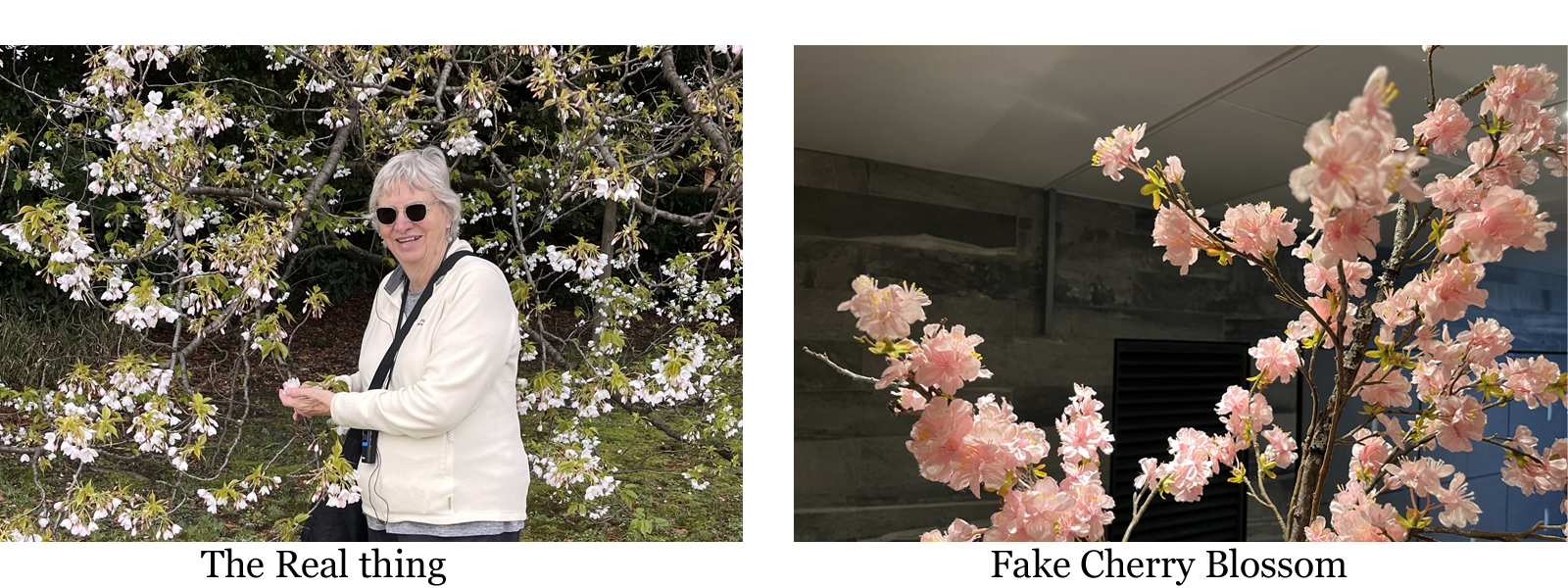
We chose to come this time of year in the hope of seeing some cherry blossom. There are three delights with cherry blossom. First, the beauty on the tree. secondly the falling of the blossom like snow. And finally the carpet of the fallen blossom. Real cherry blossom is so ephemeral that  convincing faux cherry blossom is popular as a seasonal decoration.

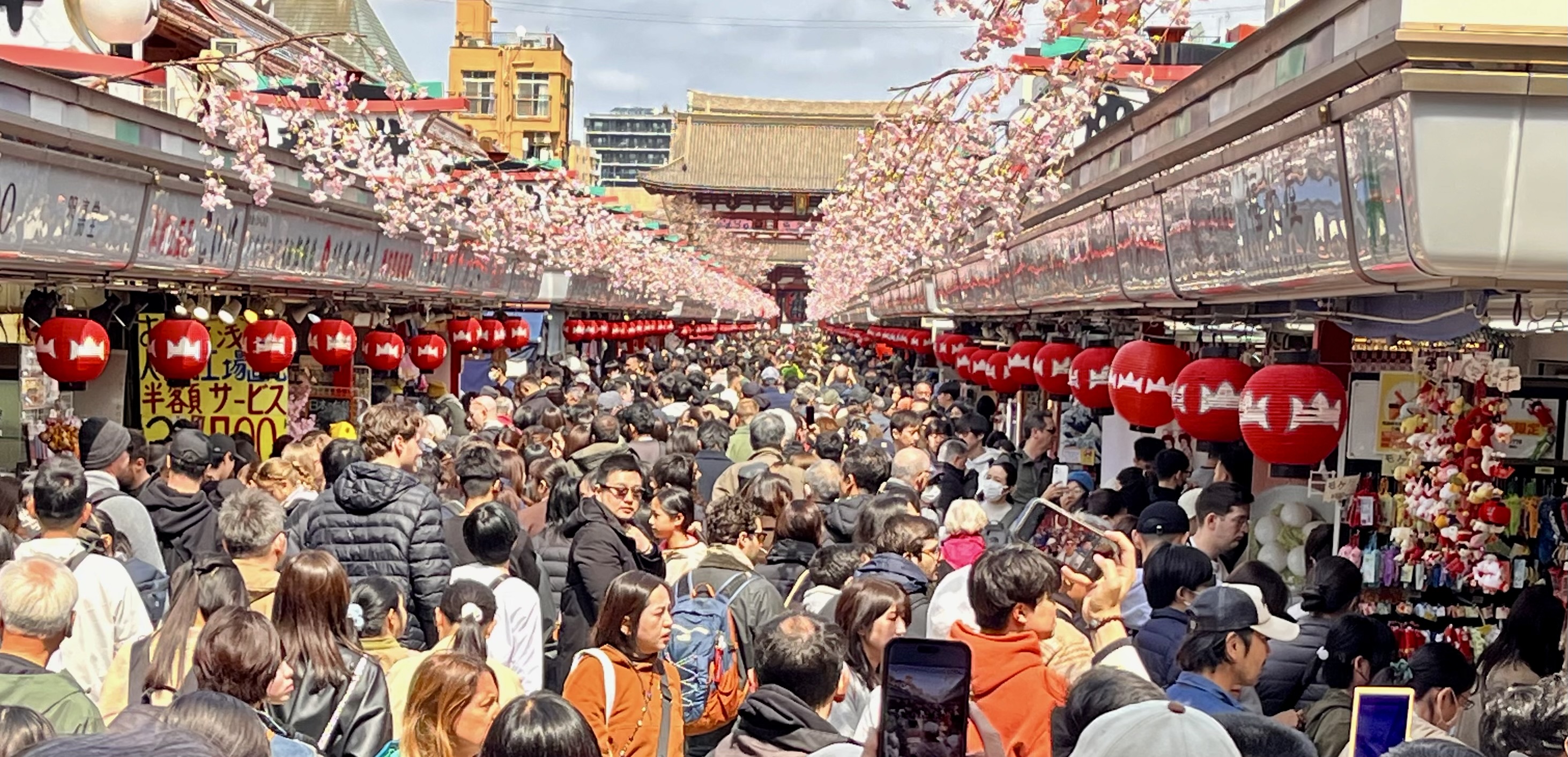
There was a festival at the Sensoji Temple. A sea of people were dressed for the occasion. The street leading to the temple was decorated with cherry blossom. Do you think it was real?

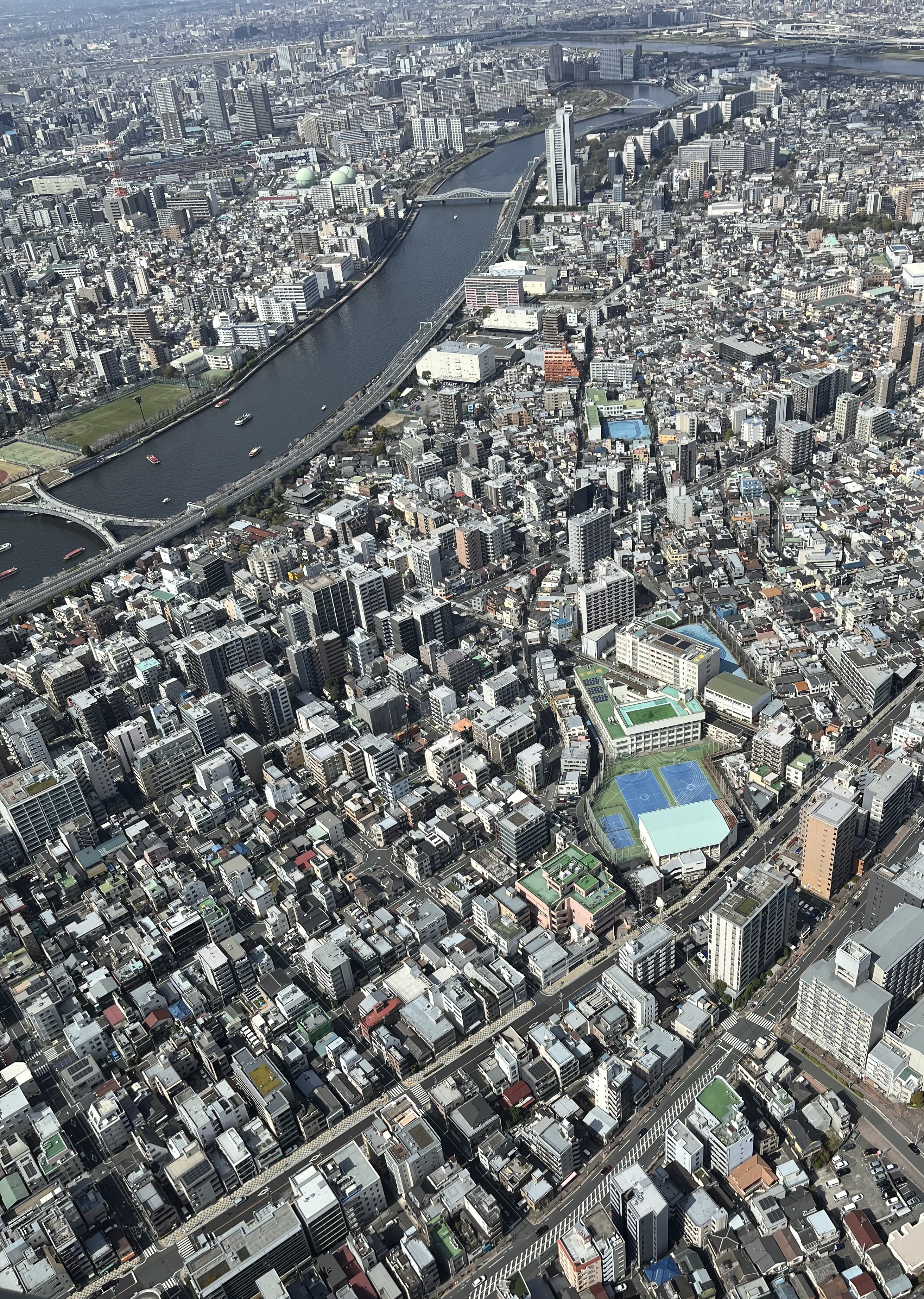
The Tokyo Sky tree at 634m built in 2012 was once the tallest tower in the world. A collossal tourist attraction, the parking area accommodates 20 buses and the 4 high speed elevators each carry 40 people to the viewing platforms up to 450m above the cherry blossoms. On our visit, as you see in the pic, a lovely clear day.

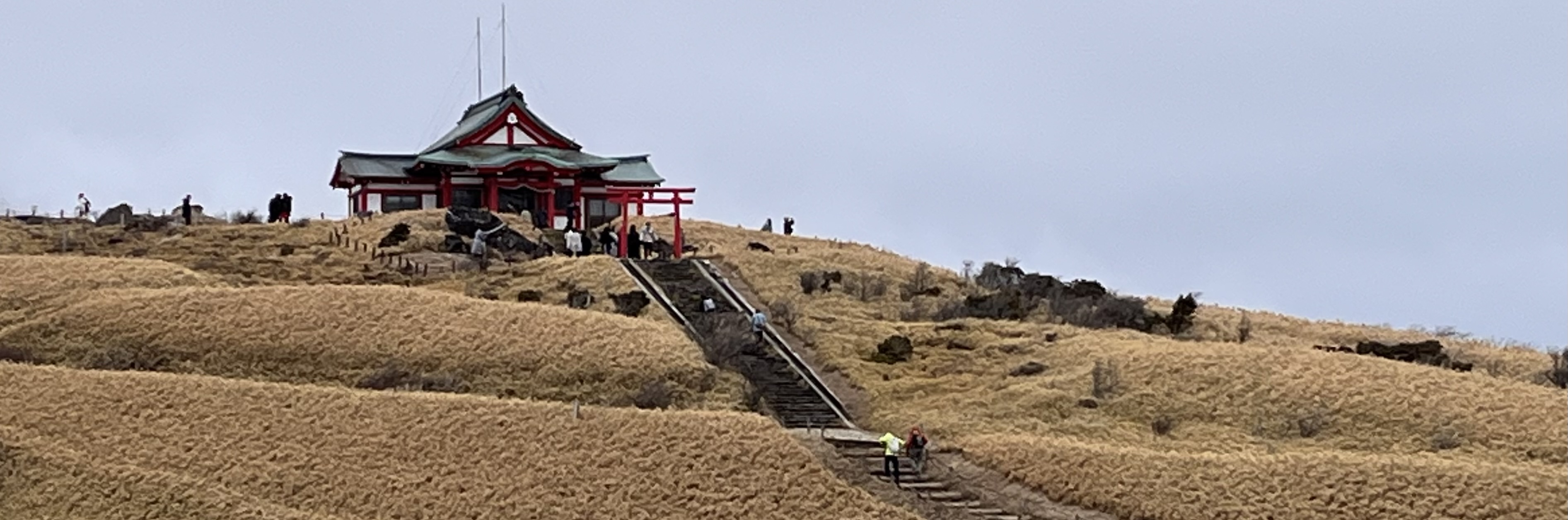
Various combinations of temples, gardens, high places and castles. The Komagatake cable car took us to a temple on a mountain top.

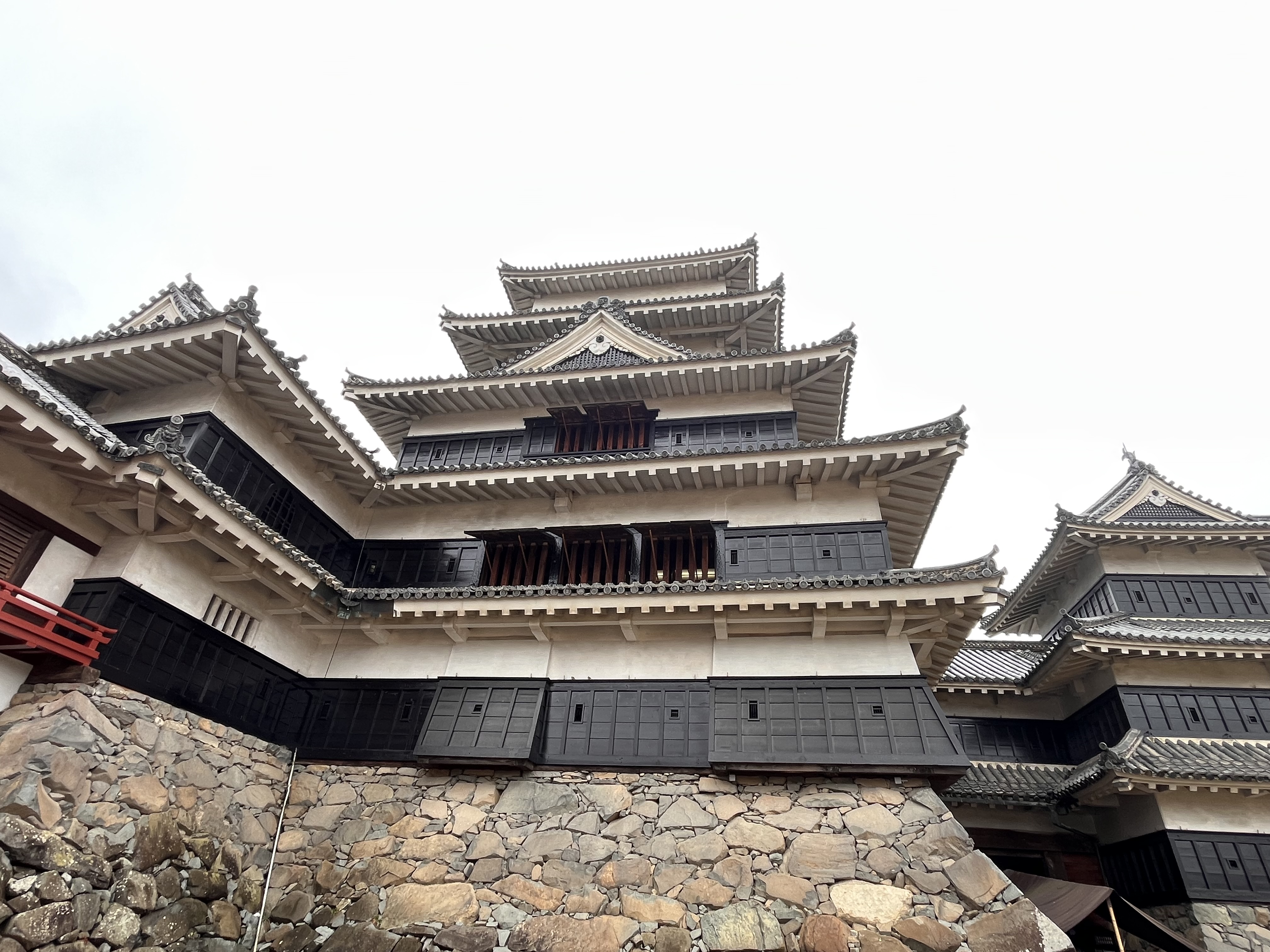
Until the 1850’s castles in Japan had been made of wood. However, in the Meiji period they became interested in Western ways and warfare. so most of the wooden castles were rebuilt in stone. The Matsumoto castle was the only significant wooden castle to be retained. Inside it is very dark and austere, intended to be defended and in no way a grand palace. Its lack of direct involvement in battles makes it a symbol of peace and preservation.

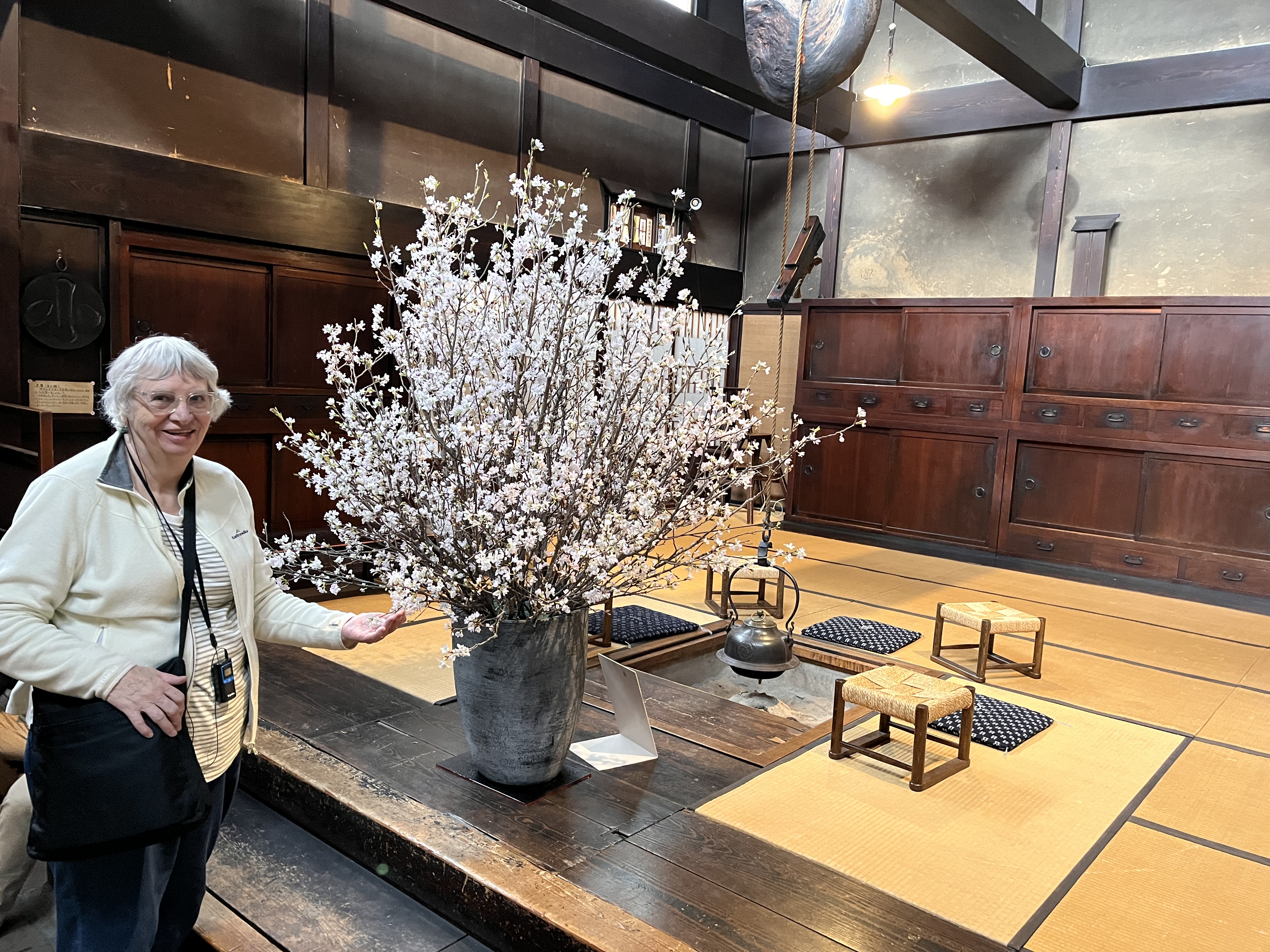
Takayama up in the mountains was blanketed in snow. Plenty of opportunities for retail therapy in the morning market. Traditional style homes were open to the public, decorated of course with cherry blossom. More than a hundred species of cherry blossom trees in Japan. No shortage of hot water in Japan. The large baths in the hotels can be quickly filled to the brim with hot water and the overflow just drains from through a hole in floor of the bathroom. And in the middle of the streets in Takayama there are outlets that gush hot water to melt the snow and ice which drains to covered slotted gutters. 

A traditional home in Takayama

. A traditional home in Takayama

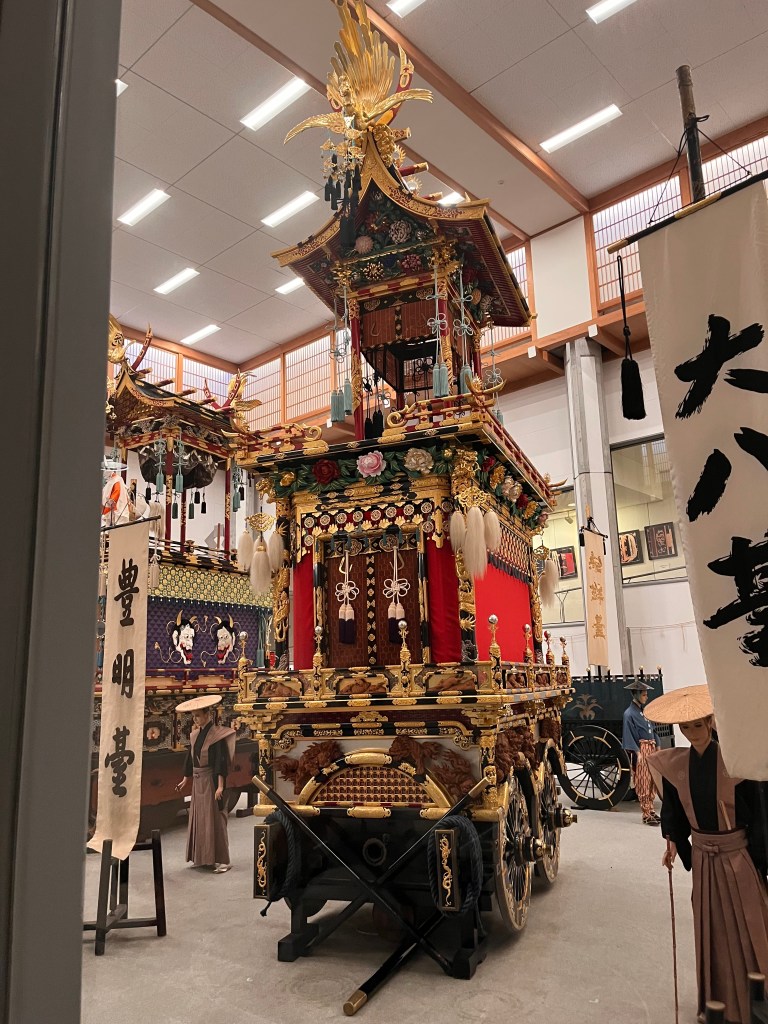
The Soo In temple in Takayama is home for 4 ceremonial buddhist floats that parade the streets on special occasions. As you can imagine, they have a rather wide turning circle. There are two sets of three story high doors for their exit and entry.

And now on to Kyoto, the old capital of Japan

Posted in Asia, category | Tagged , , , , | Leave a comment

Hong Kong

A couple of days stopover in Hong Kong en route to Japan.

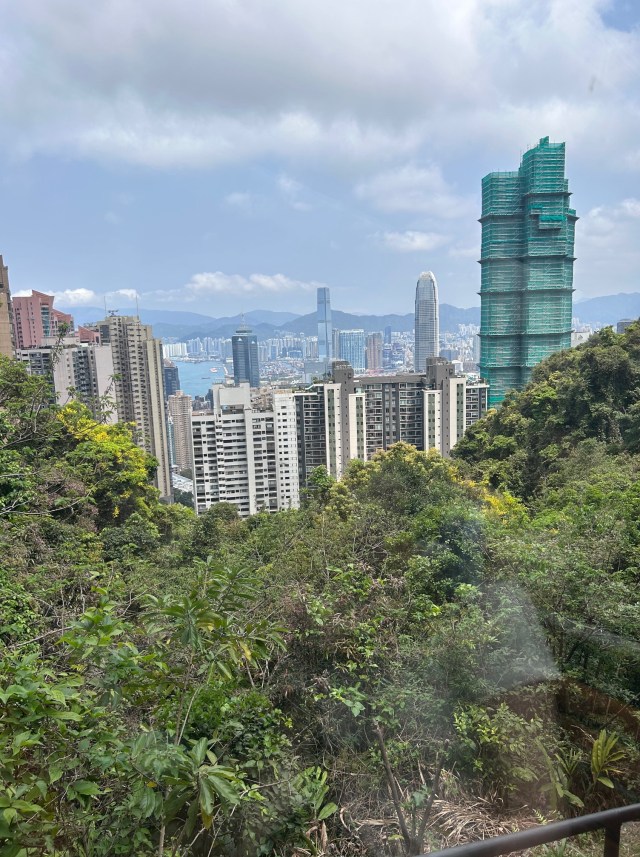
Haven’t been here for decades, not since the handover to the original owners from the Brits in 1997. Hence lots of change. Many towers of up to 50 stories of tiny boxes that accommodate most of the 1.5 million inhabitants of the island. The intensity of the shopping opportunities is a far cry from the gentle pace of sleepy little “Lonnie”.

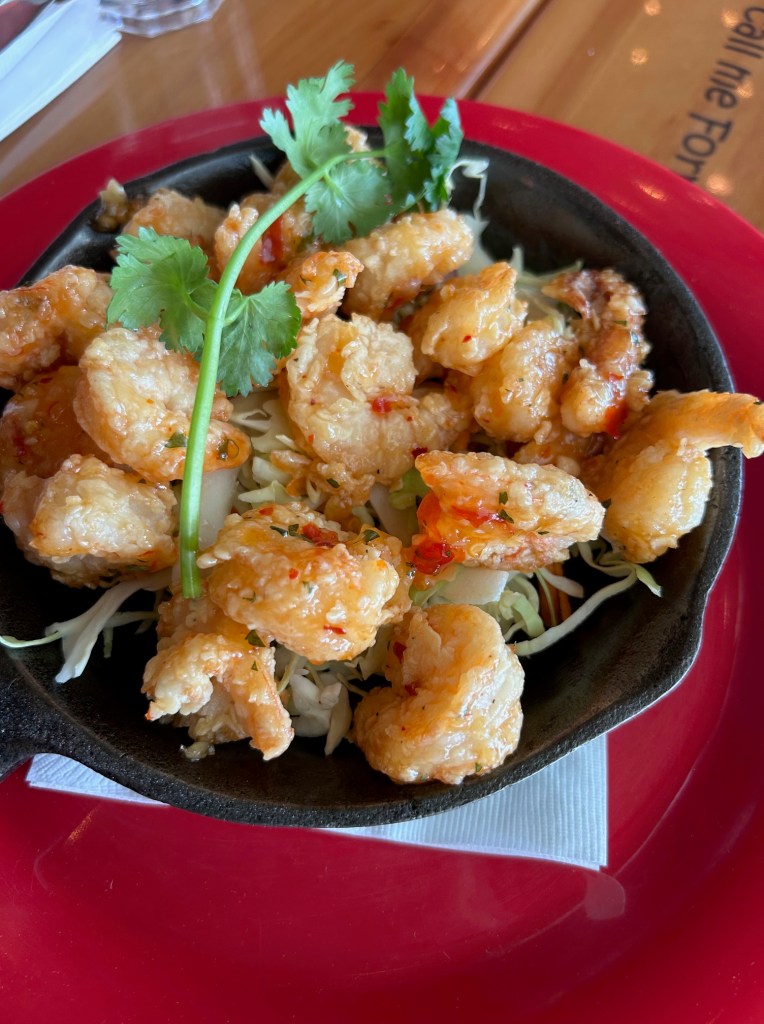
Interesting breakfast at the hotel offering great noodles, curries, dumplings, laksa and so on. All the Asian fare that you could wish. But I felt that their a full English breakfast lacked a certain mojo or dingdooram. A tram ride on a double decker tram to the other end of the line cost HKD 1.30 for us seniors. That is about 25p in Aussie currency. We were on our way to catch the cable tram up to the peak. Same old tramway but now leading to a vast multi story tower with stunning views over the city, and again endless spending opportunities. We settled for chili prawns at a wild west themed eating place high in the sky. 

On the way back down, we caught a view of a high rise building under construction. Obviously one of the 50 story plus jobs. Amazingly clad in bamboo scaffolding under the green plastic stuff. No steel scaffolding anywhere. And the bamboo is always lashed together with something that looks like a cross between cable ties and thin black gaffer tape. The long walk up Hollywood Road was a chance to revisit the pottery and jade shops that had so impressed me all those years ago. The crowded little pottery trash and treasure places are all gone.

Hollywood Road is now very select and up market. In one shop the manager explained that the items were either the work of studio potters or authentic very old pots. An old soup bowl caught my eye. A good honest potter’s pot. Pleasant fish decoration. It had a rim that was badly chipped in a couple of places. Believably claiming to be Japanese, a few hundred years old, the price was Just over AUD 10.000.

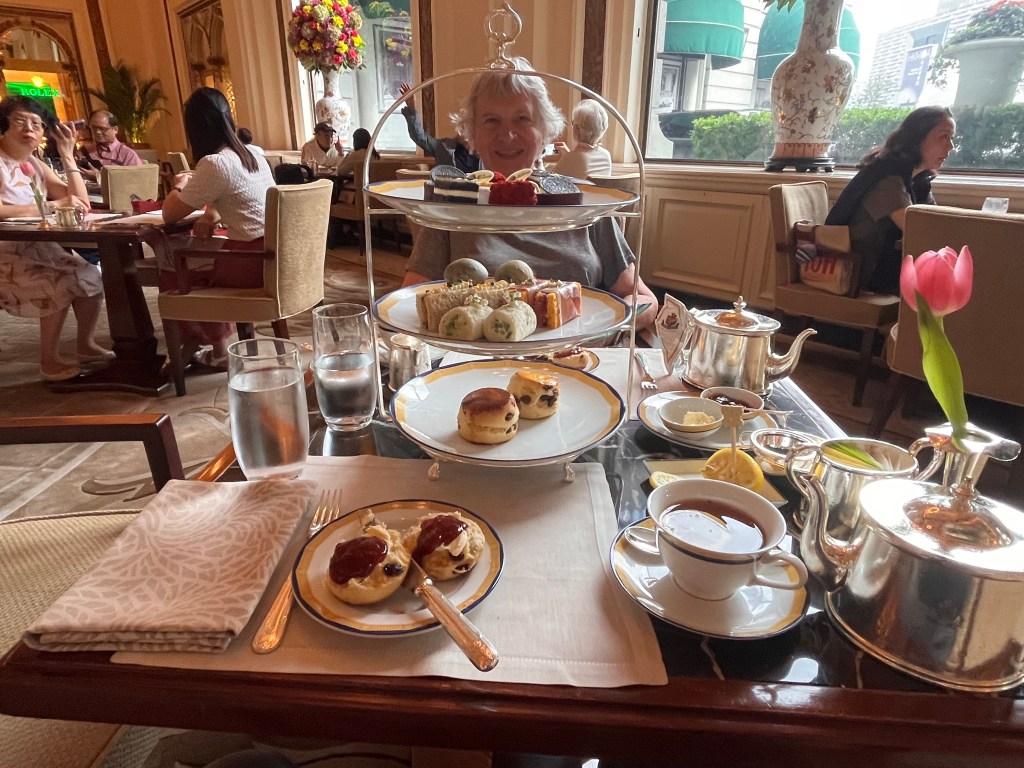
Down the steep steps to the Star Ferry terminal to ride over to the mainland for arvo high tea at the Peninsula. Pushing our way past the glitterati who had arrived via Rolls Limo from their first class or charter fight jet with an attendant truckload of shopping and frocks, we settled in for a pleasant afternoon.

I thought “I can’t possibly eat all of that!” Sweetiepie suggested that I might leave some for her. We had expected the gentle sound of a string quartet from the musician’s gallery. However, we hadn’t anticipated the drum kit, skulking behind the quartet, that definitely had lots of mojo and dingdooram. All in all, delightfully memorable.

Off to Japan tomorrow. 

Posted in Asia | Tagged , , | 2 Comments

Alaska – Gold on the water

In the olden days, gold was to be found in the hills. Today it is scattered on the water, from the pockets of thousands upon thousands of tourists. Harvested with clinical efficiency by the tour and cruise companies. What a marvellous life, but certainly devoid of a free lunch. Or free wifi.

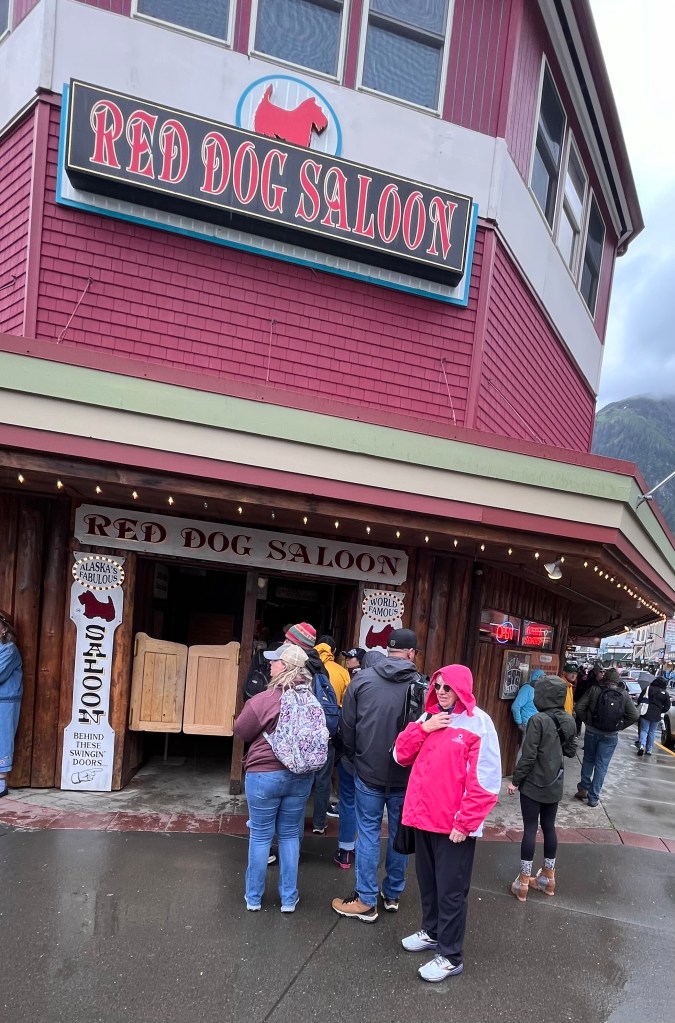
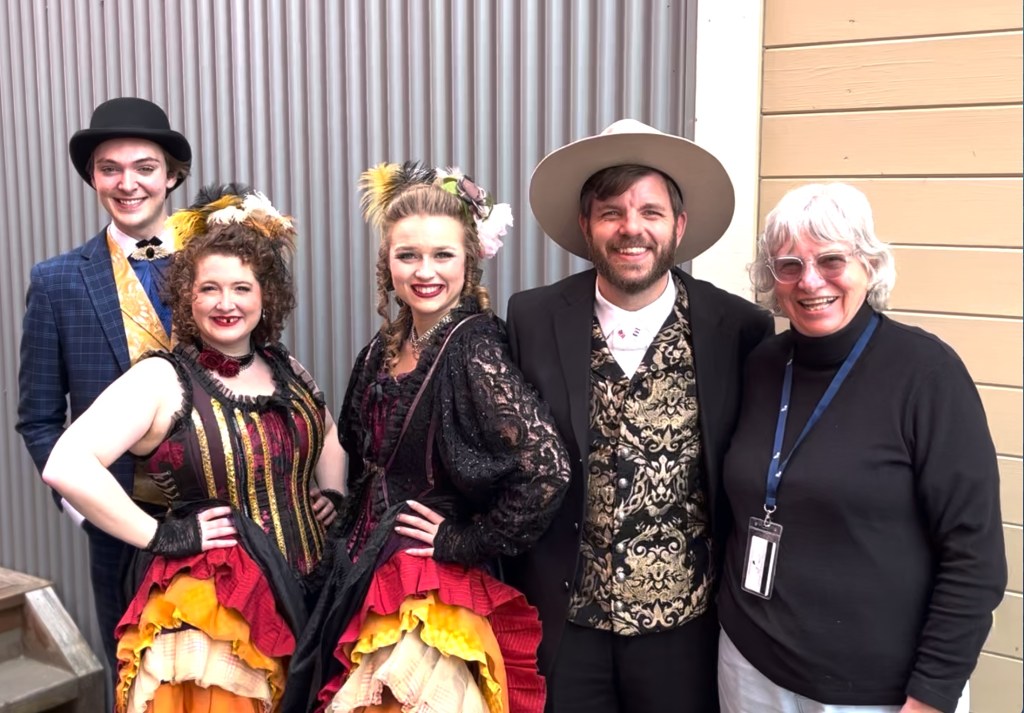
At Juneau, four cruise ships discharge about 8000 tourists ashore. The horde of customers of the infamous Red Dog Saloon spills out on to the street, along with the gravel voiced singing of the piano player. No hope of access to a shot of their signature poison as recommended by Don Lymer. Great recreation of the gold rush. Pity about us tourists.

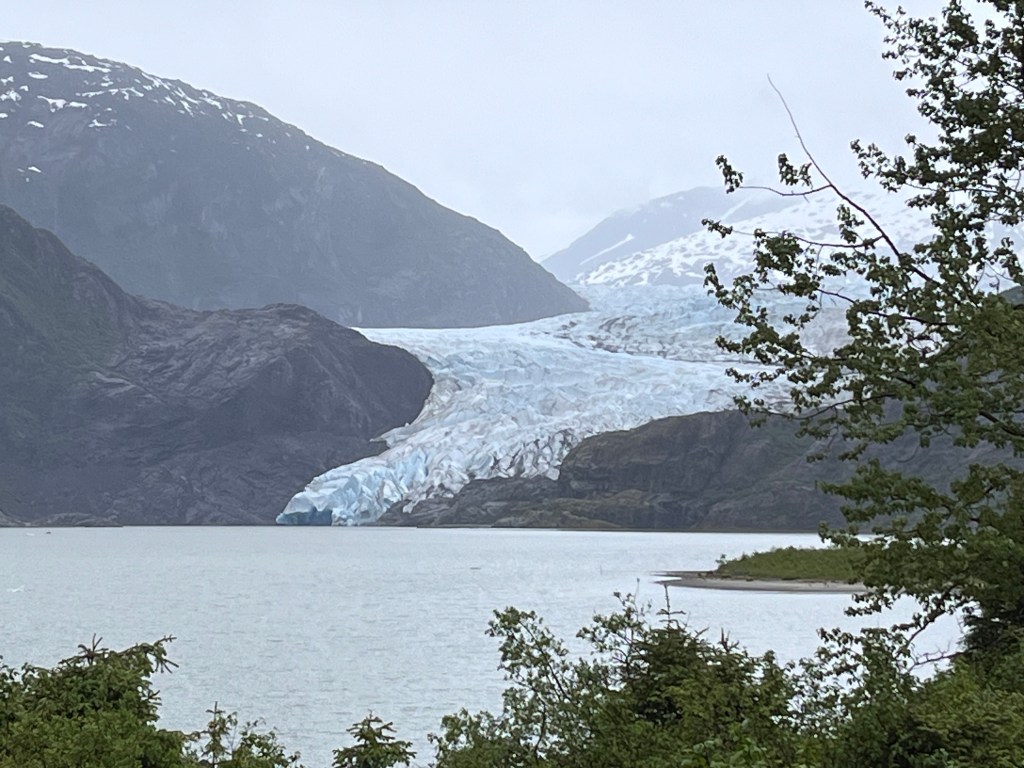
The Mendenhall Glacier is only about 20 km from downtown Juneau. Now but a shadow of its former majesty, this glacier will almost certainly have completely disappeared by the year 2050. After all, we are in the closing stages of the current ice age. Us humans seem to be hastening the process. In the year 1934, the glacier came right down to the vantage point of this photo. We could have touched the ice form here.

Following the humiliating defeat of the Russians in the Crimean war, their cunning plan was to sell Alaska to the Americans in 1867 for as little as $7 million, hoping that this sweetheart deal would distance the Americans from the Brits. Thirty years on, Skagway was the gateway to the Klondike gold rush for many of the 100,000 prospectors. Much later, in the 1980’s things were so quiet in Skagway that they didn’t even have a McDonalds restaurant. So, when McDonald’s came to Juneau, way down South, Mac fever knew no bounds. 700 Skagwegians banded together to place an order for 150 big Macs, 50 quarter pounders and 200 large fries. The order was flown North from Juneau by Skagway Air. Welcomed by the Skagway High school band trying to play Old McDonald had a farm”.

Years later, Skagway was to spend $14 million on a new fire station, twice the buying price for the whole of Alaska. Today in Skagway, “The Days of ’98 Show” is still running after more than a hundred years. Embellishes the true story of the fatal shoot out between bad guy Soapy Smith and good guy Frank Reid who bled to death but has the most imposing tombstone in the cemetery.

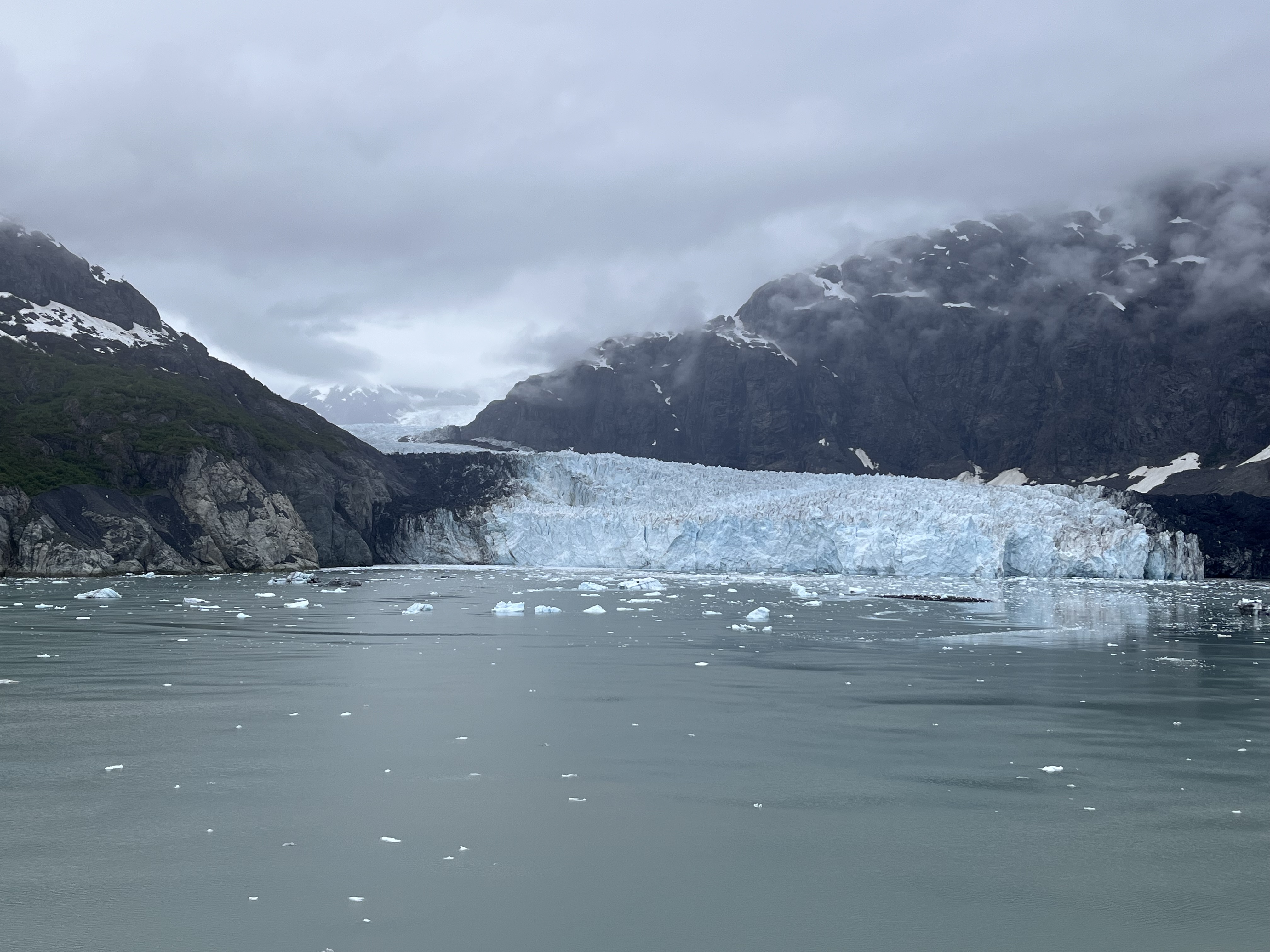
One of the highlights of the whole trip. Absolutely no chance of walking on this one. Had the rare treat of seeing a couple of calvings. As with lake Louise, the perspective is deceptive. Margerie glacier is about a mile across and a few hundred feet high where it enters the water. The thunder from the calving on the mucky left side of the glacier took quite a few seconds to arrive after the splash.

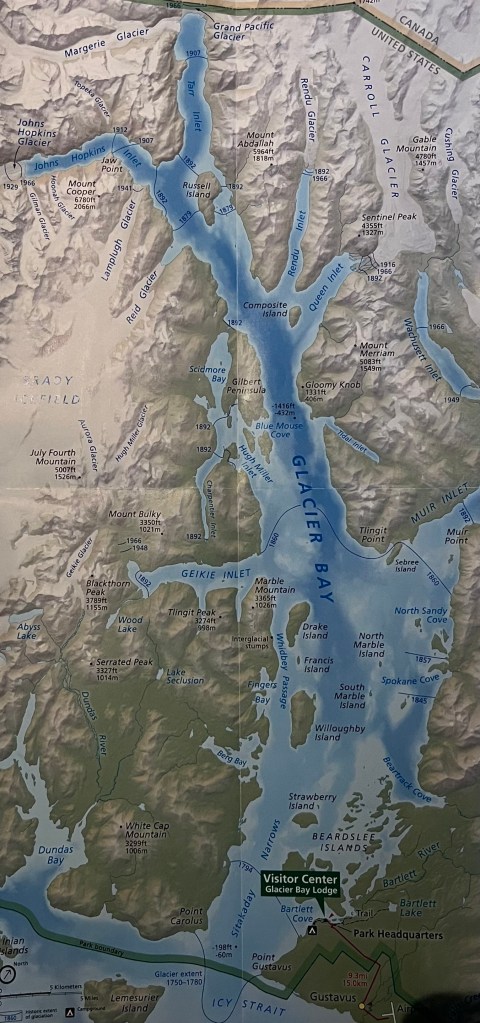
This is a map of Glacier Bay. Today the only two significant glaciers draining into the bay are The Lamplugh and The Margerie. Both at the top end of the map. In the year 1780 the whole of glacier bay was one big glacier. By 1860 permanent ice had receded to half way up the bay. The remains, along with most of the Arctic ice are disappearing fast. Catch it while you can.

.

Such is the spectacle that Sweetiepie claimed to be suffering a sort of Stendahlismo sensory overload from the panoramas of sea, sky, snow, glaciers, islands, whales and sea eagles. All on such a bright shiny summers day. A particular treat, as the weather is commonly cold, wet and fog.

Finally, a boat trip to check out the old salmon cannery and go catching crabs. For lunch. Shortly after the U.S. purchased Alaska in 1867 Charles Baranovich, a Yugoslav immigrant married the daughter of Chief Skowl and set up a salmon saltery. Others followed and by 1888 at the height of the first salmon boom there were 37 canneries in Alaska and dozens more in British Columbia. Today we are just interested in the crabs.

Sweetiepie sending a crab back home

Posted in category, USA | 3 Comments

Whistling in the fog

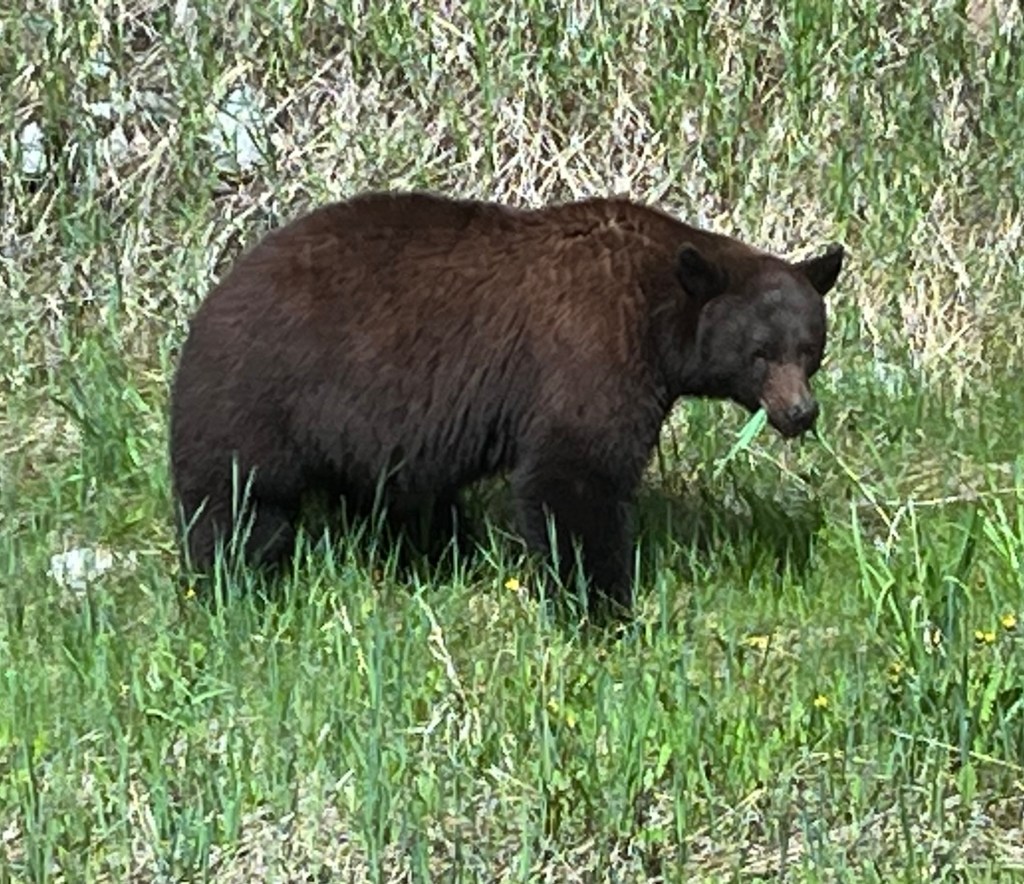
It’s not always foggy in Whistler, sometimes it also snows. There will be stunning vistas on other days, but for the present we are happy to see interesting stuff looming out of the fog. An adult black bear was grazing below our bedroom window, much in the manner of a cow turning grass into milk. There is buffalo cheese and even a Brie like camel cheese. Would there be a niche market for Grizzly bear yoghurt? As the Grizzlies are a threatened species, that might just be their saviour.

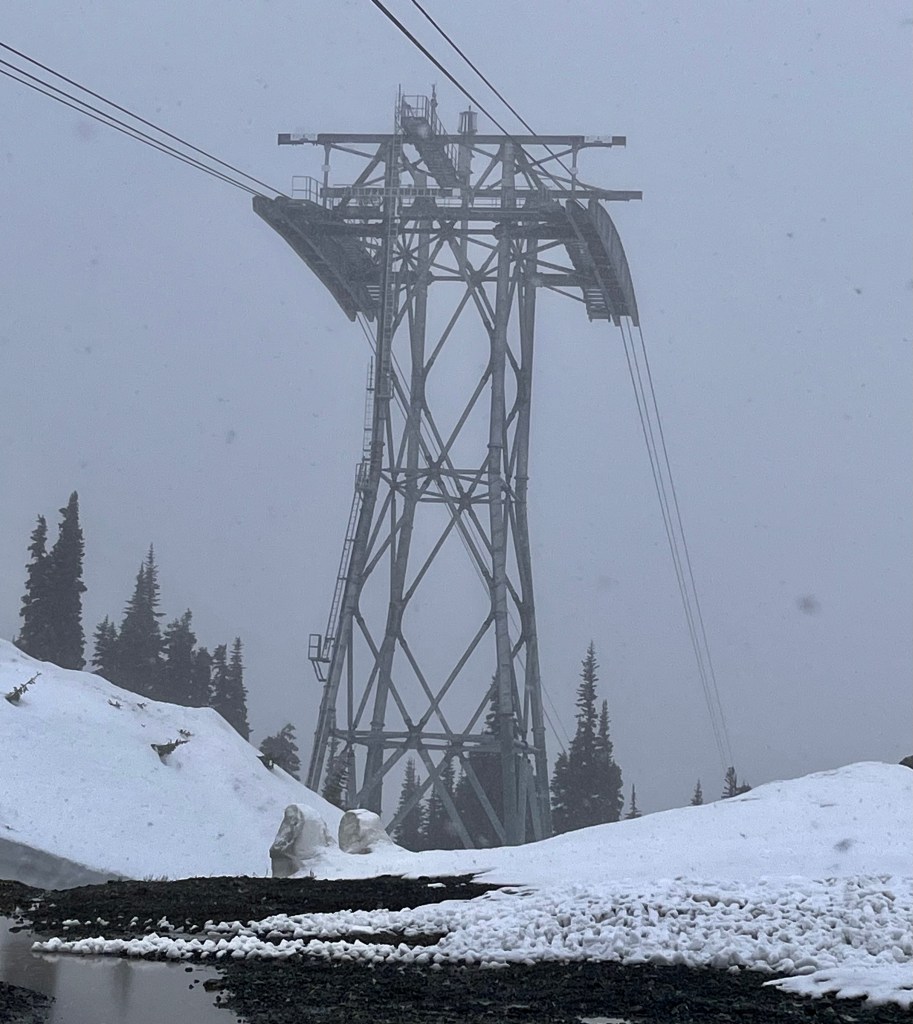
On a tour around the hills in a jeep, left overs of the 2010 winter Olympic games peeped out of the fog. The downhill track for Bobsleigh, Skeleton and Luge is the fastest in the world. After the finishing line, the dare devils traveling at about 160 kph go into a hairpin bent and head uphill to wash off speed. A luge competition will be held in the coming winter. Above the town of Whistler there are twin peaks, Whistler and Mt Blackcomb, joined by the Peak 2 Peak gondola which is the longest at 4.4 km and highest lift in the world. 1430 feet above the valley floor.

The Whistler alpine park has action the year around. Plenty of snow about now, but not in skiable quantities. Todays visitors are gondola riders hoping for a break in the fog, and mountain bikers toting their bikes up through the fog on a chairlift. Not an e-bike in sight, Breeze Bandits. For the local bikers there is a weekly comp, but there are many international standard events. At the change of seasons, for a couple of weeks one mountain is set up for skiing, the other for mountain biking. Odd mix of athletes in the village.

Not surprising, that in a place called the Rockies, rock is so widely used as a sculptural medium. Wild life is often featured. The black bear, which is sometimes brown, is far and away the most popular subject. Possibly due to the cuddly nature of its young. In appearance. Also because of the connection with Teddy, the famous Louisiana Black Bear, who, a hundred years ago was the inspiration for the ubiquitous soft toy. Some artists do minimal chipping on a large ovoid rock to suggest something that could be a hibernating bear. Some of the most handsome bears were carved from African sandstone. My favourite was a bear happily standing on one foot with the other limbs spread akimbo.

In the foyer of our Whistler hotel was a large marble Möbius Strip – a one-sided surface that can be constructed by affixing the ends of a rectangular strip after first having given one of the ends a one-half twist. Interesting properties, such as having only one side and remaining in one piece when split down the middle. Also at the whistler hotel – check out the jovial sommelier.

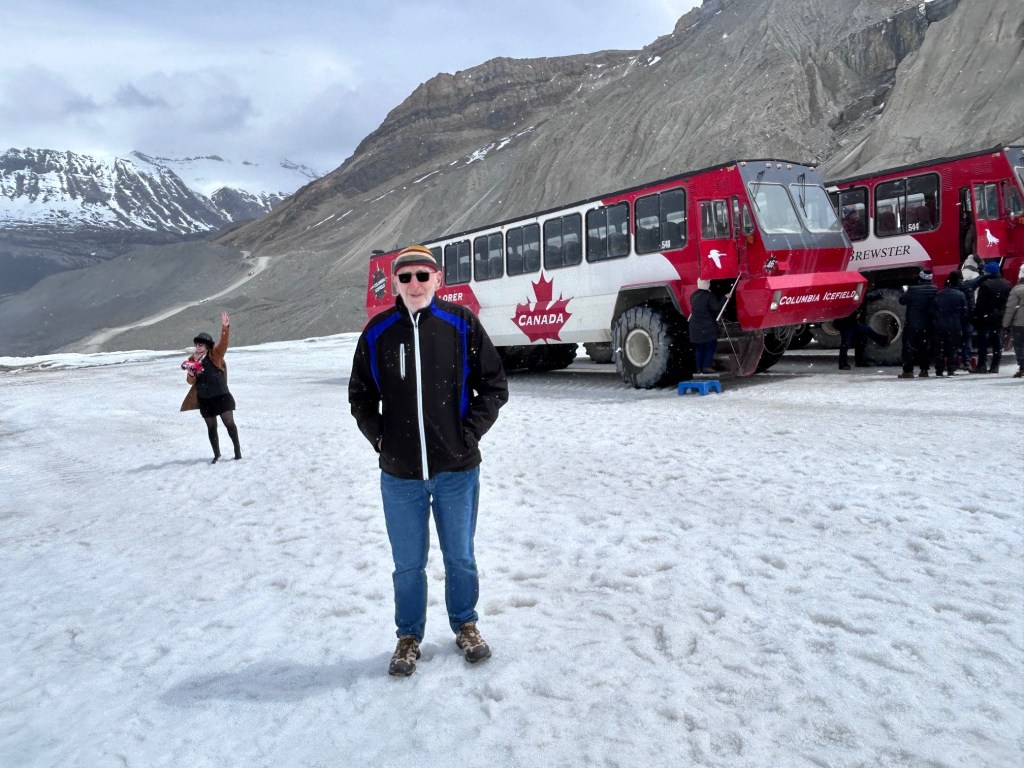
Near Jasper the Columbia ice field is actually a permanently frozen lake. The outlet or overflow from the lake happens to be the Athabasca Glacier, the beginnings of the mighty Athabasca river which flows all the way north to Alaska.

There is a fleet of 22 huge Ice Explorer vehicles that actually transport tourists out on to the ice field. The only 2 other Ice Explorers are located permanently on the Antarctic. Originally with caterpillar tracks, they now have big squashy tyres to avoid damaging the surface, which today was about 5 cm of snow over the ice.

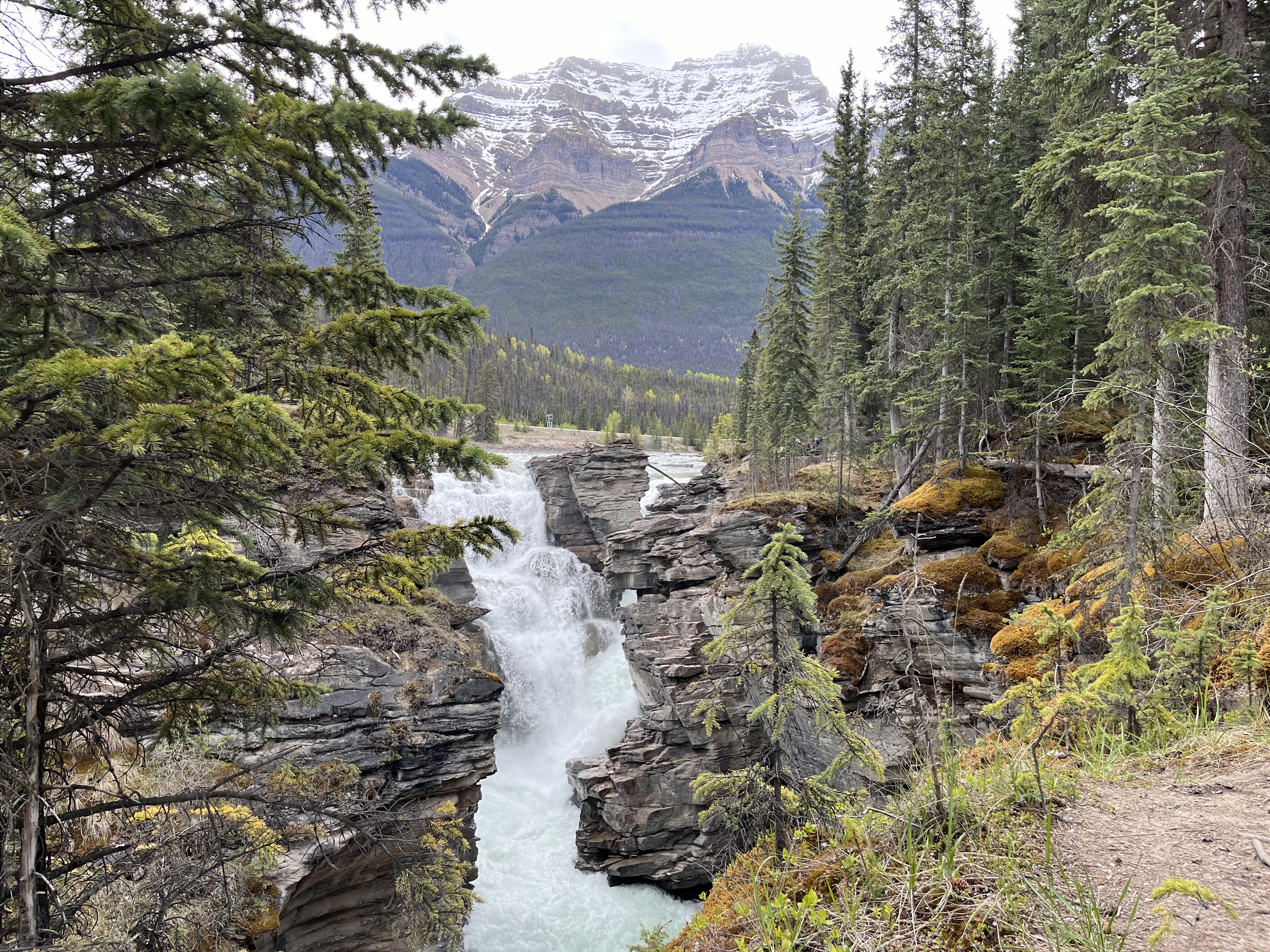
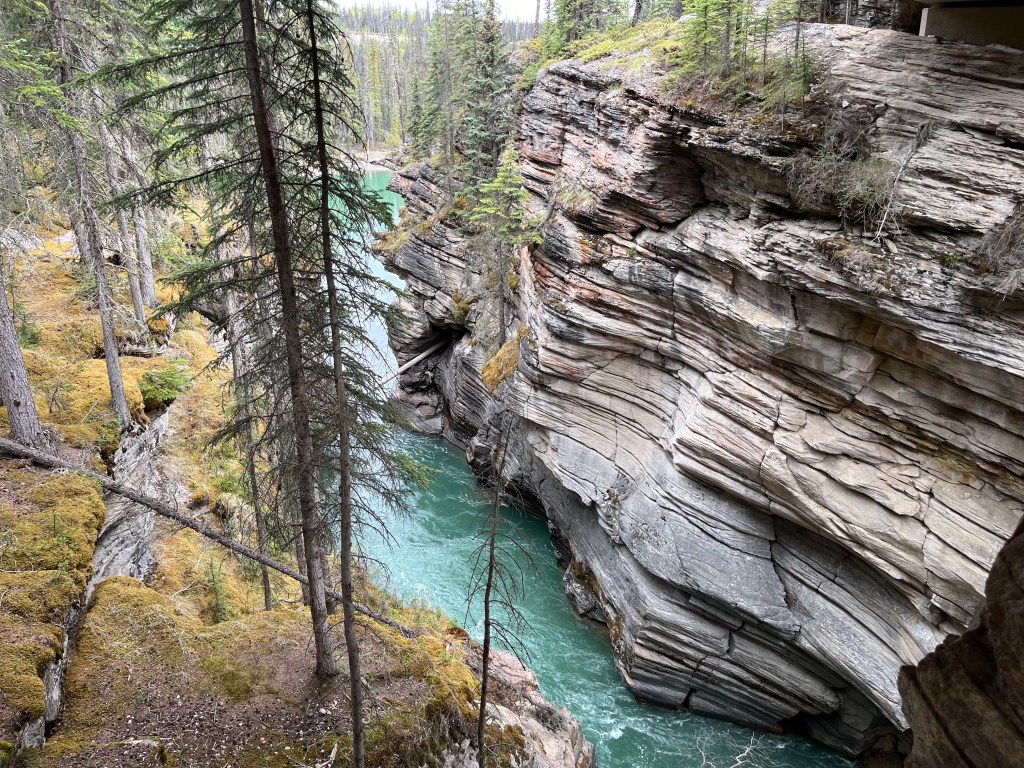
Further down the Athabasca, a lake drains into the spectacular Athabasca waterfall. This pic graphically shows what millions of years of relentless water pressure can do, leading to a bit of rafting.

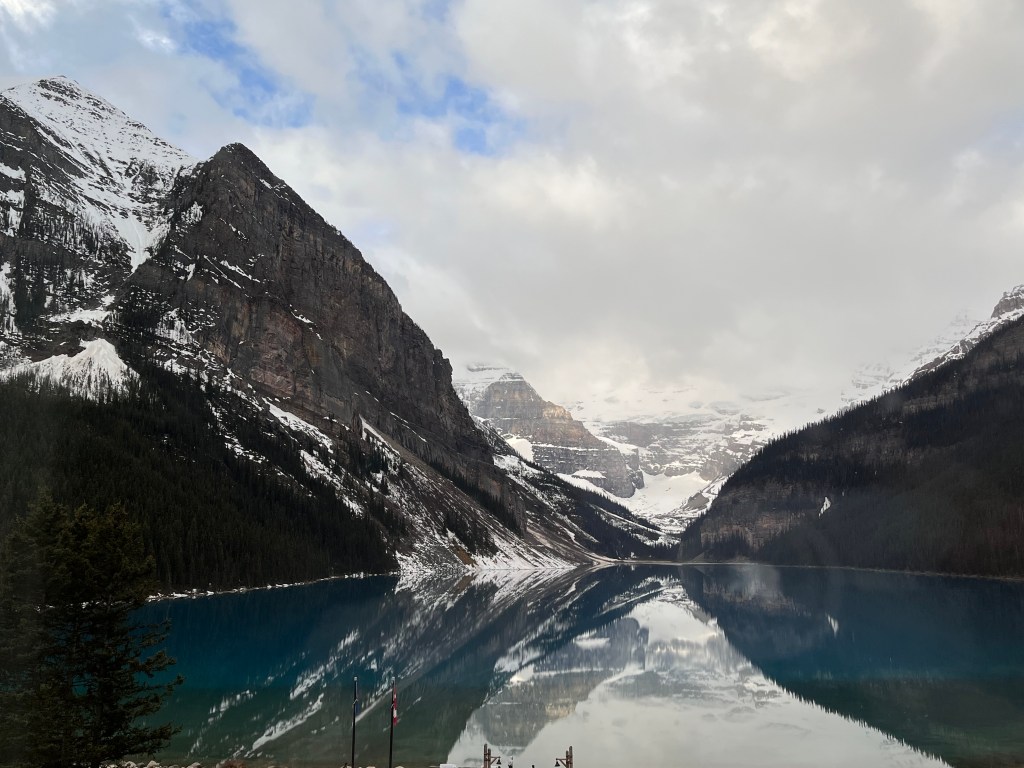
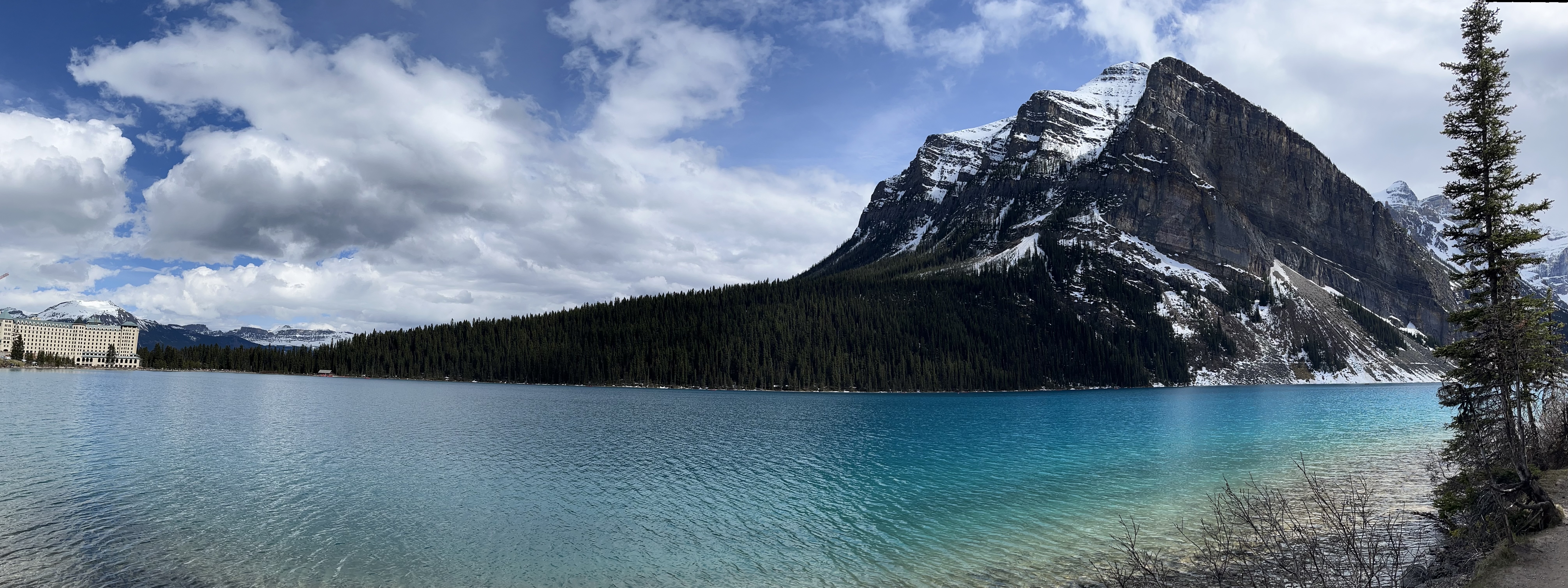
Blessed with idyllic weather on one of our days at Lake Louise, managed to capture the rare treat of the mountains reflected in the lake. From that pic, the lake looks as wide as it is long. Another perspective, from about a quarter of the way along the bank looking back at the chalet reveals that it is about 4 km long and only a few hundred metres across.

Everything is joined up. The year was 1638. George III had yet to lose the American colony to independence. Sweden was at the height of its limited military power and Queen Christina sensed that the time might be right for a colonial move to the americas, in particular to what is now called Canada to establish New Sweden. Sent a few boatloads of Swedes and Fins to set up shop. They were spectacularly good at building log cabins but failed dismally at building a new nation. After 20 years of ineffective effort, they hand balled the project to the Dutch, who did no better and they left the region to the Brits. At that time the land was more lawless than Wild West America, with added Grizzly bears. Precisely the sort of place for bootleggers to set up camp. And they did. For many years.

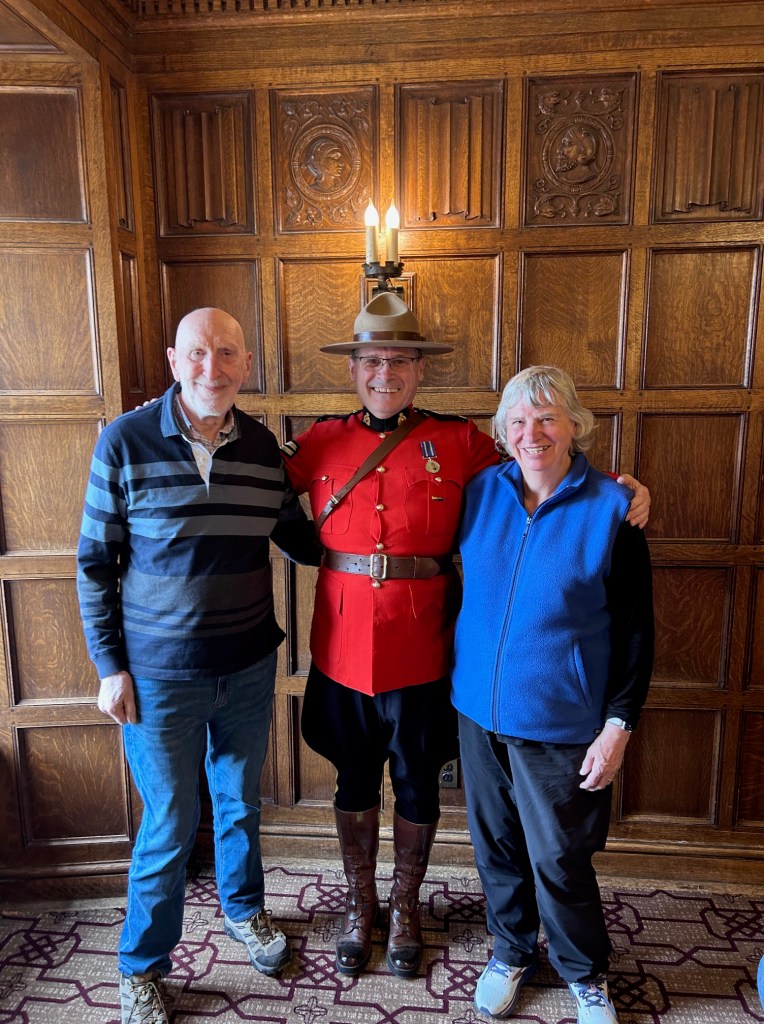
So the British Canadians, sensing attractive revenue possibilities, sent a band of a hundred or so horse riding troopers wearing wide brimmed hats, jodhpurs and red coats (red was apparently the cheapest dye, and the nicer colours were already taken by other nations) to establish law, order and taxation. According to our favourite Mountie, the bootleggers had already moved on. But the Mounties were established, later to become the Royal Canadian Mounted Police. They eventually found that motor vehicles were cheaper to maintain than horses. But they keep the horses and the red tunics for ceremonial occasions.

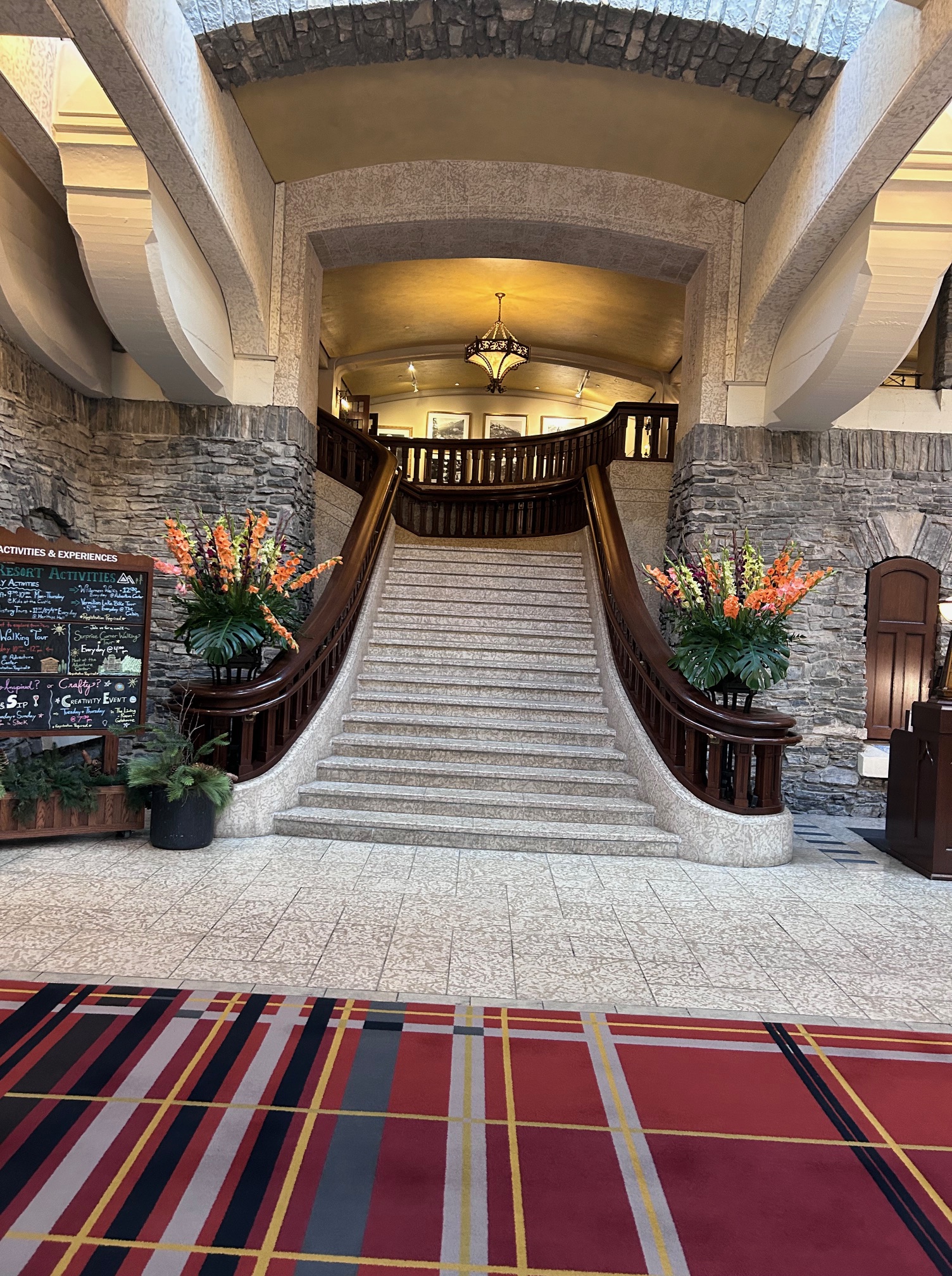
The Banff Springs Hotel is truly grand. Built in the 1920’s by Canadian Railways to provide tourists with a wilderness experience in opulent surroundings, it continues to fill that role. Following the dictum that nothing exceeds like excess, the food is truly grand. Quality superb, but the quantity obscenely decadent. For all but the most gluttonous one third of the offering on the plate is more than enough. The wait staff on their own initiative attractively package the remains in a neat carry bag with wooden cutlery. Bloated with the one third of the magnificent milk fed veal, still couldn’t resist Affogato.  The Banff version is made by filling a hemispherical cup with ice cream, scoop out a hollow in the ice cream and pour in espresso and liqueur. Whatever. The important thing is the Frangelico.

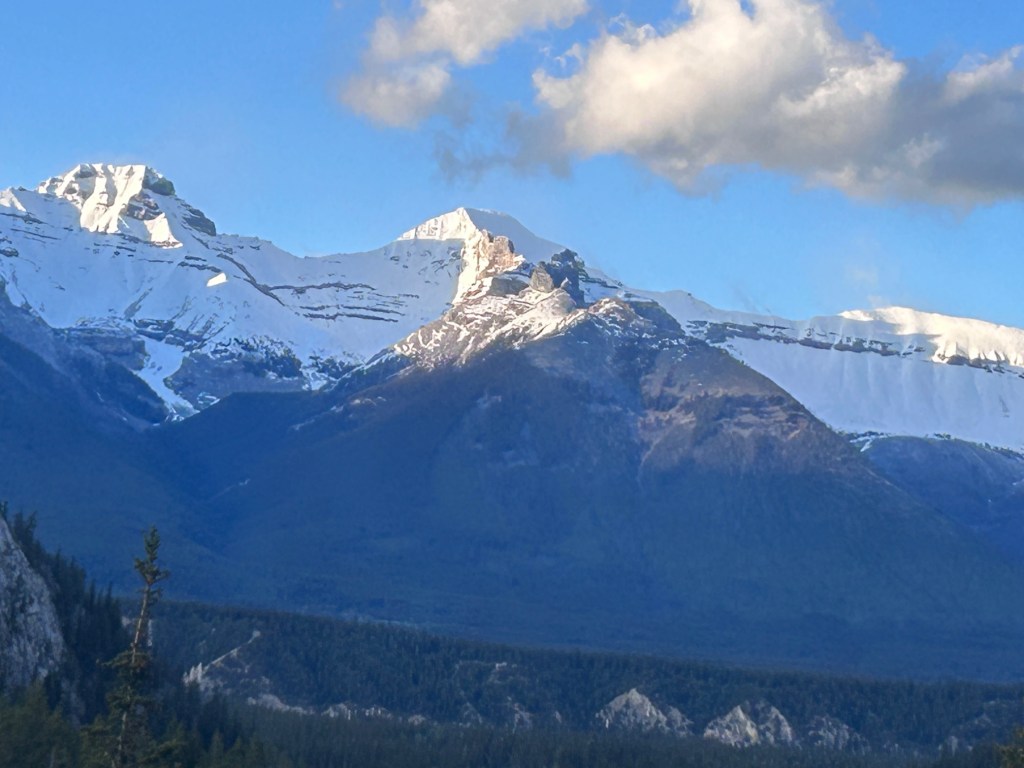
The Banff Gondola takes off from the foot hills above Banff up to the peak, quickly into the classic Rockies pointy mountains. Snowing when we step out at the top, but spectacular through the snow and scudding fog. There is a board walk down and up to the next peak which is a bit higher. But due to the snow blowing thickly up the valley and over the gap we chickened out

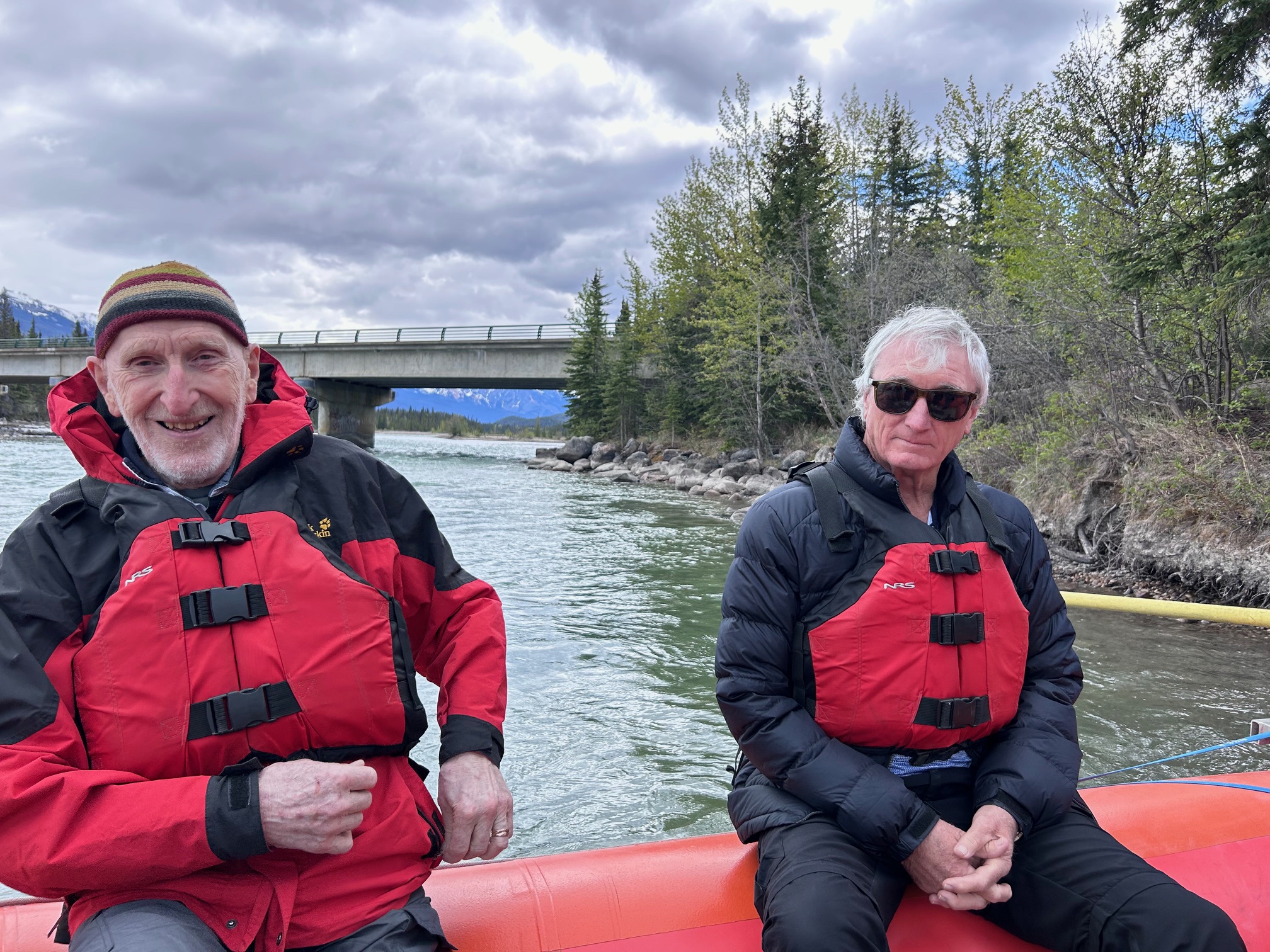
A big thank you to Randy and Shay, our driver and tour director. Randy admits to being a composite lovable rogue, naughty boy and cowboy. Kept us safe with impeccable driving and limitless hand sanitiser, happy with his singing, and pausing for wild life photo ops. Shay is a super efficient and explosive happiness bomb. A bundle of wild energy. “Oh look! our first bear! this is unBEARable”. and “This is so exciting, I can’t stand it!” however, always in control and a step ahead of the game – giving seamless bliss to the punters

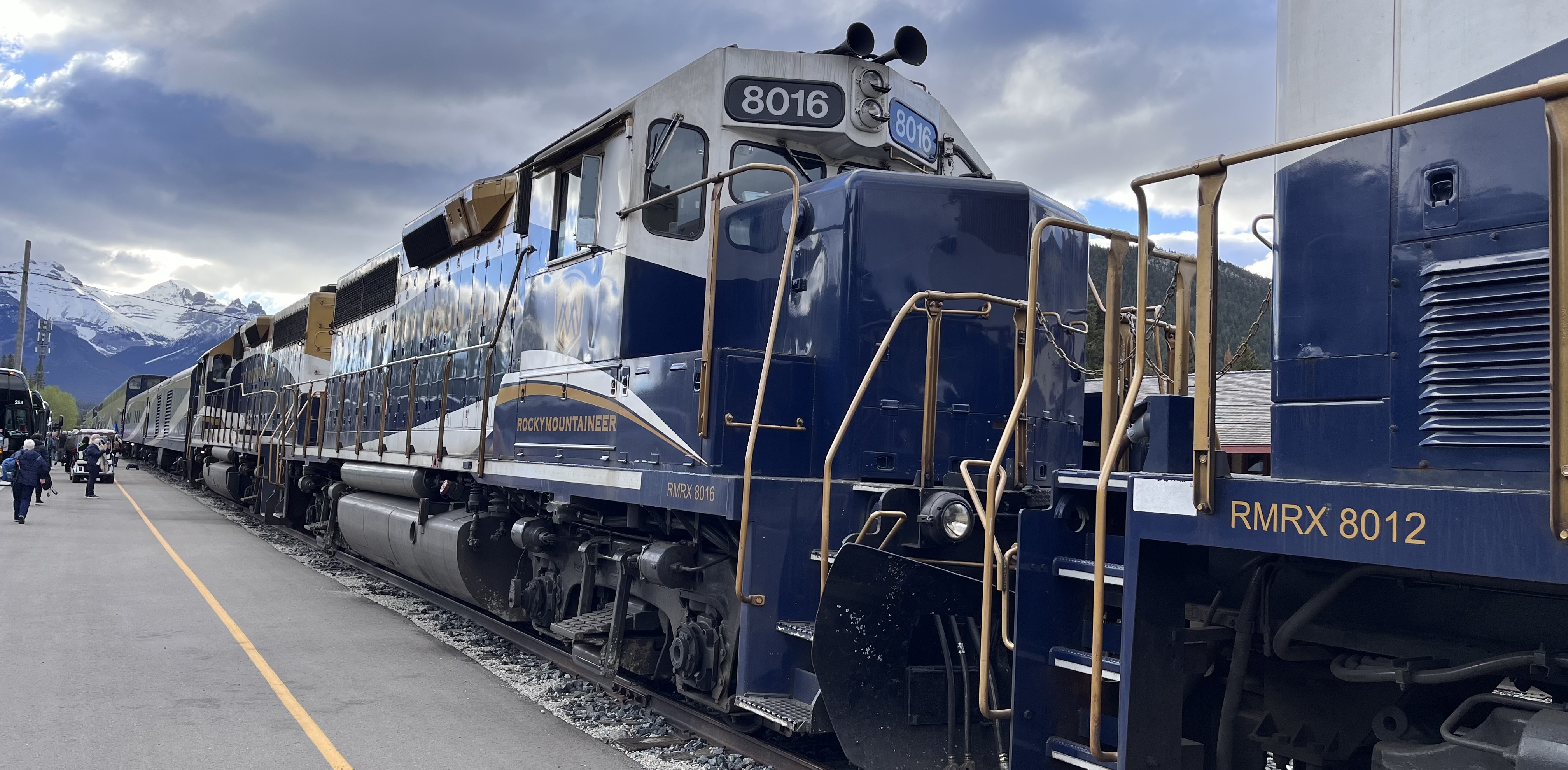
The popular two day Rocky Mountaineer trip from Banff to Vancouver is a recent chapter in the Canadian Pacific Railroad story. No shortage of massive pointy mountains. Photography near impossible because of the pine trees flying past and interfering with composition. Also, having to have your phone/camera directly onto the window to avoid reflections doesn’t help. However, for the mountains, the food, the people – just brilliant. Starting time for the voyage is accurate, almost to the minute. But the time of arrival at any destination is governed by the unpredictable movements of very very long trains of up to 200 carriages of coal and shipping containers that have locomotives a the start, the middle and the end of the train. On the final leg in to Vancouver there was gridlock at the bridge. Accustomed to this sort of thing on a Friday afternoon. The smiling cabin chief: “The chef will rustle up some food some time soon and we’ll hand out blankets if it gets to bed time”. Scenery is great, comfy seats, good company, choice of cocktails, bottomless glass of 12 yo single malt. Who needs to be in a hotel room?


Check out mountie horses on YouTube.

See you next week on the cruise.

Posted in Canada, category | Tagged , , | 2 Comments

Land of the Lumberjacks

The west coast of Canada and Alaska have long been popular destinations for Australians. Our friends all chorus “just like New Zealand, but on steroids”.  For me, that had to be a come on, but Sweetiepie had visited Vancouver 50 years ago, and she had stories to tell. We began in the relatively little city of Victoria on Vancouver Island, with its colourful shops and quaint cafes. Oddly enough, Victoria is the capital of British Columbia. Brits on the west and French on the east before the railway joined them. Ignoring the jetlag, we made for the harbour, “Where are you going?” said the driver of the cute little yellow water taxi. “May we go for a ride?” All smiles. “Twenty bucks for half an hour OK?” And we were away, on an impromptu journey through the maritime action of flying boats and visiting yachts lining up for the 79th running of the Swiftsure International Yacht Race. (We were asleep, but it happened on Saturday and Sunday), past the clever tilting bridge that allows access for the tall ships that provide hands-on experience for adventurous teenagers. Skirting around the watery runway for the flying boats. To the docking area for cruise ships, as many as four at a time, simultaneously allowing ashore up to ten thousand people.

Happened on the famous Fiamo Italian Kitchen just on meal time. Dark and mysterious, but really humming. The pasta, a gourmet treat. When it came time for coffee, caffeine tragic that I am,  I couldn’t help but ask the waitress. “As you have so many Australian visitors, do you make Magic?” The Barista, Evelyn, hadn’t heard of the quirky Australian brew, but she was eager to have a go. The result was so good that I promised to spread the word of her considerable skill on this little blog. So Hello again Evelyn and thank you so much. Long live the Fiamo!

.

On Mermaid Wharf just down the way from Fiamo, there is a multimedia sculpture called Four Winds. Commissioned by Amadon Group, it was a year in the making for artist IceBear. 

The four winds are messengers, they bring predictions of spring, with the scent of new flowers, but also carry warnings, not just fires and toxic spills, but environmental change. Even with their backs to the winds here, each of those winds is telling us that change is coming , sooner than we think.

Winds with backs to the wind??   But you get the idea.

Current controversy in Canada over ribbon skirts for the Mounties. Not to be overshadowed by images associated with “I’m a lumberjack and I’m OK”, women have served in the Mounties for over a hundred years. Ribbon skirts are worn by first nations women on ceremonious occasions. The Mounties recently gave permission for ribbon skirts to be worn as part of Mounties ceremonial uniform. Some see this as a mark of reconciliation, while others claim it shows insensitivity to the sometimes brutal part that the Mounties played in the early days of colonisation. On going expressions of intolerance of the “Other” around the world.

The Butchart Gardens

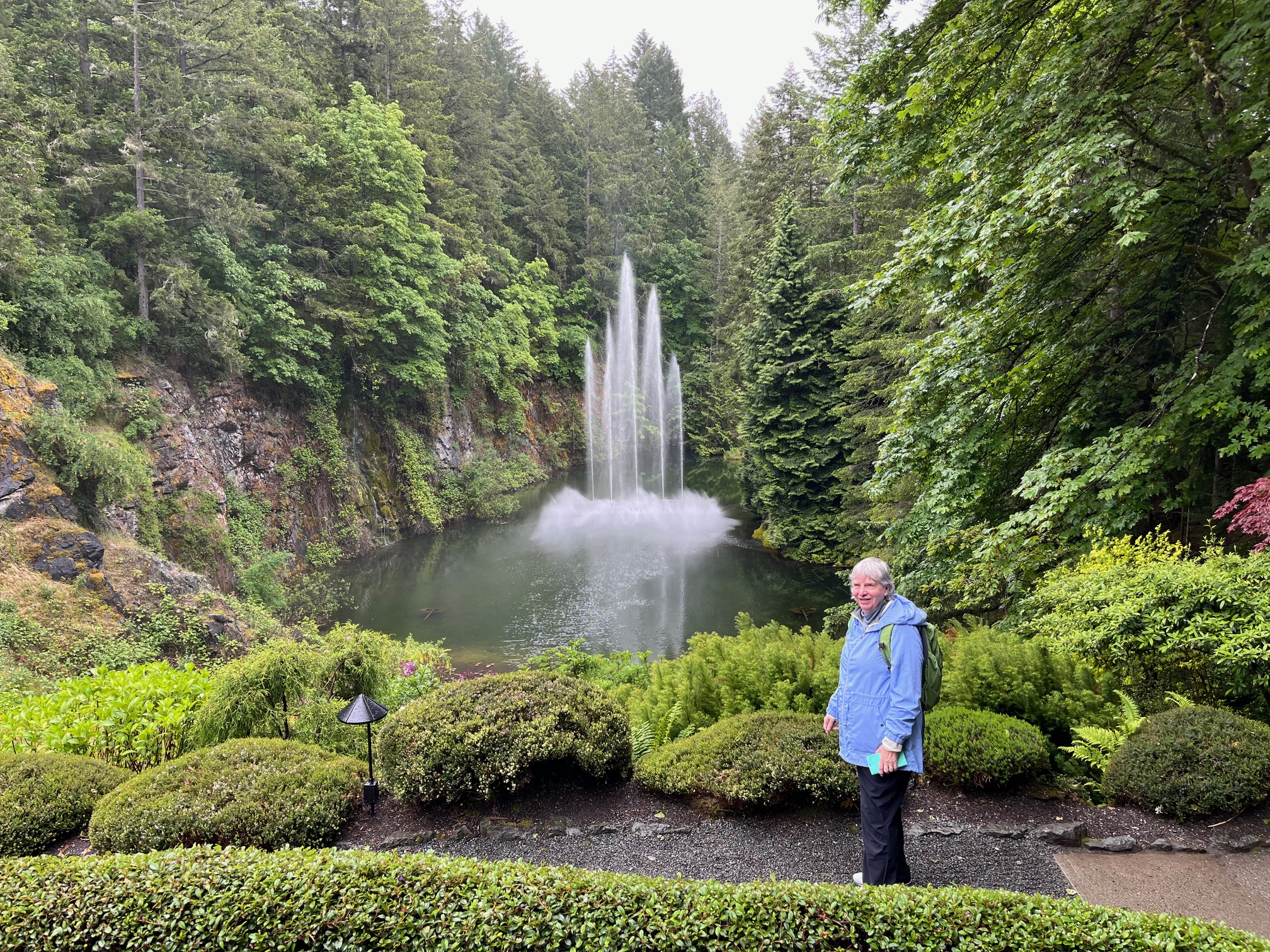
Early last century Robert Butchart had a successful Portland Cement works near Victoria B.C. using limestone from a nearby quarry. When the exhausted quarry was a vast, ugly, empty hole in the ground, Robert’s wife Jennie had the imagination, energy and resources to turn the hole into a magnificent garden. In the early days, Jennie swung from a bosun’s chair to plant ivy in the crevices of the stark quarry walls. A hundred and twenty years on, the work continues with a regular work force of seventy gardeners. The gardens include Sunken Garden, Rose Garden, Italian Garden, Piazza, and Mediterranean Garden. But the most impressive is the non-traditional Japanese Garden which began in 1906 with the expert assistance of Japanese landscaper Isaburo Kishida. For breakfast at the gardens we were surrounded by exotic orchids growing in quietly unassuming Japanese pots. Justifiably high on the bucket list for anyone who has seen everything else.

Posted in Canada, category | 10 Comments

Scotland

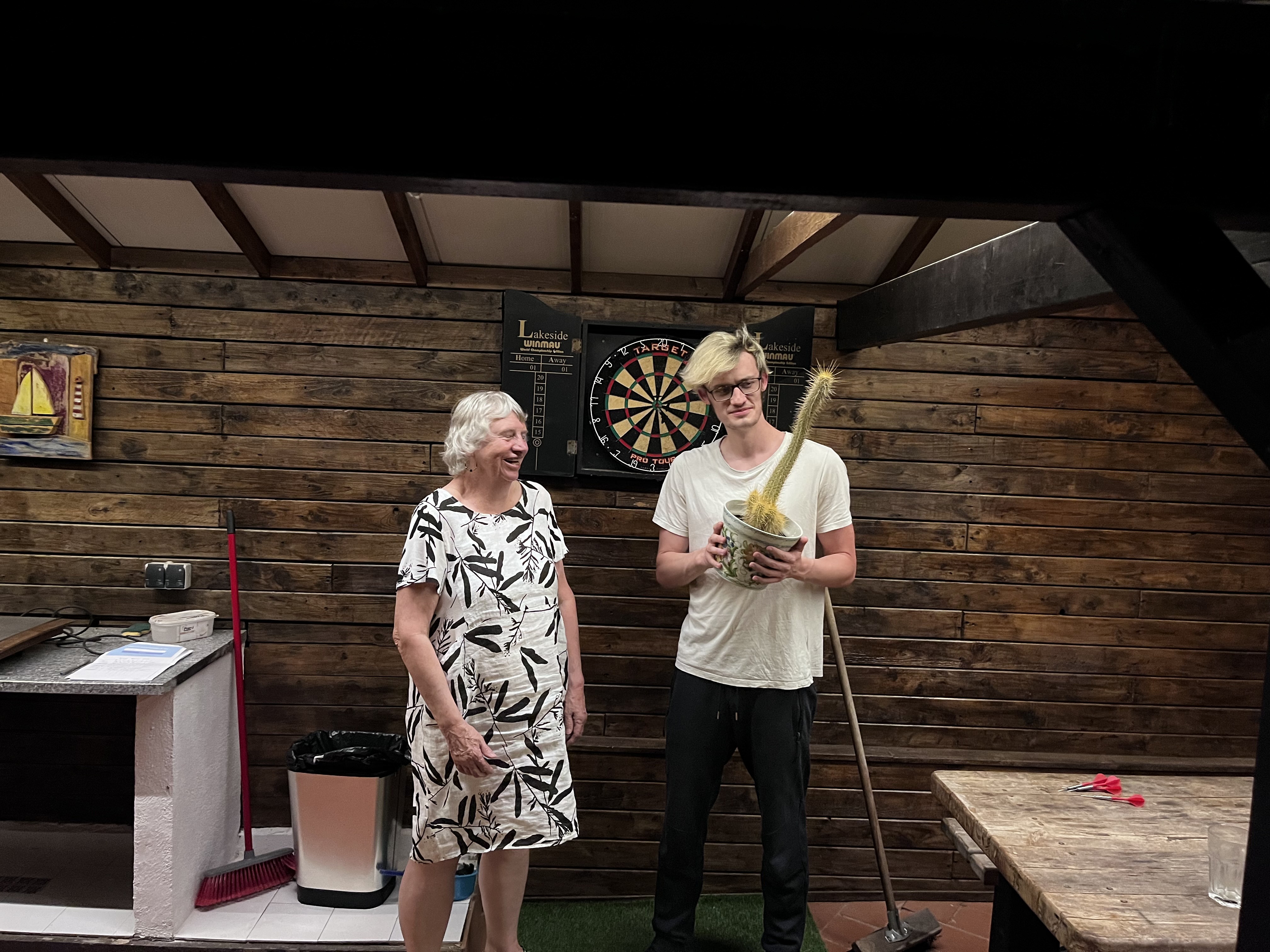
On the last night in portugal, Yunus has won the Darts Murder tournament and is presented with the trophy by Grandma.

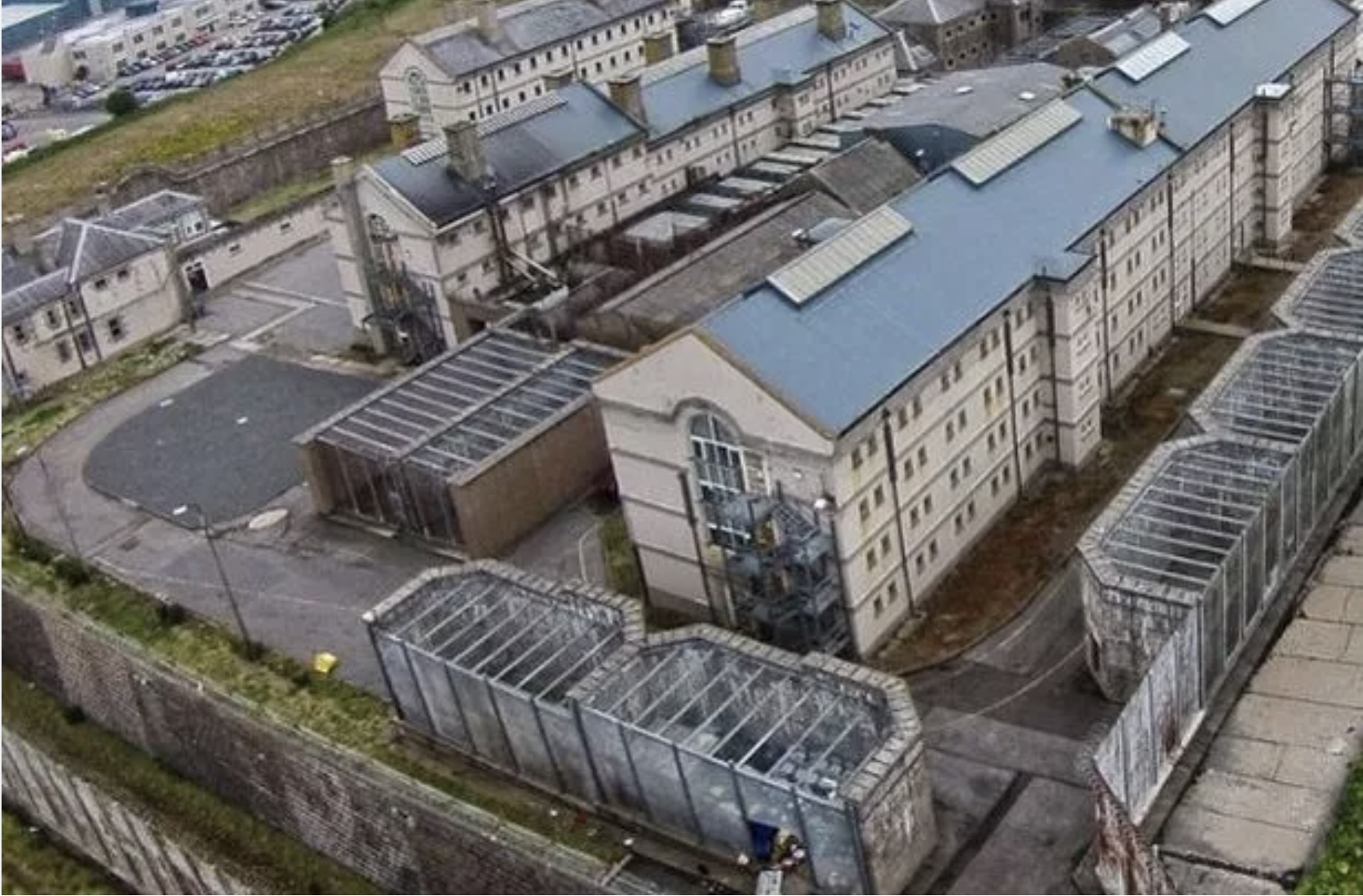
And now to Scotland. Lovely autumnal weather in the north east. Not the bleak rain and misery that was forecast. Peterhead – or P.Heed as the locals say – has been a major fishing port from way back. In the late 19th cent. a prison was built here to house the worst of the dangerous prisoners in Britain. At the time there was a need to improve the harbour by building a more secure sea wall. So daily, the hard labour prisoners were taken by prison train to the quarries on Stirling hill to break granite into sea wall sized portions. Life was hard and there was flogging on the triangle for trouble makers.

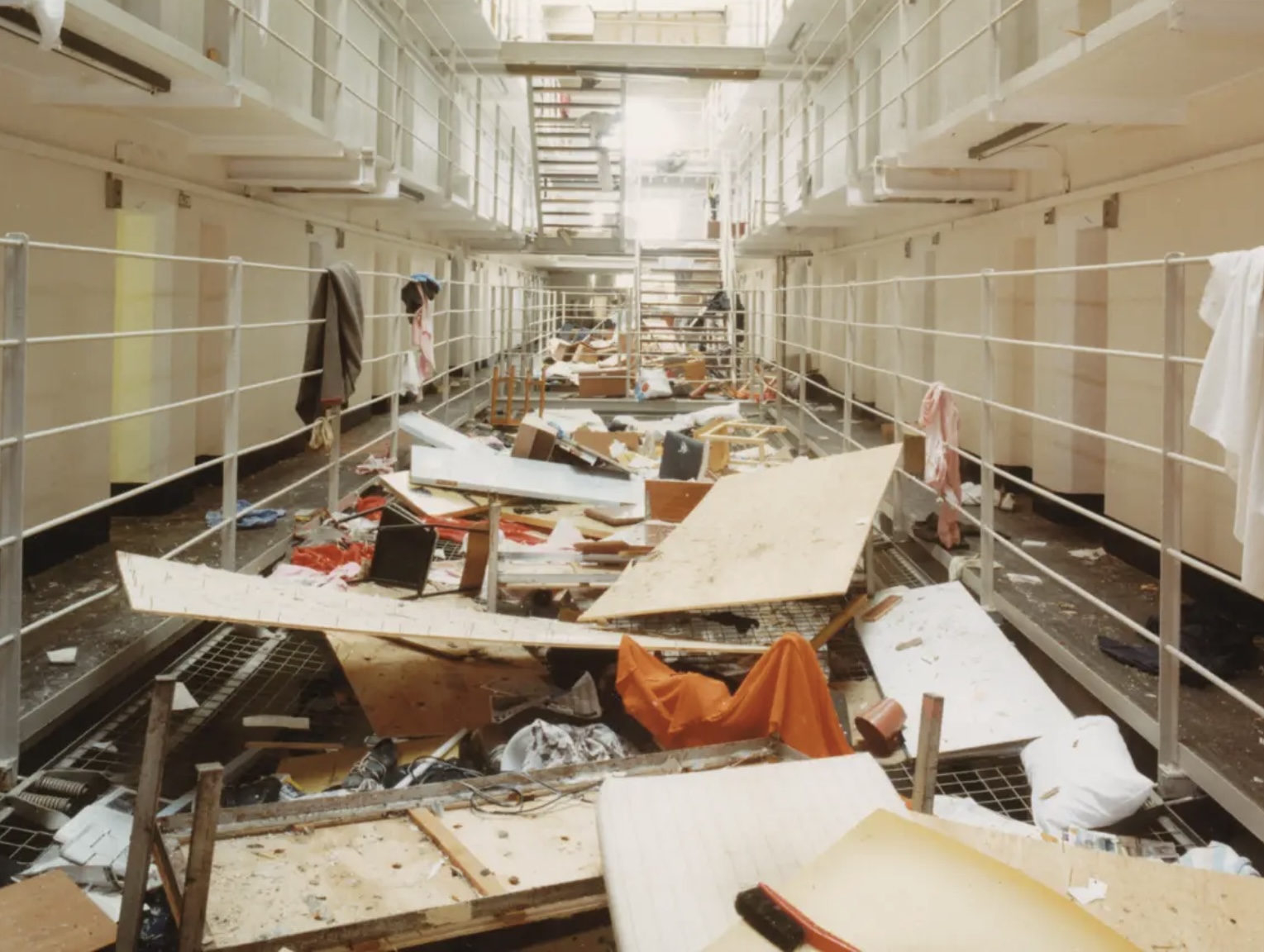
As time went by conditions became softer and in the 1930s corporal punishment was abolished, but conditions in the 3 story cell blocks were still Dickensian in their brutal austerity. Although the prison security was formidable there were escapes. Difficult for the escaper, as the countryside up here can be unforgiving at the best of times. During WWII one of the prisoners was the famous Johnny Ramesky, aka Johnny Ramsay, or Gentle Johnny. He was in for safe breaking. During the war Johnny volunteered to join the army. As safe breakers were needed to open German safes, Johnny was taken to Germany and performed his duties so well that after the war he was given a pardon and became something of a folk hero. He did, however, revert to his chosen profession and continued to do time in Peterhead and elsewhere, escaping HMP Peterhead 5 times, once in 1952. One warder said ‘why don’t we just give him a key?’

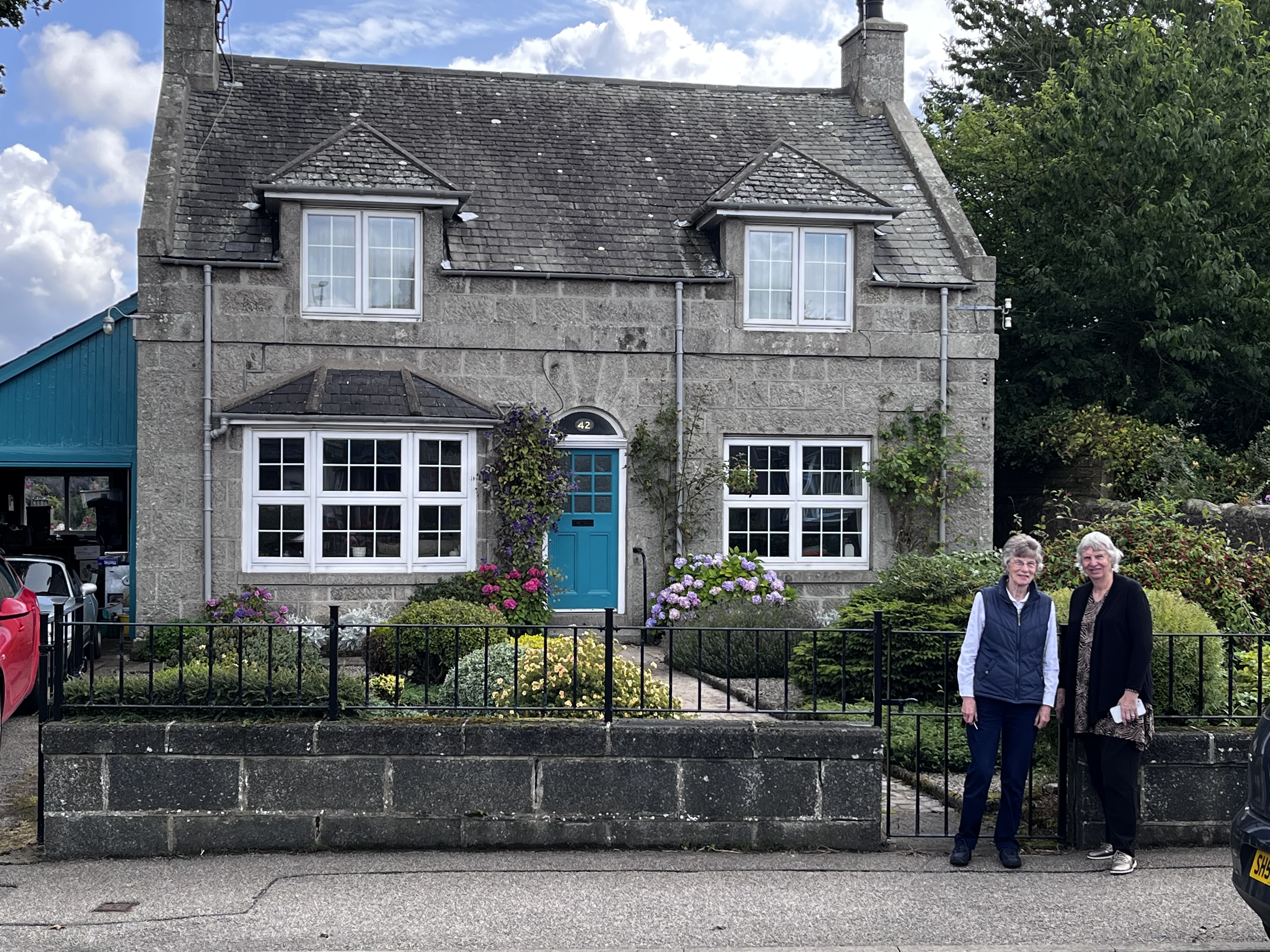
In 1952 Helen’s father Alec was a policeman serving in Stuartfield about 12 miles from Peterhead. Alec, wife Evie, youngsters Helen and Margaret all lived in the house that also doubled as the police station. One cold winters night Alec was called out to help search for an escaped prisoner. Hours later a farmer found the escaper hiding in his barn. Took him to the police station, knocked on the door and left him there. With Alec out in the night and the two young girls sleeping upstairs, Evie took the bedraggled escaper into the house and gave him a bowl of porrige. When Alec arrived home much later he had mixed emotions at finding the escaper. I like to think that the escaper might have been the famous Ramesky. Helen and Margaret assure me – NO. The pic shows Helen and Margaret today in front of what was the old police station in Stuartfield.

Jackie Stuart (not the racing driver) was a prison guard serving at the Peterhead prison for 25 years in the 70s and 80s. In that period there were many violent riots. In one riot Jackie was held hostage on the roof for 4 days, his clothing soaked with lighter fluid. Pic shows some of the 1987 riot. The rescuing SAS had to explode their way in to the prison to release him.

At age about 94 Jackie is still alive, has written a book of his experiences, and enjoys spending time once again at the Peterhead Prison which has now been turned into a museum. He is very popular as a volunteer, colourfully retelling his stories. The museum also houses a restored life boat with records of marine rescues dating back to the 19th century.

OK. After a day at the prison museum followed by a memorable meal of crumbed haddock and tatties, what next? Difficult to imagine that we agreed to rise before dawn to join a mystery 5 day bus tour starting at 5.45 am in the bus terminal at Peterhead. Why and how? Don’t ask. So far so good. Lovely bus, lovely driver, Ewan, and lovely passengers. The incidence of mobility assistance and other issues leads us to feel quite spritely. Rolling down South in the early morning. Not a clue as to the destination. Ewan rattling on with a smokescreen of possibilities. The passengers are thinking Lake District? Yorkshire? Please not Birmingham or Blackpool. On the M6 Evan is teasing us by getting into the turn off lane for Blackpool. At the last second he says “maybe not” and is back on the M6. Home for the next 4 nights is a Georgian hotel north of Bolton – in the forest an hour north of Manchester. Think of a fusion between Fawlty Towers and a group of inexperienced but enthusiastic young people trying to run a hotel. Georgian means 4 poster beds but no air con. Would you believe, they are actually holding a Fawlty Towers weekend sometime soon?

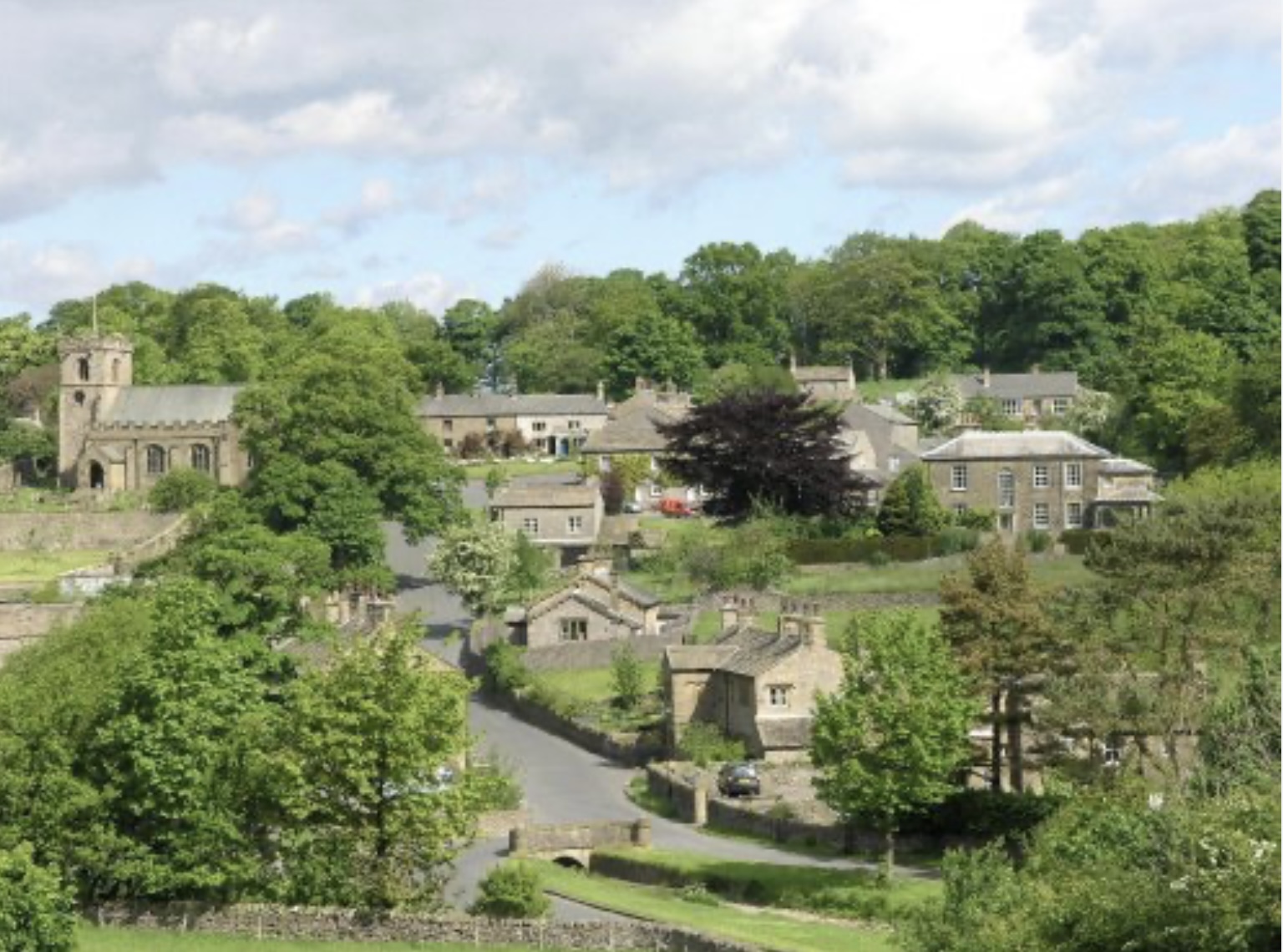
The tour featured some of the interesting smaller old towns left relatively undisturbed by the Industrial Revolution in the North. The most fascinating is Downham. Quaint. No village sign, no street signs, no advertising, no TV antennae, no satellite dishes, a primary school and church but no shops. Downham with a population of about 160 is in the Ribble valley district of Lancashire. Current owner of the village is Ralph Assheton 2nd Baron Clitheroe. The notion of living a simple life without TV, in the Amish style, appeals to many people. No real estate is ever offered for sale. Would be renters are interviewed by Lord and Lady Clitheroe to establish their acceptability to the very harmonious community. Downham has been owned by the Asshetons since 1558, ownership passing uninterrupted down the male line since 1680. Eldest son has always been named Ralph. Robert Assheton, the second son of the 1st Baron, Ralph’s brother is reported as saying that Downham should be modernised and that if ownership should fall to him, he would like to see a McDonald’s restaurant in the village. Long live the Baron Ralph.

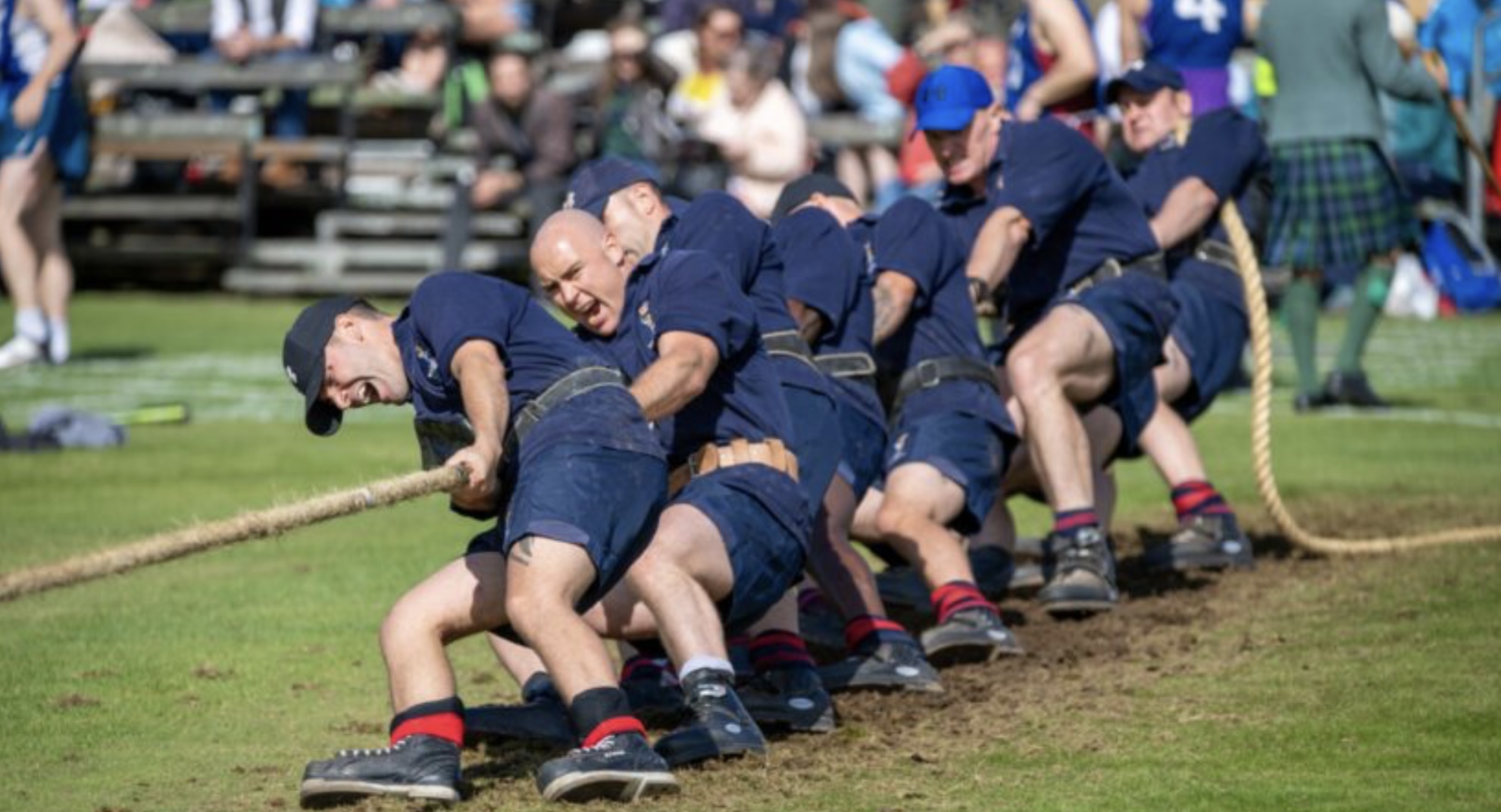
Back to Scotland for the Braemar gathering. Keen followers coming from around the globe, rolling in to the ground from early morning to bag the best places. The action begins at 10 am – simultaneous running, jumping, highland dancing, throwing things, tug-o-war all accompanied in turns by 10 drum and pipe bands. Royal party arrived at 3.00. His Majesty, Camilla and Princess Anne.

Can’t help noticing a note of austerity creeping in. No horse guards leading in the royal limos for a circuit of the oval. Distinctly remember at the 1996 games seeing a dozen mounted horse guards leading the entry of the Royals. And there was a guy in a white coat following at the side with a bucket and little spade to take care of any innocent horse droppings. There weren’t any. Please someone – confirm or absolutely deny this. Absolutely the best part of the games is always the tug-o-war. This year a dozen service teams of 8 men doing battle with their heavy steel heeled boots. My favourites this year were the Scottish Gunners. Possibly the lightweights of the contest, but they had the technique and teamwork to beat some really beefy lads. Pic not the gunners, just some losers being dragged through the mud.

Posted in category, U.K. | 3 Comments

Portugal

A week in the sun. Fled the wet and dismal Birmingham along with several plane loads of Brits, heading for the Algarve. Took possession of Casa Serena along the coast from Faro. They have not had rain here for over six months. Temp every day is 20 overnight 27 through the day. The pool is shaded in the afternoon by a row of tall conifers. Equiped with a massive Aldi shopping we are prepared for a week of play. Already introduced the guys to Breeze style murder darts in the barbecue hacienda. There is a cupboard full of games that look interesting.

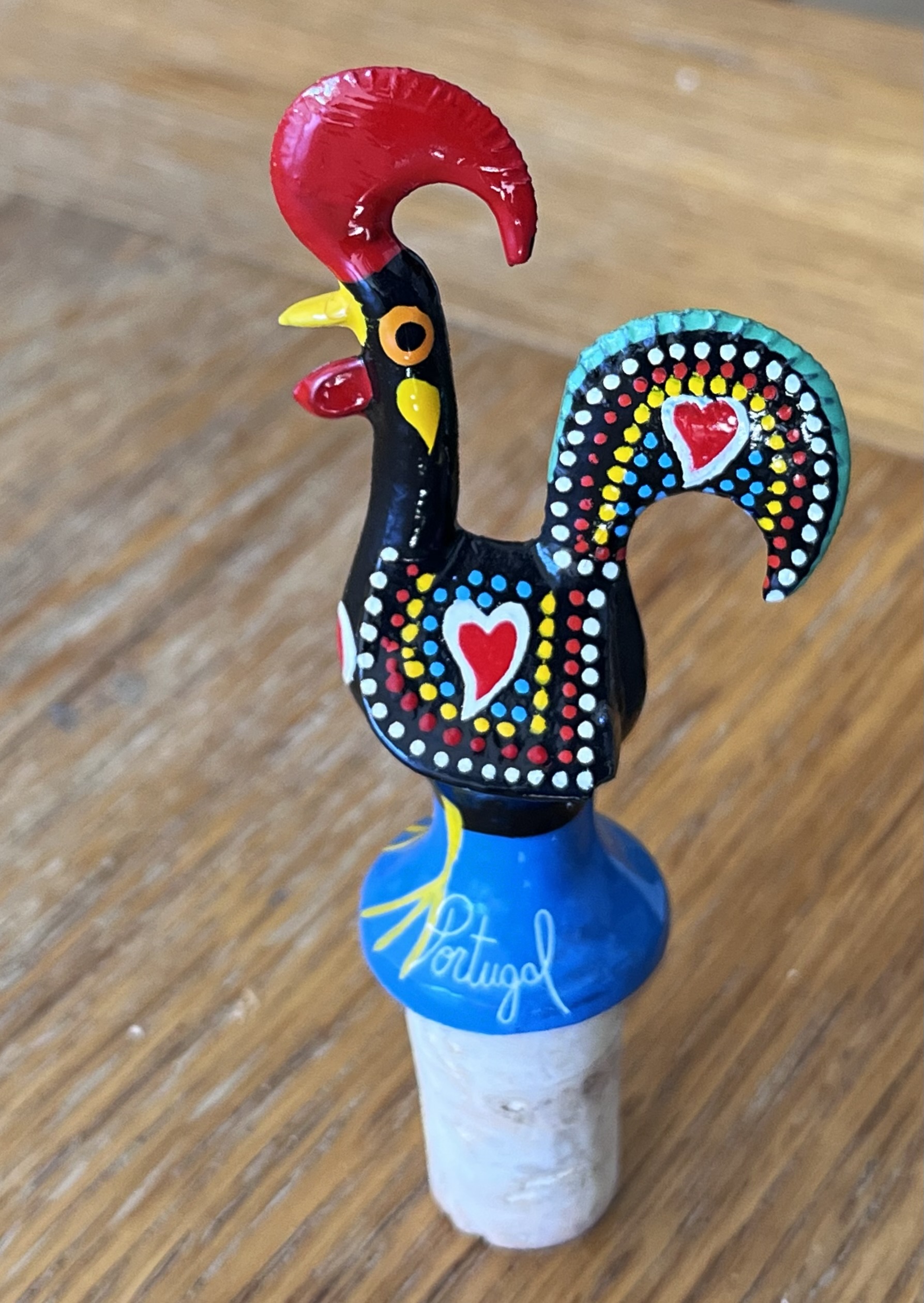
The national bird of Portugal is the Barcelos rooster. Belgium has Mannekin Pis, Australia has Ned Kelly, England has Robin Hood while Portugal has the Barcelos Rooster. All of these fabled heroes upholding the welfare of the underprivileged. Perhaps in Russia and the States the underprivileged are expected to look after themselves. In the little Portuguese town of Barcelos a man was once wrongly accused of stealing silver. He protested that if he were wrongly hanged, a roasted chicken would rise in song. So the story goes, the chook did sing and he was set free to live happily ever after. The rooster is proving to be a suitable inspiration for all manner of merchandise.

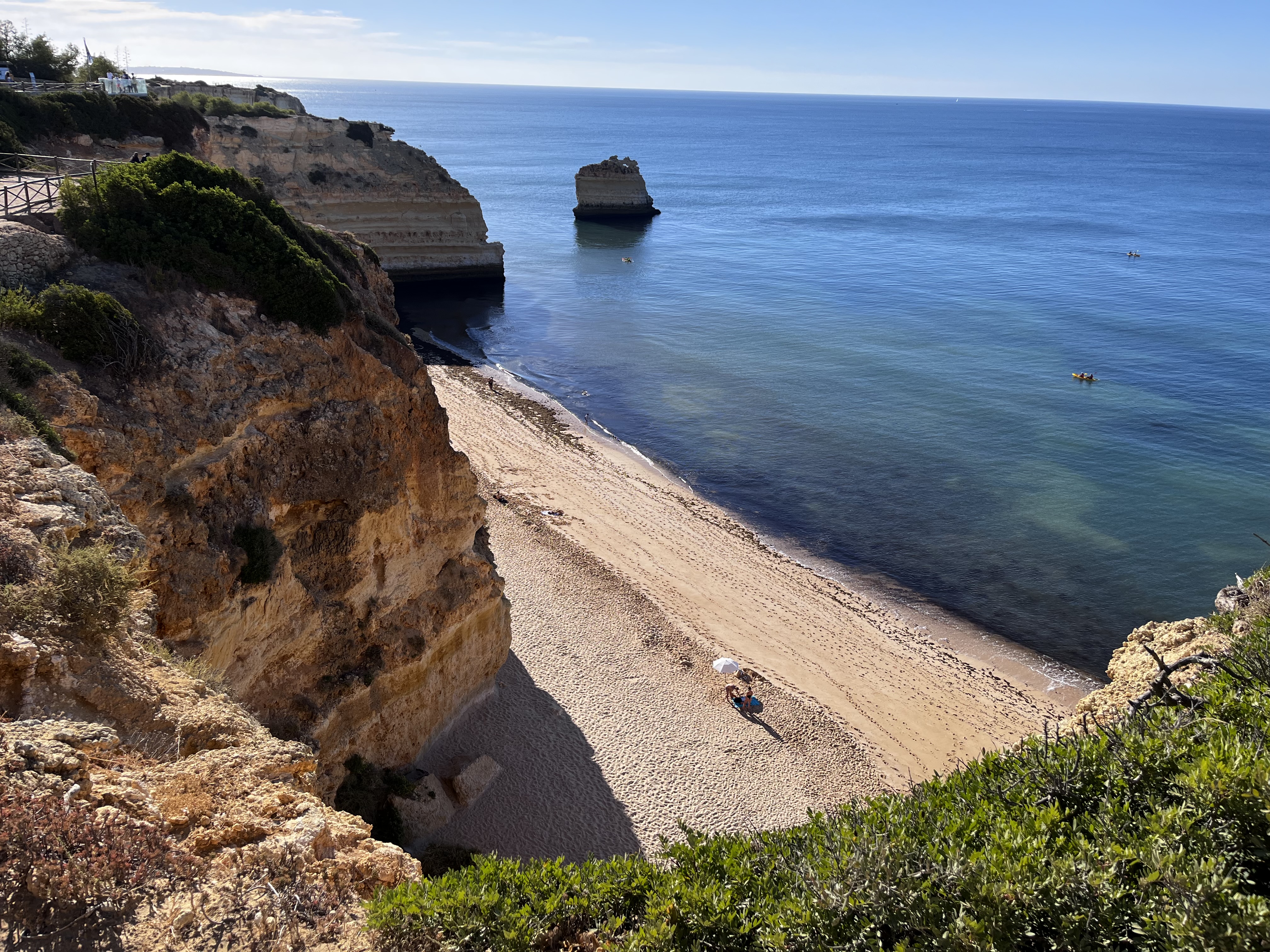
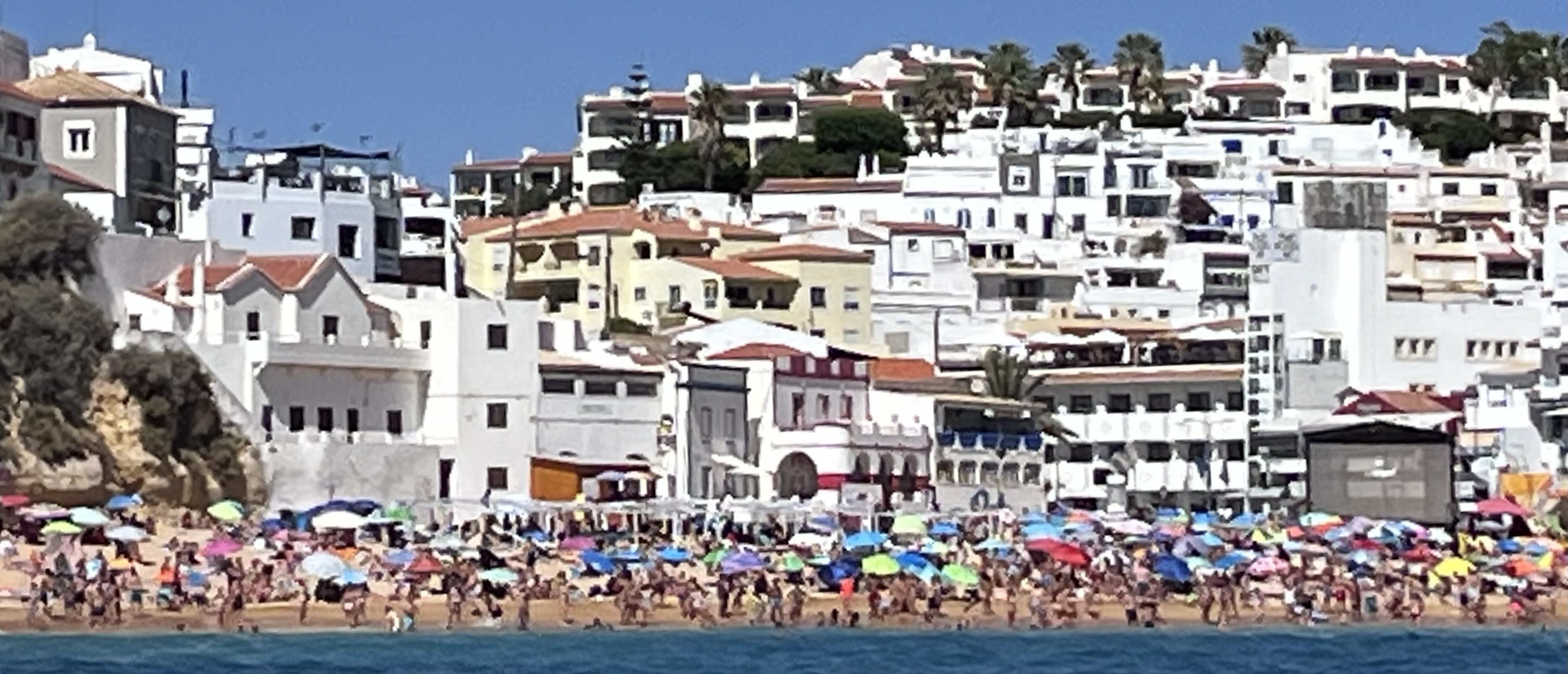
Summer in the Algarve and tourists and locals alike are enjoying the sun. The Algarve is characterised by endless towering cliffs dropping away to pretty little beaches, far below. This means access is difficult, parking impossible and intense pressure on the limited beach space. All of this is handled with grace and good humour.

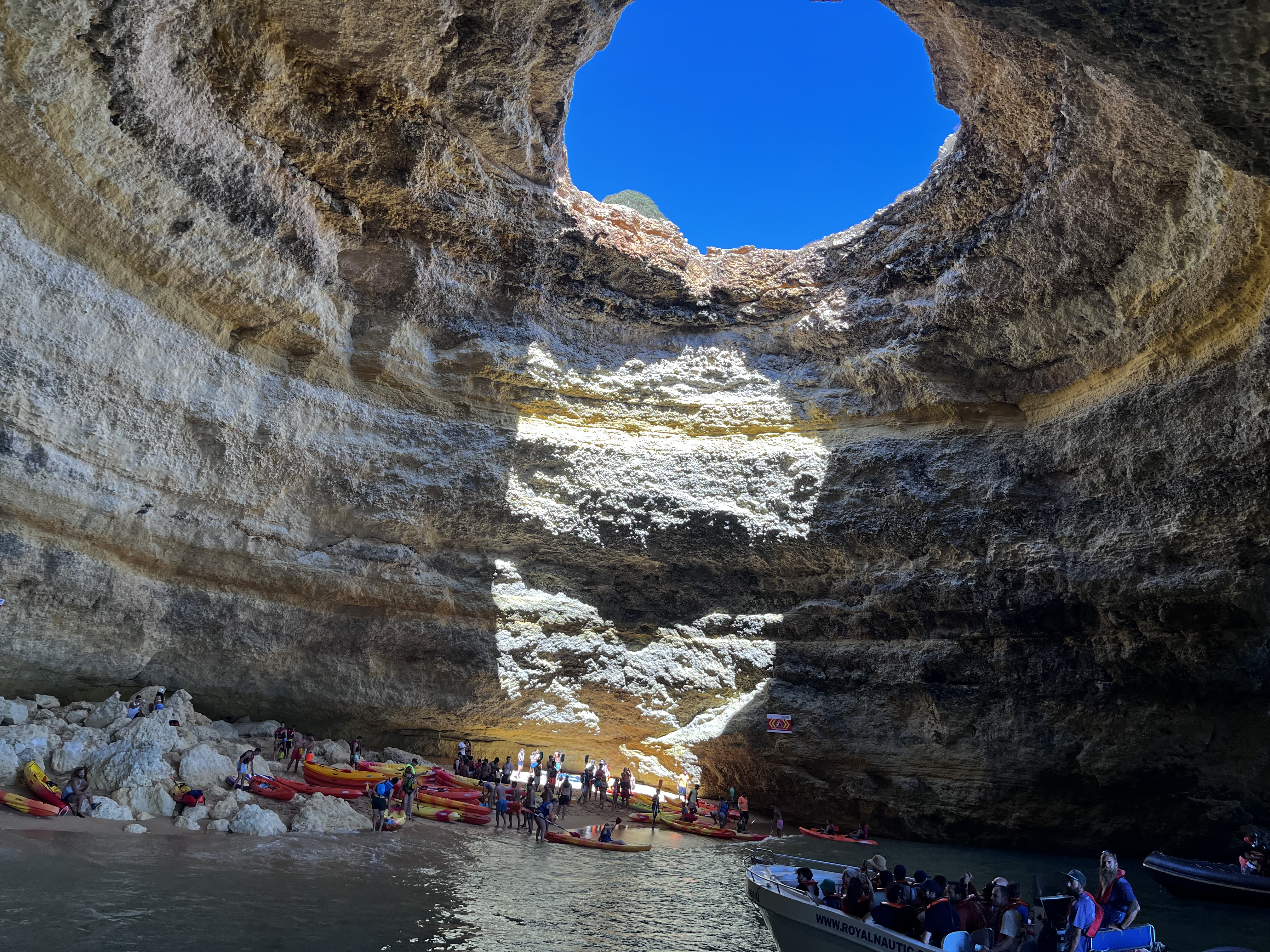
Best, only, way to appreciate the caves is by boat. Boat fast enough to get around, but slow enough to watch the dolphins synchronised swimming. Most famous is the Benagil sea cave with its spectacular sky light.

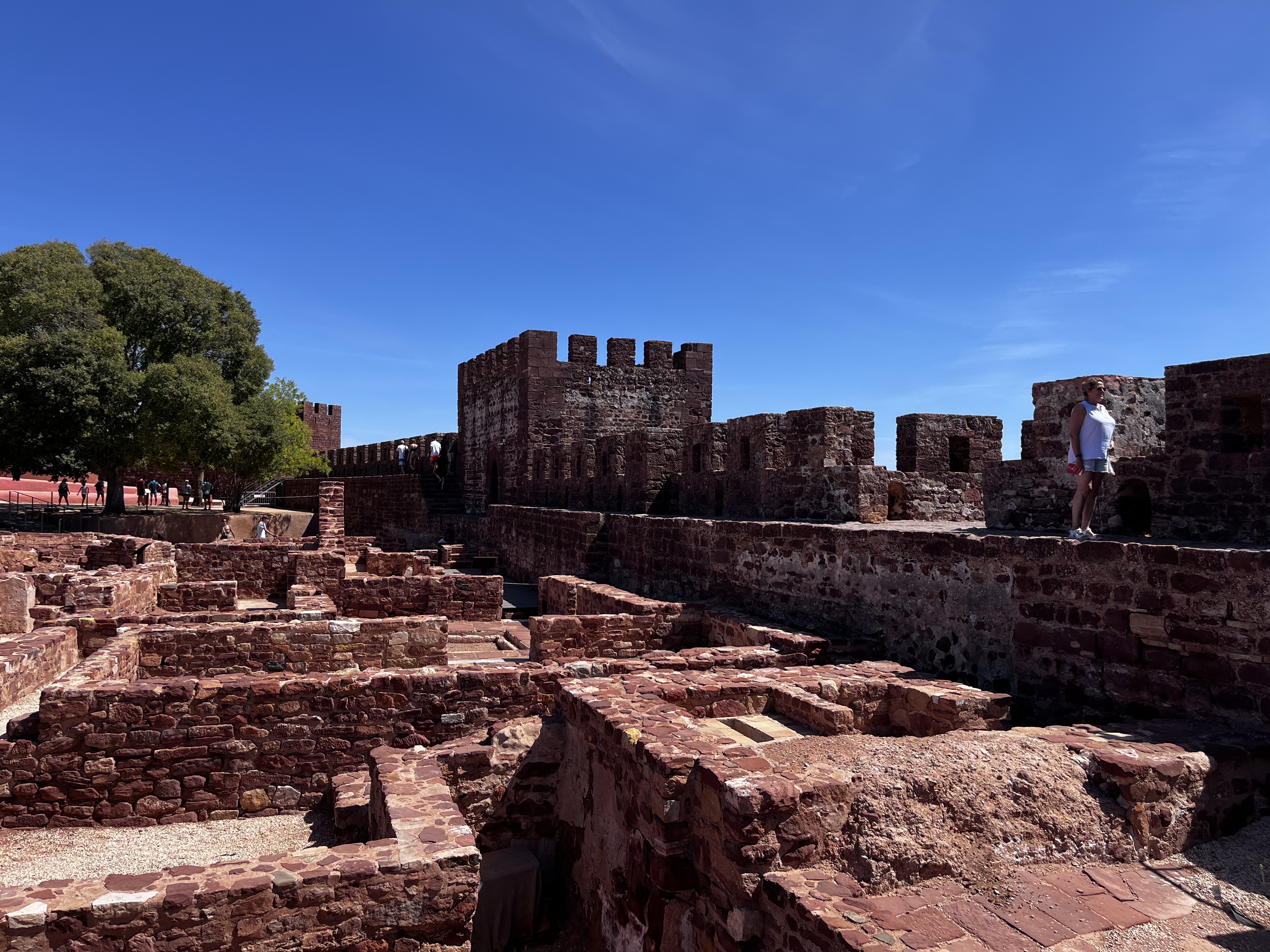
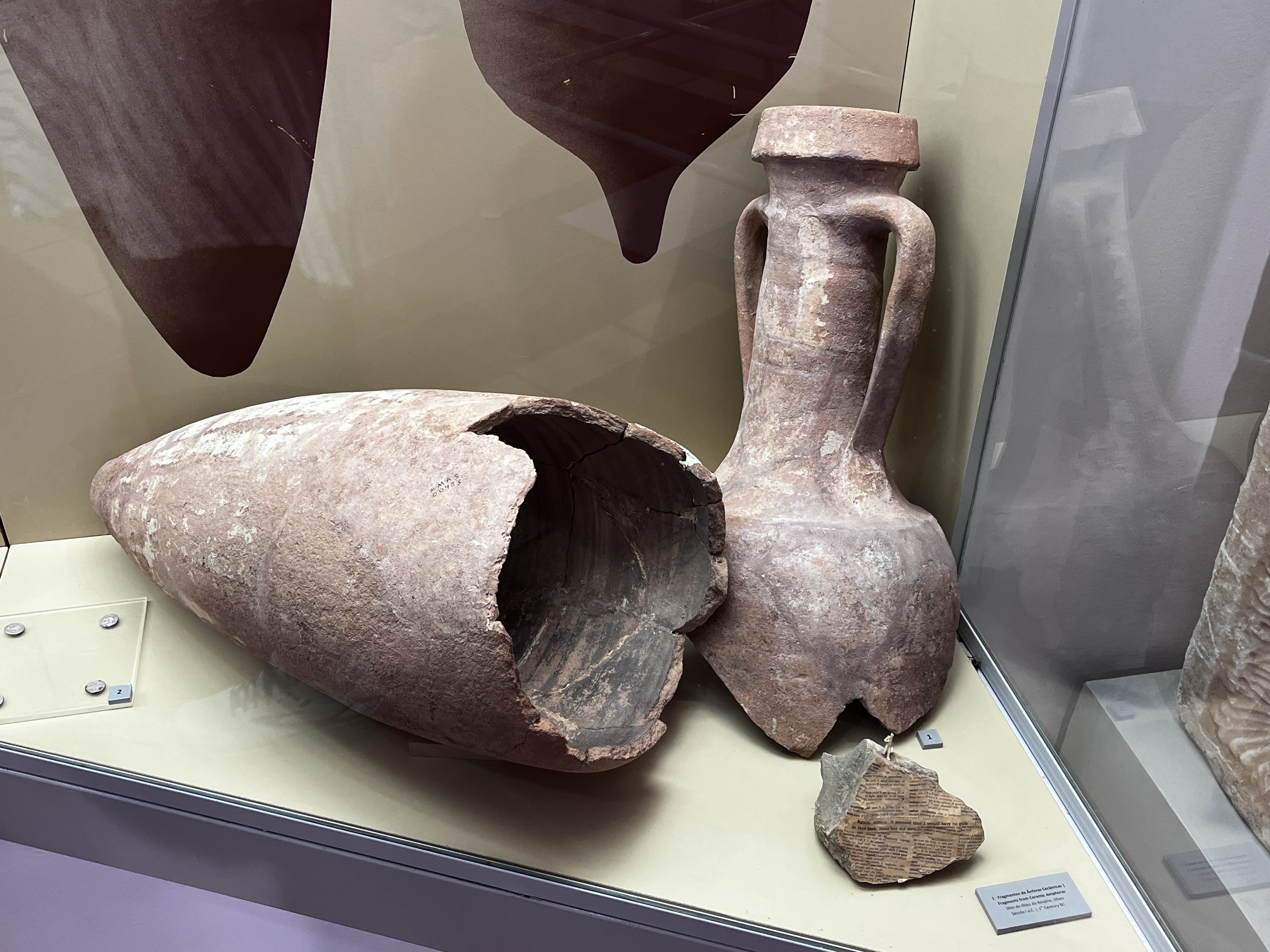
The remains of Silves castle with its surrounding medieval walled city lie in the hills a half an hour inland from Faro. Just inside the city walls sits the archeological museum. The museum was set up in 1990 following the discovery of a 12th cent. Almohad well cistern in the course of an archeological dig in the 1980s. Most of the museum is given over to a collection of pottery shards dating from the 12th cent. to recent times.

The real thing

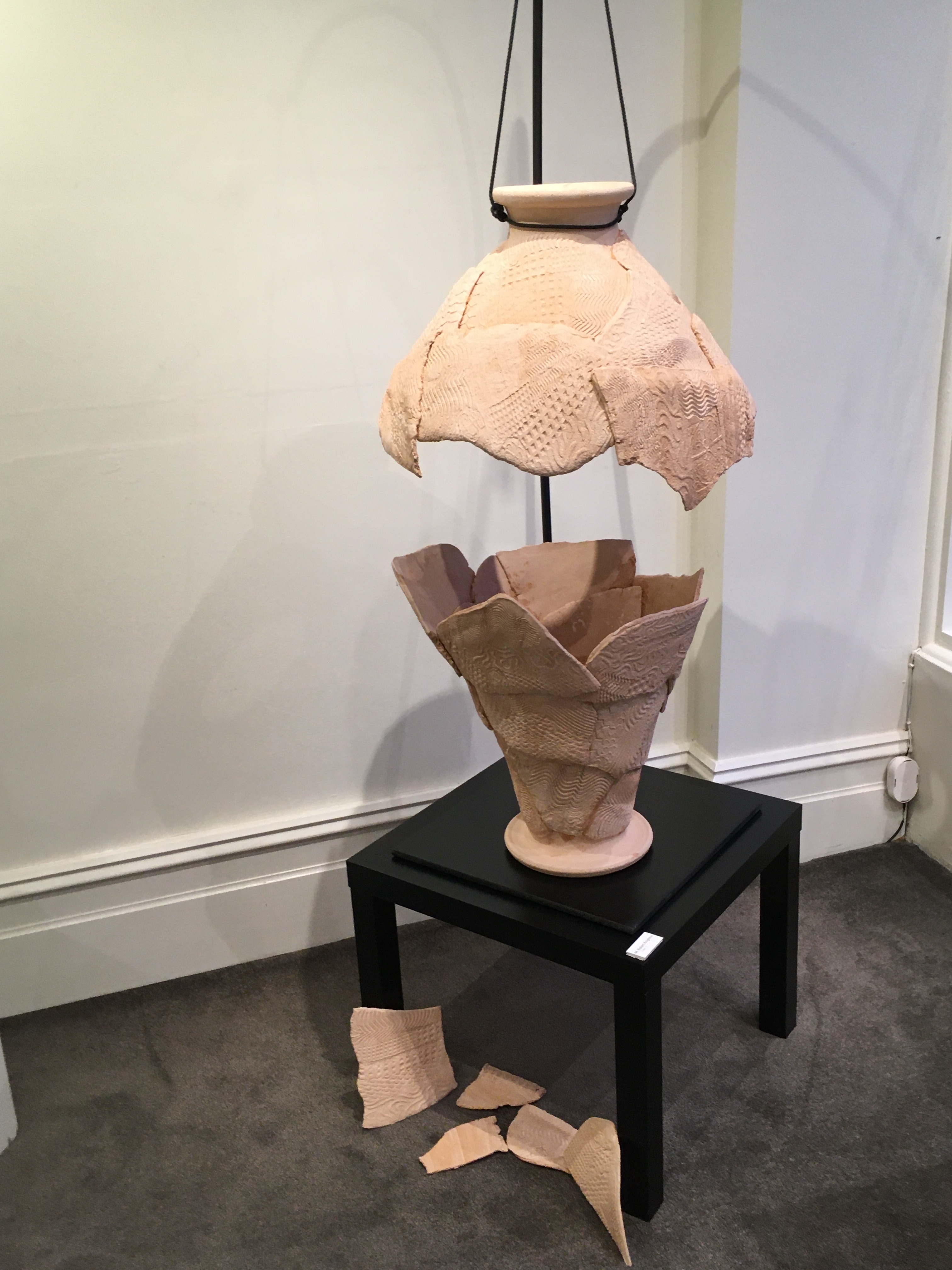
Along with coffee and trombones, pottery has been one of my many obsessions. In particular the ancient amphora form. As so many of the really old amphorae only exist as broken bits, over the years I have been making broken bits of amphorae. Imagine the surprise at finding such a smashing, sic, example of a great old amphora. Also included here is a photo of one of my follies.

Posted in category, Europe | 9 Comments

Shakespeare, coffee and the Titanic

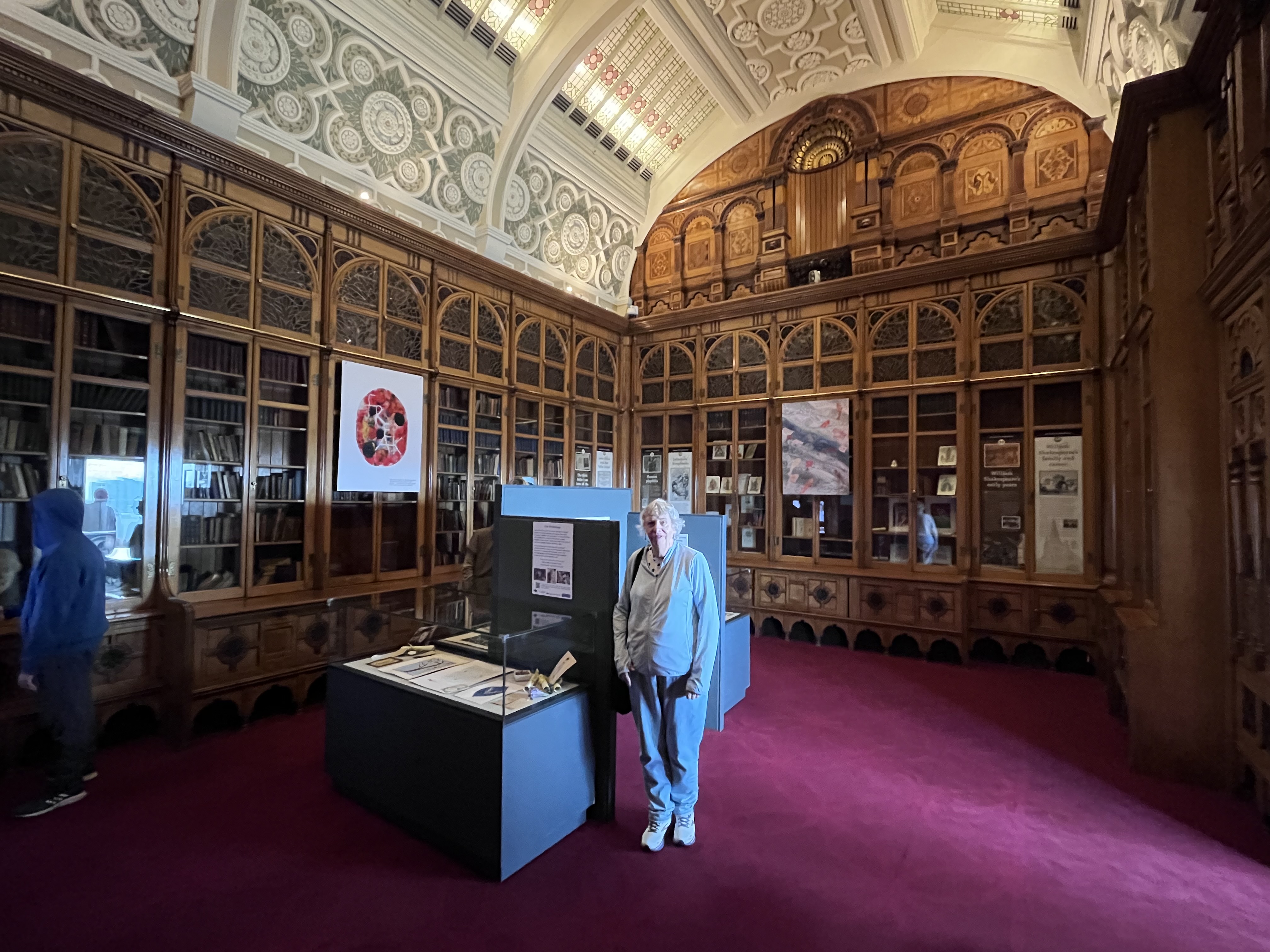
Busy day in Birmingham. An hour on a long boat around the canal system followed by a visit to the library. In 1864 the Birmingham Shakespeare club started a collection to mark the 300th anniversary of Shakespeare’s birth. It was housed in a decorated room in the city’s first public library. This memorial room has now been relocated to the top floor of the impressive new 9 story library. It was declared that the collection should contain every edition in every translation, in short, every book ever written connected with the life of the great poet. For hundreds of years people have be compiling scrap books of Shakespeare memorabilia. A couple of hundred of these scrap books appear in the collection.

Coffee again

Many of you have met our daughter Danielle when the family visited the Breeze last year. Knowing how fussy I am about coffee, Danielle took us to the famed “Coffee Room”, around the corner from the infamous Starbucks. Crowded and busy, so rather than make a fuss, ordered a simple double shot flat white. Very pleasant indeed along with a messy but delicious ploughman’s focaccia. As the crowd thinned out, family encouraged me to go chat with the barista. “Yes, I do know Magic, but no one asks for it”. Me and Reece become instant buddies. AND he shows me the finer points of controlling the machine for the best Ristretto. The resulting “Magic” is, of course as good as it gets. Soooo, when we return to Lonnie, if I am allowed behind the counter, and if Maureen approves, I will be happy to attempt Reece styled Magic coffee for all comers.

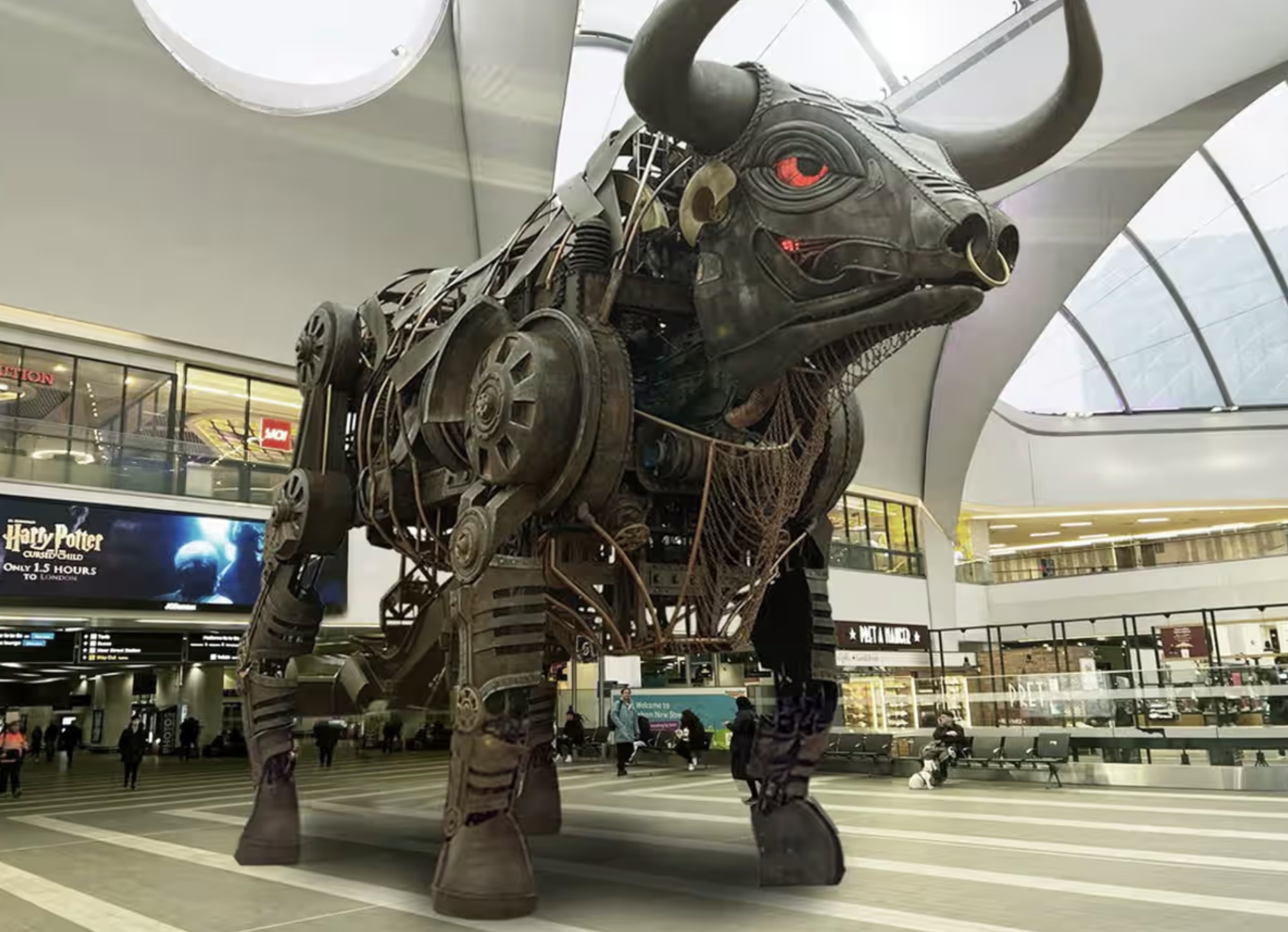
The Bullring is the epicentre of Birmingham and a bull has long been the symbol for Birmingham. The famous bronze bull near the centre of the Bullring has a sleek patina from the caresses of thousands of admiring visitors. The giant mechanical bull called Ozzy was the centrepiece of the opening ceremony of the 2022 commonwealth games in Birmingham and is be installed in the atrium of the New Street station.

Games

While the Matildas have been setting records on the football field, we have continued with the ritual of our Rummikub game. Every night after supper we clear the table and the 7 of us prepare to engage in our noisy and sometimes physical version of Rummikub. Most of us prefer to play solo, but Idris and Yusha work as a team with one set of tiles. The rules, including points for opening and the number of starting tiles are open to negotiation. Attempts to cheat include making forged jokers and various forms of sleight of hand. Grandma, being a very careful Scot was slow to make her mark. But now, entering into the spirit of things, she is capable of cheating with the best of us. The locals generously accepted what they call the Australian manoeuvre as creative and entertaining.

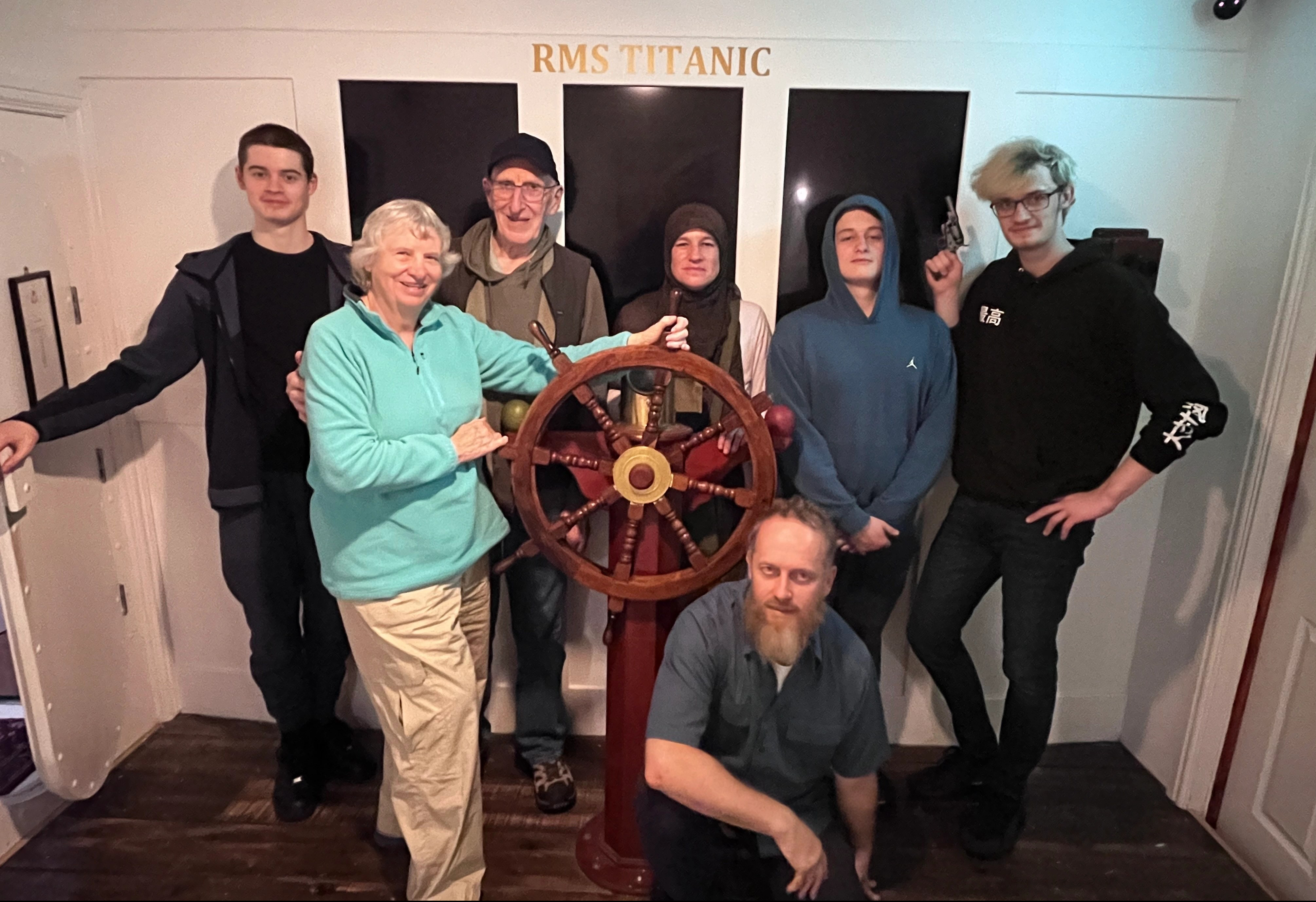
On the other side of town there is a massive entertainment centre that provides no end of physical and mental challenges, including escape rooms. This is the deal. Part real, part imaginary. The secret seven find ourselves unaccountably in a cabin on the Titanic. Unexpectedly, the deck is tilting much more than usual, and we are locked in. A quick check in the dimming light reveals that our resources are a lot of keys, a crank handle, a revolver and our boarding passes containing an odd sort of code. Danielle tries to dislodge a loose vent cover. A booming voice says “don’t touch the vent cover!!”. Idris, who is good at that sort of thing, realises that the boarding passes have a cryptic code, which when translated reads: “Shoot the vent”. Yunus who has the revolver, and is good at that sort of thing, loudly shot the vent and the booming voice said “Well done”. Grandma led the escape into the pitch black ventilation shaft which led to the bridge with its dangerously tilting deck. No sign of the captain anywhere. In another box there were a few more crank handles and a crow bar which was useful to gain access to the radio room so we could send Morse code distress call. Booming voice said “Help is on its way, lower the life boats”. That’s what the crank handles were for.

The Secret Seven on the bridge
Posted in category | 3 Comments

Skagen – Banksy – Visby

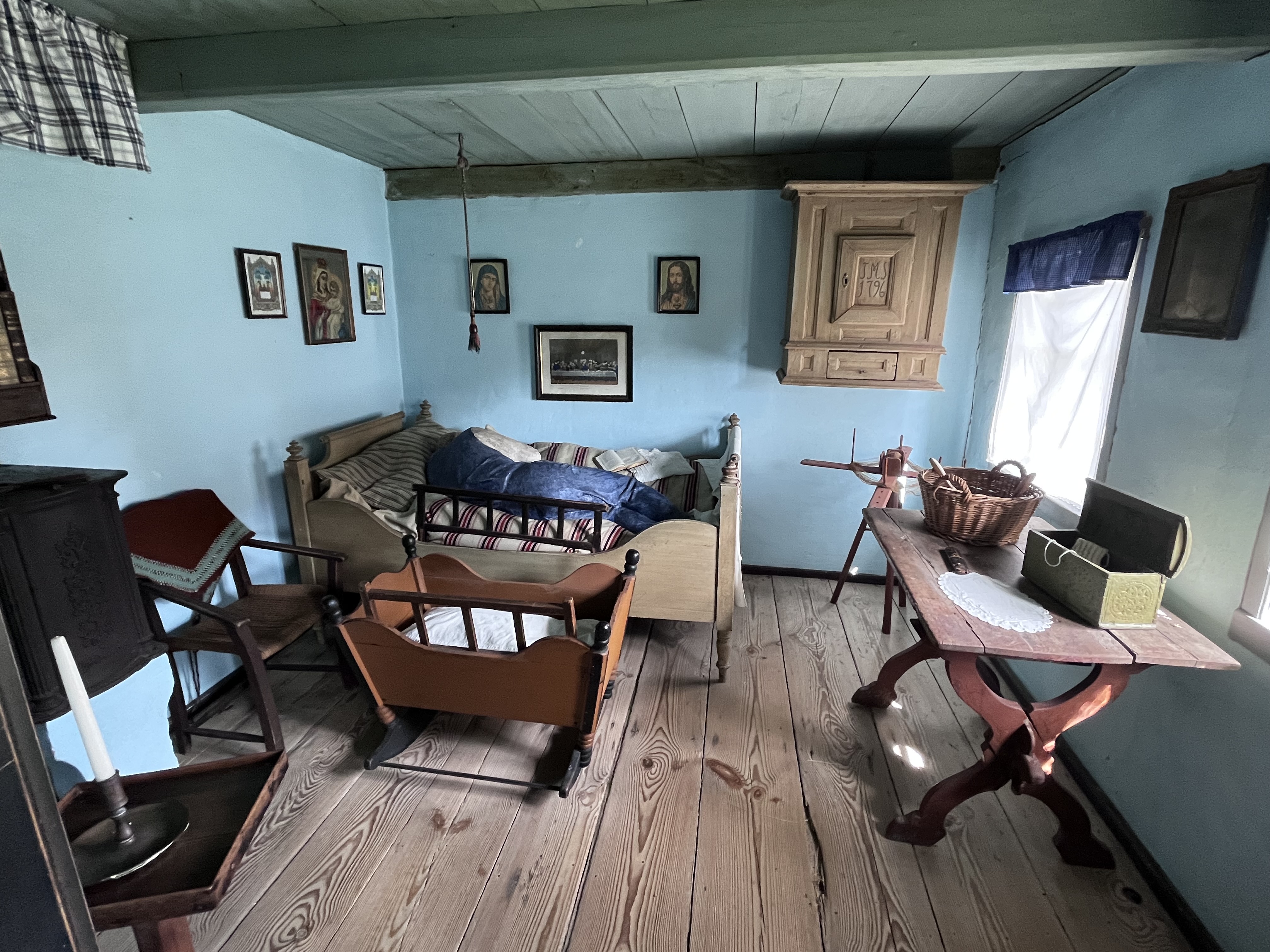
Such a long history of engagement with the sea and fish in Skagen.The coastal Museum of Skagen documents life on land and sea from the time the fishermen used boats rowed by 4 or 6 men. Marine rescue is described in graphic detail. The walls of the museum are covered with photos of the heroic rescuers and the names of the many many fishermen lost at sea. Out the back is an example of a poor fisherman’s one and a half room hovel, where as many as a dozen adults and children lived and slept in one room. In the bleak winter. Across the way stands the more comfortable home of the fisherman who owned his own boat.

Home of the “well to do” fisherman

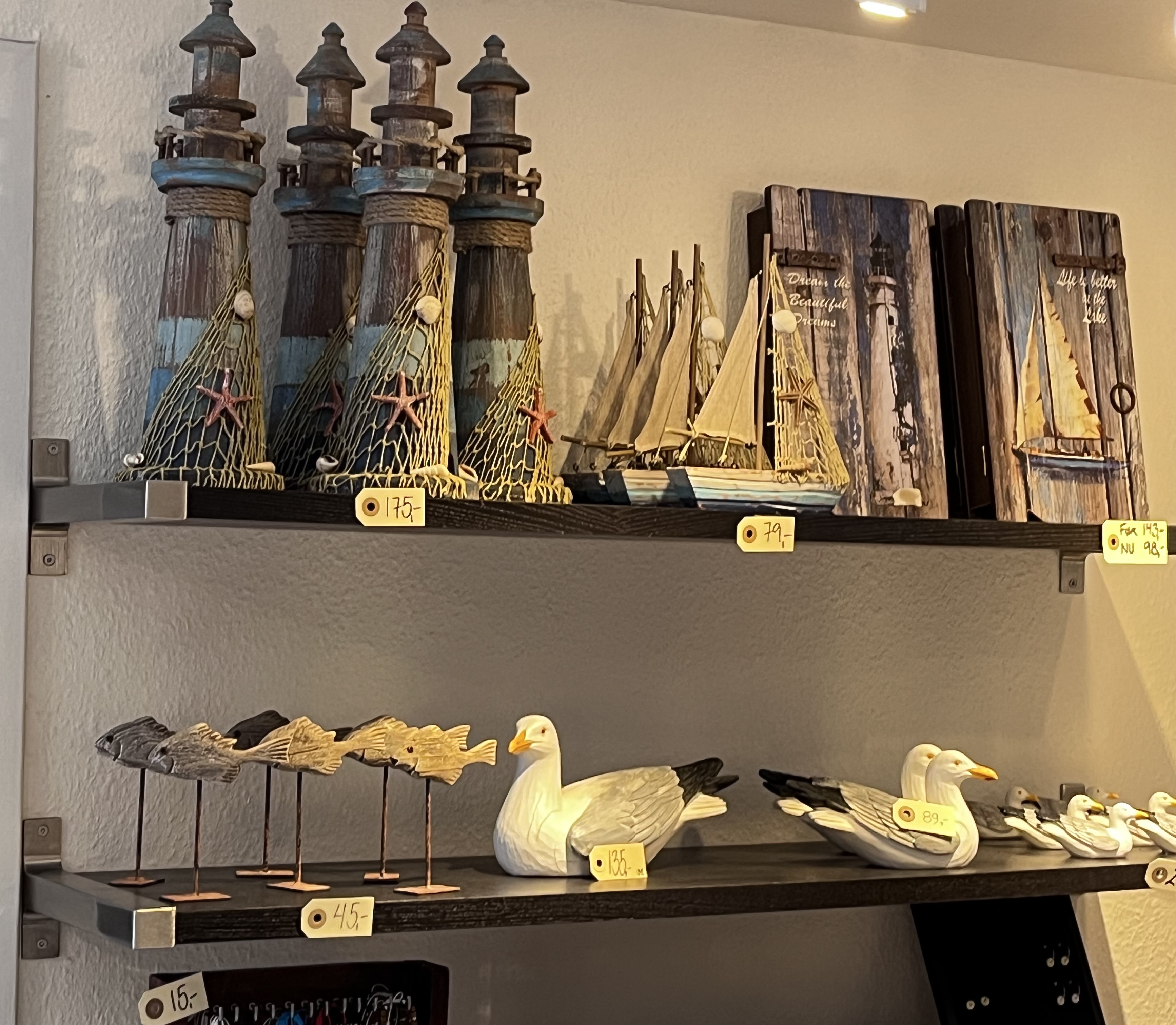
The souvenir shops in Skagen in general offer more honest memorabilia, featuring the icons of the area like wooden lighthouses, boats, fish, cottages and seagulls.

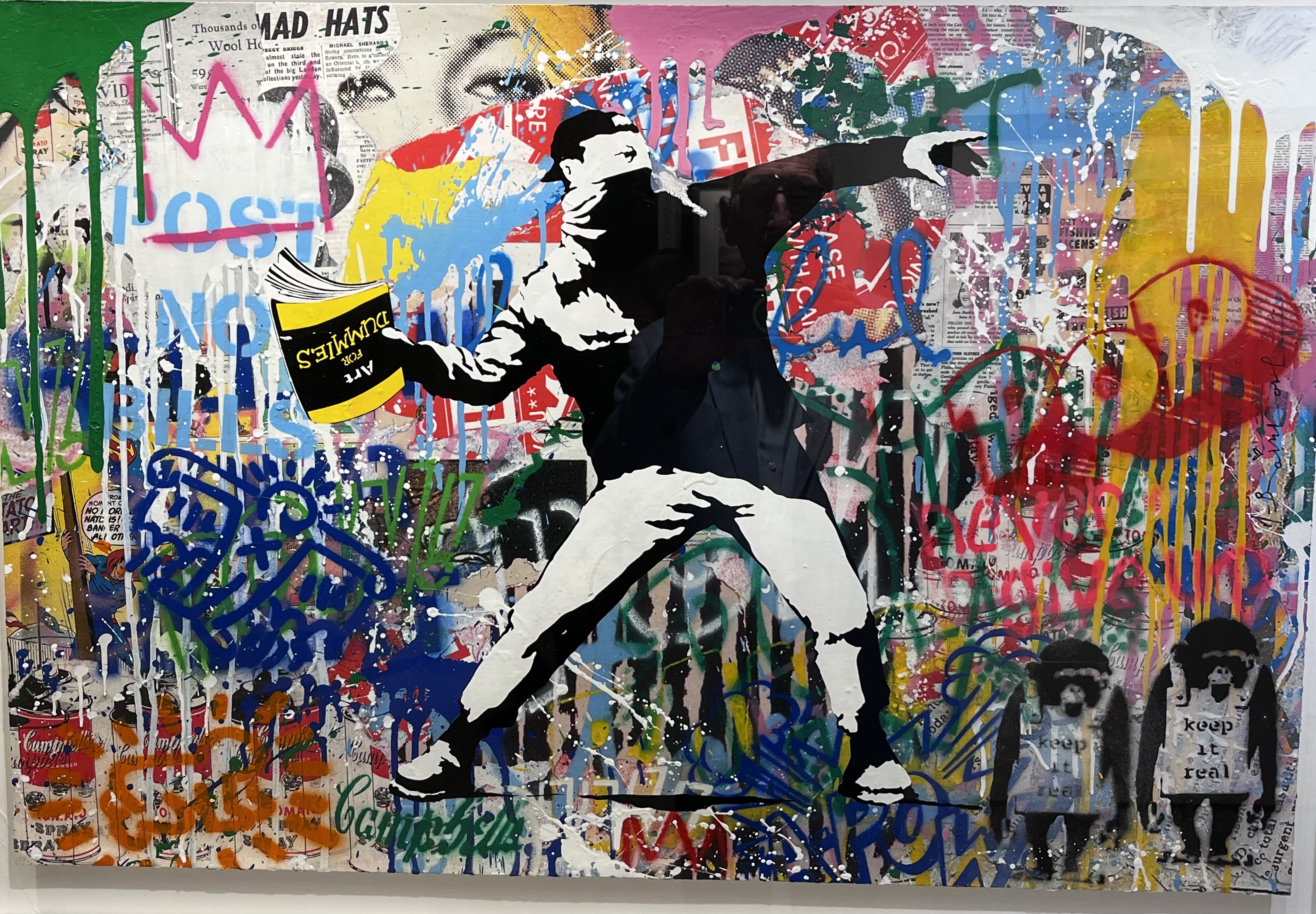
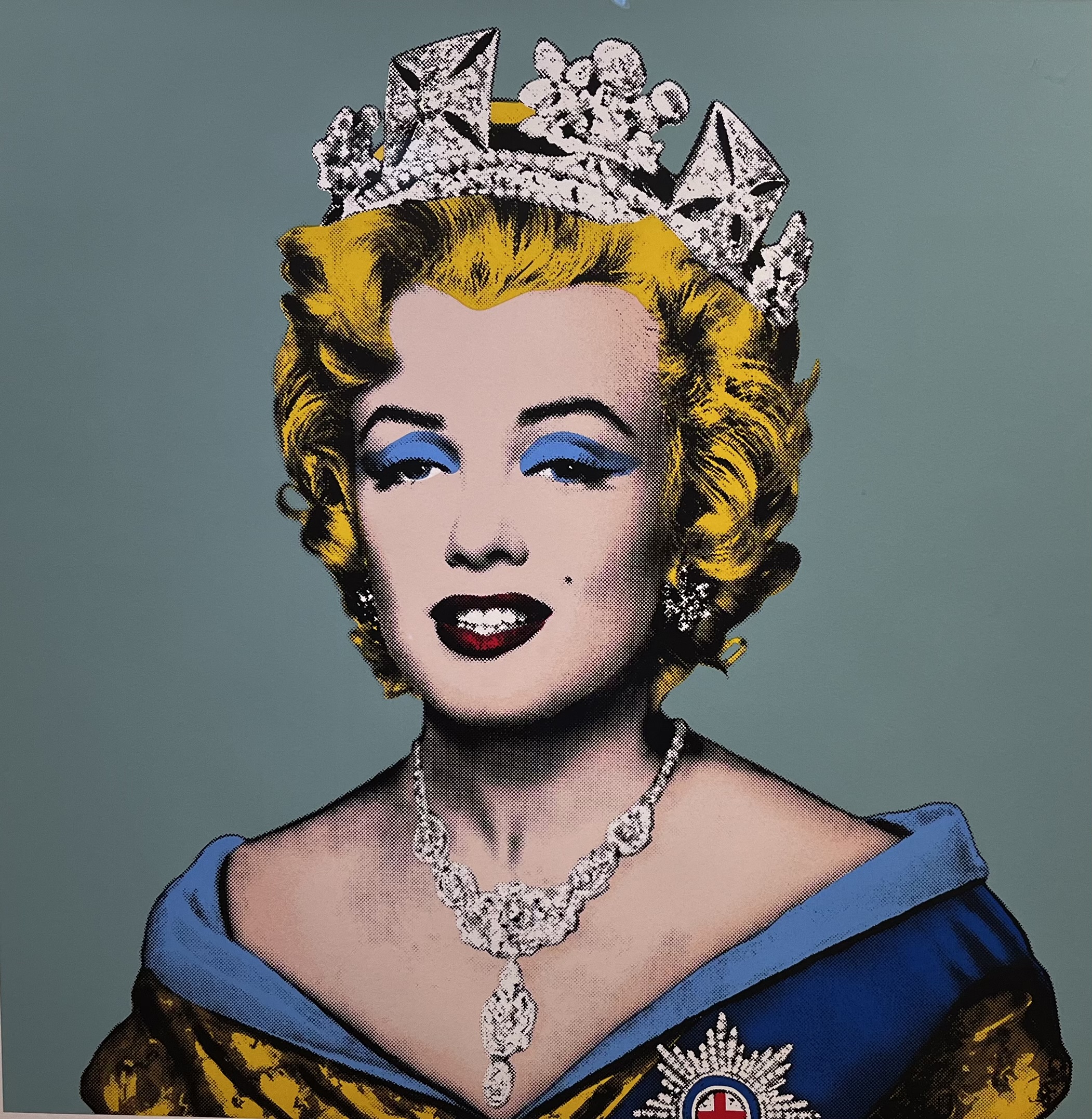
Clarendon Fine art have permanent galleries on most Cunard ships. They give talks and display the work of featured artists. On this occasion one of the featured artists was Mr. Brainwash, aka Tierry Guetta, a trusted confidant of the famous anarchist street artist Banksy. From 2006 they have done all manner of silly and challenging things together, confronting some of the absurd aspects of domestic and political life today. In this show some prints and originals of Mr Brainwash are offered, along with comparable street art of kindred spirits. In the featured work Art for Dummies is trashed while the monkeys advocate “keep it real”

What is the absolute meaning of royalty? What qualifies as genuine royalty? In the event of fakes, forgeries, copies or misrepresentations who actually deserves to be given the royalties? Hmmm?

Visby Gotland

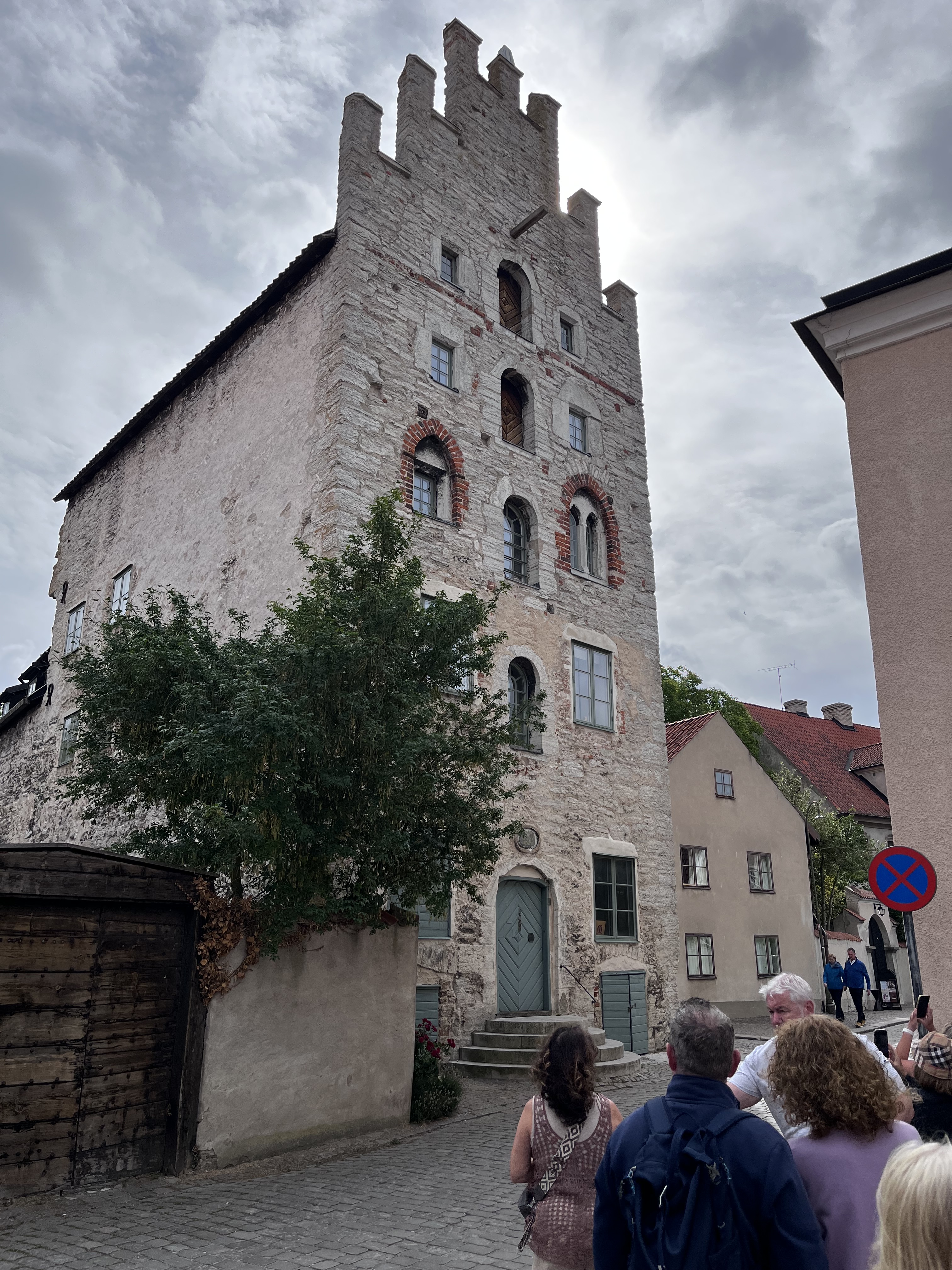
The remaining hanseatic warehouse

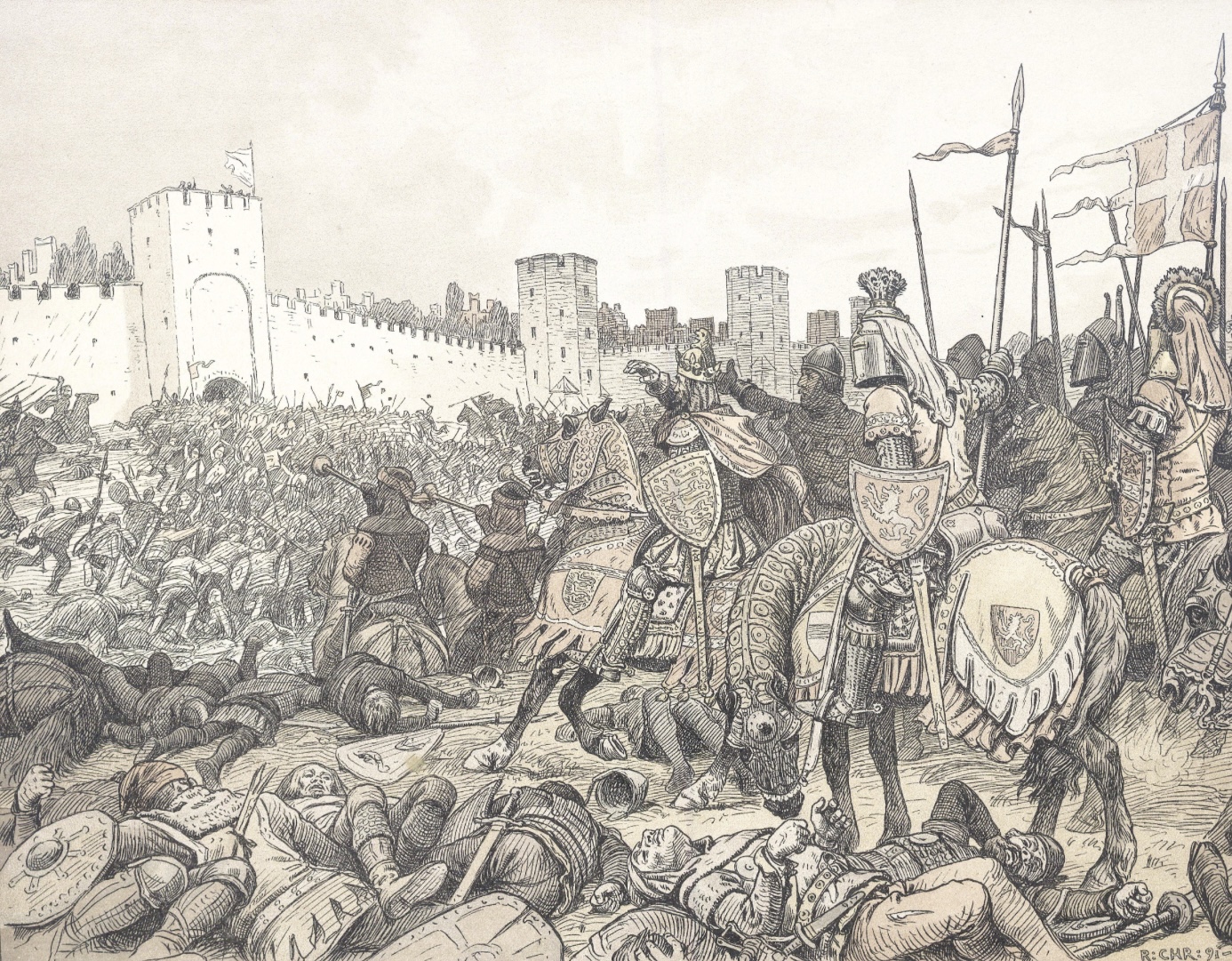
In the early 1100s farmers of Visby on the Swedish island of Gotland were happy to welcome a band of Hanseatic German traders. It was a win win situation. The farmers had more customers for their produce and the Germans had a great natural seaport as a hub for Baltic trading. As the settlement grew into such an attractive city, the Germans felt the need to built a city wall to secure their position. The farmers, enraged at being forced to pay a toll to enter what had been their own market place, declared war on the Germans in the civil war of 1288. Needless to say, the better armed and prepared Germans prevailed.

Germans 1 Farmers 0 grumble grumble.

In 1350 Gotland was ravaged by a plague, followed by a downturn in the fortunes of the Hanseatic traders. The malevolent King Valdemar IV of Denmark (possibly an ancestor of the bad guy in Harry Potter?) seized the opportunity to successfully invade and add Gotland to his kingdom in the 1361 Battle of Visby. Law and order was enforced. Lots of crimes were punishable by hanging. The local bishop had the responsibility of interviewing suspects for an hour each day until they confessed. Form of torture at the discretion of the bishop.

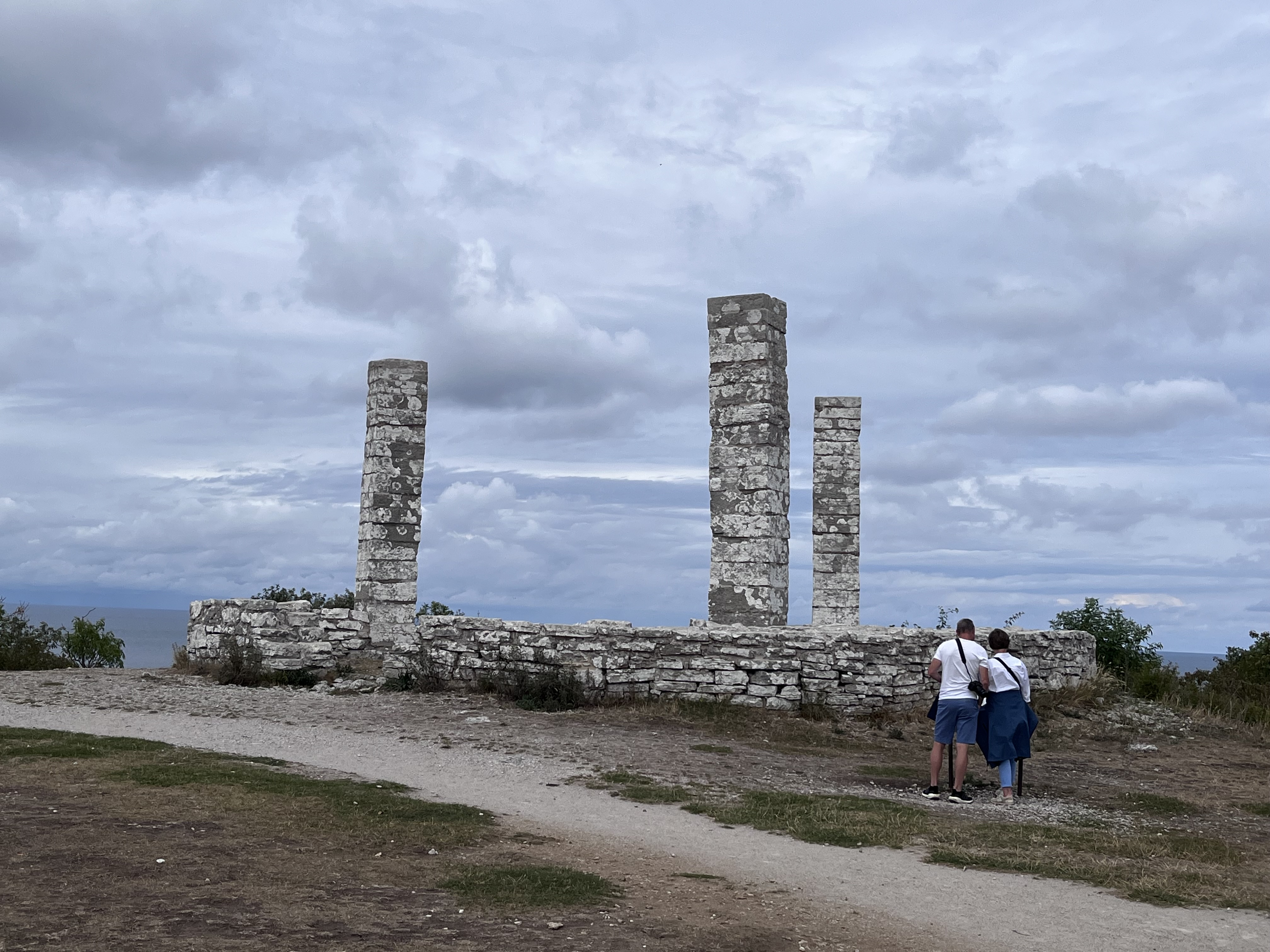
remains of the Galgberget gallows

The object of the hanging was neither vengeance nor deterrence, simply the ultimate form of humiliation. There were many gallows around the town. On a hill overlooking the town, 3 wooden beams sat atop the triangle of stone columns of the Galgberget gallows, so that up to 9 criminals at a time could be hanged for the education and entertainment of the residents. Only the stone columns remain.

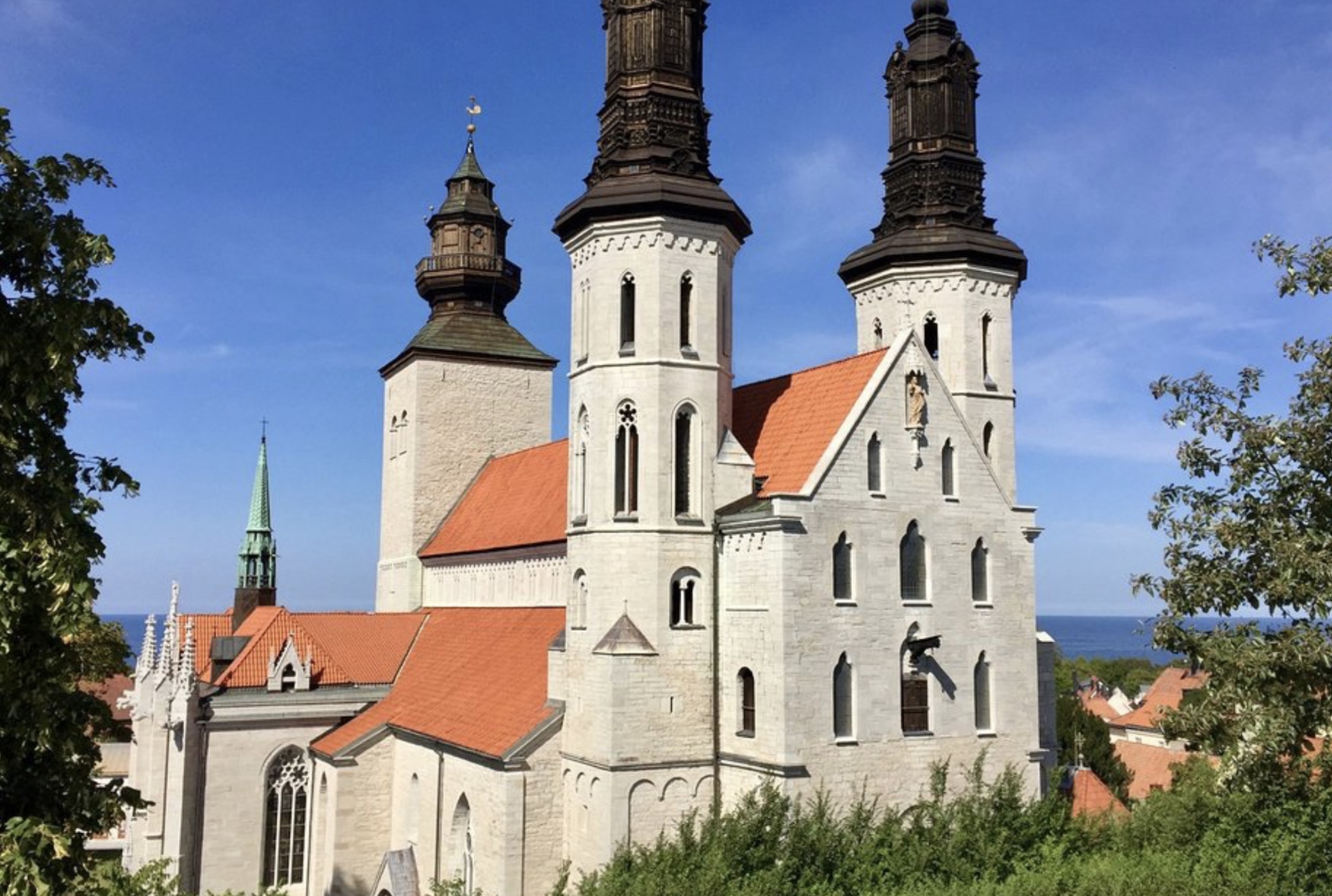
In 1645 Sweden regained Gotland. Life returned to normal. St Mary’s Cathedral was the spiritual centre of Visby

A T A L H E A

Posted in category, Europe | 1 Comment

Estonia and Skagen

Little Tallinn, the capital of little Estonia. From ages past Estonia had no kings of its own, but had elders who managed affairs of state. The kingdom of Denmark held the grand Duchy of Estonia from 1219 to 1346. After a couple of hundred years of ugly skirmishing, the kingdom of Sweden held Estonia til Peter the Great of Russia defeated the Swedes in the great northern war. Peter took over Estonia and built for his wife Catherine the Kadriorg Palace in 1718.

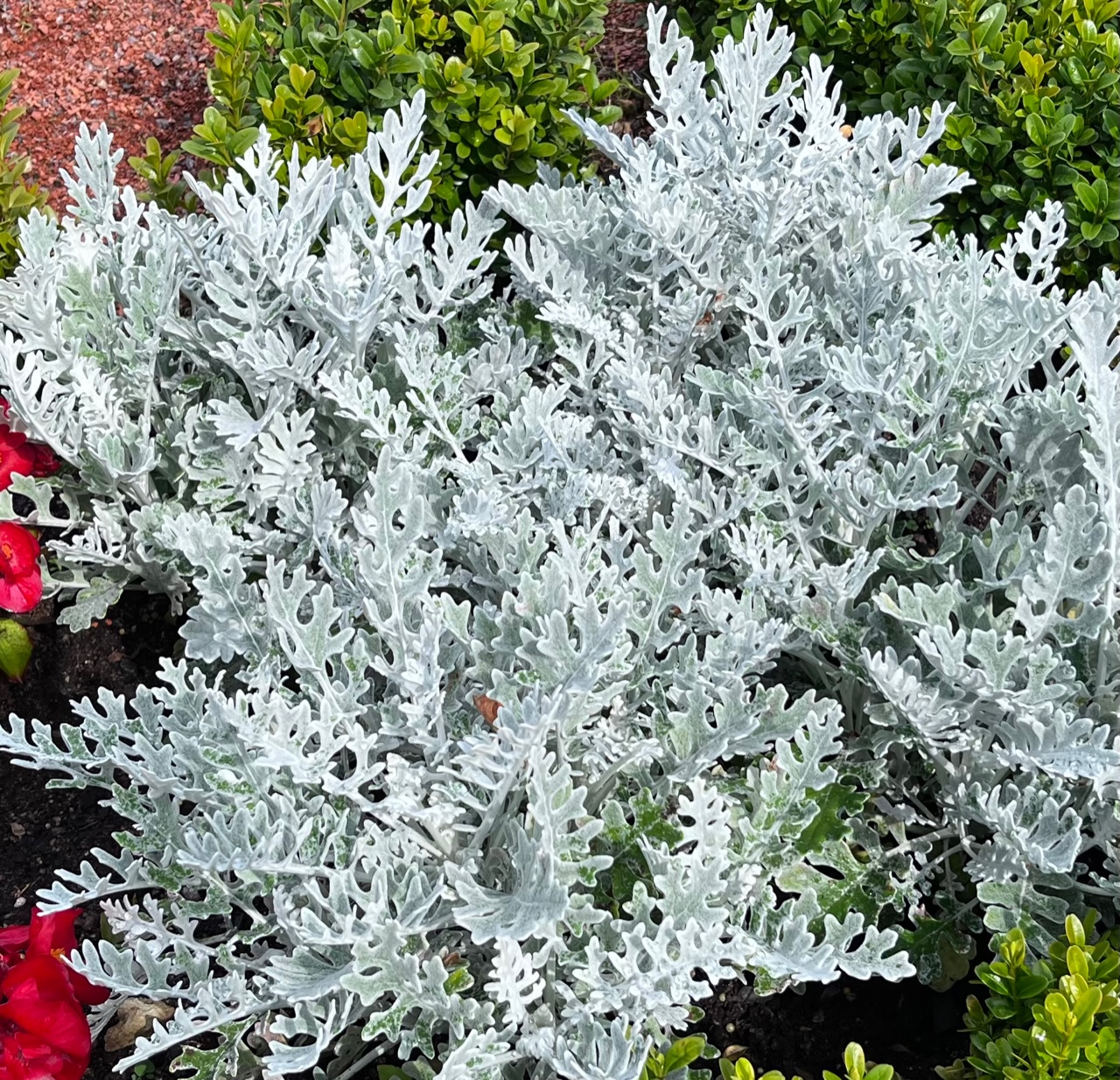
In various places around the garden are preserved attractive patches of a variety of ragwort which in many places around the world is considered to be an offensive pest. Interesting that in the palace the rococo decoration seems to feature quite a lot of ragwort. Fascinating.

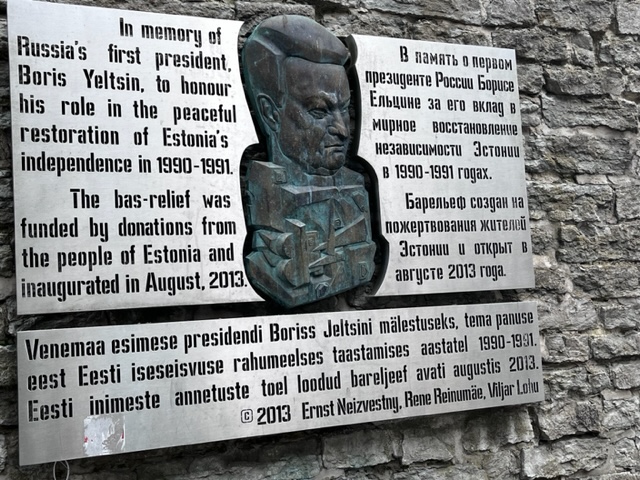
There is a monument in Tallinn giving credit to The Russian Boris Yeltsin for enabling Estonia at last to achieve independence. Estonia now has president Alar Karis rather than a king and relies on membership of the EU and NATO for a sense of security

Last week it was the girl with the pearl ear ring by Vermeer, this week it is Sweetiepie with the Amber ear rings from Estonia. Way back 40 million years ago the Baltic Sea was a vast forest which flooded and the soggy trees over the millions of years turned into amber. And a few thousand years ago lumps of amber started washing up on beaches to become an important part of Estonian trade. Currently the Baltic is the worlds major source of Amber. In China Amber is currently replacing Jade as the desirable semi precious mineral with consequent increase in value. For more info google “the amber road”. Check out Sweetiepie with her 40 million year old ear rings.

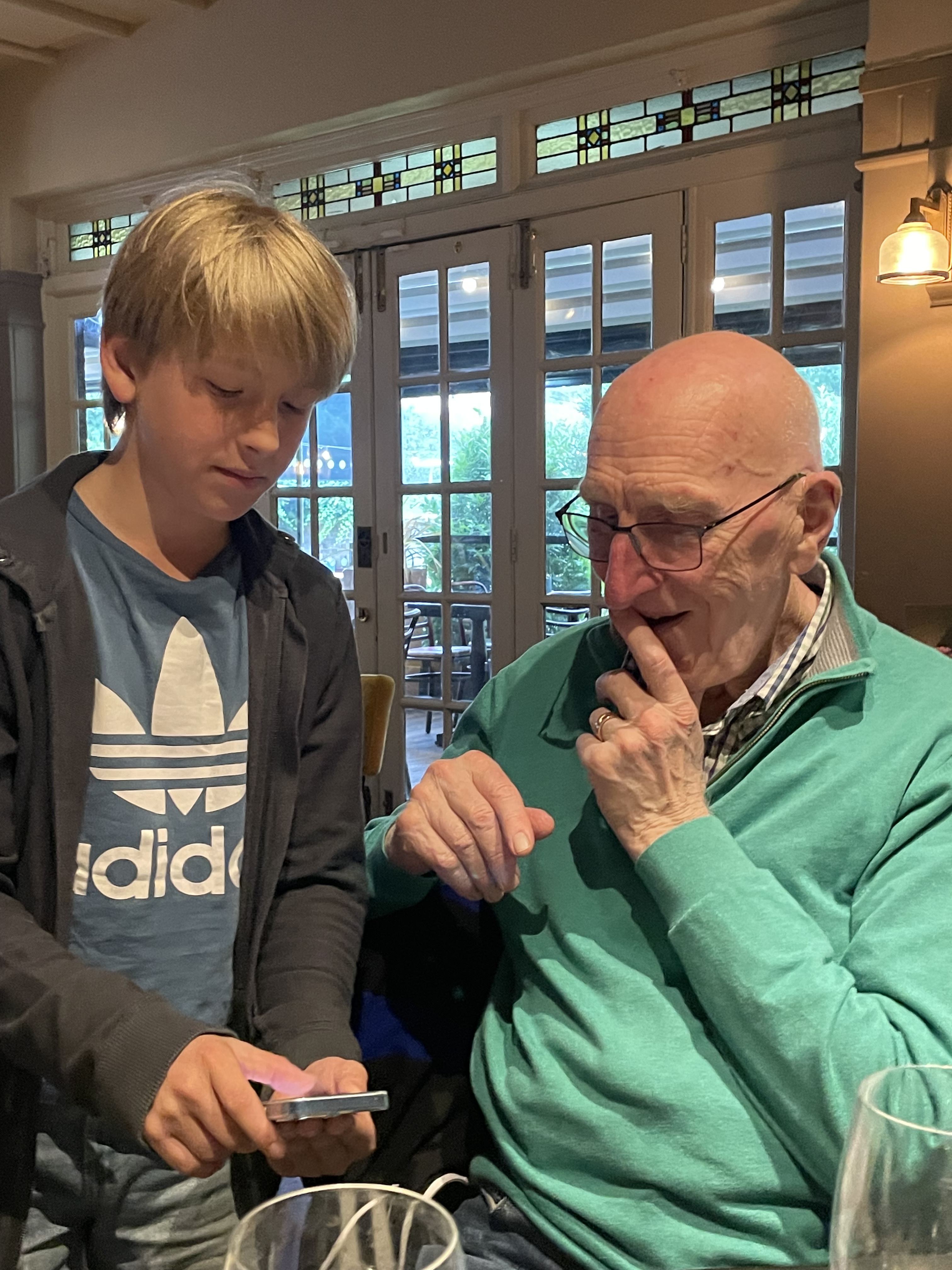
The seventy year difference between my age and that of interesting young people does present difficulties for meaningful conversation. Sport is a possible subject for dialog but computer games provide better common ground. The phone game 2048 introduced by Zoe has been useful. I asked young Alex in Finchley if he knew of 2048. He certainly did, taking my phone to demonstrate some of the finer points. Encouraged by this, I found myself a couple of weeks later sharing a spa on the QV with the 13yo Ryan.

Was he interested in the Cricket?

Not really.

Computer games?

Oh yes!!

2048?

I like 2048.

And in the steamy spa he demonstrated 2048 on his watch. I was impressed. Left him immersed in water and 2048.

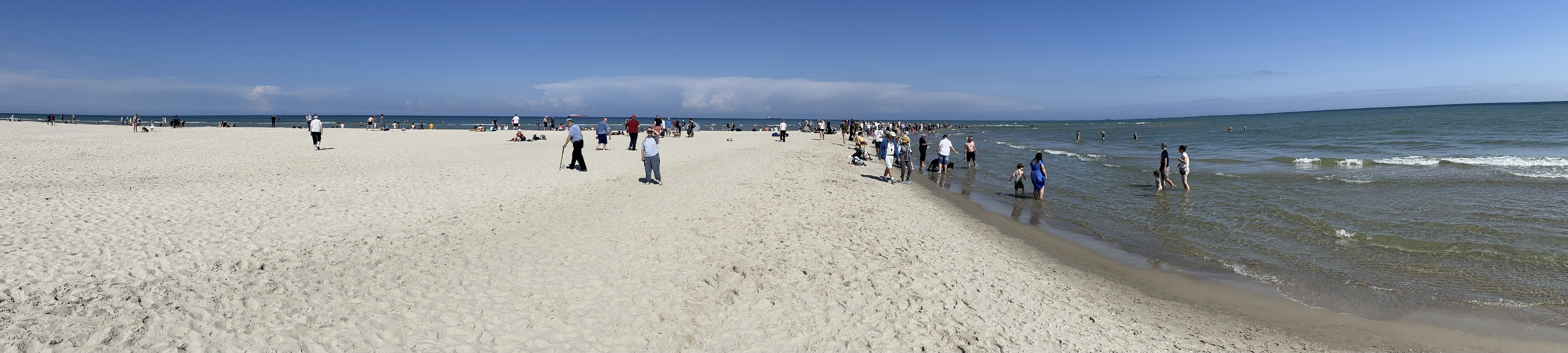
Skagen is at the northernmost tip of Denmark. A very pointy tip. So pointy that it is possible for a long line of people standing in the water aligned North – South to all have one foot in the Baltic Sea and the other in the North Sea.

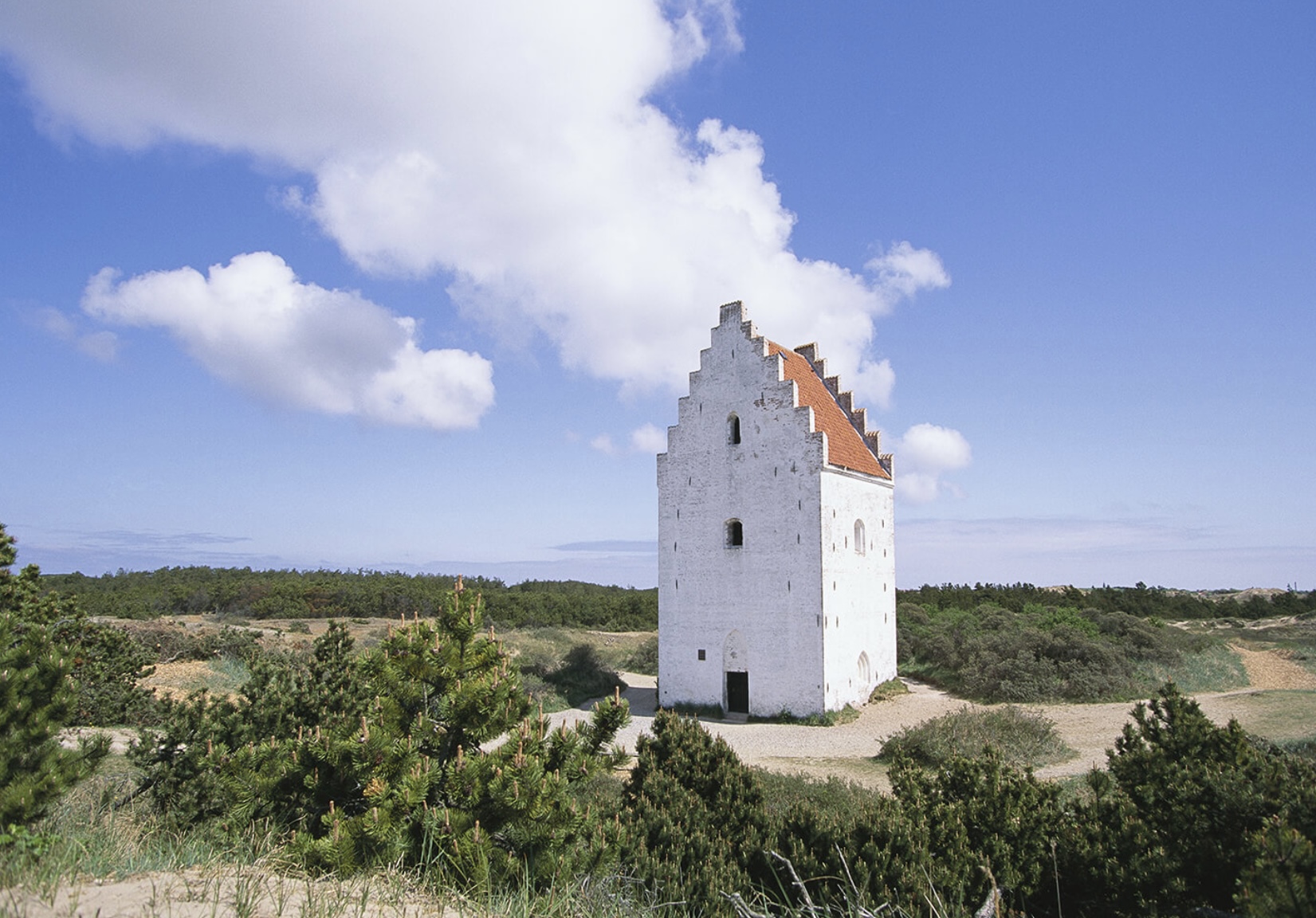
For centuries Skagen had been subject to a plague of shifting sands that buried all in its path. Including the famous Tilsandede Church. From the middle 18th century the church became buried deeper and deeper in the drifting sand so that the congregation had to dig their way in to services. Until 1795 when they gave up the struggle and the church was abandoned and demolished, except for the tower which remains as a tourist attraction. Although many tourists come to visit the town with its cute little red and yellow cottages, fishing remains the main business of the town.

Posted in category | 3 Comments

The Baltic

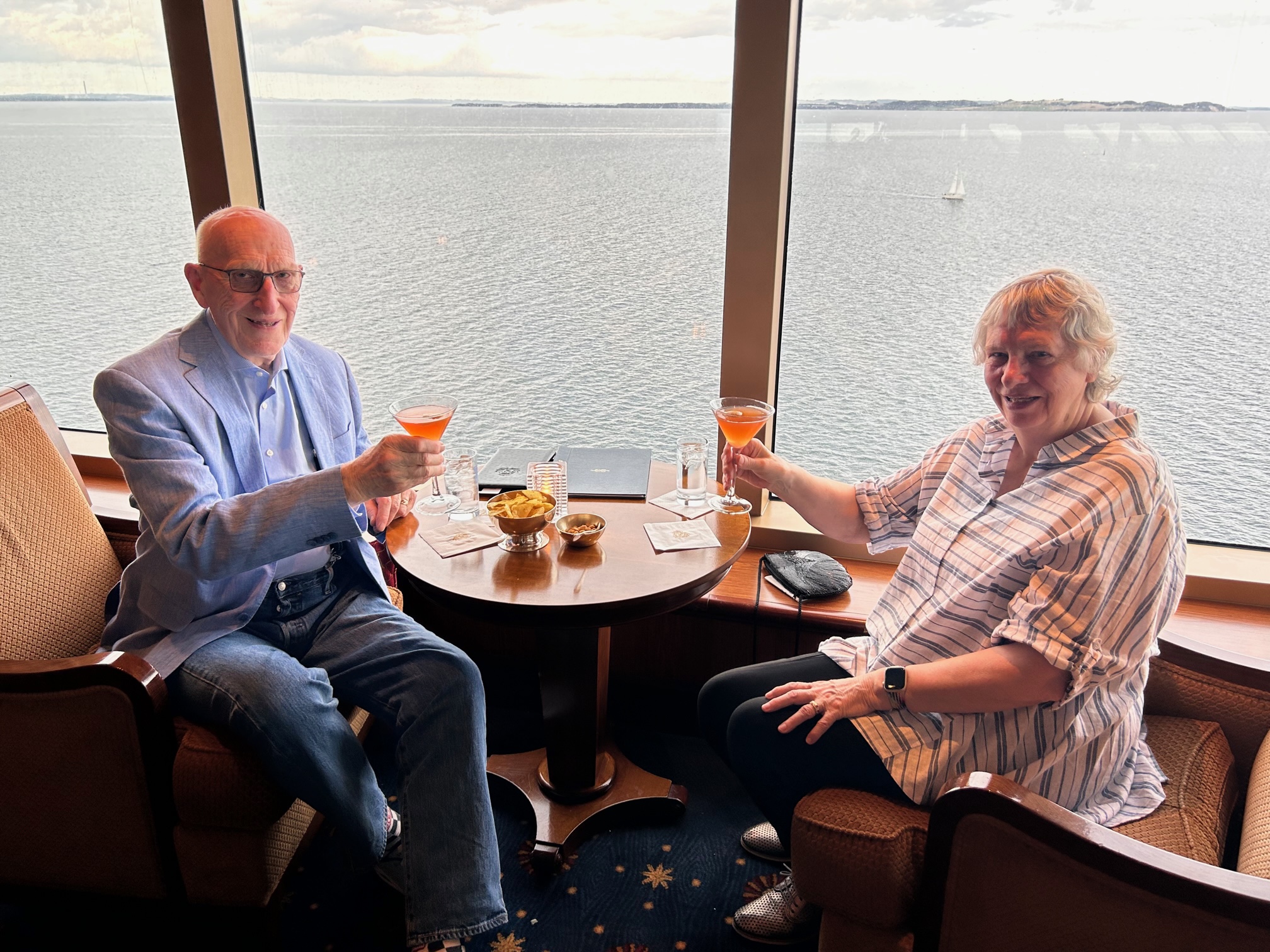
On the Cunard Queen Victoria one expects everything, including coffee to be just so. For example, picture us seated thus: In the Commodore club, sipping an Atlantic Love Affair cocktail, to the romantic Guitar of Andrew Scott as the sun goes down

Now to coffee. I admit to being a coffee snob. And worse, an ignorant coffee snob. However, I do enjoy a good cup of coffee. Many of you have heard my ramblings about “magic” coffee. The Queen Vic has the staff and the facilities to produce very good coffee. But, understandably, they have not heard of “Magic” which originated in Lygon Street Carlton, considered by many to be the current coffee centre of the world. The first attempt to introduce Magic to the Queen Vic staff failed dismally. Won’t bore you with the details. But on the second take, Barista Raul fine tuned the necessary Ristretto to produce a very nice Magic.

Without exception the Queen Vic staff are lovely people. They come from around the world. Often spending months away from their families and friends in order to send money home for life’s essentials. A happy outcome for all concerned. The Nigerian Pizza lady behind the counter beams – “I love my work” she chortles with enthusiasm.

Bornholm

This is the first time the Queen Vic has docked at Bornholm. A Danish island about the size of the Isle of Man situated bang in the middle of the Baltic. Delightful place dotted with cute little cottages around the three small towns. Rolling pastures with a steep drop down to the harbour. Could be the subject for a pastoral symphony. However, being in such a strategic position has made it an attractive target for ambitious raiders. Germany occupied Bornholm for most of WWII to secure control of the Baltic. Toward the end the Germans begged the British to send someone to accept their surrender before the Russians arrived. Bornholm again became Danish after the war, surviving a brief overture from Sweden.

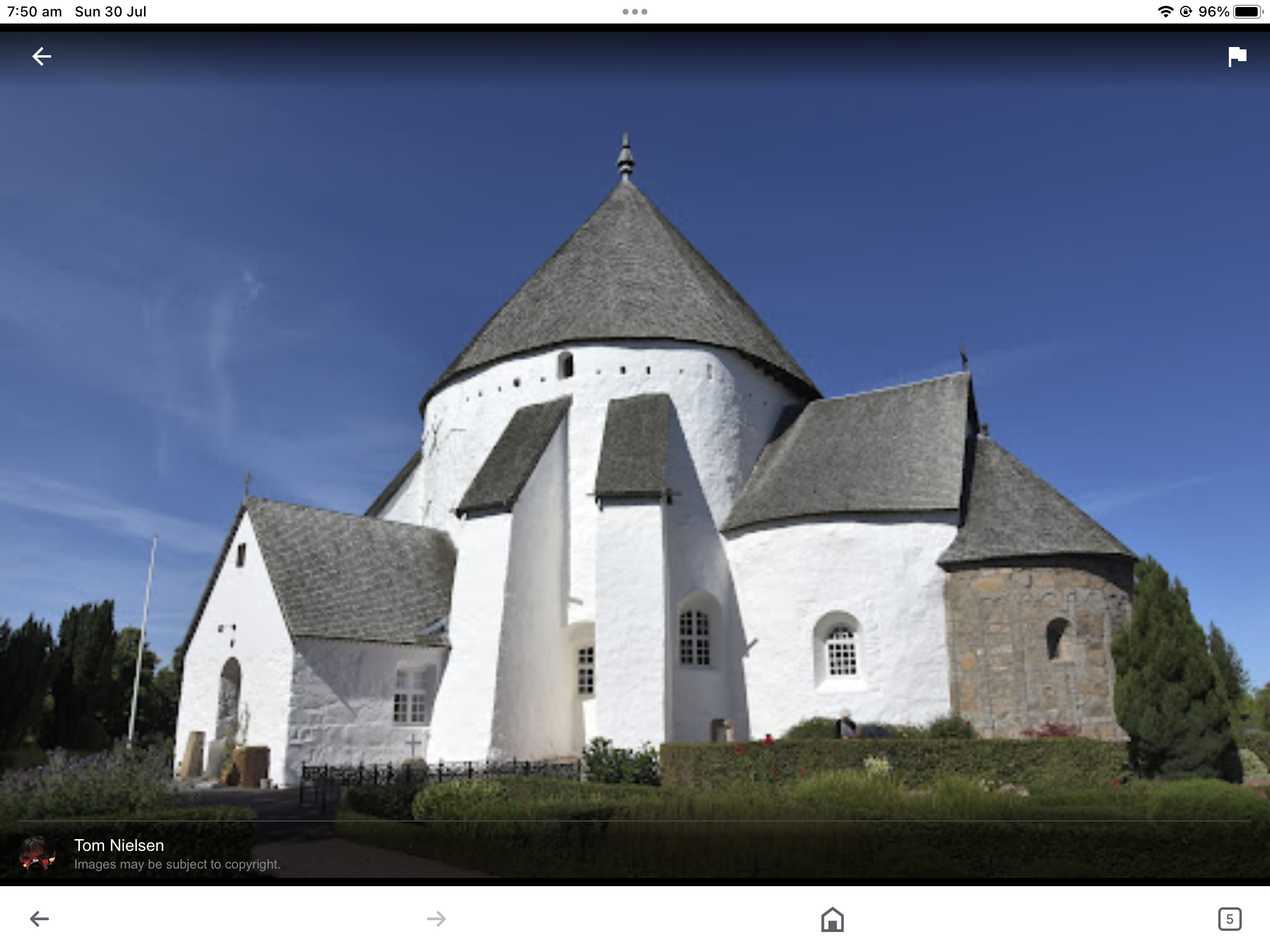
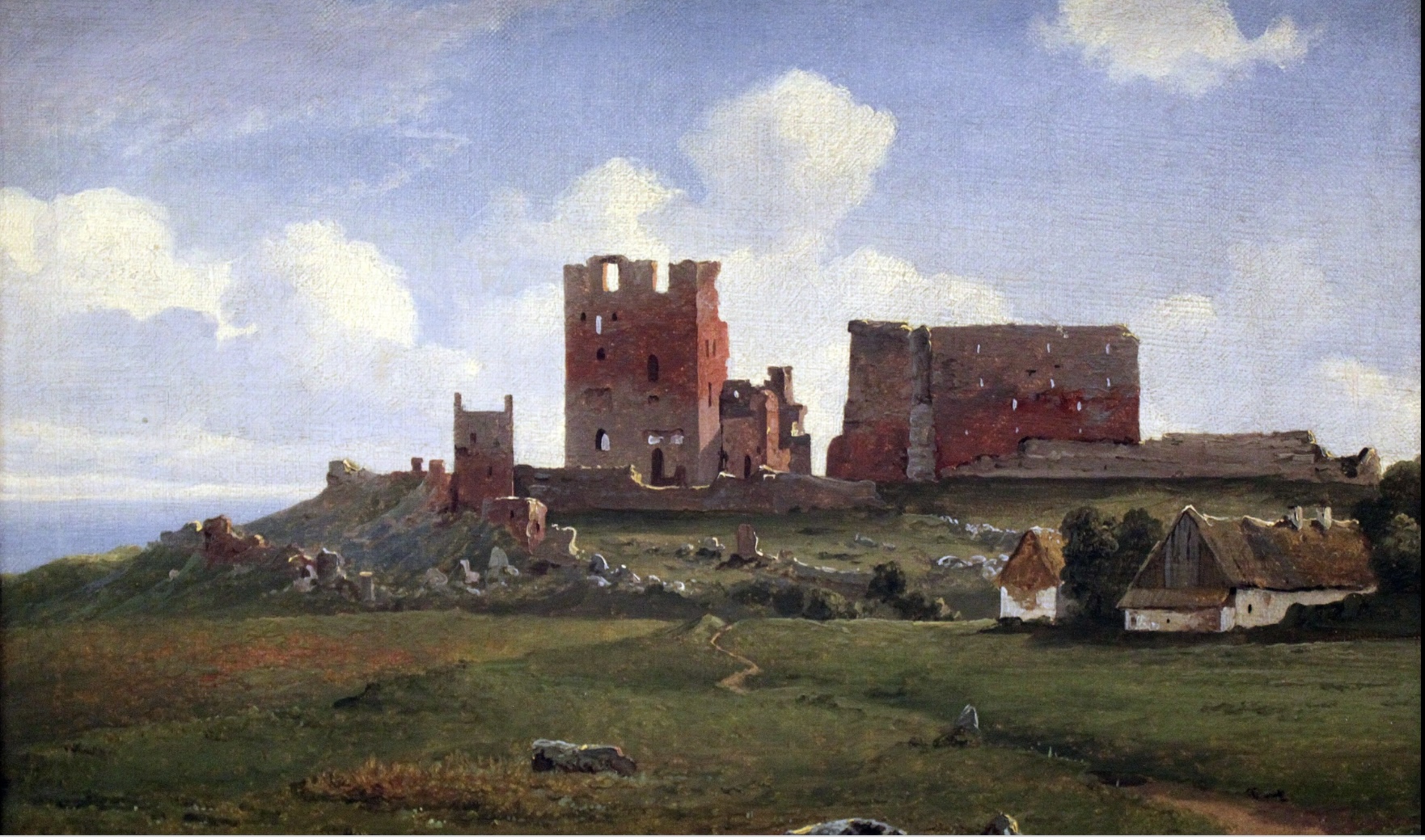
The early pagan Danes took their time in converting to Catholicism and eventually evangelical Lutheranism. The unusual Osterlars round church was fortified and built about the year 1200 at a time of conflict between the church and the king. While the king built the Lilleborg Castle about that time, the archbishop of Lund chose to build the much larger imposing Hammershus castle. Hammershus played an important part in the many wars of the Middle Ages. It was deserted in 1745 and fell into ruins. Mainly because it was a great source of building materials which could be better used elsewhere. It was only as recently as 1900 that the historical significance of the site was recognised and some restoration began.

Hammershus is such a vast area of crumbling masonry that it is difficult to gain a good perspective. The following painting from the year 1848 gives an impression of what was involved.

Helsinki

Finland was part of the kingdom of Sweden from the 13th cent til 1809 when it became an autonomous duchy of the Russian empire until 1917 when it declared independence. The composer Jean Sibelius was born into this period of Russian oppression/suppression and his music often reflected a wish for his homeland to at last be independent. In 2015 on the 150th anniversary of his birth, Finland staged a series of Sibelius concerts and events. The Flinders Quartet were invited to come from Australia to perform all of his string quartets as part of this celebration.

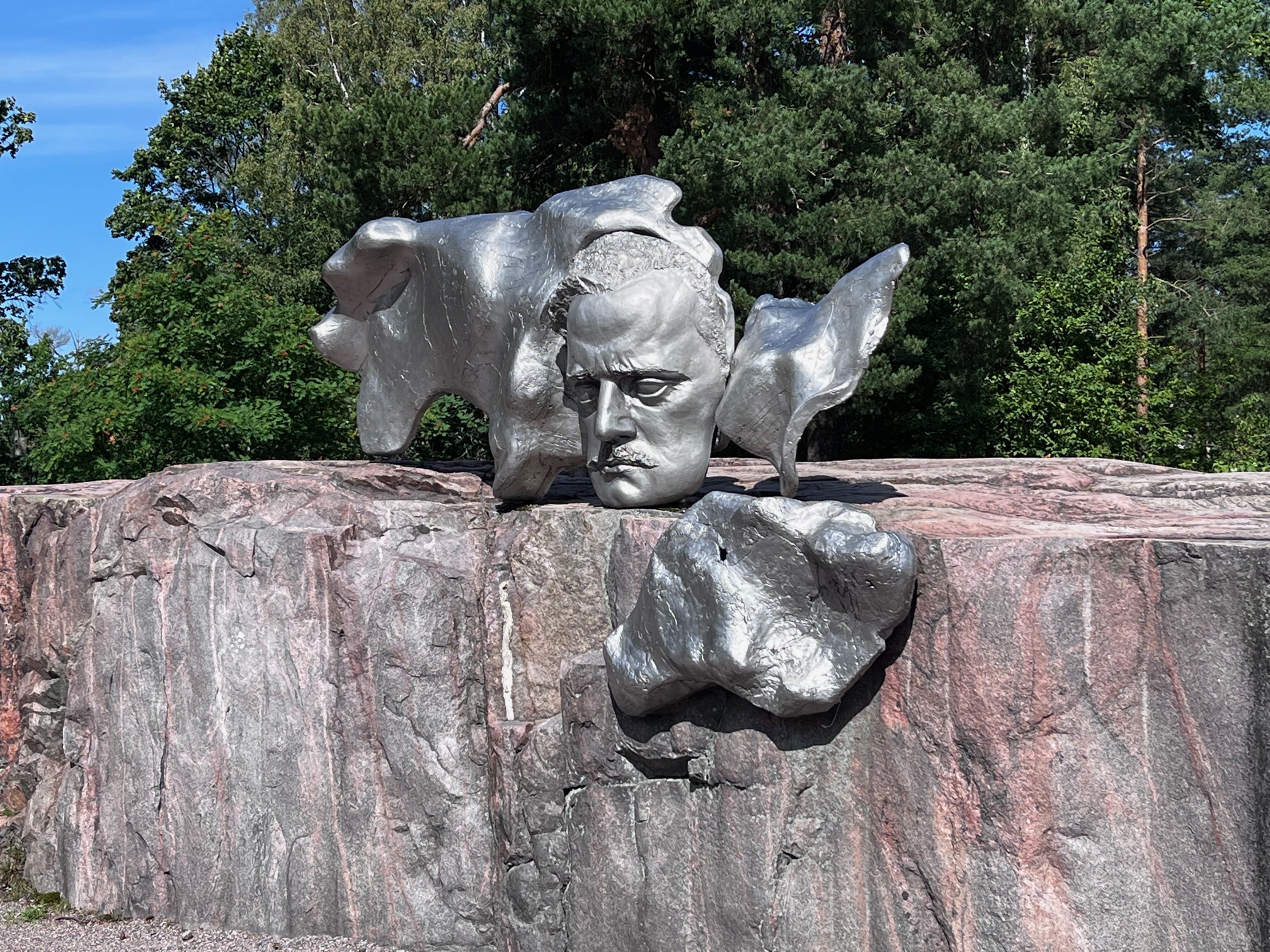
In Helsinki now, there are two monuments to Sibelius. One by the Sculptor Kuvanveistaja is simply the head of Sibelius surrounded by clouds representing Russian oppression.

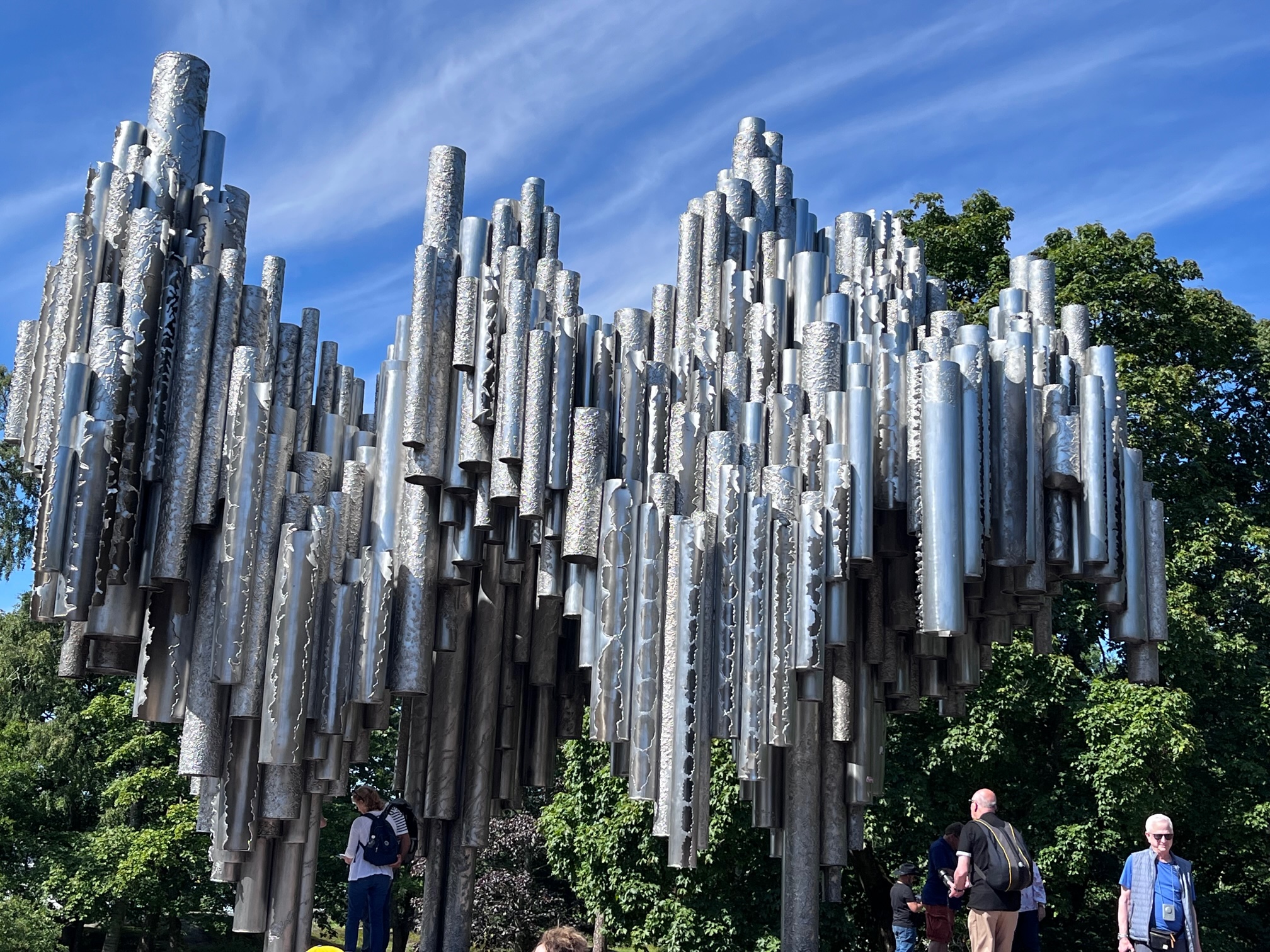
The other is a massive assembly of 800 stainless steel pipes. Alluding to Sibelius’ organ music, the work took 6 years for the artist Elia Hiltunen to build. It was completed in 1967 to commemorate the decade after the death of Sibelius. His widow Aino lived on for another two years and died at the age of 97. The famous Australian polymath, Barry Jones had long been an admirer of Sibelius and his work. After the death of Sibelius, Barry visited Finland to possibly pay his respects the aging Aino. Authorities told him he shouldn’t visit because Mrs Sibelius is so frail and old. Undeterred, Barry knocked on the door anyway. When she opened the door, Aino said with delight “Barry Jones! – what a surprise. Do come in” Such is his fame.

Technical quality is a bit ropey but the best that I could do on short notice. Following pic shows Barry, shortly after turning 90 having a good time at the recital centre with Zoe Knighton and mutual friend Julian Burnside.

Posted in category, Europe | 6 Comments

Highgate London

We have arrived in London.

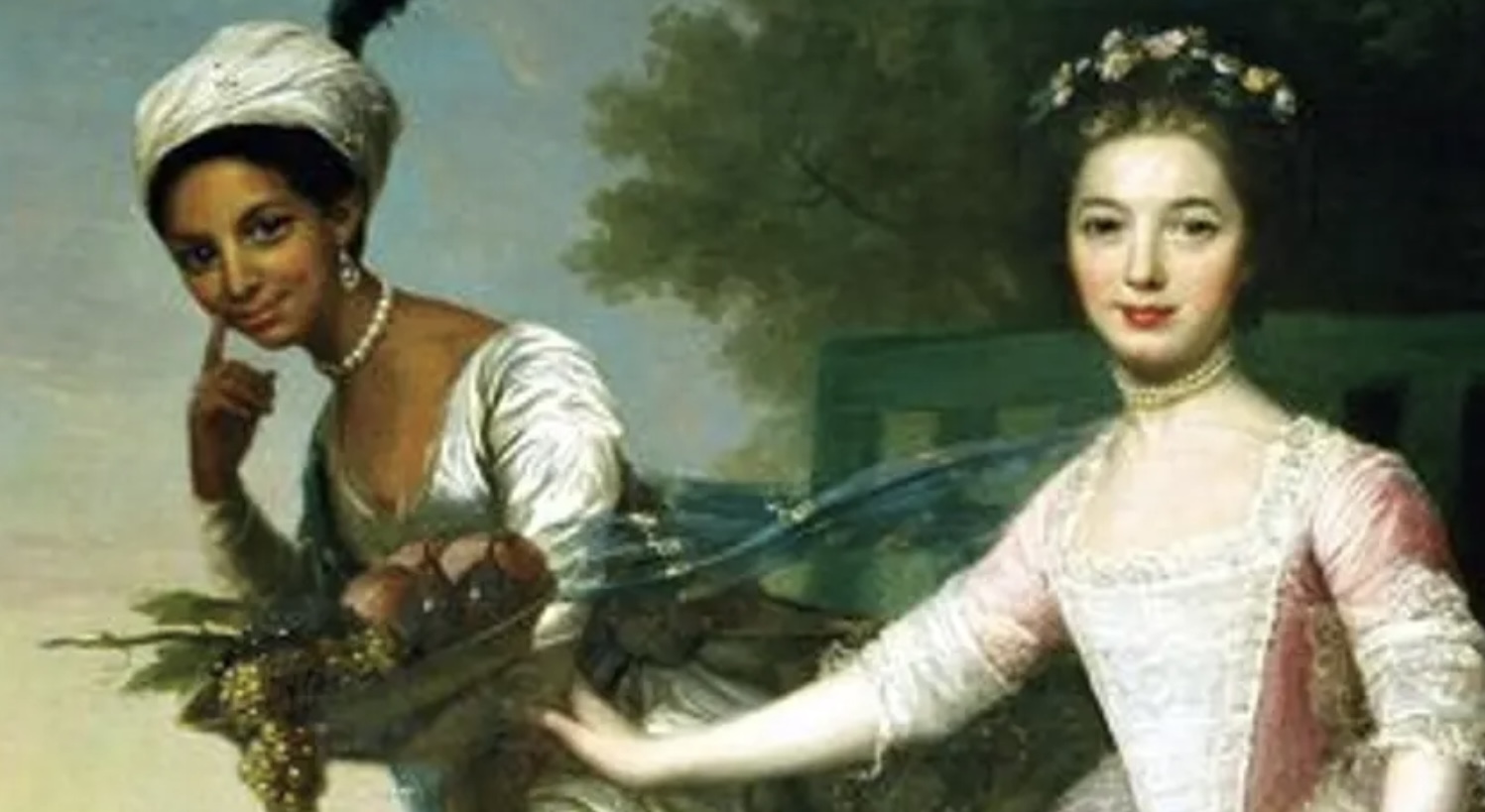
A few days with Cousins in Finchley, North London. Highgate on the great north road is quite nearby. In the olden days Highgate was the first stop on a journey to the North with a coach and horses. Change the horses and so on. An important feature of Highgate is Kenwood house built in the 1776. Remember the 2013 movie “Belle” with Tom Wilkinson? The film represents, with some cinematic licence, life in Kenwood house in the late 18th century. “Britons never never never shall be slaves” so the anthem goes. However, Britons of the time were not averse to using other peoples as slaves.

William Murray, Lord Mansfield of the movie was the Lord Chief Justice of England. He owned the Kenwood estate and lived there in style and grace. Happens that his nephew Sir John Lindsay in a liaison with the black slave Maria Belle in the British West Indies, produced the beautiful illegitimate black baby Dido Belle. Although she was born into slavery, Mansfield adopted Dido Belle and brought her up as an aristocratic sister to his own daughter Elizabeth on the Kenwood estate.

Dido Belle and Elizabeth Murray

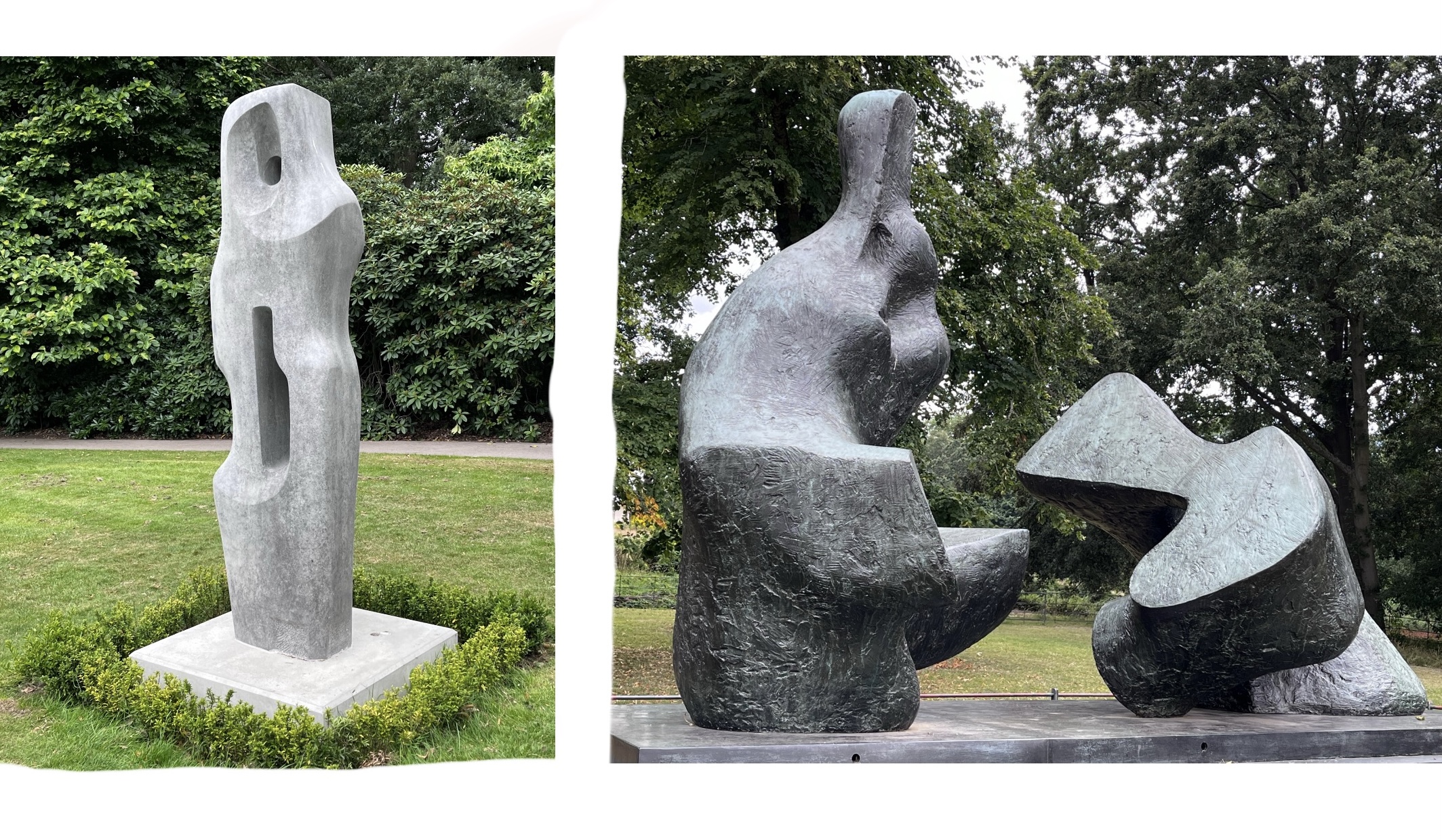
The Murray family retained Kenwood till 1910 when the 6th Earl Mansfield fell on hard times, sold at auction the exquisite contents and offered the property for sale. Years earlier Edward Cecil Guinness, on the sale of his share in the Guinness brewery had used the very substantial fortune, thus generated, to pursue the collection of fine art, in particular, rare and valuable old masters. At the time the Murrays offered Kenwood for sale, Guinness was still enthusiastically collecting but was running out of gallery display space to display the growing collection. So he bought Kenwood not to live in, but as a venue for display of some of the collection. Shortly before his death in 1927 he gifted the estate to the state to be administered by the national trust on the condition that it would be open every day and that entry would be free. A couple of hundred enthusiastic volunteers enable this situation to continue. Such is the experience that most of the horde of visitors are happy to make the suggested 5 (where is the pound sign on this iPad?) donation. In the grounds there are a couple of restaurant/cafes, one that welcomes dogs on a lead and one that doesn’t. Also some choice sculptures.

Barbara Hepworth. . / Henry Moore Bronze

.

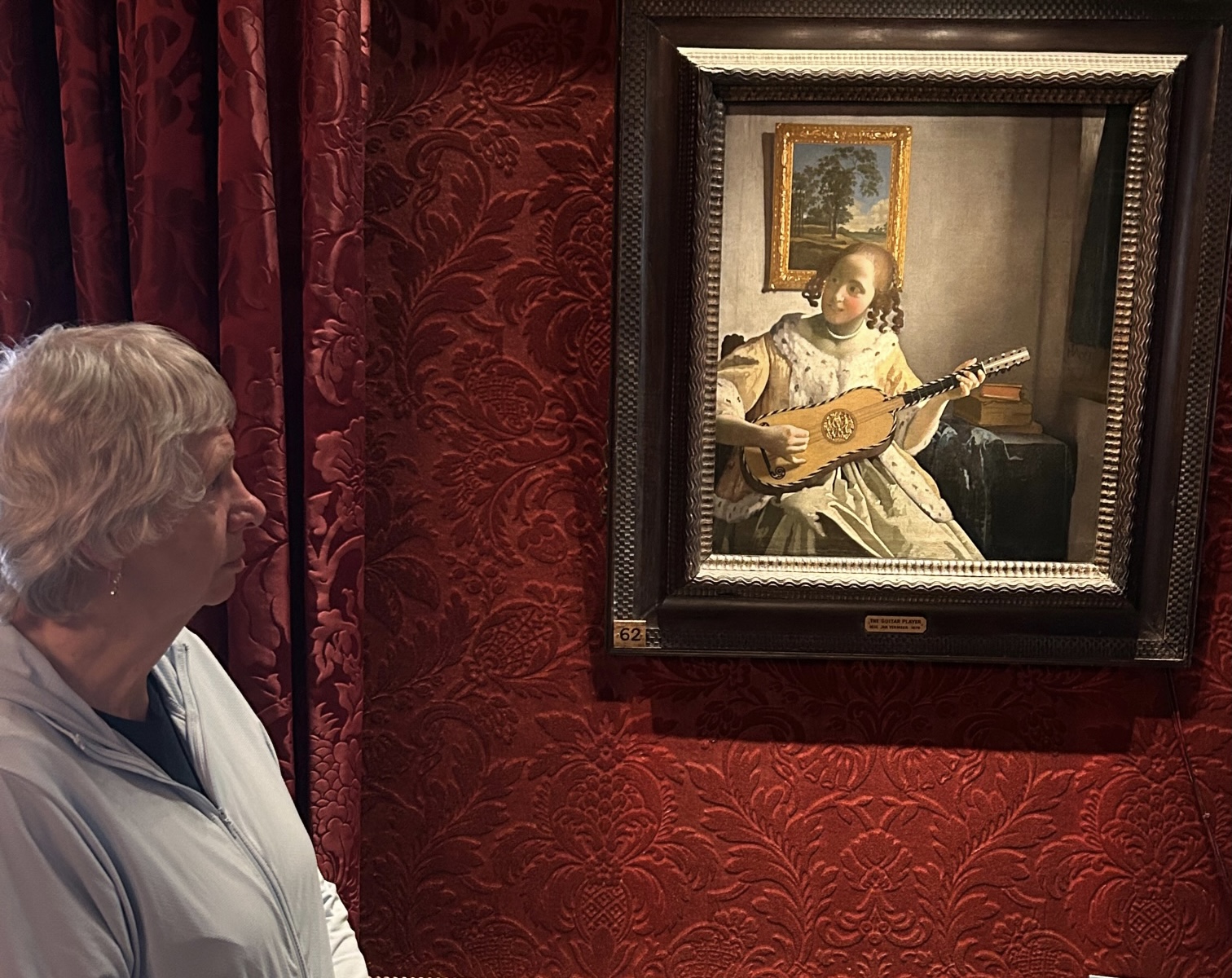
Sweetie Pie has this thing about Vermeers. Not particularly owning them, just going to look at the actual paintings. So far she has collected “The girl with the pearl ear ring”, “The milk maid”, “The love letter” in the Rijksmuseum and a couple of others. Guinness was also keen on Vermeer, but he was in a position to own the real thing. In this case The Guitar player. As you see, it is presented without any particular reverence alongside a whole lot of old masters.

Back to Britons and slaves – Also at Kenwood is this Gainsborough portrait of the wealthy noblewoman Caroline Lady Brisco, painted in the year she married. Her wealth was derived largely from the trans Atlantic slave trade. She inherited several sugar plantations in the Caribbean from her father and husband. Kenwood is neither grand, pretentious nor majestic. It was simply a very comfortable house that is now an interesting art gallery.

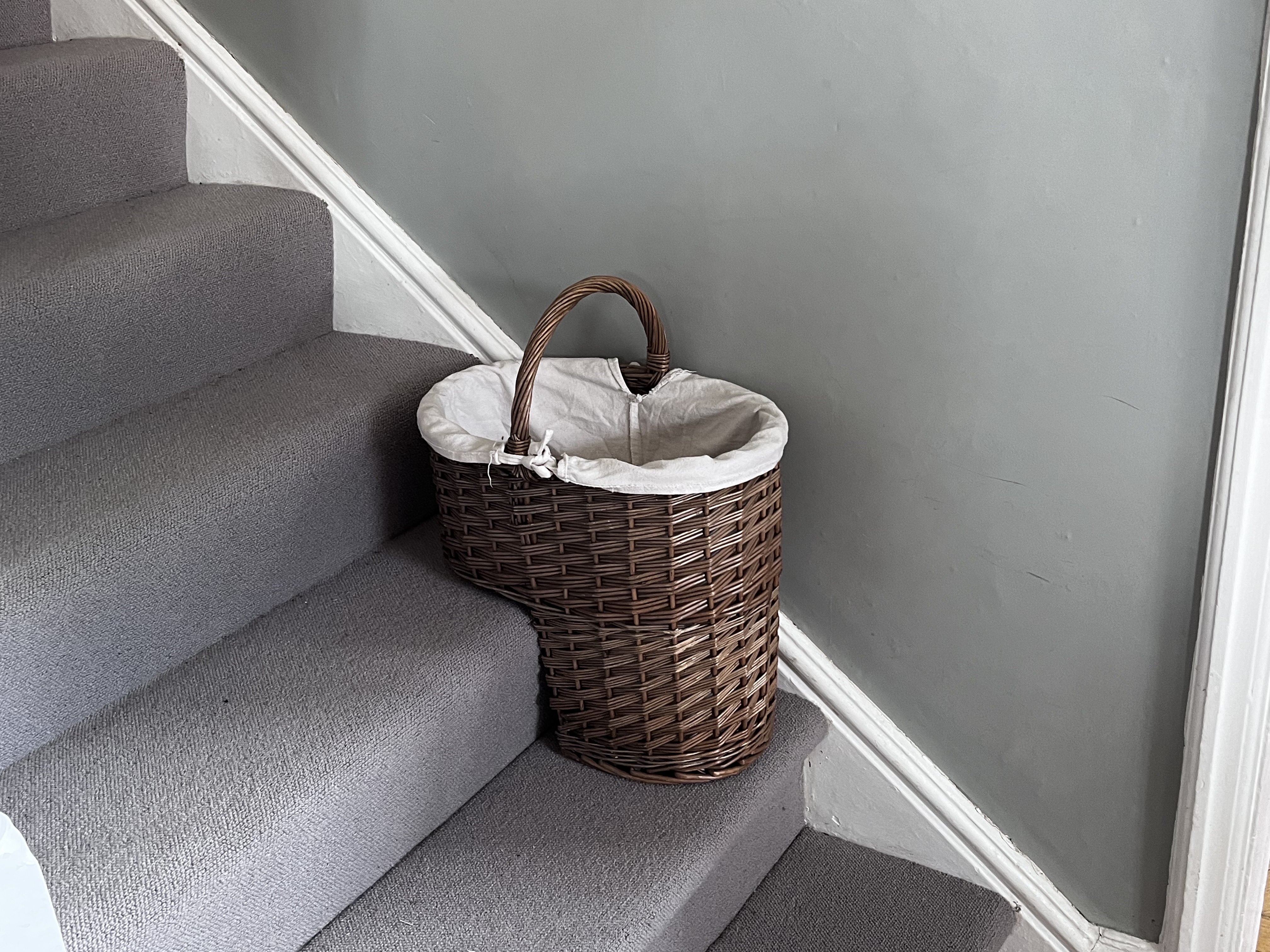
Back home in Finchley the accommodation may not be quite so expansive, but its quintessential Englishness is expressed in this humble Stair basket. We set sail for the Baltic Sea tomorrow, but more of that later.

Posted in category, U.K. | 10 Comments

High ‘C’s on the High Seas

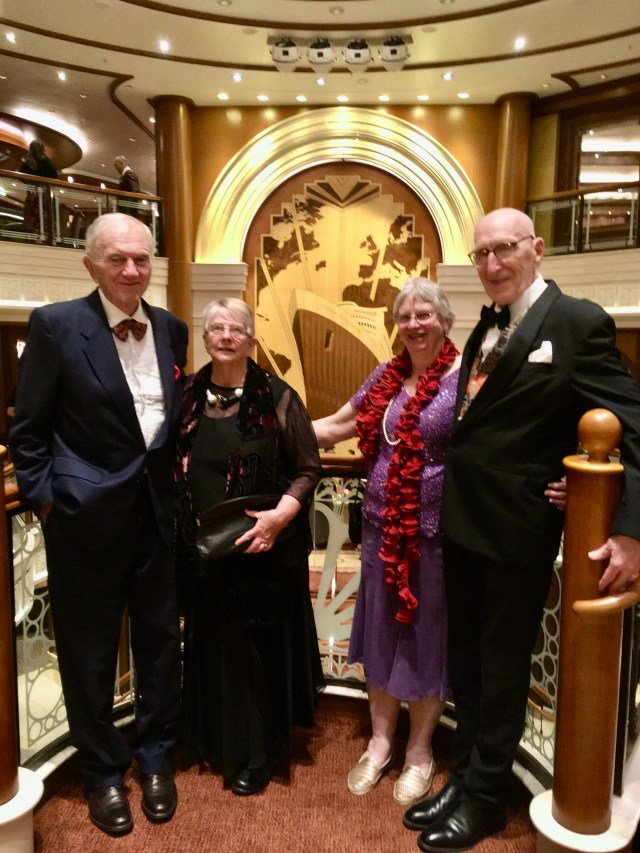
Melbourne to Melbourne, circumnavigating New Zealand, making landfall a few times and doing a sail-by of Milford sound. Alerted to the fact that there are regular Gala or Galah nights, we came suitably frocked up with fancy gear.

Although the current MV Queen Elizabeth is only ten years old, from the art deco design and fittings, she might well have been sailing when the current greying, wobbly and sagging passengers were but little children. Cosy staterooms (their word) with balcony, serviced daily and turndown service with chocolates on the bed at night. Magnificent public rooms; a grand theatre; swimming pools; promenade deck. Elegant grand dining room with stiff white tablecloths, silver, crystal and white gloved waiters. Formal afternoon tea began as a ritual on Cunard ships 140 years ago, and continues to this day. Tea, cucumber sandwiches and scones in the Queens room by day, dancing by night. English pub downstairs on the 2nd floor and a cocktail lounge 0n the 12th.

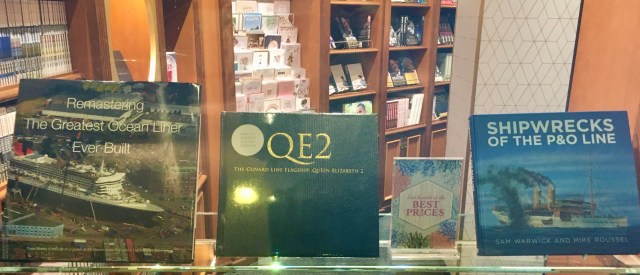
Something for everyone. “Chairobics” and line dancing are popular. The casino has lessons in poker machine, beginner and advanced, and there are lessons and tournaments in Bridge. The on-board art gallery is a branch of the English Clarendon gallery. They have originals and prints for sale, and the manager gives talks on life and works of artists like    L S Lowry and Salvador Dali. A spiral stairway connects the upper and lower levels of the library. The parochial bookshop displays a coffee table book – “Shipwrecks of the P&O line”.  There are guest speakers like the lawyer in the Lindy Chamberlain case, a pilot from Concorde and a park ranger talking about New Zealand flora and fauna.

The 830 seat Royal theatre has a different show each night. including musical singing and dancing, three tenors type harmony, duelling cellos, a performance by a Maori troop explained the culture and the dances climaxed with a terrifying Hakka. The fastest pianist in the world, Ashley Carruthers featured at the Royal along with Rock Rhapsody doing the hits from Queen. Music everywhere. The place is littered with grand pianos in the foyers and bars playing everything from classics to Billy Joel. A string trio and a concert harpist elevate the tone of the grand central foyer. Another of the entertainments between formal dinner and the show is to see a line of guys dressed up like penguins giggling outside the lady’s toilets.


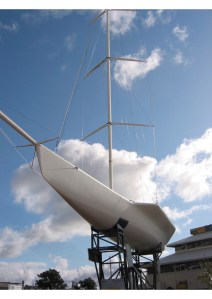
Auckland was the first land fall. Their maritime museum counterbalances the sea going and warfaring craft of the early Maoris with trophies of the Americas cup challenges. The Kiwis KZ1, purported to be the fastest monohull in the world, was New Zealands know-how at its finest. In 1988, the result was predictably lopsided, as the KZ1 was no match for Dennis Connors smaller faster catamaran, Stars and Stripes. However, the Kiwis returned in 1995 to take the cup from Stars and Stripes with Black Magic (NZL32) and went on to make a successful defence in Auckland in 2000..

.

.

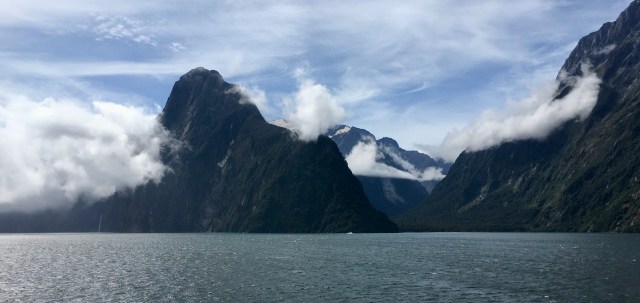
The absolute highlight of the cruise was a passage through Milford Sound. The New Zealand Fiords are notorious for bad weather and lack of visibility. The icy gale force wind on the front deck was brain stoppingly savage. Monumental shards of rock rose from the water to disappear hundreds of metres above in a foggy mess of racing clouds and mist. Nature at its most menacing majesty.

.

.

Why did we wait so long? It was fantastic. The food, the service, the wine, the entertainment, the food, the luxury facilities, the wine, the lifestyle, the food, the glitz, the wine, and hundreds of people just like us for company. Roll on the next one.

Posted in New Zealand | 2 Comments

The March

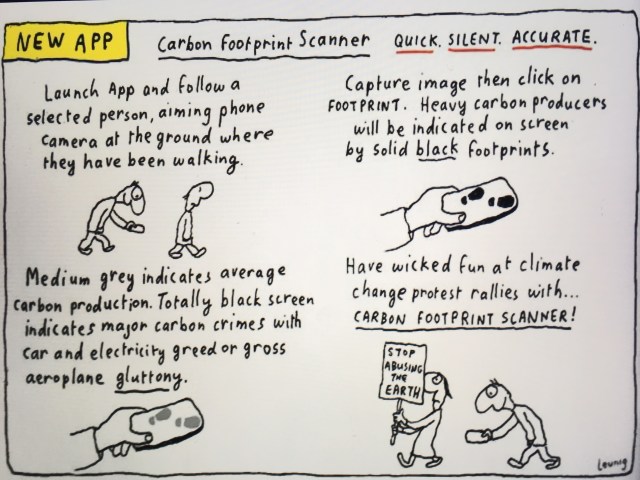
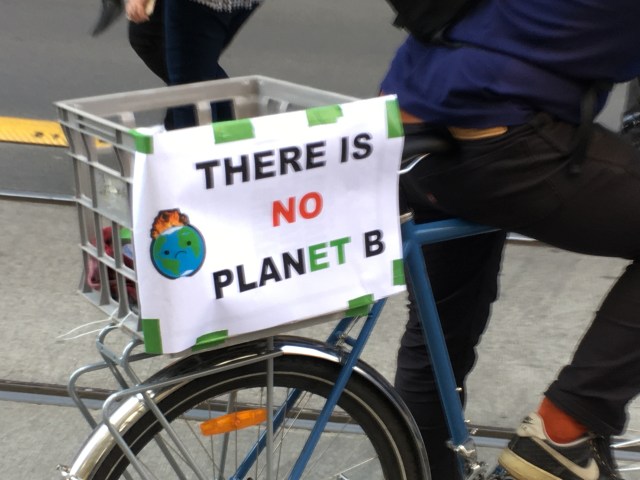
Friday 20th September saw a worldwide statement by millions of people, marching to draw attention to the sort of world that we are likely to face if global warming is not moderated.

The marchers generally believe that action must be taken to avoid catastrophe. There are those who see the marchers as lefty hippy ratbags, not in touch with the real world where jobs must be secured, electricity, water and gas provided at reasonable prices, where the environment can be treated as a consumable commodity. Passionate people line up on either side of the divide.

The Marchers and the Conservatives. It is easy to emotionally side with the Marchers but be tempted to swap sides when considering the likely discomfort and financial cost of effective climate control action. Discomfort which includes inconvenient moderation of thoughtless habits that waste and pollute. Me? I like to lead the good life. I am embarrassed at the sheer quantity of stuff that I have accumulated in a lifetime of hedonistic consumerism. Stuff that has no real value other than bringing back happy memories. For all that, we are now fairly diligent about composting, recycling and avoiding unnecessary packaging.

If we were told that we could save the planet by having one less car and by making do without heating and air conditioning, that we would just have to wear warmer clothes in the winter and fan ourselves in the summer, what would we do? It may come to much harder tack than that within the next twenty years. I hope that I will/would have the intestinal fortitude to stay with the marchers.

Pa: Why are these people marching?

Fin: To stop pollution.

P: What will happen if pollution doesn’t stop?

F: The earth will die.

P: Are you and your buddies worried about that?

F: Yes.

P: Me too. What do you think that will happen?

F: The earth will nearly die, then people will do things.

P: What will they do?

F: Stop burning coal, have electric cars, stop smoking and stop using plastic.


Posted in Australia | 1 Comment

Milan and the Lakes

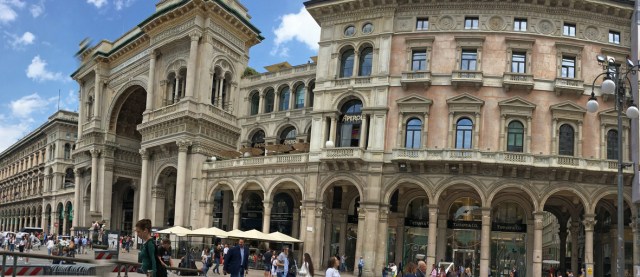
The big three of Milan, La Scala, the Vittorio Emanuel Emporium, and the Duomo, stand together in the middle of town. The Duomo is totally overwhelming. But then, it has had quite a few hundred years to arrive at this point.
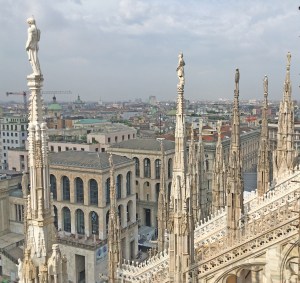
It is very nearly complete, a couple of blocks of marble still await conversion to sculptures. Meanwhile, natural forces are working strongly in the direction of decay. Inside and out, teams of hard hats work high on the scaffolding, restoring and repairing. Such is the program of their work that they have to continually move on, leaving the ornate marble only partly cleaned and restored. It is likely to be some time before the Duomo stands clean and complete, free of scaffolding and hard hats. At the top of the Duomo, the heavy marble roofing tiles sit in stark contrast to soaring spindly spires crowned with statues of the saints, not teetering, just comfortably at home in the sky.
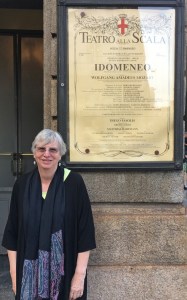
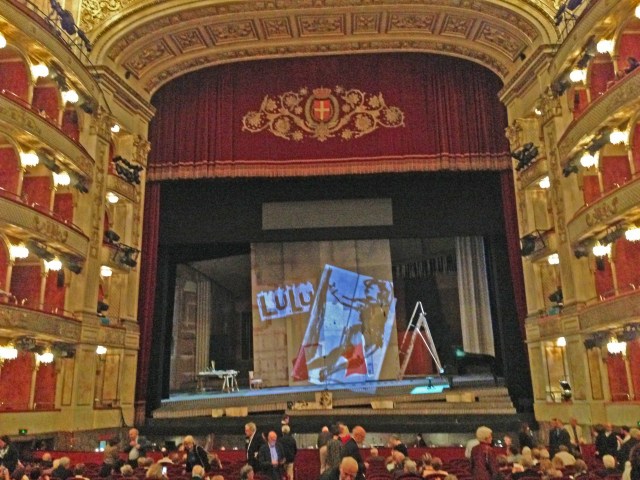
Given the reputation of La Scala, we expected nothing less than the best with a performance of Mozart’s Idomeneo. We played our part by dressing for the occasion. The grand auditorium is geared to acoustics and performance, and succeeds brilliantly. If the audience is physically a bit uncomfortable, that is a small price to pay. Of course, Idomeneo must be sung by the classical tenor and the bad guys by baritone or base. That means that Idamente, the gentle son, must be sung by a higher voice. The obvious answer is by an alto, yes, a woman. Puzzling at first, but it all works out OK.
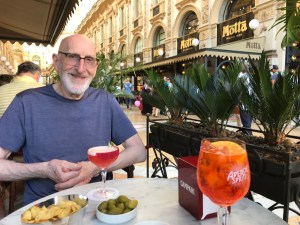
 

At the majestic Vittorio Emanuel II Emporium, a sea of shoppers and lookers swells past the boutique salons, while we sit in the smug comfort of the famous Camparino Bar, sipping Aperol Spritz and Italian Sours. And further along the street it is possible to lounge, sipping and supping on the rooftop of the swish La Rinascente department store while checking out the Saints across the street on their spires of the Duomo.
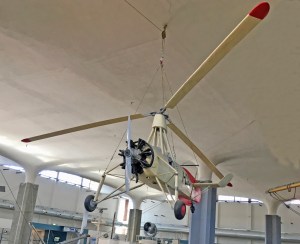
The Science museum in Milan has much in common with other similar collections around the world. The Milan Museum stands apart by emphasising the leading role that Italy played in development of gadgets of all sorts. Leonardo certainly got them off to a good start. So, there is a display of Leonardo designed things produced by an army engineering team. Then there are the planes, boats, torpedoes and trains. Italy did it all first, and so much bigger, faster and better than anyone else.

.
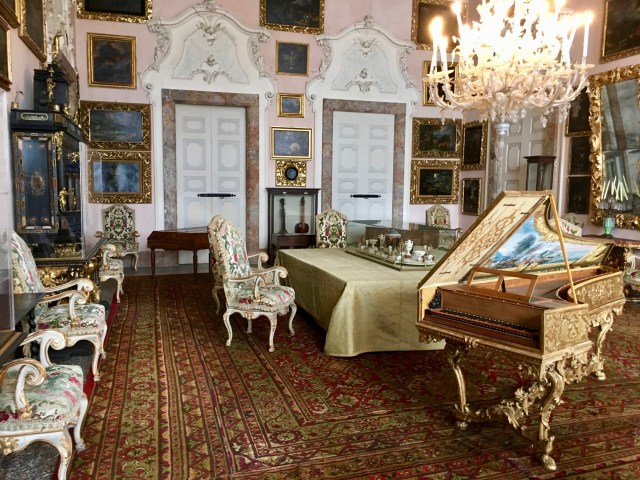
The Italian Lakes, Como, Maggiori, Garda, Orta and so on make a great playground for the rich and famous. The Borromeo family had control of much of the area till Napoleon marched in around the year 1804. Napoleon kindly left them with the Borromean Islands on lake Maggiori. The palaces of Italy often changed hands over the centuries due to squabbles, wars and bankruptcies, but the Borromeans have managed to hold on to theirs through thick and thin to this day.
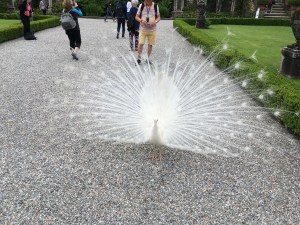
The architecture, the art, the furniture, the tapestries, the gardens have been continually maintained and developed through the centuries. Groups of about forty people are ushered through the grandeur of the Isola Bella palace and then into the terraced gardens with proud white peacocks. The vast gulf between this glittering excess and the lives of ordinary people may be obscene. But the enterprise employs a huge army of staff. The resources available to the gardening staff must make this one of the choice gigs in the country.

.
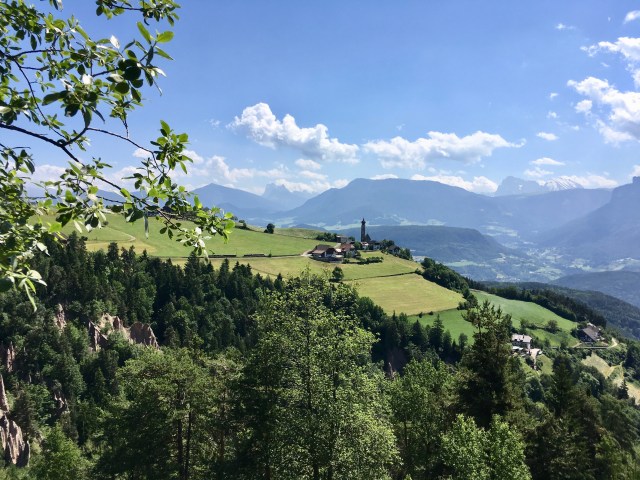
The Tyrolean alps of the Sound of Music spill over from Austria into Italy. Politically it is Italy, but the food, the dress, the manners, the language and rococo church decoration are totally Austrian.

.
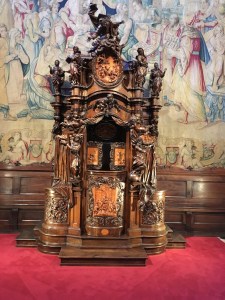
In a church we came across the ultimate confessional. If you have something serious to confess, this is certainly the place to unburden the guilty conscience.

Access to the yodelling hilltops is by funicular railway and cable cars. The contrast between Alpine street music and Milan street music is revealed in the video clip.


.

.

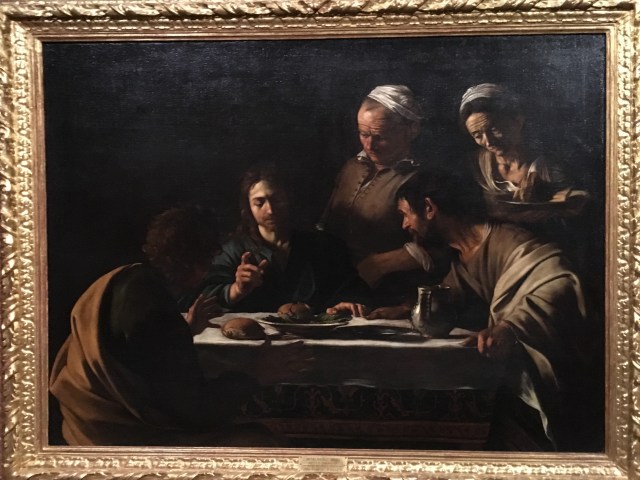
The Pinacoteca di Brera is the serious gallery of paintings in Milan established in 1809, by request of Mary Therese of Austria. Later, at the direction of Napoleon, the collection became a museum with the intention to show the most important paintings plundered by the French Army, paintings from the churches and monasteries of Lombardy were added to the collection, as were other confiscated paintings. At the heart of the Brera is a towering glass enclosed laboratory where the public can watch as master works are meticulously restored and repaired. Paintings as high as 6m are mounted vertically and the restorer sits in a comfortable work station, traversing the painting on a sort of gantry. They have only one painting by Caravaggio, but it is the brilliant Supper at Emmaus depicting the moment when the resurrected but incognito Jesus reveals himself to two of his disciples in the town of Emmaus only to soon vanish from their sight.
Posted in Europe | 1 Comment

That Sinking Feeling

.

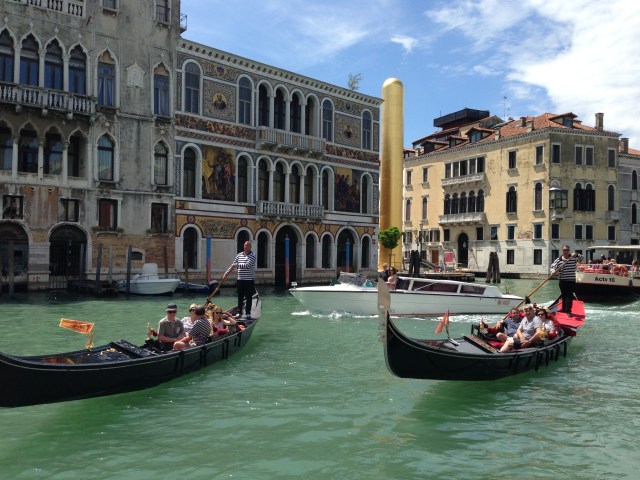
Arrived in Venice in soaking rain, confronted with a sea of umbrellas. A ten-minute sodden trudge found us at our new home. And in the middle of the action, only five minutes from the Rialto. Happily, on the ground floor without any stairs at all. Ground floor in Venice is sometimes beneath the waves. In our case ground-floor is above the waves most of the time. Blocks under some of the nicer furniture and tell-tale rust marks reveal the need for caution at very high tide. There is now provision at our front door for inserting a temporary barrier. So it would be theoretically possible to open the door inward and step out over the barrier into knee deep water. Worried? Never! We have wifi and hot water in-house. Wonder what the super mart, deli and cafe will do?.

.

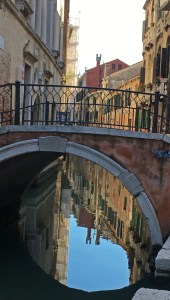
The Venetians have ways of getting things done in spite of the difficulties imposed by the canal system. The only wheeled vehicles on the islands are wheel barrows. So, everything has to be delivered by boat, by wheel barrow or hefted over the shoulder. Building materials, groceries, tourist nick knacks, rubbish. Everything. Our personal gondola launching pad has been taken over by a team of builders. The scaffolding and planks dumped on the landing, to be man-handled away by the hard hats. The building next door seems to need roofing repairs, some four or five floors above the river – depending on whether or not the flooded basement is counted. Point is, there is nothing but water on which to base the scaffolding. The solution is to bolt the scaffolding onto the wall, about 3 floors above water level. Missed seeing them install the brackets. Sky hook? 30 ft. ladder on a row boat? You have to believe that they know what they are doing. Oc. health and safety is hard hats and waving the tourists out of the way.

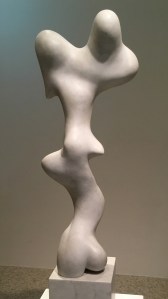
Arp at the Peggy G

.

In Venice for the Biennale, where artists aspiring to be best in the world come to show their wares. We come here to be challenged, confronted, educated, amused and inspired. It is exhausting work but we have succeeded. In no position to compare and contrast the value of the material. Sometimes not sure what is an installation and what is just a piece of machinery in an empty room. Some the video presentations were genuinely moving, with others, the camera might have just been accidently left running. Maybe that is actually sometimes art. Nah, don’t think so. The following notes record a few of the things that moved us.

.

Ghana, the first black African country to achieve independence, this year was the first black African country to have a pavilion at the biennale. An enormous expanse of wall hanging with hundreds of thousands of tiny elements painstakingly joined with fine copper wire by a team of 25 workers. Speaks of skill, patience, persistence, cooperation and vision. In the next room photos of many proud, well-mannered, civilised matriarchs presents another aspect of Ghana culture.

At one installation, there are three large round glass topped pedestals. Shoes off, you can stand on the glass and have the optical illusion of looking through mirror glass past repeating bits and pieces down into a bottomless hole. Curiously, in the third pedestal, the bits don’t repeat and the display appears to actually end very deep beneath the floor. Optical trick or using an actual hole in the floor?

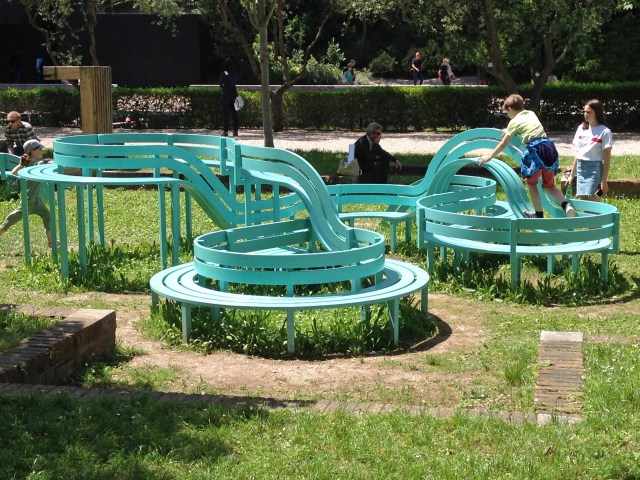
Jeppe Hein placed his sculpture out in the open. With no obvious title, the public were often not aware that it is an exhibit. Grown ups found many comfortable places to lounge and the kiddies were also impressed. Definitely art.

.

.

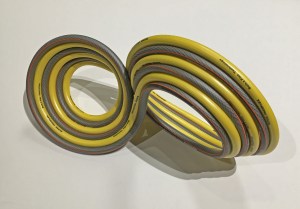
A simple variation on the Moebius loop caught our eye. Ingeniously made of 2 colours of hose pipe to confuse as to what is actually happening. Again, ticks for concept, execution, confrontation and humour.


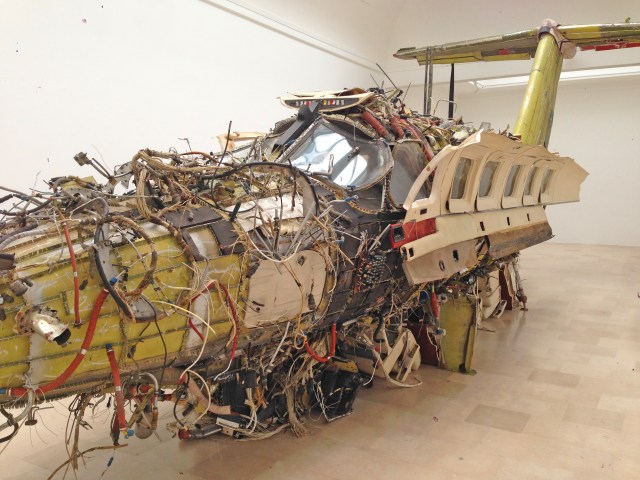
By contrast, the Polish exhibit was an actual plane turned inside out. Probably a twelve seater to give an idea of scale. The artist Roman Stanczak had been mulling over the idea of turning a plane inside out for about 30 years, mainly as a technical challenge. Eventually a plane became available and he used the exercise as a tribute to the fatalities in a presidential plane crash in Smolensk, Russia in 2010. And as a comment on the rift that troubles Polish Society.

.


.

.

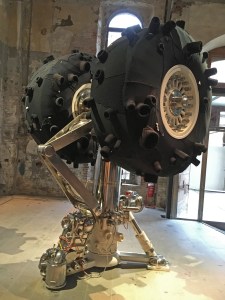
.Still with planes, Yin Xiuzhen constructed a believable life size copy of part of a large jet plane landing gear. On looking closely, it is mostly composed of common domestic hardware. Like little wire handles, a hair dryer and shelf brackets. Would have used a sink plunger, but Dr Who already did that. Perhaps an unusual thing for a woman artist to do, but she likes to work with kitchen bits and pieces.


.

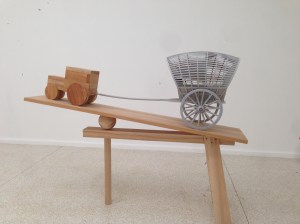
wagon heading uphill to liberty & freedom

Title of the Biennale as a whole is May you live in interesting times. The Americans titled their show Liberty. In view of their history – interesting. They showed a number of works expressing the idea of liberty as well as entrapment or slavery. The most telling exhibit was a sort of comfortably upholstered cage. The attendant laughed when it was suggested that this represents the comfortable prison in which many Americans live.

.

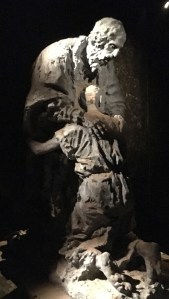
The Russians and Italians, as usual, put on big displays. The Italians built a Labyrinth where it was possible to either focus on the art work or on how to find a way out. The Russians played the Hermitage card by way of inspiration. But clearly said we would be disappointed if we are looking for trinkets from the Winter Palace. Upstairs, a heavily emotional multi-media portrayal of the return of the tear-away prodigal son to his proud long suffering father. Downstairs, a ballet with 18 life-size shadow puppets operated by noisy hydraulic lifting shafts. Accompaniment – simply the hydraulic noise.

But is it art?

Posted in Europe | 3 Comments

Above the towers

.

An hour from Lucca, by a slow train following the river out into the country. Robert and Norma live high on a ridge in a villa in a village confusingly called La Villa. So high that in the morning it is above the clouds. Over a decade ago Norma bought the abandoned shell of an old house. In the course of a couple years of inspired “grand designs” activity it was transformed into their very romantic home. For us, Lucca is presently home away from home, so La Villa has become home away from home away from home. Waking to breakfast outdoors on the terrace out above the clouds. The mountains across the valley look something like a sound of music film setting. In La Villa there are two churches but no shops. The two churches compete to define Garfagnana standard time by striking the hour about three minutes apart..

Continue reading

Posted in Europe | 2 Comments

Life beneath the Towers

Towers, food and wine. The important Tuscan things. As in many places and cultures, the food and wine here varies from the ordinary to the sublime. The range of available Gelati flavours is mind and palate blowing. Our favourite Gelateria is La Crema Matta on Via Fillungo opposite the Torture Museum. We have become such regulars that the boss asked us to put a review on trip advisor. Sweetiepie’s favourite is Zabaglione, mine is Nocchiola con Crema Antica. We’ve been told to say Nosheeola not Knockeeola. Equally good is Dondoli in San Gimignano who twice won a gong for best gelati in the world. Chocolate and Vanilla is always good for a benchmark, and Dondoli produced the most intense death by chocolate ever. A common Tuscan tipple is Aperol spritz – Matta have even produced Aperol Spritz Gelato, Quite OK as a sorbet, but we’d usually prefer a conventional spritz.

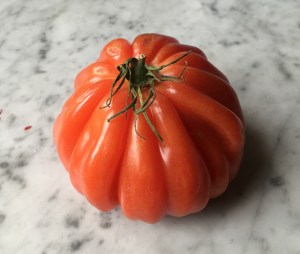
Tiramisu is always good here. So many variations on the theme, all with thoroughly enjoyable exquisite creamy taste, but my own with Rutherglen Liqueur Muscat is still hard to beat. Current favourite cheese is a creamy soft Gorgonzola. Goes well with fine ham which the deli slices so thin it is translucent. The Chianti is jolly, sometimes cheaper than Coca Cola, comes in anything from a plastic bag up to the classic raffia wrapped bottle. Tomatoes loom large on the Italian food horizon in many forms. Came across these strange shaped tomatoes which are very tasty. Rather empty inside like a capsicum. Possibly called ‘Costoluto Genovese’.

View from atop the Guinigi tower

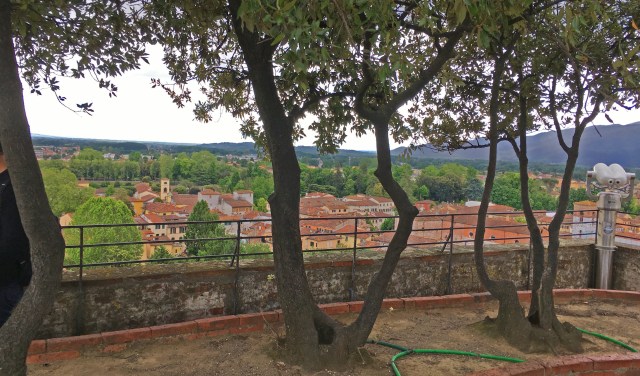
It seems that in Italy every self respecting Lord and tyrant must have a tower. Because they can. To impress, to imprison, for defence and for the view. In Lucca, Siena, San Gimignano, Prato and Pisa alone there were over a thousand towers in the 15thCent. The emblem of an establishment family was their tower. The taller the better. Paolo Guinigi even had a garden with oak trees on top of his. Now open to the public, who, after climbing 232 stairs, face a sign saying (in Italian) please don’t climb the trees or stand on the wall. The video shows some of the current indoor steps. Back in the olden days the steps went up the outside. Easier defence? The families squabbled a lot way back then. The Montagues and Capulets were mild compared to some of these guys. Paolo Guinigi was locked up in prison by his enemies for being a tyrant. He died there two years later. It was normal practice for the winning family to knock down the loser’s tower. Which is one of the reasons why there are so few still standing. However, Paolo’s tower still stands, not sure if the trees are original.  What is it about this tower thing? Is it some sort of blokey phallic competition? In the video clip, these are just a few of the towers still standing. Accompanied by a couple of the resident buskers of the Anfiteatro, whose music inspired me to take a few liberties with the lighting.

Continue reading

Posted in Europe | 1 Comment

The Bargello


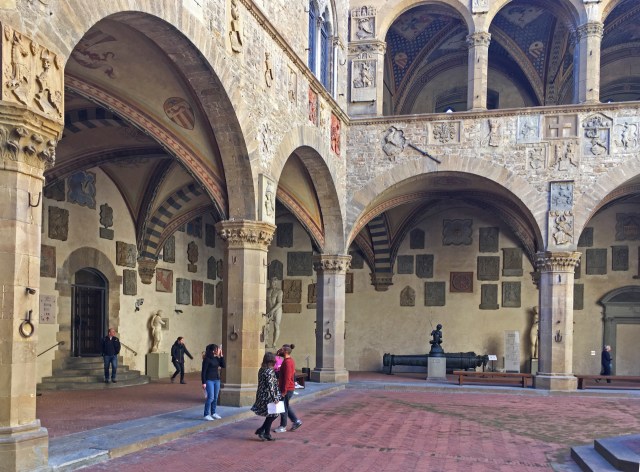
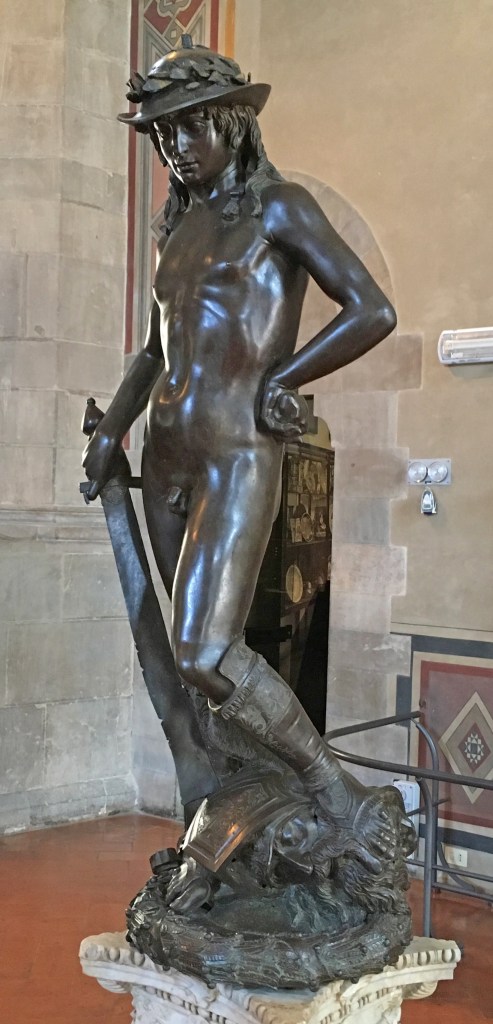
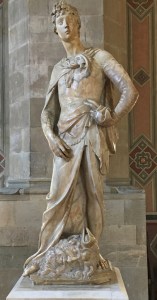
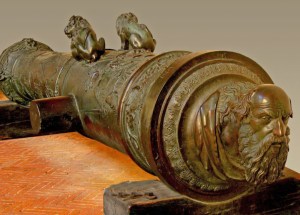
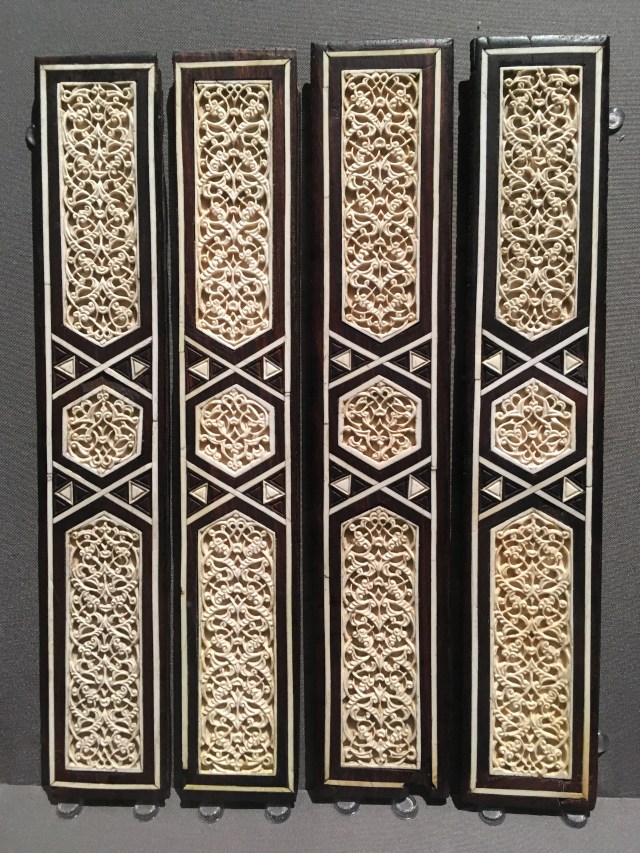
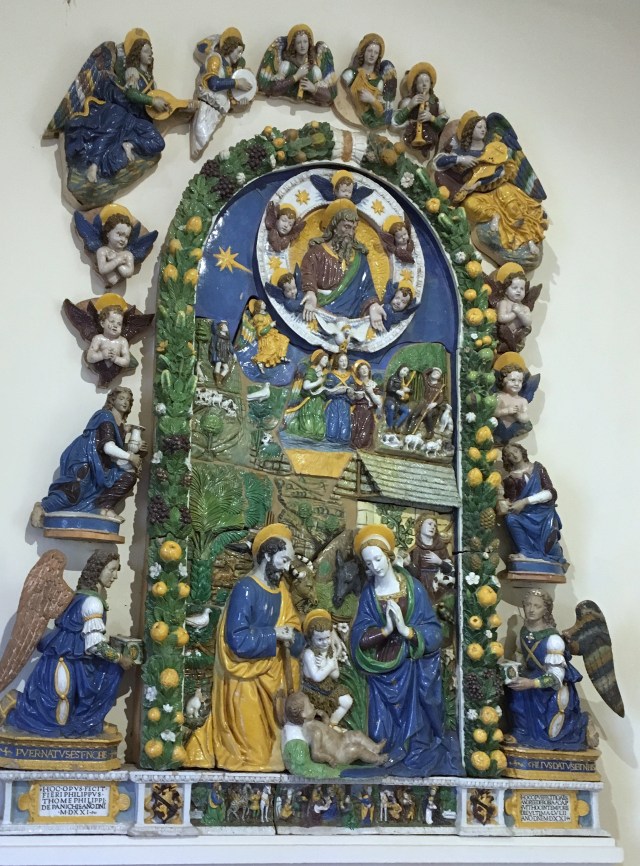
In Florence, The Uffizi, the Academia and the Duomo have their followers and enthusiasts, but for me The Bargello is a stand out benchmark for world class sculpture and decorative art. The Bargello is one of those grand old palaces that begged to be repurposed over the centuries, rather than used as a quarry for masonry as was the Coliseum in Rome. In 1261 the building now known as the Bargello served as the Palazzo del Podestà, the oldest public building in Florence. In 1574, the Medici dispensed with the function of the Podestà and housed the bargello, the police chief of Florence, in this building, hence its name. It was employed as a prison where torture and executions took place in the Bargello’s yard until they were abolished by the Grand Duke in 1786. It remained the Florentine police headquarters of the until 1859 when it became a national museum, and today, the reason for a short, day trip to Florence on a fast train.

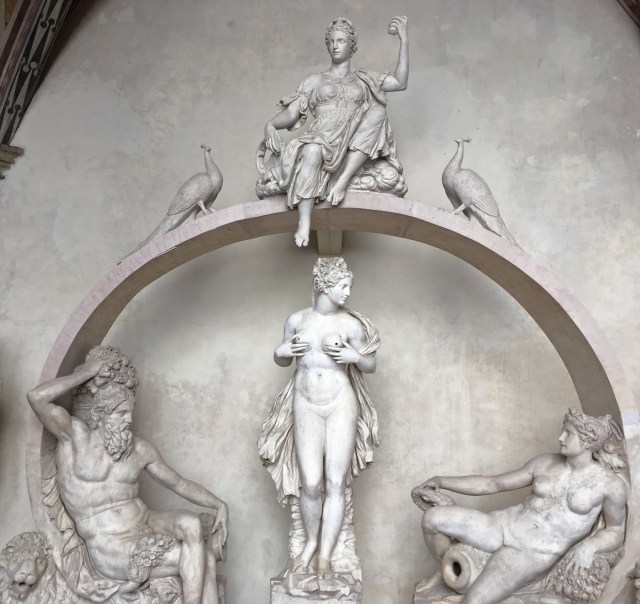
What can be said about a fantastic fountain where water pours from the most unlikely orifices.

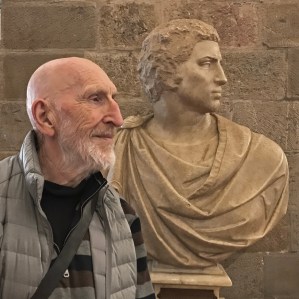
Me and Brutus at the Bargello

.

Booked in advance on-line to by-pass the anticipated throng. As predicted, that ploy advanced us to the head of the queue. Surprisingly, there were only three people ahead of us, but the attendant made them stand aside as we were clearly much more important guests. There were many visitors, but usually only a few other people in each room

.

.

Ah, the Donatellos of David. The bronze of the totally naked David, with a marvellous, slightly androgynous body, wearing only a pretty hat, gazing at the head of the slain Goliath. Such is the humour of his triumph that he might equally have been wearing nothing but a pair of gumboots.

.

Donatellos boy David


Then there is Donatello’s famous marble take on David. This is plainly a boy on a man’s job. Nothing at all like Michelangelo’s Hero. And the boy humbly succeeded. The Bargello also has Verrocchio’s David, also brilliantly emphasising youth, in his case more the naughty little boy than the Donatello bronze


The Donatellos were the main attraction for us, but the current temporary exhibition is a long- awaited selection sculptures of Christ by Verrocchio, the master of Michelangelo. In the crucifixion, Verrocchio portrayed Christ as a strong man in a weak body. A man who has given his all and is not broken, but totally spent. Photos allowed everywhere else, but not in these rooms. In the event a photo would have been inadequate.

.

This is the place to come to see the giddy heights to which the decorative arts can rise. The decoration of the massive St Paul’s cannon is surely over the top. Was this cannon something like the elegant parasol that the princess was reluctant to use, lest it get wet? Surely an enemy savaged by such a weapon should consider itself well and truly beaten.

Weapons of all sorts were the currency of the day. From Cannons down through guns and swords to the tiniest dagger, all enjoyed the finest decoration, often in ivory, sometimes in gold. Difficult to imagine who was doing all of this decoration, the time and skill involved.

Over-the-top decoration was wrought in all available media. This wall display below is an example of Majolica carried to the extreme.

.

Who was the knight proudly riding into battle atop this gilt saddle with its twin golden holsters supporting elaborately hand tooled pistols. How peeved would he be to be shafted from his mount by shabby pike-man.


.

.


Also on display, from the other end of the decorative range is this 17th cent. set of surgical instruments resembling a precursor of the Swiss Army knife. More functional this time, but still not able to resist a little decoration.


Ghiberti and Brunelleschi submitted panels in a competition to decide who would get the contract for the high profile baptistry doors. The panels are now side by side in the Bargello. The judges awarded an equal first to both guys. The judges wanted the two to co-operate in  building the doors, but Brunelleschi sulked and retired to work out a method for building the dome of  the adjacent Duomo. Here, Sweetiepie is standing in front of the Ghiberti doors. An impromptu visit to the Duomo might have been on the cards, but the four deep queue stretching around the corner, around the next corner and out to the horizon was enough deterrent to leave something for next time.


Posted in Europe | 2 Comments

Tuscany 2019


.

The Lucca Italian School

.

First week of our Tuscan adventure has been given over to a week of deep immersion at the marvellous Lucca Italian school. Where the only non-Italian sound to be heard is the occasional furtive English whisper.

.

The Students

Great crowd of enthusiastic students of varying ability. Myself a rank beginner and Sweetiepie an Intermediate. Outside the class-room the students gather for cultural, social and gastronomic stuff. My key phrase for the week is “sfortunamente boh” which apparently means “unfortunately no”. Somewhat reflecting the progress to date. But it has been very entertaining. Italian should be simple. I try to follow the Italian example by waving my arms about when talking. Good for the circulation and exercise, doubtful for communication and bad for knocking things over.

.

Top of the Wall

Key feature of Lucca is the famous wall. Current wall is the fifth after the original Roman wall enclosing the Amphitheatre, where we now roost at the top level surveying the action below. The wall is about 5 km long, 12 metres high and for the most part about 12 metres wide. There is a wide road on top between a continuous avenue of trees. At intervals around the wall there are ten “Ballurados” – fortifications that accommodated troops, ammunition and weapons. The now grassed area of most of the Ballurados is large enough to allow football fields.

.
The outside of the wall is sheer brick, surrounded originally by a moat. The inside of the wall is a grassy slope down to the inner road. Somewhere about a million 6 x 4 trailer loads of rocks and dirt would have been needed to build the wall. Not to mention the bricks – Can you imagine the sort of brick factory that would have been needed? And who did all of the sweat and blood? You choose. Slaves? Certainly! Check out & download a 471 page PDF on medieval Italian slavery. Possibly hungry serfs also helped, and maybe a few people who might have been nervous about the advancing Florentine army.

View from our apartment on high

For the next two weeks we are in a quirky artist’s apartment, high above the iconic Anfiteatro. Quite likely the best foreign accom. we have had. Ever. But there is a price to pay. The stairs are steep and narrow. No front door onto the main tourist drag, but the dark steep first two flights are enough to discourage any would be ne’er-do-well. The next flight is even steeper and narrower, so steep that it is safer to come down backwards. The final eight steps from our front door to the living area would need pitons, crampons, hard hats and ropes for proper occ. health and safety. But once inside, totally wow plus! Comfy sofas,  hammock to lie in and take in the action below, Shower – tick, kitchen – tick, fast wifi – tick, heating, cooling, bed – tick tick tick. Previous tenants were not so keen about the noise from nearby Osteleria. Hey! This is party time! and anyway, the noise eases off by 1 am. Deli, Gelati, Supermart downstairs and just ’round the corner.

The fast Lucca to Prato train stops at about 5 cities and takes only an hour. About the same time as the Belgrave to Flinders St. service at home. Spent the day in Prato with a dozen classmates from the Italian school, taking in the ancient history and the current culture. Many Melbourne people know about Prato because of the campus of Monash University here.

The sacred girdle is the deeply venerated belt of the Virgin Mary, a relic kept in the Prato Cathedral. A narrow strip of gossamer fine wool brocaded in gold thread has been for centuries the city’s most precious treasure. Legend has it the belt, consigned by the virgin to St. Thomas at the moment of her assumption, was brought to Prato from the Holy Land around 1141 by the merchant Michele and donated on his deathbed to the church. Very soon the relic became the subject of extraordinary veneration. Outside the cathedral is a copy of an immense pulpit designed by Donatello and Michelozzo depicting the story of the belt. Five times a year the girdle is displayed to thousands of the devout from the pulpit on high. Down in the crypt, the remains of the real pulpit can be seen by the public, along with a copy of the girdle displayed under the pictorial narrative of the event painted by Bernado Daddi around 1337. The real girdle is kept somewhere secret in a strongbox locked with three keys.

Continue reading

Posted in Europe | 1 Comment

We’ll tak’ the high road


From Aberdeen, north to Peterhead, then west into the Speyside hills. The main feature of the small town of Fochabers is the Gordon castle and estate. The seat of generations of Dukes of Gordon and Richmond. A long time ago we were enjoying a picnic in the grounds of the estate when a horsey, tweedy woman in green welly boots engaged us in conversation. She showed us a huge salmon that had been caught that morning by her grandson. The salmon was on its way it to the smokehouse. Lady in boots lamented that plans were afoot to lay a motorway across the middle of the estate separating the castle from the village church which houses stained glass windows commemorating generations of her husband’s family. She had already moved on when we jumped to the conclusion that we were now best buddies with the Duchess. Alas, not so. Frederick, the 9thDuke of Richmond, the racing car driver, was forced to sell the estate back to the crown in 1938, being unable to cope with a double dose of death duties. So, our best buddy’s husband was actually related to Sir George, a non-duke family member who bought back the farm. The farm is now in great shape in the hands of Angus Gordon Lennox and his wife Zara. The eight-acre kitchen garden is one of the largest in the country, supplying quality produce for lunches at the castle cafe. The huge iron pipes in the hot house in the following pic are a relic of a victorian era heating system. A motor way does now divide the estate, but a two lane bridge connects the castle with the church.

.

From the south end of Loch Ness the Great Caledonian canal begins its 60 mile and 29 lock journey to Fort William on the west coast. Built as an important freight conduit in the nineteenth cent, it is now a playground for the rich and famous with their fancy toys. In November 2017 a decommissioned Danish naval ship was rescued from a nautical knackers yard by a swish couple with vision, imagination and cash. They commissioned the Talsma shipyard to undertake a major refit of the vessel now named ‘Spirit of Romo’. With a Scottish captain and crew, they are now fully equipped to take a few of their friends in eye-watering luxury anywhere in the world. Today they are simply “Doing the Cal”.

Continue reading

Posted in U.K. | 2 Comments

The Staffordshire Hoard


.

About fourteen hundred years ago a hoard of golden treasure was buried in a field in Staffordshire. It is likely to never be known why it was buried in a place remote from any archaeological markers, nor by whom, nor the source of the treasure. The treasure had been buried deep. Centuries of farming progressively thinned the protective cover of earth, till eventually, ploughing started to dismember the treasure, unnoticed by the farmers. In 2009 the fossicker Terry Herbert, trawling the area with a metal detector, discovered a few pieces of gold jewellery. The more he looked, the more he found. Badly mangled, but never-the-less, finely worked pure gold jewellery. Herbert drew the attention of the find to the authorities and the resulting archaeological dig uncovered some 4000 pieces amounting to 5 kg of golden booty. Some of which is on permanent display in the Birmingham Museum. The simple beauty of the work belies the technical issues involved. To do this work, they must have had a fine selection of very interesting tools.

.

Back in Birmingham, it all happens within reach of the Bullring. Current thrill ride for the kiddies is the Mercedes Petronas F1 racing car simulator with voice over by Lewis Hamilton. Down the road a grand old bank building is reincarnated as an Apple store. Some of the hub-caps are starting to fall off the iconic Selfridges building. But nearby, Jamie’s Italian is still the best place to do lunch. Great food, great service, great vibe. And the church of St Martin in the Bullring presides over all. The boys took me to the Avengers Endgame movie which has just opened at the Odeon. The expected mix of mega violence with mushy sentimental moralising. But the best part was the Incredible Hulk trying to master the mysteries of the time travel machine.

.


Posted in U.K. | 2 Comments

The Boat House


Think – a week with the extended family in a cottage in the cold, wild, wind swept hills of Snowdonia. The “Boat House” at Tan Y Bwlch in Snowdonia is a something of a Tardis. From the outside appearing to be small, cold, dark and Spartan, but from the inside, white walls, soaring ceilings, in floor heating, designer kitchen, comfy furniture and abundant bathrooms


We imagine that the owners adopted the shell of an abandoned stone cottage as a project. The previous occupiers of the cottage had been a colony of bats, consequently the development includes a handsome bat refuge so as to be environmentally sensitive.


Tan Y Bwlch is midway between Portmadog on the coast and Blaenau FFestiniog in the slate encrusted hills an hour away by the famous Ffestiniog narrow gauge railway. The railway was built in 1836 to shift slate from Ffestiniog down to the coast. The slate trolleys rolled down the flimsy iron rails by gravity and were hauled back empty by horses. Proper rails, steam trains and the passenger service came later.

In case you are interested, Tan Y Bwlch is pronounced Tan ee boolk and means under the pass or gap. In common with some other British railways, the Ffestiniog train only has one first class and many third class carriages. No second class. Firmly separating the haves from the have nots. We have nots could only press our noses against the windows of the first class carriage and hungrily watch as the privileged people wallowed in luxury.

Caught the train up to Ffestiniog and gave ourselves a couple of hours to check out the shops and sights of the slate town, have a coffee and catch the next train down. Stumbled on a lovely folksy coffee shop that had books, mags and games for the use of customers. Included a game called Carcassonne. In contrast to the world domination game of Risk, the aim of Carcassonne is simply to build a medieval country with farms, farmers, monasteries, city walls, robbers and knights and so on. The guys all got so engrossed in the game that we didn’t see anything of the town, missed the train and nearly missed the one after that.

Lovely day for boating on the Dwyryd estuary. Six of us in kayaks and canoes with Grandma on camera duty on the bank. Paddling uphill for an hour or so then cruising back. Blissful, uneventful communion with nature. Entertainment was the owner’s Labrador who divided his time between being a passenger, swimming alongside and sauntering along the bank. Afternoon tea at the posh Plas Tan Y Bwlch, the local 4 storey manor house. Now a national trust treasure, the house and gardens were commenced in the seventeenth century and by the late eighteenth cent. were the domain of one of the local slate barons.

The grandsons have grown somewhat since last time. The elder two now, from a base of very large feet, being able to converse face to face with me when standing. As expected they are quite loud and physical with a lot of wrestling and whistling. In one of the rare quiet times they introduced me to their version of the card game “Cheat” and I showed them how to play Rickety Kate and Cribbage with an improvised cardboard and match stick score board. At intervals, all of the men indulge with multiple devices in the world domination computer game Risk. The boys insist on introducing optional hazards like Zombies. Fair enough, in this world of Trump and Brexit. Results of 4 days of Rickety Kate show me at the bottom of the list. After more than fifty years of playing the game, I expected to do better than this. Dammit! These children are so alarmingly clever, having already mastered the essential duplicity and treachery of the game.

Posted in U.K. | 2 Comments

Empire Rone


Rone is possibly the most prolific quality street artist in Melbourne and widely famous for his silo art. Born under the name Tyrone Wright in Geelong, he specialises in depicting large scale faces of beautiful women. Often in old buildings that are about to be demolished. He was recently given the challenge to create a temporary installation in Burnham Beeches, the expansive art deco mansion of the Alfred Nicholas family set among the towering gums and fern trees near where we live in the Dandenongs. Rather than being demolished, Burnham Beeches is about to be redeveloped by celebrity chef Shannon Bennet and Heritage developer Adam Garrison.


Rone says “It was totally stripped out and it was more of a construction site”. He treated the building like a blank slate, and set about recreating his imagined vision of its interiors. The result is a haunting picture of abandoned opulence, housing hundreds of objects, from chandeliers and a grand piano to vintage shampoo bottles. The wallpaper has been custom-designed and printed, the ceilings have been transformed with a patina that looks like black mould, and even the “dust” has been artfully arranged. And then the – piece de resistance – the “library”. The most elaborate of the rooms in the project, this one has been flooded in a difficult operation that had to be done twice — because it leaked the first time.

Continue reading

Posted in Australia | 2 Comments

Raku 2018

Raku is an instant satisfaction sort of pottery. Normally, pottery is a protracted sort of process involving many patient days of drying the pot, firing it for many hours, glazing and decorating it then firing it for yet more hours. Pots produced by the Raku method can be glazed, decorated, fired, reduced and cooled all in the space of an hour or so. The trade-off for all of the excitement and instant gratification is that the wares are not very durable, not really suitable for food use and they usually will not hold water. And the results are not at all predictable. So, we just do it for fun and the social interaction.

In the same way that the first pancake is usually a “dog” pancake, the first Raku pot of the session is expected to be a “dog” pot. i.e. a disappointment or embarrassment. Today, amazingly enough, there were no “dog” pots. Not too shabby, particularly as it was ten years or more since our last effort.

The players on this occasion were Helen, her daughter Danielle, husband Mohammed, their three boys and myself. O.K, we did cheat a bit, in that the starting pots or blanks were pre-made by a potter with a bit of experience. That was the boring bit. The important part, the exciting, creative part involving choice of Glaze, how and where to apply and in what thickness, this was embraced with enthusiasm by the players. You will have guessed that the end result most times bore little kinship with the player’s grand vision. As with childbirth, the process is quickly forgotten on arrival of the beautiful baby or pot.

The prime source of mystery and magic with Raku is the reduction bin. The pots, red hot from the kiln, are placed with tongs into a metal rubbish bin containing combustibles like saw dust or newspaper which quickly bursts into flames. When the lid is placed on the bin the flames are starved of oxygen. Year 7 Chemistry, remember? So, you get red colour in the glaze if the flames win, blue colour if they fail. O.K.? The blue and red colours are both acceptable, but the devil is in trying to have control over what happens. Most potters seem to use newspaper or sawdust. The potter/artist John Percival claimed to have used old linoleum as the reduction medium for the mottled red/green of his Angels series. Have yet to try that. In the past, we have had good results with pine needles and dried horse manure, but this time we used dead fern fronds. Plenty around after the long dry summer.

Continue reading

Posted in Australia, Pottery | 6 Comments

The Goddess of Fun in Dunolly

Dunolly is a happy place. The Welcome stranger, a very large gold nugget was found in nearby Moliagul in 1869. So large, it was, that it had to be broken apart with picks to weigh. Total weight is reported as low as 66kg and as high as 78kg. Weights and measures and due diligence were evidently not high priorities for the miners. A hundred and fifty years later the search for gold continues.

Currently Dunolly is a likely destination and location for those wishing to avoid the complications of city or suburban life. A place to enjoy clean air, the quiet life, a pleasant sense of community and the chance to stumble on the occasional small nugget of gold. A focus for the arty – crafty creativity of the district is the Dunolly Ministry of Fun. Philip and Anna Ashton probably didn’t actually intend to buy up all of the century old baker shops of Dunolly. But one of their two old baker shops presently accommodates the Ministry of Fun. A long building of many rooms. The street frontage is of course the showroom. Followed by rooms for screen printing, felting, textiles, pottery, jewellery, blacksmithing, leatherwork, music and welding of the MIG, TIG, Oxy, Arc and plasma varieties. The mission of the Ministry is to give the members of the community the opportunity and encouragement to give full flight to their creative whims. Community mosaic installations are a recurring theme.  The ministry was recently host to a mosaic workshop given by Deborah Halpern.

Anna had for some time been hatching a plan to build a Goddess of Fun. Why? Because she could! Along the way improving on some of the precedents of previous fired-in-situ goddesses. Candida was inspired by the Tony Orlando song “Oh my Candida …  life will be sweeter …. where the air is fresh and clean…”. She is proving to be a happy, somewhat Bacchanalian soul, a shining example of Fun for the community.

Continue reading

Posted in Australia, Pottery | 1 Comment

The Forest Guardian

Following the creation of the Potager Goddess at Cloudehill, Jeremy floated the idea of a forest guardian figure protecting the lower, wilder area of Cloudhill. He imagined a troll like creature peeping menacingly from a clump of bamboo. A couple of maquettes were made to help crystallise the ideas. In the most promising model the guardian was clutching a stout cudgel – think Badger in the wild wood. After a gestation period of a few years a site was found at the other end of the mountain overlooking the Sherbrooke forest. The guardian might be expected to protect the forest from storm and fire damage. We had just seen Teddy Tahu Rhodes in Don Giovanni, so the image of a stern ghost of the Commendatore seemed more relevant than a troll for forest protection. But still armed with a Badger type stout cudgel.

As usual, we pushed the boundaries of what is technically possible and artistically desirable. However, firing on this occasion to about 1200°C, the outcome was more or less acceptable. Resolved next time to use a more open clay, to use more internal bracing and to fire only to about 1100°C to allow quicker aging with attendant lichen growth.

Continue reading

Posted in Australia, Pottery | 1 Comment

Kimberley – the rocks and cattle runs


Bell Gorge – King Leopold Range

The story of Jandamarra’s war is a ripping yarn that was produced as a film for the ABC. Based on facts, the narrative wobbles a bit through many versions in the telling. As a young black fella Jandamarra made his mark as a stockman in the Kimberley, respected by the white fellas. He returned to the tribe under the influence of his uncle Ellemarra. Together they were jailed for spearing sheep. On his release, Jandamarra was not accepted back into the tribe and he teamed up with constable Richardson in capturing black fellas. One of a chain load of captured black fellas happened to be Ellemarra who persuaded Jandamarra to change sides again. Richardson was shot as he slept, his guns taken and the war was on. For many years Jandamarra and his buddies created mayhem among the Kimberley cattle runs. Massacres of black fellas in retribution caused Jandamarra to target stock and property rather than white fellas. Many of the colonials were spooked off their cattle runs by tales of black fella magic. Inevitably a posse headed out led by black tracker Micky, Jandamarra was killed at Tunnel Creek in the Windjana gorge, and his head sent to England. Exciting to be told Annelies’s creepy version of this story as we slosh through knee deep water in the tunnel, our head torches revealing waiting freshies. The gorge and the tunnel would have been a spectacular place for a last stand showdown, lit by a brilliant sunset on the ruby red escarpment.

Continue reading

Posted in Australia | 1 Comment

Kimberley – Pearls

For years, starry eyed adventurers returning from the Kimberley have been in raptures as they told us of the Gibb, the Tanami, the Bungles, the cattle runs,  the majestic ranges, the birds, flowers, big water, bush tucker, Boabs, anthills, the Argyle, endless plains sweeping to infinity with the curvature of the earth. Tempted for so long to follow, but deterred by the prospect of driving over corrugated roads for days to get to the good bits. Eventually, able to resist no longer, we joined a soft camping tour with Kimberley Wild at Broome to check out the fantastical scenery, plants and animals.

Annelies and Niki, our guides  with Kimberley Wild, look like a couple of teenagers but claim to be a bit older. They do the cooking, driving, wood wrangling, tour guide chat, story telling and more. Everything is beautiful, and there is no problem that can’t be fixed with duct tape or a joke. Annelies is a treasure, revealing the bush lolly shop, she finds all this weird bush stuff for us to taste. Petals that are bitter sweet, a bit like cumquat. And green ants, if you hold them gently and put their bright green bottom on your tongue there is a sharp citrus sensation, mainly lime but a bit lemonish. Haven’t tasted termites yet, but they are great little builders. Using just mud and termite spit, their constructions somehow manage to be safe against cyclones, flooding rains, fires and attacks by other critters. Wondered what ceramic properties termite nests might have. Happily left them in peace. However, there is abundant pottery inspiration out here, some of it may surface in time for the October open studio.

Continue reading

Posted in Australia | Leave a comment

When in Rome

Sleek train down to Rome, which goes as fast as 300km/h when the quality of the track allows. From base camp off Via Veneto, around the corner from the American embassy, planned to just walk around and see what happens. Lots of tiny cars parking in impossible places. Have to get very skilled at un-parking. The pic is a Photoshop synthesis of a real situation. Physically, couldn’t actually photograph both ends of the middle car at the same time.

Leave a normal space between cars, and when you return there will be a motor bike or Twizy in the space.. The Twizy is a little Renault which makes a Smart car look like a truck. Carries one person, no passengers. Deluxe version has folding windows. Intermediate has no windows and the standard version has no doors. But it did attract more attention than a nearby Lamborghini. A reviewer who was lent one said he would prefer a bike.

Settled on a nice little nearby restaurant, Locanda Bocca for everyday evening food. Lasagne, spaghetti, scaloppini and baked yellowtail made by a real Italian Momma out the back. Through the day it is just prosciutto, olives, cheese and tomatoes with funny bread from a cute deli in the next street. Lots of fancy boutique shops, but they don’t seem to be big on department stores. The mild spring weather encourages mooching about the streets or just sitting in cafes doing coffee and gelato. People here, as anywhere, make such a marvellous zoo-like passing parade.

Caught the underground over to the Colosseum for a bit of tourist flavour. Difficult to appreciate the normal scene as there were an additional 60,000 people milling about on a breast cancer awareness walk. The Colosseum? Yep, it’s big, maybe even bigger than the ‘G’, certainly higher. And all around, the touts are selling stuff. This year the item of preference is coloured selfie sticks. The ticket sellers get around on Segways.

When in Rome, don’t do as the tourists do. Bought on-line tics for the Vatican museum. Happily avoiding the worst of the queues, got straight in to the action. However, although forcing time-slots for tickets, a sardine-like density of people is allowed in. In the Sistine Chapel the whispering from the sheep-pen of the densely packed crowd would steadily increase till the loud P.A. announcement “Silenzio. No Photos”.

Grand pope mobile

The most memorable part of the Vatican visit was a display of Pope Mobiles over the ages. From people powered to horse powered to an assortment of exotic motor vehicles with accommodation for one person on a throne in place of the back bench seat. He was also given a very limited edition Ferrari Formula 1, which was auctioned for charity.

humble pope mobile

They say there are 7.2 kilometres of galleries in the Vatican Museum. Found the density of people along the way exhausting. Nowhere to sit and ponder. Mopping the brow, asked a guard if he minded if I sat on the floor. Beckoning me to follow, he unclipped a barrier and pointed to a comfy chair, indicating that I could take my good time. One of the benefits of looking old, I guess. Couldn’t help smiling a little as the envious tide of young and old swept by. Imagine that the pope might have similar feelings from time to time.

A less crowded visit to San Pietro at seven in the morning, accompanied by the devout and the true believers. Marvelled at the grandeur of the architecture and the Swiss guard with their Halberds.

Shortly after the Borghese family relocated from Siena to Rome, Camillo Borgese was appointed as Pope Paul V. And friends and family found themselves in positions of advantage. A nephew of Paul V – Scipione Caffarelli was named as Cardinal and set about establishing Villa Borghese, an extensive garden estate with a palace and gallery. Arrangements for visiting the Borghese gallery are much more civilised. People/art ratio just right. Brilliant collection of the best of the 16th and 17th centuries. Particularly impressed by the Raffaellos, Carravagios, Berninis and more. Our favourite is the Bernini where Pluto, God of the underworld is set on having his way with the sweet Proserpina. Convincingly, Pluto’s fingers can be seen to press into the yielding milky marble flesh of the fair maiden.

.

The Opera of the moment was Alban Berg’s Lulu. Composed in 1937 in 12 tone style, it doesn’t have recognisable catchy tunes, but it is emotionally very engaging and powerful. As is the story line. Lulu, you see, is a free spirit who drives all of the men to distraction. Lulu having an affair with a countess doesn’t help matters. The men die of heart attacks or by being shot. Lulu and the countess are stabbed to death by Jack the Ripper. Really. Lots of counterpoint surrealist action. A great show, although there were times through the three hour performance when we wished they would just get on with it.
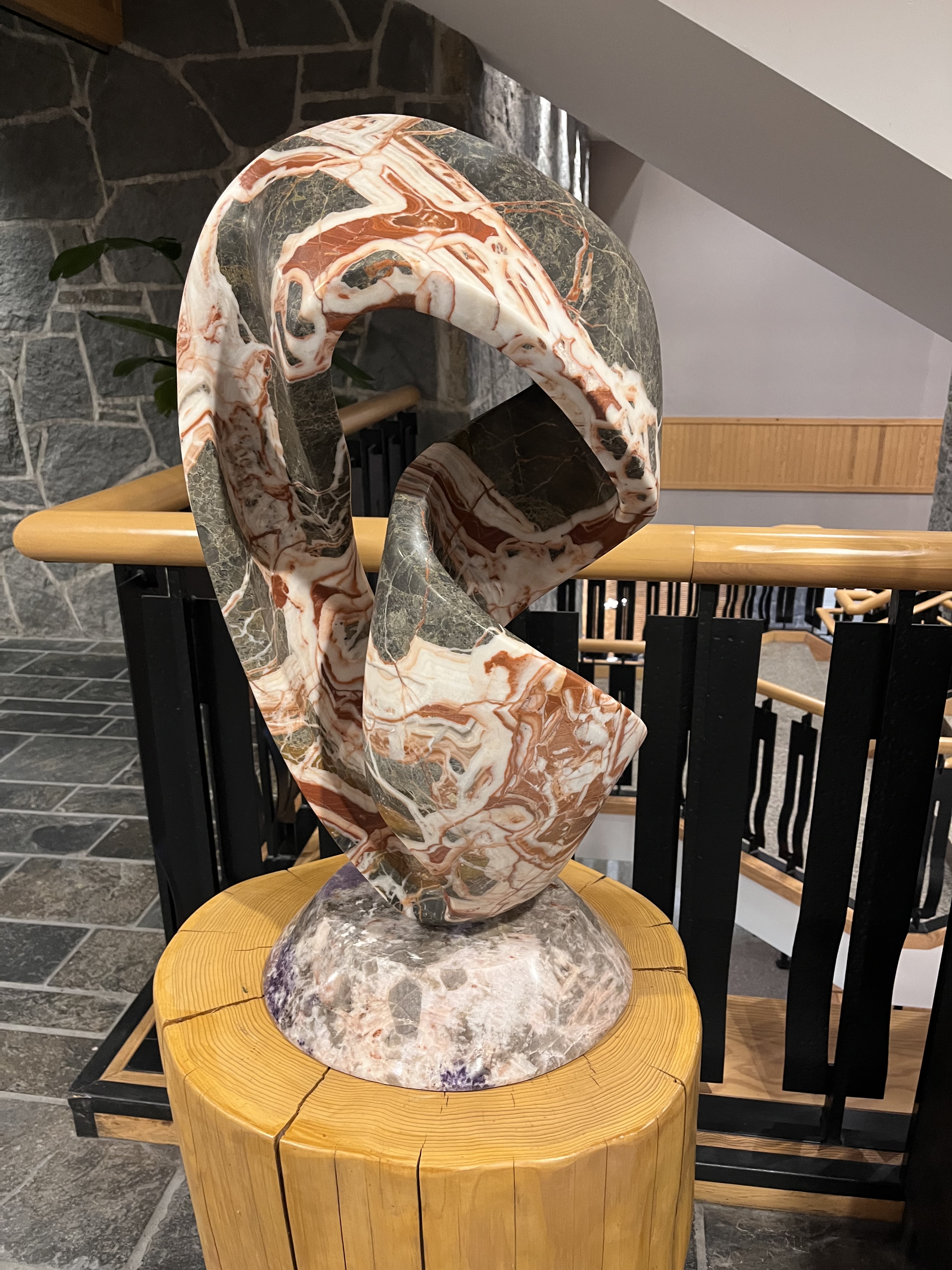
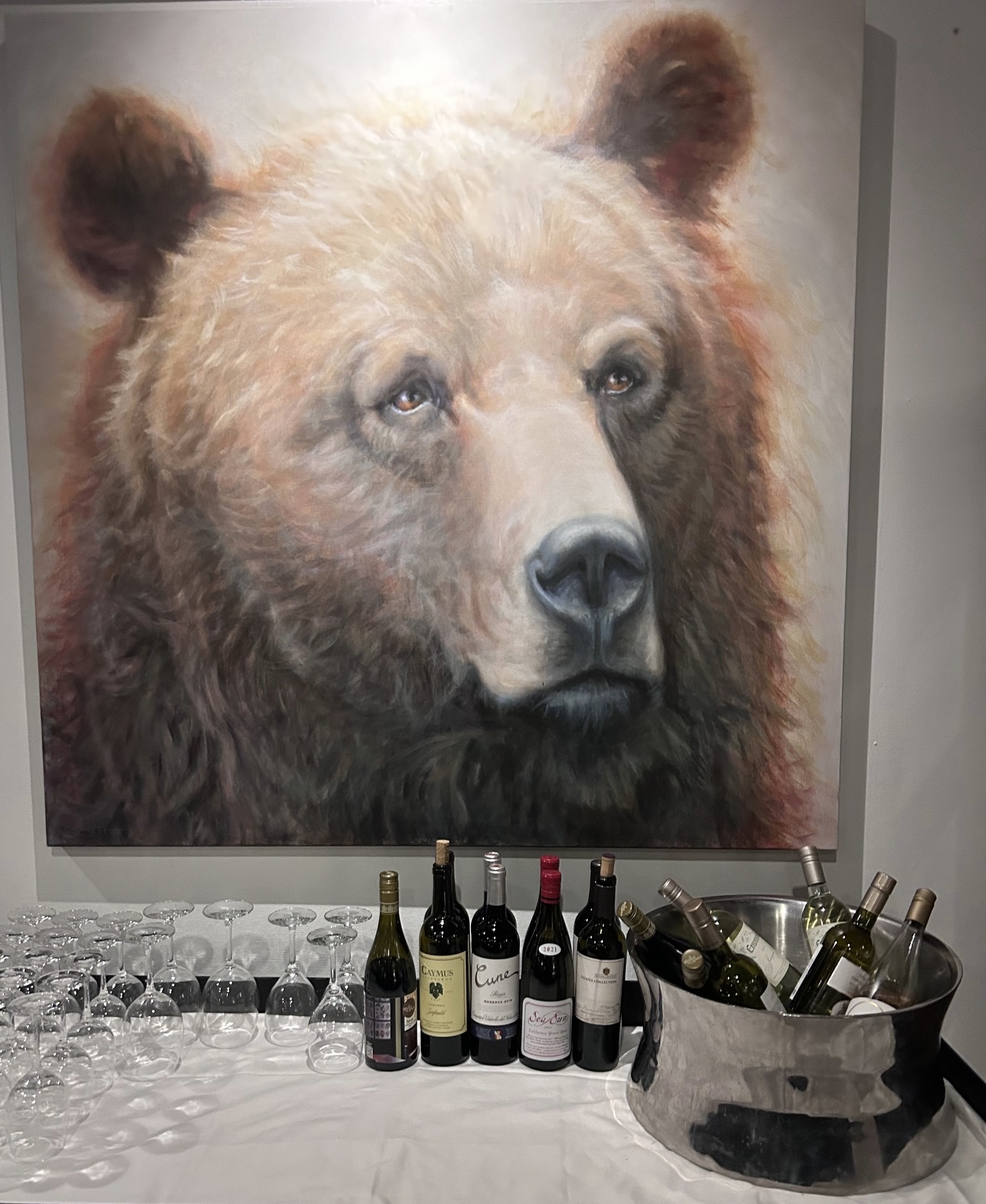
.
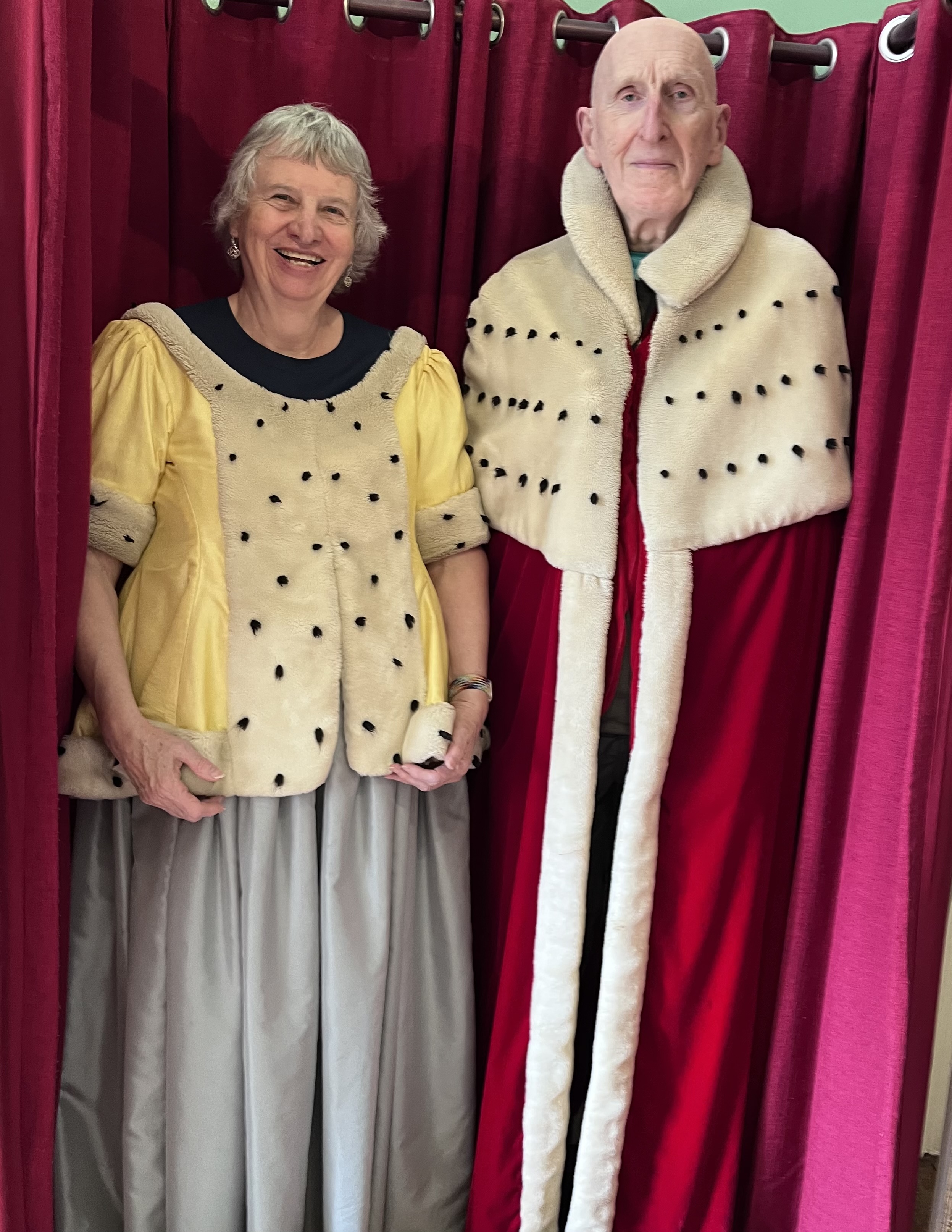
The Trevi fountain is so romantic. Spring was in the air. The crowd were joyfully doing selfies and throwing coins in the fountain. €3,000 a day is collected and given to Caritas. In the short time that we were there, the crowd applauded as a proposal of marriage was accepted. Marvellous vibe. Continue reading

Posted in Europe | 3 Comments

Venice 2017 Biennale

The following pics and video extracts allow a peek at some of the things that could be seen in the course of a couple of days at the 2017 Biennale at the Giardini and the Arsenale in Venice.

New Zealand offered an animated history of the invasion by the British

.

Tracy Moffat’s photographic sequences encouraged creation of a personal narrative.

Cop and Baby

Continue reading

Posted in Europe | 4 Comments

Venice 2017 the intro

By train from Vienna. Up the hill to Innsbruck. Through the yodelling country and the Brenner Pass, and down past the Dolomites and grape growers into Venice. We all know that Venice has lived for over a thousand years in a converted swamp, but it still comes as a surprise on coming out of the train station to not see any roads, busses and taxis. Instead, a tangle of boats bouncing on choppy green waves smelling of the sea and fish. A thirty-minute ride on Vaporetto No. 4.1 lands us at the Arsenale terminal, a short walk from our Airbnb home for the week. Wifi, tick etc. etc.
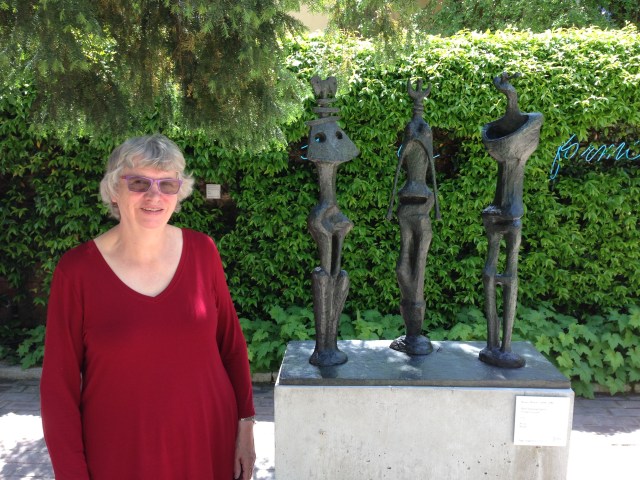
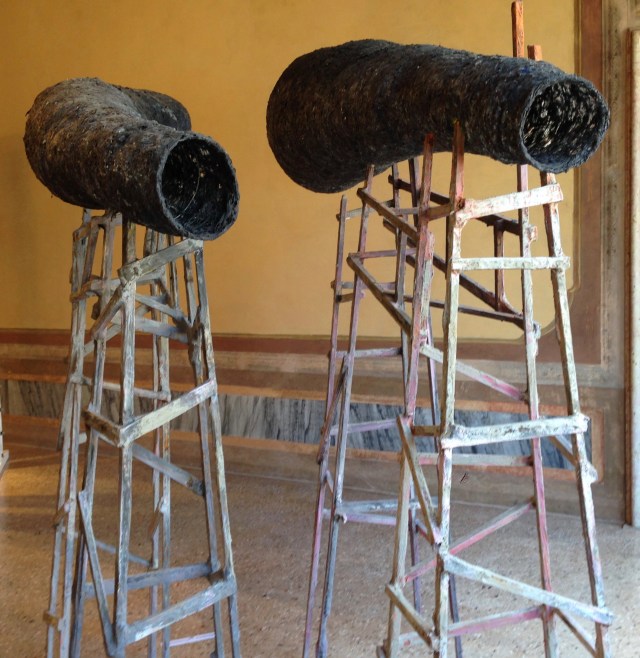
Venice rule #3 – “Those who walk naked down the streets and fields can be fined.” Venice rule #5 – “The dirty dog must have a master who cleans.” On the island there are, of course, no cars. As well, cycles, skate boards and skates are forbidden. The trams, trains and motor vehicles that use the causeway between the mainland and the island are all quarantined in a sort of marshalling car park. Contrary to Vienna, where people are quiet and orderly, at the tram terminal a crush of boarding passengers tries unsuccessfully to enter the tram before the sardines on board can dismount. The low slung three carriage trams curiously only have one rail. We think the rail is use for electricity and guidance and that they must have bus tyres secreted somewhere.

In Peggy’s Garden

Had the good fortune to meet up with old friends Norma and Corrie and their ex-pat friends who all have real estate here. They introduced us to Aperol spritzers at the Glass house, Squid ink pasta, proper tira-mi-su and the good life. Ellen, a Dutch woman, has a sculpture exhibit at Palazzo Mora in an event associated with the Biennial. Requested a route from Maps.me to take us from home to Palazzo Mora, half an hour walk away. All good until the dotted line crossed a canal where there was no bridge. We didn’t reach the Mora on that day, but with the benefit of woman’s intuition we did find our way home.

A couple of days later, took advantage of a Vaporetto day ticket to visit Peggy Guggenheim’s collection on the other side of the canal. Although she died over thirty years ago, her collection of surrealist, abstract and impressionist art continues to grow. Many of the works by Pollock, Picasso, Klee, Kandinsky, Chagall, Brancusi, Braque, Rothko, Giacometti and husband Max Ernst that she collected soon after the war are still on show. Then on to the Mora to seek out Ellen’s sculpture.

Ellen’s Sculpture

. Continue reading

Posted in Europe | 1 Comment

Berlin to Vienna

In and around Berlin we had our fill of Grand Royal palaces. Winter palaces, summer palaces, palaces for the Empress, palaces for the kiddies, palaces to impress the neighbours. But in the end, as Frederick the Great said, “A crown is just a hat that lets the rain in”. The monarchy went steadily downhill and people found other ways to amuse themselves.

.

On our last night in Berlin, what better preparation for travelling back to the Vienna of the golden days than replaying a DVD of The Sound of Music? The train trip to Vienna gave us ten hours, travelling at up to 220 km/h, to build up anticipation of the good old days. Many things in Vienna have been put back just the way they were before the war. Try to ignore Starbucks, McDonalds, Subway and Bodyshop – concentrate on the elegant boulevards.

Gave the taxi driver the address of our Airbnb apartment. A quarter hour later he stopped outside what appeared to be a disused plumbing shop. In disbelief, I looked up and down the street for something more promising. Sweetiepie had more faith in the system. The hostess, Christina had sounded so helpful. There was, however, a combination lock on the door pillar and the given code allowed entry. In the mid 19th cent. Ferd. Schremmer established a plumbing business in a Biedermeier style complex. A pair of shops sat either side of a carriageway that gave onto a spacious garden courtyard. The residence above and around the courtyard has now been turned into comfortable Airbnb apartments. We were guests above while below, the plumbing business still operates at a very gentle pace.

Continue reading

Posted in Europe | 2 Comments

Berlin 2017

Returning to the 19th floor apartment of Uta and Andreas on Leipzig Strasse after three years was just like coming home. The Augustiner beer hall around the corner and the Brandenburg gate a ten minute walk away, Lidl downstairs for breakfast supplies and spring in the air.

in the Reichstag Dome


Entry to the spectacular Norman Foster designed dome of the Reichstag is free, but the price to pay is a long wait in a queue to gain entry in two days time or on-line booking for three weeks hence. Worth the wait. Marvellous views and a history of the site. The automatic audio guide comments on the view from wherever you are standing and prompts you when to move on. The building is said to be ultra enviro-friendly. Apparently rain and snow can’t enter the enormous hole in the centre of the top of the dome because of the force of exhaust from the ventilation system. Seems to work, because there is no evidence of weather damage on the polished wooden seats inside the dome.

The bear of the Berlin coat-of-arms appears life size around the streets in many media and guises.

Continue reading

Posted in Europe | 2 Comments

Wales

The delights of being a grandpa for a week with the family in a house by the coast in Wales. The opportunity to open for a week that compartment of the mind that contains absolutely nothing. Bliss. Bathrooms and comfortable chairs for everyone. Time in abundance. Time for monopoly down to the ugly megalomaniac end (with grandpa the sad victim of a ruthless young real estate tycoon). Time to complete a thousand piece jigsaw puzzle. Time for a mixed doubles table football tournament.

Our house is in the little village of LLwyngrwil by the sea. In the mid 20th cent. there were over twenty shops.  Commerce and the population have steadily declined and now the village only has a church, a train station, a pub, lots of cute little houses and a post office/shop providing the essentials. And the building that recently housed a primary school now stands clean, stripped of life and grass grows longer on the un-trodden sportsground. But the village does live on. Life is simple. Sheep live on the hills above the village and the townspeople find an assortment of occupations. Down the road there is a horse-riding school, and further along, a showroom presenting a dozen exotic cars. A viable business? An expensive hobby?

Continue reading

Posted in U.K. | 8 Comments

Amsterdam

On this quick whizz through Amsterdam, managed to avoid the famous red light district in favour of the slightly less famous Rembrandt house or huis. He was able to buy the house at the height of his career following the famous Night Watch commission. A later commission Conspiracy of the Batavians was not so successful.

His Burgher clients were not impressed by his venture into what was later known as impressionism, refusing to accept the work. Rembrandt angrily took a knife to the painting, the remains of which are now displayed at the Rijks Museum. He didn’t entirely fall from favour, but he was unable to pay the mortgage on the impressive huis. The house and contents were sold to satisfy the creditors. The list of contents compiled by the creditors enabled later restoration of the house as it was in Rembrandts time. Continue reading

Posted in Europe | 6 Comments

Alexander von Humbolt, Timewarp and Floods

kit

Reunited with the grandsons for a few days. They requested assistance with a couple of projects. A computer generated movie and assembling a model sailing boat. Simple enough? The model of the Alexander von Humbolt is level 5 of difficulty – as difficult as it gets. Their dad said, pointing at me, it is your responsibility to see this model

alex 2

completed, rigging and all, before you leave. The teeny tiny pieces have to be handled with micro tweezers and glued together with a micro syringe glue applicator. And the rigging is a spool of the finest thread, which somehow has to be threaded through invisible holes in the spars. Notwithstanding these challenges, we managed to progress from the sheets of bits to the photographed intermediate stage.

Continue reading

Posted in U.K. | 1 Comment

Croquettes at the Alhambra

IMG_2052

In coming to Granada, the focus of our Andalucian campaign was to visit the fabled Alhambra. Fabled, due to the very popular Tales of the Alhambra written by Washington Irving in 1829. He was an adventurous writer and diplomat (American ambassador to Spain) with an entertaining economy of truth. When Irving visited and stayed in Alhambra it was a romantic ruin that had been trashed by Napoleon when he was forced to retreat from Spain. Irving’s writings put Alhambra on the tourist map and the Spanish government undertook repairs.

Continue reading

Posted in Europe | Leave a comment

Cordoba

IMG_1786

Cordoba is the loveliest place at this time of year. Busloads of tourists are easily swallowed up and dispersed among cute little blue and white alleyways. There is always space at the corner tavernas and cafes to sit, lean back, close the eyes, and after a pause, open the eyes, lean forward, enjoy a café con leche or copa rosada and repeat. There is little sign of plant life along the tall narrow streets except the occasional window box of geraniums. Continue reading

Posted in Europe | 1 Comment

Ham, bells, wine and Pirates in Seville

IMG_1522

The move from Morocco back to the other side of the Med was quite easy as we are travelling light this trip. Encumbered more by technology than underwear. Touched down in Malaga for a couple of days. In a strange town, why is it that I am always attracted first to the Cathedral/Mosque/whatever? From the perspective of a bloke, it is probably fascination at the technical challenges, rather than being overwhelmed by the spiritual element or Stendhalismo at the beauty of the art-work. Sweetiepie thinks that better use could have been made of resources if more attention had been given to health, education and welfare of the poor and less to the grand architecture. But then, if they had been better educated, they mightn’t have been so inclined to spend lifetimes chipping and stacking stones. And we wouldn’t have anything to remember them by.

Continue reading

Posted in Europe | 1 Comment

Artisans of Morocco


IMG_1286

A long tradition of craft can be useful. When the owners of our riad came to repair the badly damaged very old tiled flooring (possibly damaged by donkey feet) they found that tiles of the same shape and colour are still being produced. See the pic of the junction between new and old tiles.

Continue reading

Posted in Africa | 2 Comments

Lost in the Medina


IMG_1246

To relive the exotic romance of the period a thousand years before the French occupied North Africa a hundred years ago, bringing their baguettes and patisserie, where better than the Medina of Fes, Morocco. No cars, no American Burger chains, little English spoken, donkeys and push-carts laden with produce abound. A very complicated tangle of 9400 little alleyways, home to about 200,000 people is compressed into an area of about 2 kilometres square.

Continue reading

Posted in Africa | 3 Comments

Barcelona

High on the *Buttock list has been a return to Barcelona. The intent was to reprise all of the delights of a visit 15 years ago. Of course some things have changed. The mantra – “Barcelona, Ah, beware the pickpockets!” has not changed. But this is an orderly, polite, high tech city. Where the trains are clean, cheap, frequent and punctual. Arrival of trains is accurately counted down in seconds in Barcelona, rather than the vague, sometime today, expectation of Melbourne trains. When young (30ish) people in crowded trains rise to give us their seats, we are reluctant to admit to such venerability, but politeness dictates acceptance. What a lovely place.

Continue reading

Posted in Europe | 5 Comments

Sleepless in Birmingham

street

In many ways the highlight of the recent little European sojourn has been taking care of three young grandsons in their home for 2 weeks while their parents are away. The delights of total immersion in the world of primary school boys. Boredom, P.E. gear, overexcitement, homework, high decibel noise, lunch boxes, aggression, clean school uniforms, frustration, hugs, boundless joy, seldom clean surfaces anywhere. And precious little sleep. Awoke about 3 am the other morning to find a third person in the bed. Eventual outcome OK. We have the necessary sense of humour.

Continue reading

Posted in Europe, U.K. | 1 Comment

Another week in Berlin

The Germans are famous for being good organisers rather than good lovers or good cooks. But being good followers gets them into trouble from time to time. Think WW II. More recently the lack of progress on the new Berlin airport has been an embarrassment. Since ground was first broken in 2006, almost everything that could go wrong with Europe’s largest airport construction project has gone wrong. Just three and a half weeks before the grand opening ceremony, with posters already up around the city, came the announcement that the fire safety system wasn’t working, and the airport’s first flight would be delayed indefinitely. It emerged that the person in charge wasn’t an engineer, but people thought he was, so he didn’t bother to contradict them. The project has already gone a staggering €3.5 billion over budget, and the latest bail-out will push costs to almost €6 billion. Completion not in view at all.

Continue reading

Posted in Europe | Leave a comment

A week in Berlin

Ah Berlin! Where beer is cheaper than water. Staying in a 19th floor apartment on Leipziger Strasse for 2 weeks. Midway between the Brandenburg gate and Check point Charlie, near to the action. So prosperous and trendy, so much to see and do. Food options range from donner kebab street food to classy restaurants and a Lidl supermarket next door. Must say the transition from Salmon and single malt to Sausage, kraut and beer is a bit of a jolt, but we are managing nicely.

Continue reading

Posted in Europe | 1 Comment

Pitmedden Garden

IMG_4121


At Pitmedden, Aberdeen Shire, there is a vast formal garden which has a history dating back to the 17th century. The remarkable thing about this National Trust property is the day by day relentless attention to detail. The precision and extent of the parterre boxwood hedges and the espaliered apple trees, trained to form a long archway are world class.

Continue reading

Posted in U.K. | Leave a comment

Highland Life

IMG_4044

Patrick the gamekeeper is the most marvellous host, both professionally and privately. On a clear sunny day, having the job of looking after deer and pheasants and helping people to shoot them would seem to be an occupation made in heaven. Unfortunately, the weather is not always fine, and the animals don’t always cooperate. Patrick’s place of work is an estate of thousands of acres in the heather covered hills of the north east of Scotland. The customers are happy to be taken from the isolated narrow road to the home ground of the even more isolated deer and pheasants across country in a 4WD. We had the excitement of riding in a trailer towed behind Patrick’s Quad bike. The limit of oc health and safety in the trailer is padding made of old quilts, gaffer taped into recycled animal feed bags.

Continue reading

Posted in U.K. | Leave a comment

the Whisky Mountains

Picked up a car at Aberdeen airport and headed west. Following the broad swift flowing river Dee for a while. Past rows of the posh Dee-side manors with their imposing gardens behind high granite walls. Turned north at Ballater to head into the hills. Following the line that might have been taken by a soaring sparrow hawk. Over the bare, rolling, heather covered, high country, snow poles line the edge of road along the ridge. Over the top and down into Tomintoul. A neat little village with one church, three hotels, a whisky shop, a wifi café. And a distillery. Of course. It seems to be a rule that all villages must have a distillery. We have arrived just in time for a sort of folk concert.

Continue reading

Posted in U.K. | 1 Comment

Gilda – the Venus of Eltham

The making of goddesses is for us a team sport. The team consists of Ric – arbiter of style & taste, Jenny – the anatomy supervisor, Kate – responsible for detail and finish and Rob – who likes setting fire to things. The team is passionate about the making of goddesses. There are, however, criteria, three of which must be met if we are to be moved to action. The location must be inspiring, the clients enthusiastic and the catering to gourmet standard. Other considerations are unimportant. Madeleine and Nigel chose an excellent goddess site on their 2 acre spread in Eltham. High on a hill, overlooking the house and, in the distance, the tennis court.

Continue reading

Posted in Australia, Pottery | 1 Comment

MONA

A recent visit to MONA – the museum of old and new art – in Hobart.

David Walsh, the unlikely founder of MONA, made a fortune by gambling, aided by clever maths and loads of bravado. Check out an article The Gambler written by Richard Flanagan for the Feb edition of The Monthly to fill in some of the details.

Most visitors to MONA arrive aboard the stylish house ferry whose civilized captain sometimes sports a pet parrot, pirate like, on his shoulder. Only the beginnings of the unexpected. From the jetty, the museum looms above, carved out of the rock face like some nouveau gothic cathedral. In establishing MONA Walsh probably intended the project to confront, to shock and to challenge. With subject matter including death, sex, bodily functions and conflict it certainly succeeds. On a grand scale. And with such diversity.

Continue reading

Posted in Australia | 2 Comments

The Chain Kiln

118-1891_IMG

The little town of Gulgong in central western New South Wales is something of a mecca for potters. Over the years many exciting international ceramic events have been held in the town and at the late Janet Mansfield’s famous nearby property Morning View. Potters from around the world have gathered in their hundreds to create kilns and sculptures, to stage installations, workshops and exhibitions, to get inspired and to be inspiring.

Continue reading

Posted in Australia, Pottery | 1 Comment

A week in the sun

IMG_2911

.

Away from the Melbourne winter to the Byron Bay Writers fest. Timing was good, as this has been their first fine weather since the bad storms early in the year left flood damage and many upturned trees. Some of the beaches and beachfront real estate still bear the scars, with huge stacks of rocks and sandbags being used to keep the sea at bay.

Continue reading

Posted in Australia | 1 Comment

In 1858

In 1858 in the little village of North Wingfield in Derbyshire a coal miner, George Knighton married young Anne Mottershaw, the cordwainer, or shoemaker’s daughter. They moved into the cordwainers cottage with her dad, Richard and her brother Joseph. With the arrival of daughters Sarah, Elizabeth and Mary-Ann, George and Anne moved out of the family home, turned their backs on coal mining and took a passage to the excitement of the gold rush in Victoria, Australia. They never looked back, leaving the Mottershaws to continue making shoes and renting the Cordwainers cottage from the church for another hundred years.

Continue reading

Posted in U.K. | Leave a comment