
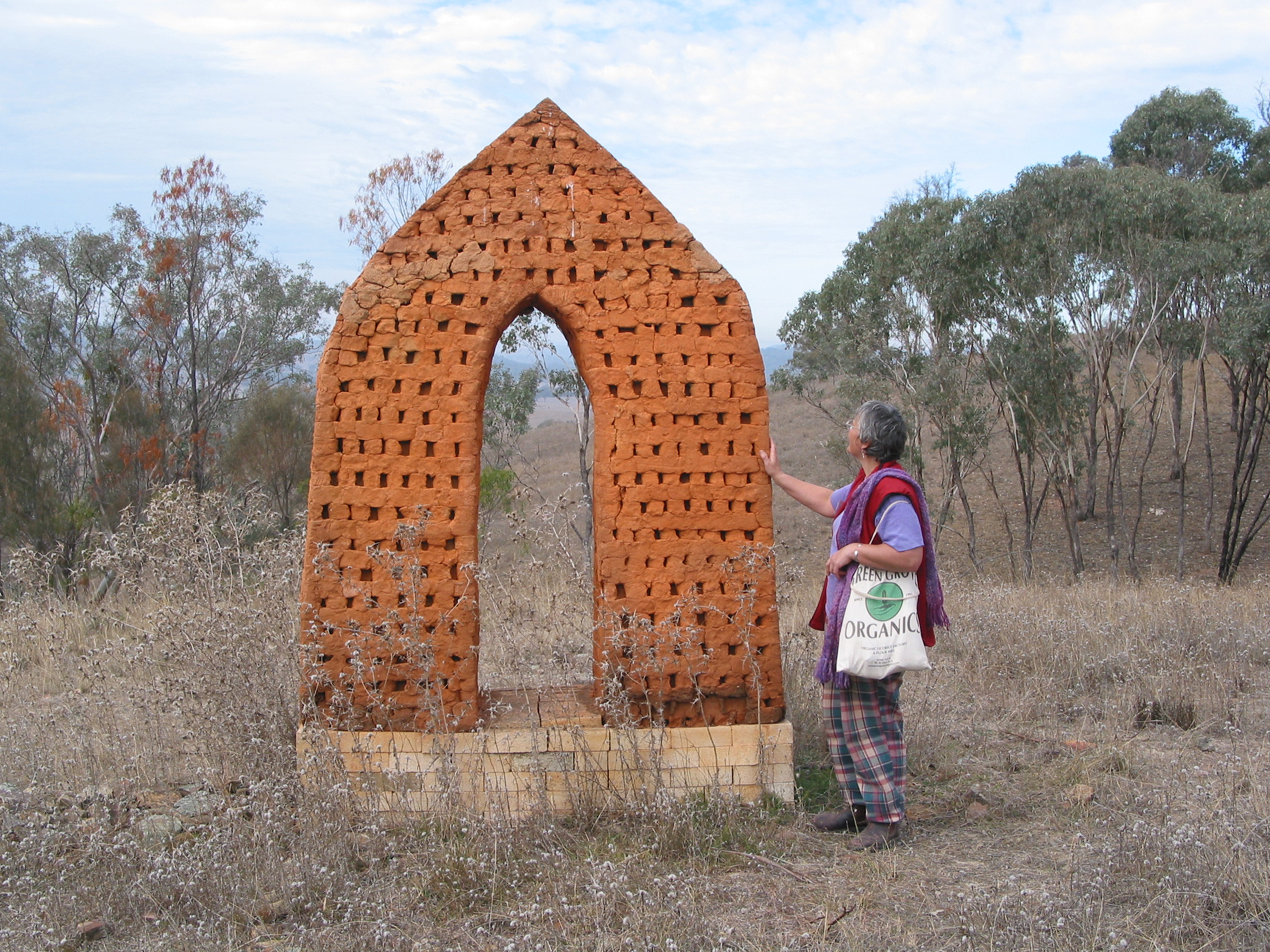
The little town of Gulgong in central western New South Wales is something of a mecca for potters. Over the years many exciting international ceramic events have been held in the town and at the late Janet Mansfield’s famous nearby property Morning View. Potters from around the world have gathered in their hundreds to create kilns and sculptures, to stage installations, workshops and exhibitions, to get inspired and to be inspiring.
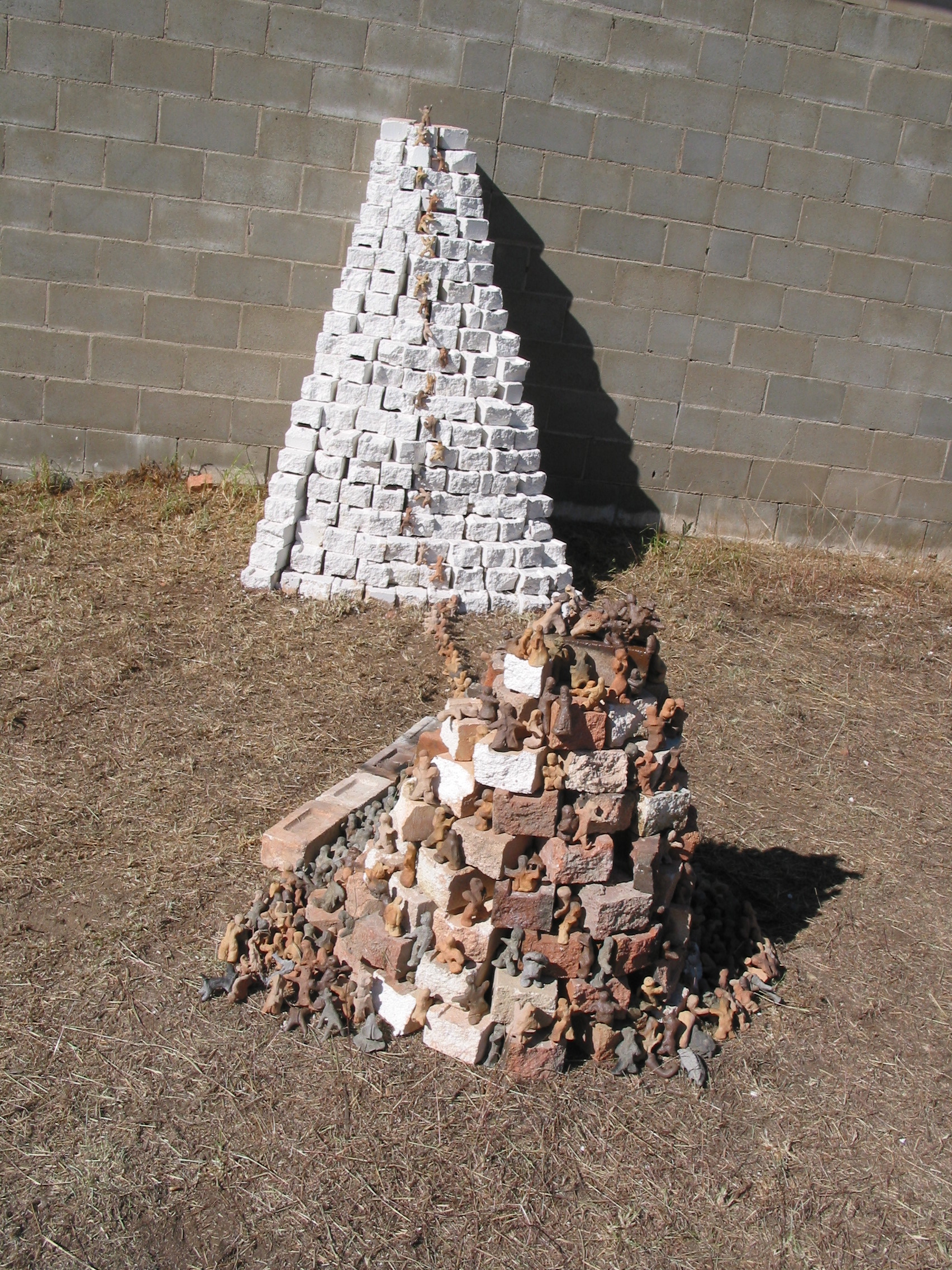
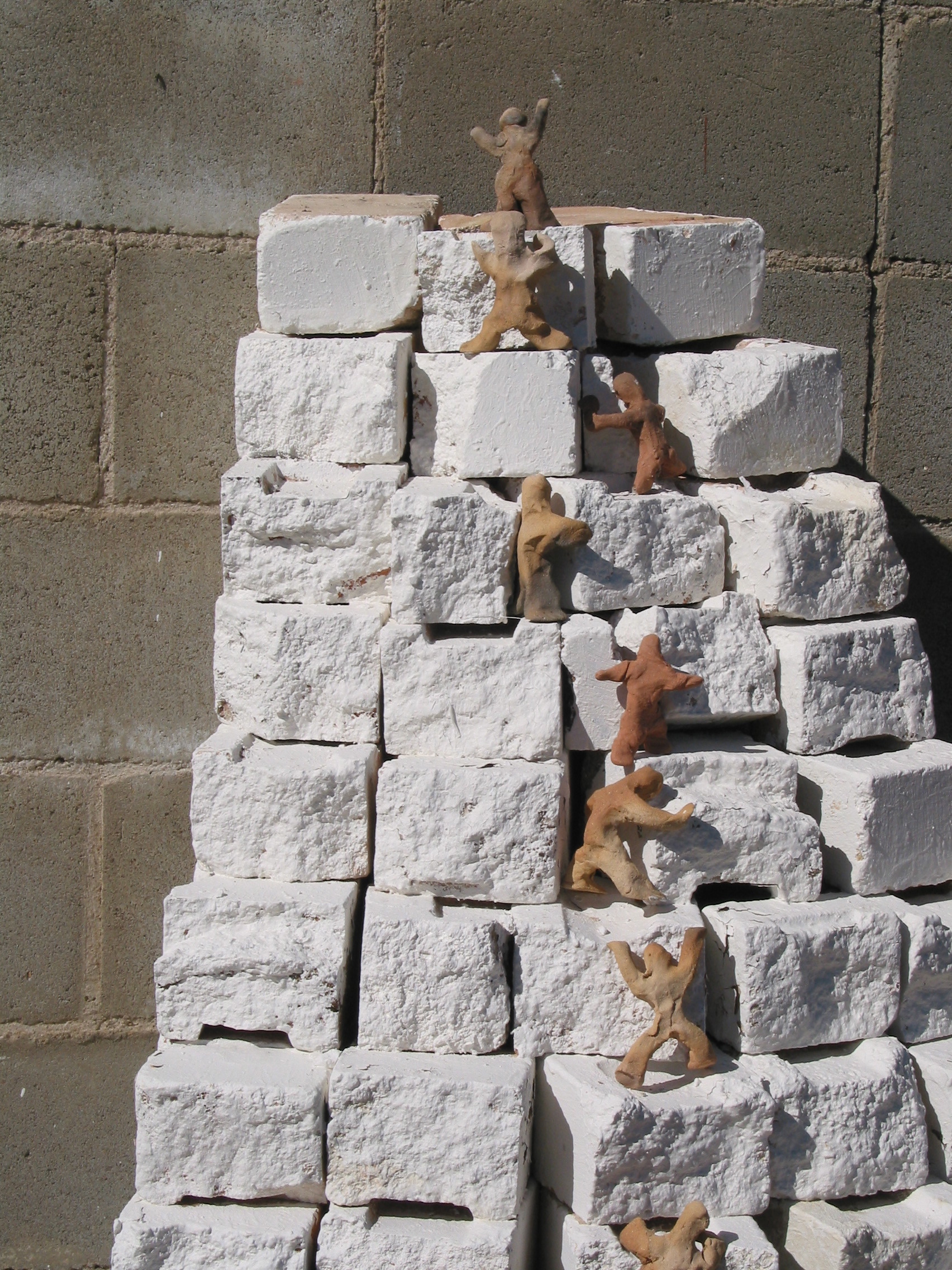
About fifteen tears ago Peter Lange, creative brother of the some-time New Zealand Prime Minister David, persuaded participants at one of these events to create an installation. The concept involved conscripting hundreds of participants to make figurines representing the mass of humanity descending from the ivory tower of academia only to struggle up the pyramid of life and eventually and unaccountably just disappear.
.
.
.
.
.
.
.
The tricky part of the project was arranging for all of the components to be made and fired very quickly. Over the years Peter has created many bizarre things.
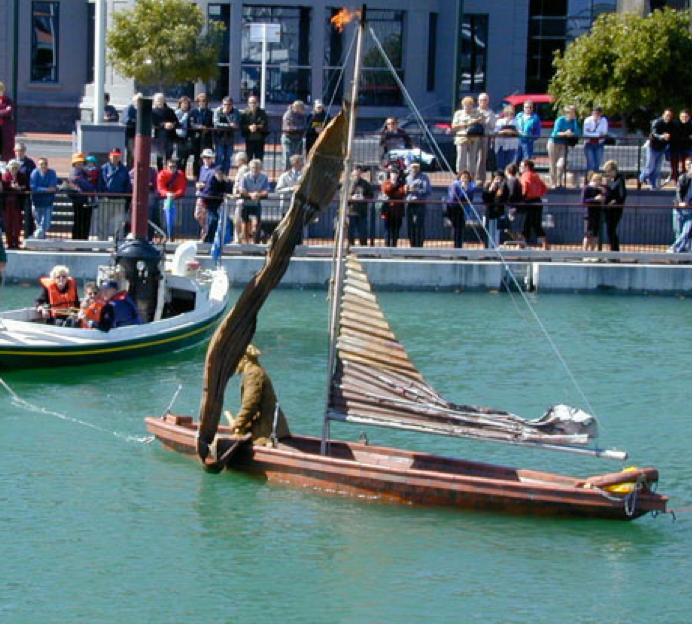
One of his stranger creations being a floating, although not particularly ocean-going, yacht made of bricks and a corrugated iron sail. So he is no stranger to the realm of the technical “Gee Whizz”.
To fire the figurines, his spectacular party trick was a portable continuous feed kiln. The freshly made soft clay models were instantly placed on the conveyor belt. They progressed from cold to glowing orange heat and then plunged into cold water only 40 minutes later. As a teaching device this kiln gave instant insight and understanding of the ceramic process, dramatically showing what is actually involved in changing soft fabricated clay into a durable, more or less weatherproof product. Over two days the innocent bystanders made a few hundred figures variously running, walking, jumping but mainly standing still. These were then arranged ascending the pyramid.
As he was dismantling the kiln, Peter was looking at me when he said “I don’t want to take the conveyor chain back to New Zealand, would anyone be interested?” And so it was that I inherited the chain. Back in Melbourne a replica of the Gulgong tunnel was built using Peter’s drive chain. In the course of the next couple of years this incarnation of the invention had outings at a Selby Community open day and a McClellan Gallery Pottery Expo.
For the technically inclined: The hot space was a 10 cm x 15 cm tunnel running for about 2 metres. Crucial to the invention was transfer of ware through the tunnel by a conveyor belt made of Nichrome wire and porcelain rollers. The conveyor belt happened to be powered by a water wheel, which was a neat method of getting the variable torque needed to drag the ware at constant speed across a ragged uneven surface. The heat source was a stout LP gas burner blasting in to the tunnel two thirds of the way from the start. Time for the work the traverse the hot area could only be about 40 minutes. Longer times would make the conveyor wire soften, stretch and break. Finding a clay body that can cope with transition from room temp. to 1000 deg C and back in 40 minutes is not easy. Feeney’s red raku was one of the few. The system only works if the ware is put on the conveyor at soft leather hardness (otherwise – explosions due to a dry non-plastic skin), and the cooling process involves the red-hot ware sliding/skiing down a chute into cold water.


terrific stuff Robert – fun to try and get all that timing right…cheers and happy Tassie-ing…Helen