
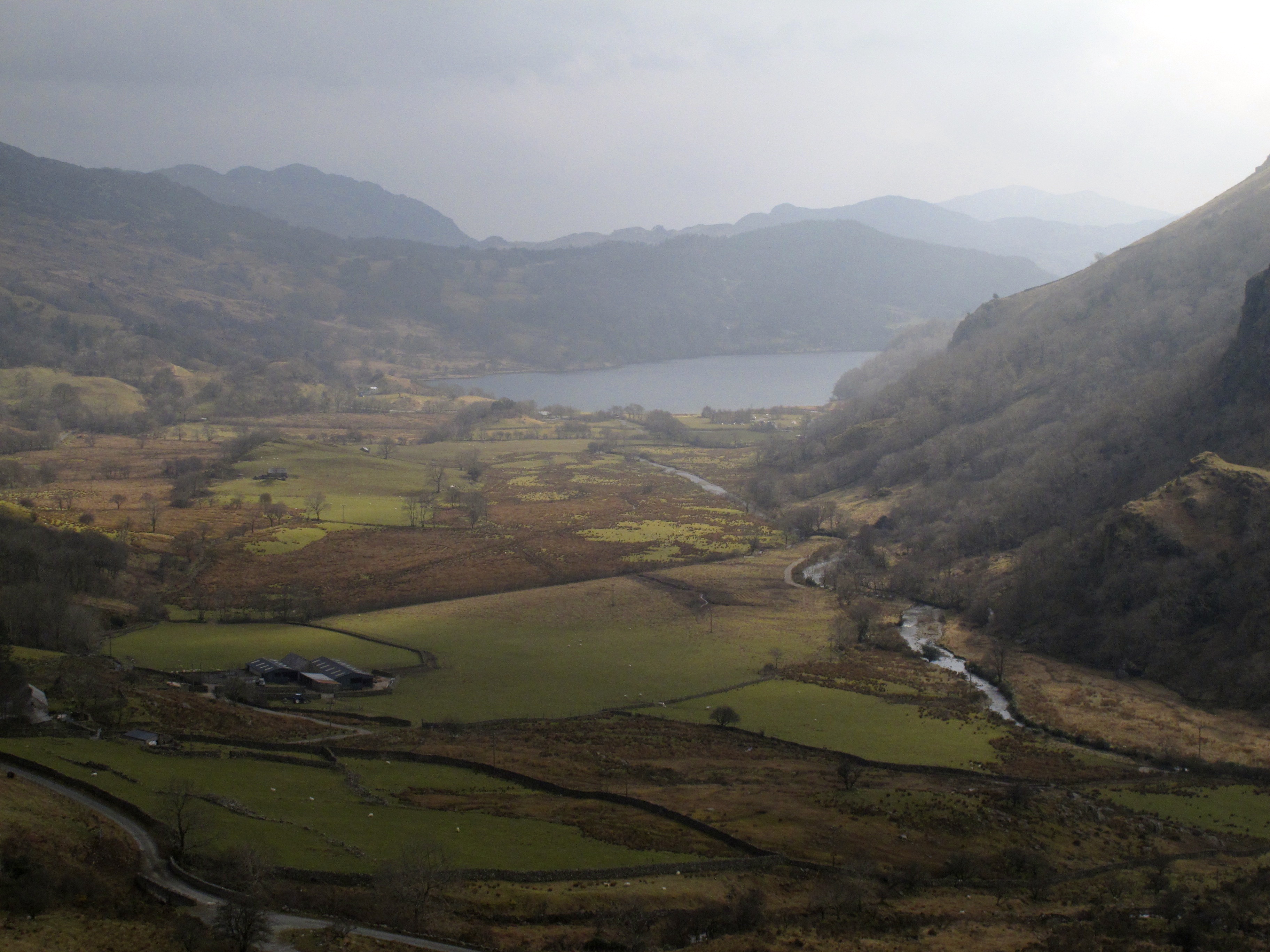
Enjoying a week in a cottage in Wales, deep in the mountains of Snowdonia, in the shadow of snow capped Mt. Snowdon itself, surrounded by extended family. Our village is Nantlle, famous for its slate mining. Ambient temp. sometimes verges into double figures, but the bare trees, the snow on the ground, the mud and the mist feel very much like winter – and this is mid April already. In the areas without the castles of Edward I and without the slag mountains of Coal, Copper and Slate, the mountains of north Wales are rolling, rising, velvety, mossy olive green pastures rising to make a bed for the over 1 km high Mt Snowdon and its lesser cousins
Richard Llewellyn in “How green was my valley” lamented of the greying of Wales, using the voice of the elderly Huw looking back at the moment when he sat with his father part buried and dying after a roof fall in the coal mine. His green valley blackened under mountains of slag and detritus from the mine.
The process of slate quarrying generates vast amounts of waste rock – often only 5% -10% is useful and the rest is dumped, except for some which was used for making bridges and bus shelters and for the Germans to use for toothpaste. The vast heaps of waste rock are what characterise the Slate Quarrying areas of North Wales. There are estimated to be 730 million tonnes of slate waste in North Wales, making the now quiet slate towns more like Siberia than a garden of Eden.
The National Slate Museum is located at Gilfach Ddu in the 19th-century workshops of the now disused Dinorwic slate quarry. Displays show how the miners lived and worked, continually struggling for a better deal from the owners. Some of the more considerate mines would make provisions for mine widows, of whom there were many. But the miners are never likely to forgive Maggie Thatcher for breaking the unions. A state funeral for Maggie would be too much for these folk to bear.
.
.
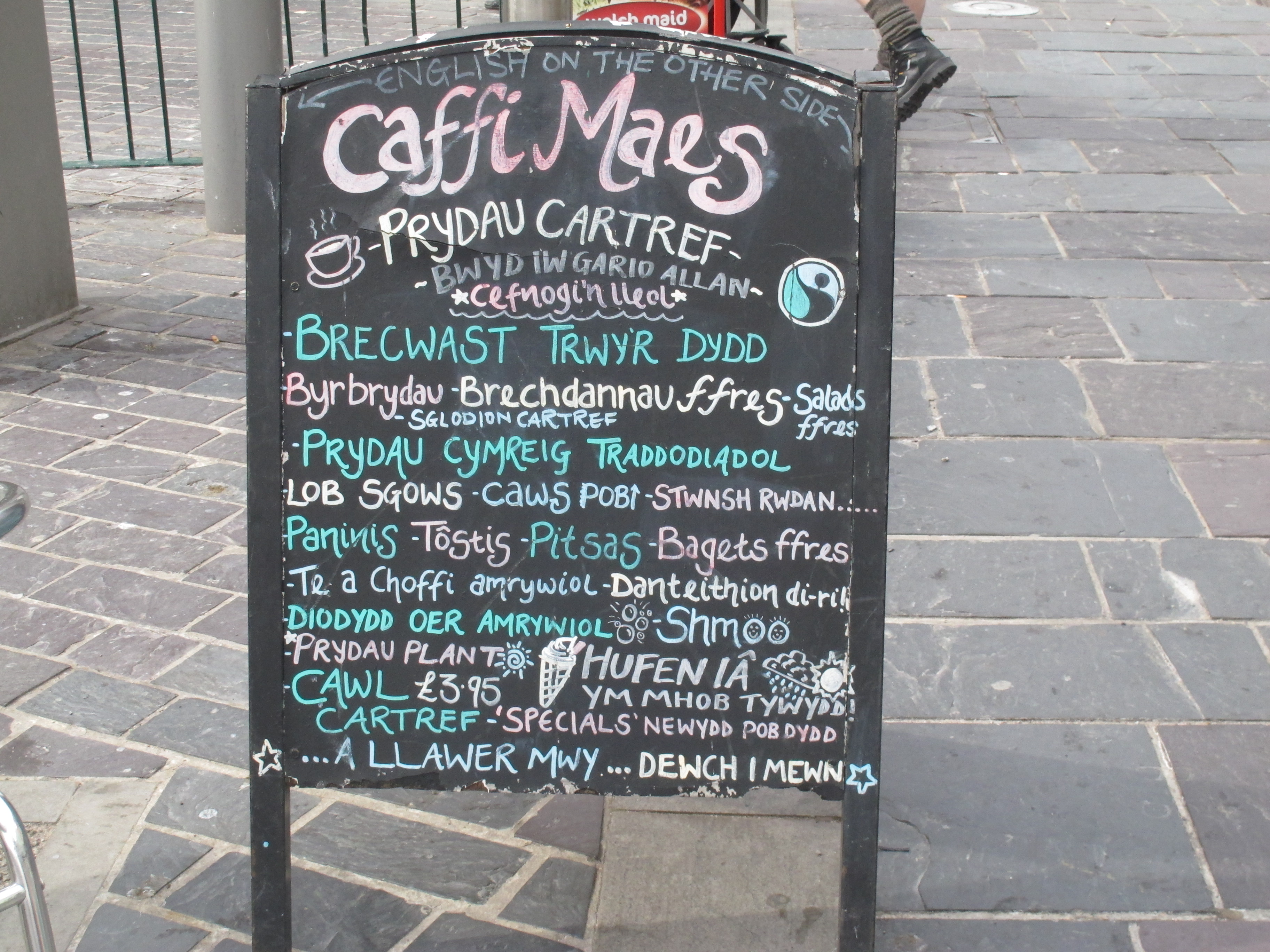
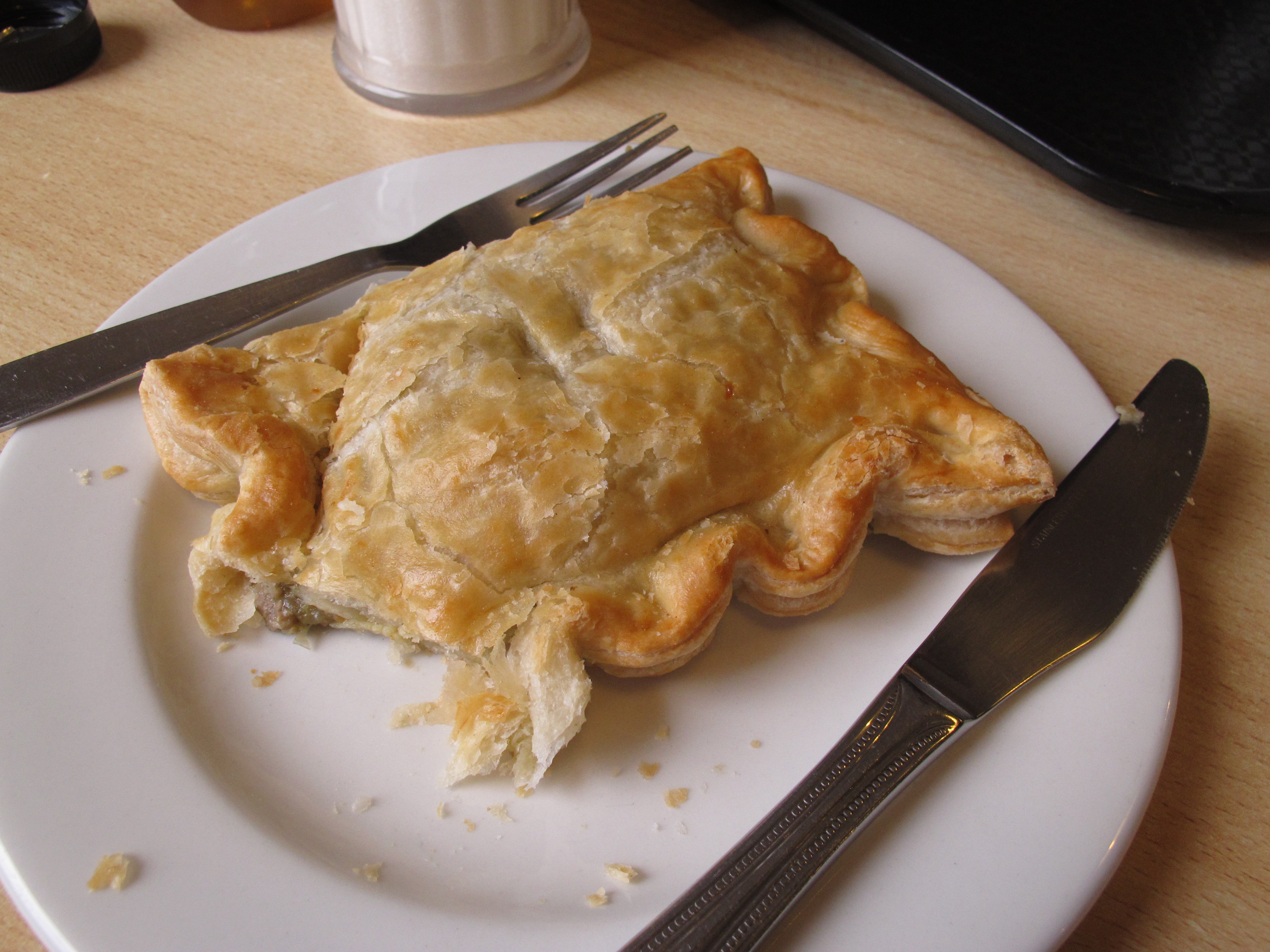
Scotland may have its own currency and its own Parliament, but Wales has its own language and the “Lamb Oggie”.
.
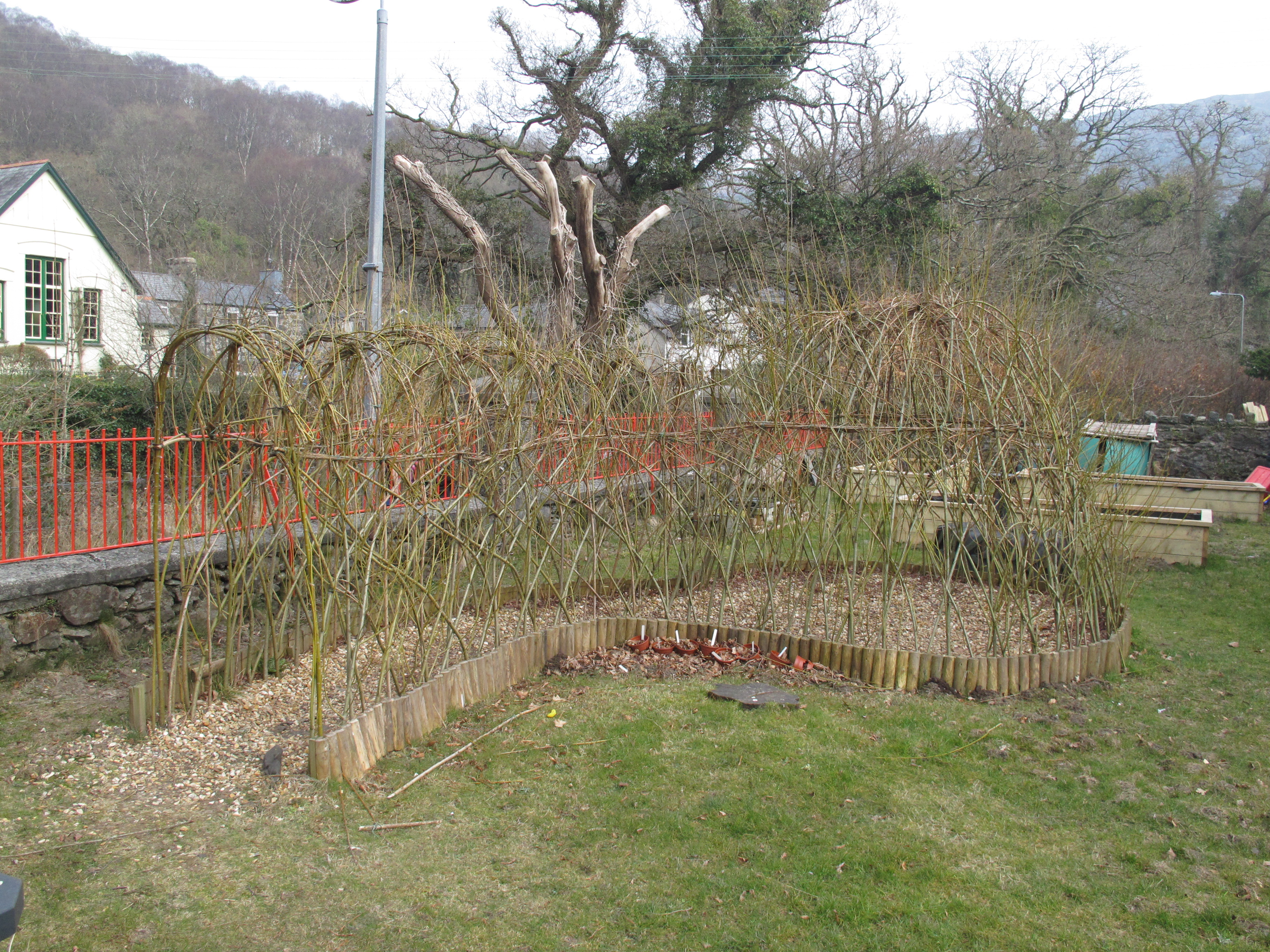
At our cottage in Nantlle a living fence has been made by cleverly planting and weaving long thin willow trigs – obviously looks good later in the spring and summer. Also in the village of Nantlle there is a retreat and conference centre called Trigonos. When we visited, uninvited, there was a silent retreat on the seventh of its eight day program, so the only information that we gained was from its website. They have also been doing living willow architecture, this time an igloo with a long winding entry tunnel.
.
.
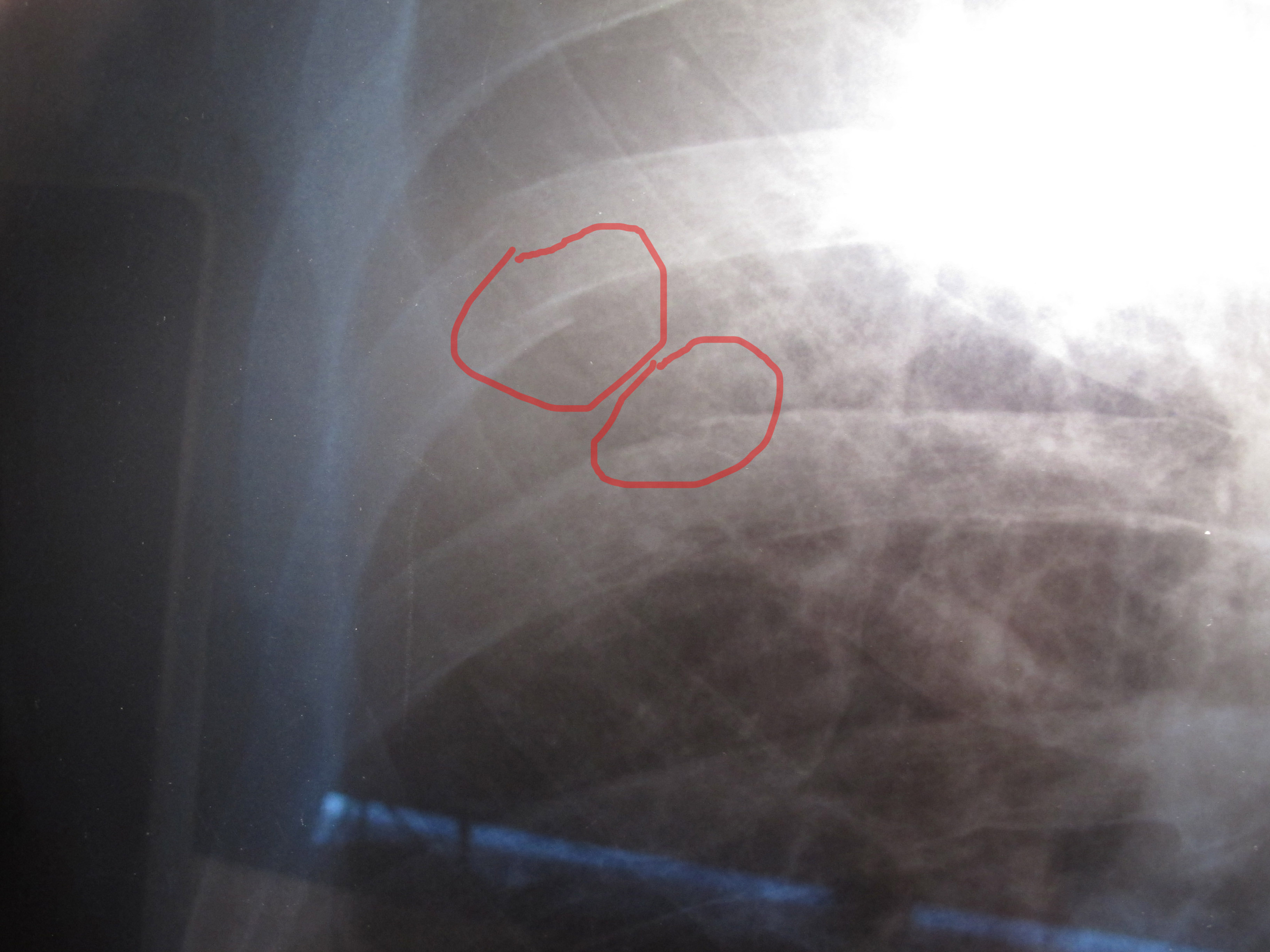
For show and tell I have an impressive pic of the x-ray of my broken ribs. Two weeks tomorrow since the fall – so now starting to laugh again. And hey! We are having a good time.
.
.
Another treat was a tour of a woollen mill – still working – that hasn’t changed since the start of the industry revolution. Is still owned by the same family that bought it early 18th cent. Powered by a massively over engineered victorian era hydro electric generator using water from a dam up the hill behind the factory via 8 or 10 inch pipe. They still make the rugs and jumpers that would have been worn by workers and horses down the pit. Sort of thing that you or I might chuck on the ground if we needed to crawl under the car. Very stout and long lasting. Very Welsh. Then a walk up the hill behind the mill, past the little hydro dam, past the sheep & cows and nearly to the snow line. Temp is just into double figures through the day but with occasional heavy drifts of snow on the ground.
.
.
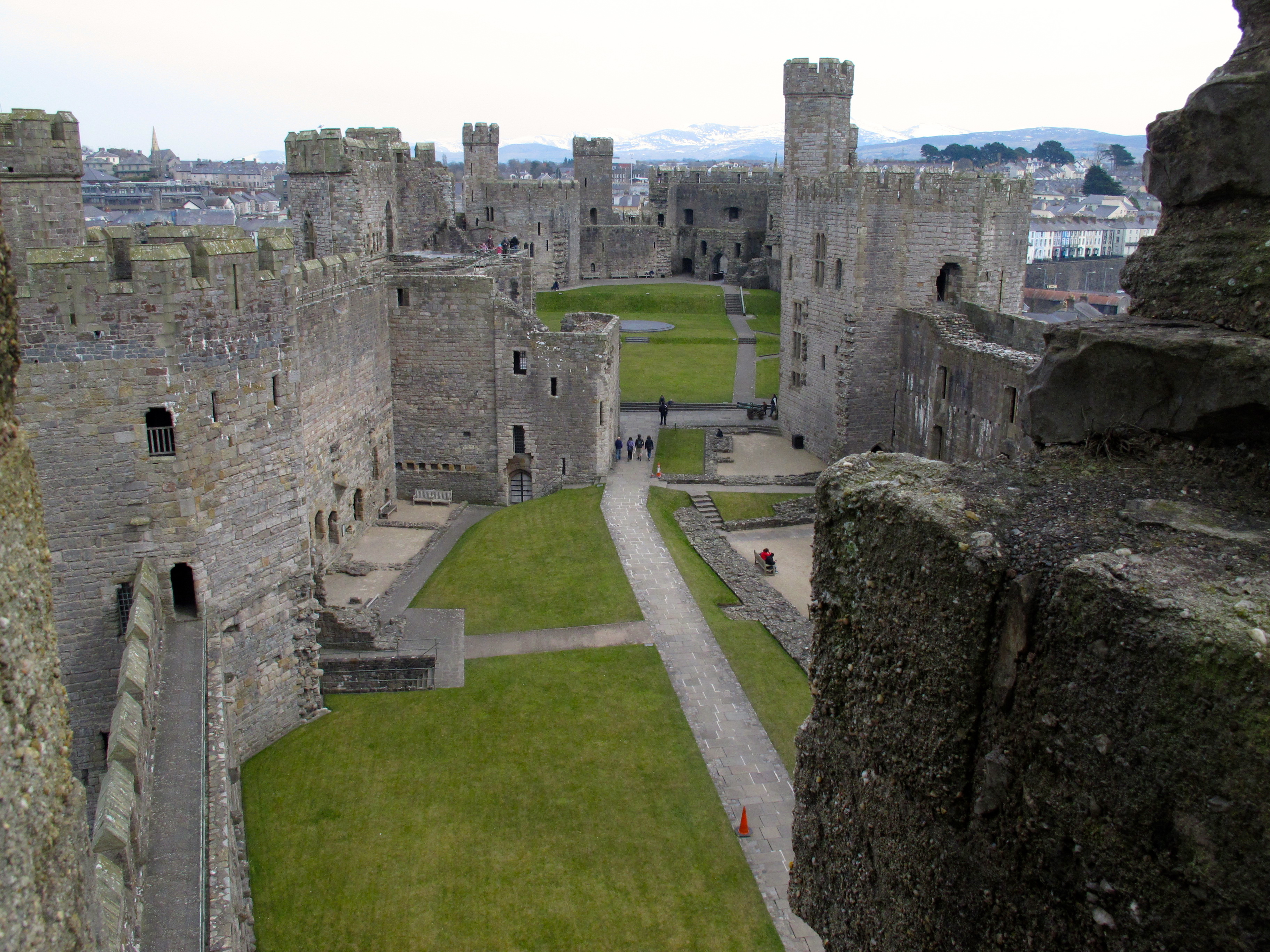
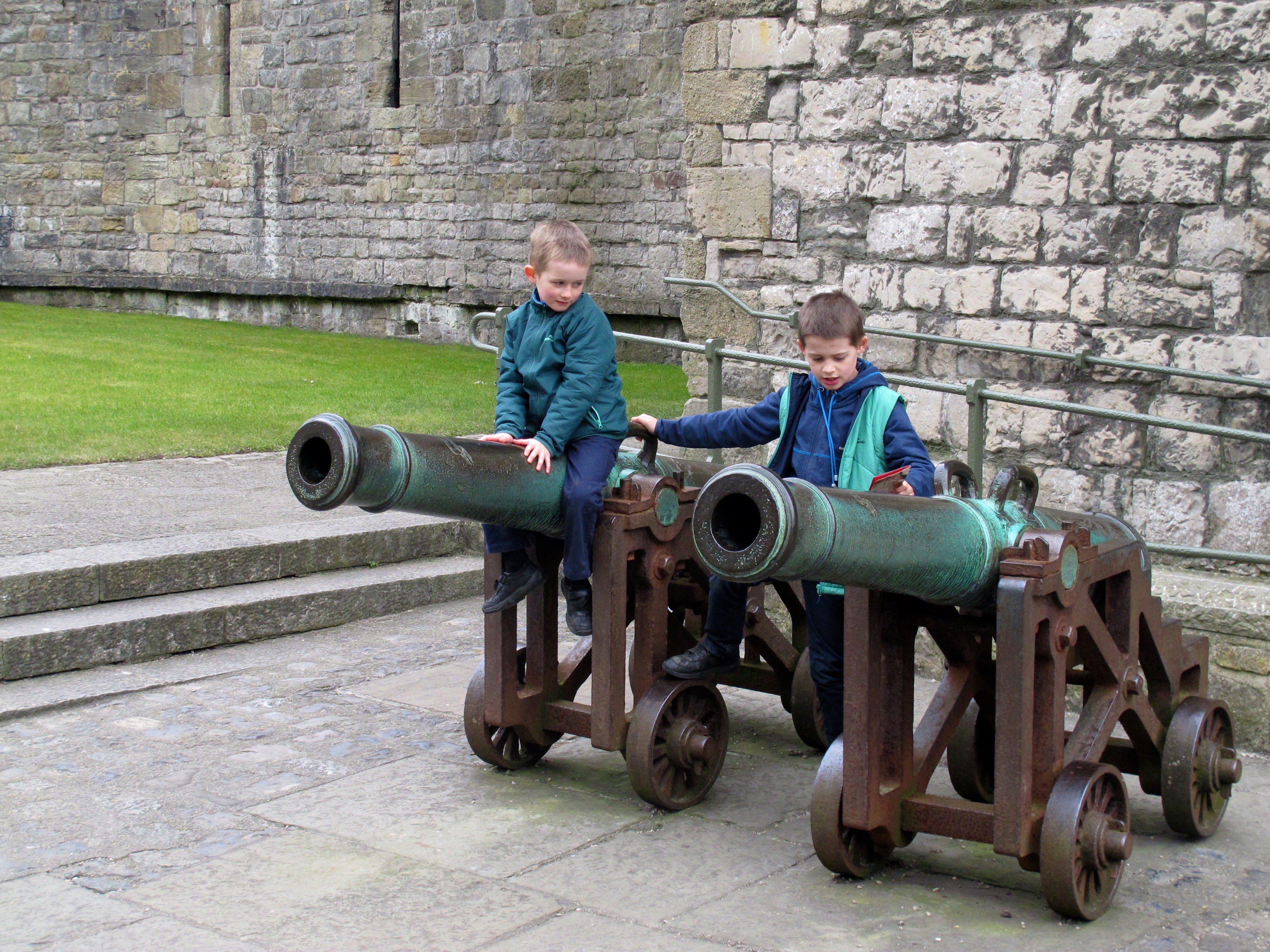
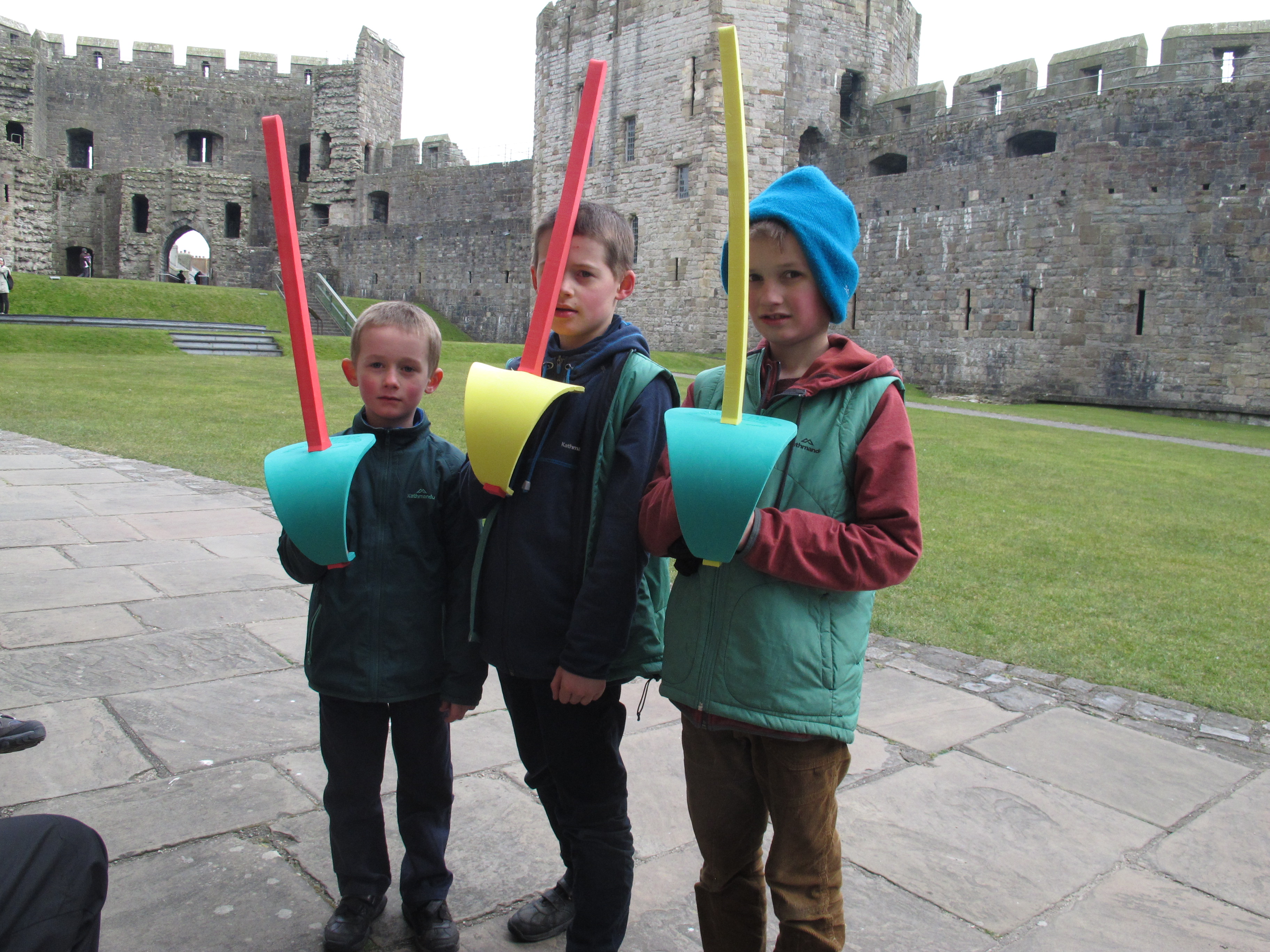
The Welsh have their own castles but the biggest in Wales is Caernarfon built by Edward I in the 13th cent. together with nearby Conwy and Harlech to assert English dominance to the furthest corners of Wales. Carnaerfon is enormous but was not completed, never-the-less serving the royalists well in the civil war. Our sympathies lie with the Welsh.
.
.
.
The Victorian era steam railways of the mines have been reconfigured to become an attraction for train gunzels, kiddies and lovers of the higher countryside.
.
 scatterbrook
Not globetrotting yet again! But I’m glad – just as long as you keep writing about where you are and what you’re discovering. How did you manage to break ribs? Scaling castle walls? Or falling down mine shafts?
Saw photo of you with our lovely little Alex, looks as if you enjoyed our rainy land.