
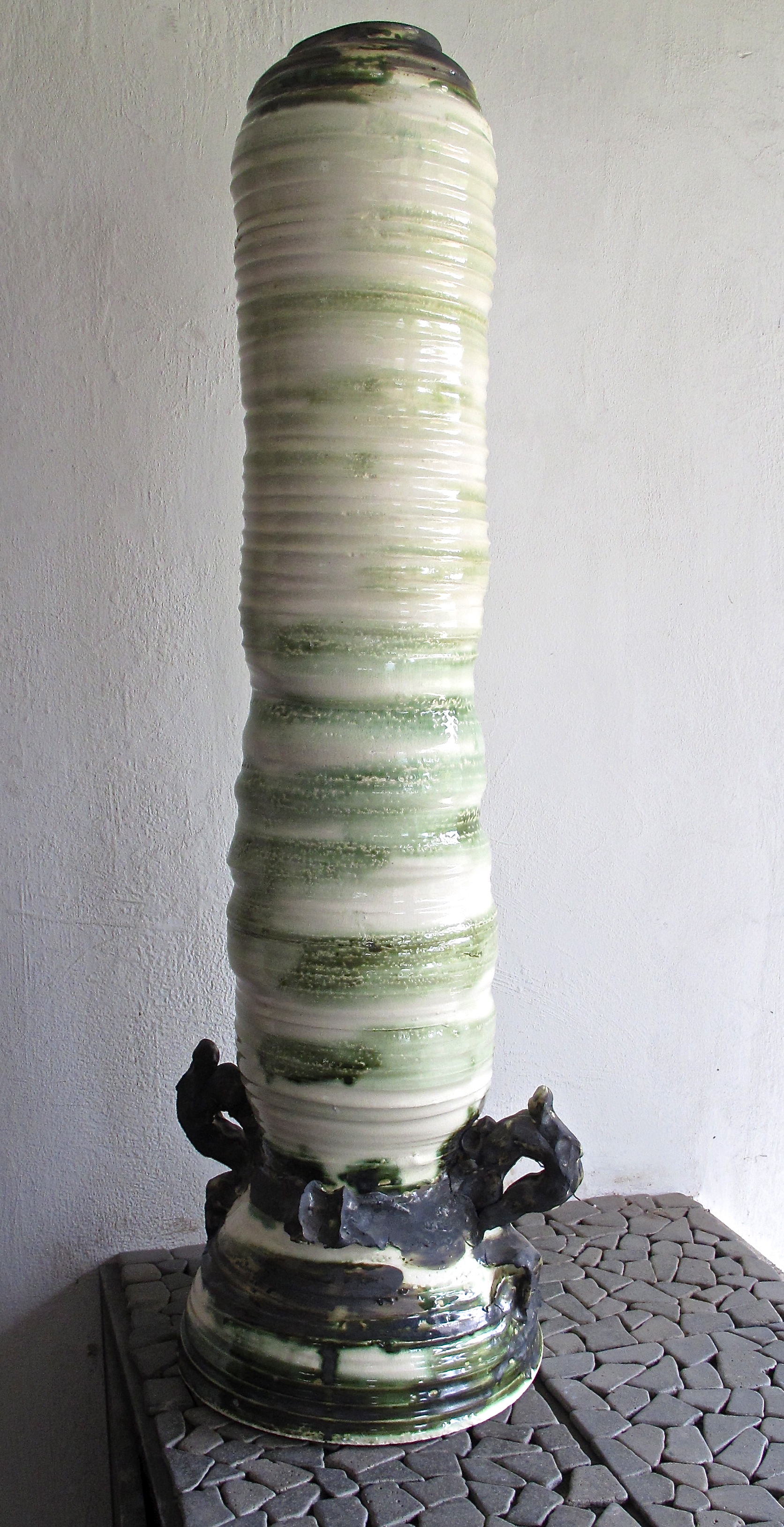
Marcello’s showpiece
With the encouragement and support of the Australian Business Volunteers organization we are delighted to return to this corner of paradise. The purpose of this visit is for me to be an ABV technical advisor at Gaya Ceramic, a pottery in Sayan, a village near Ubud. The company employs about 50 villagers to design and produce custom-made porcelain tableware for stylish hotels and restaurants, locally and by export. Their work has considerable design and technical merit, but Marcello, the owner of Gaya, ABV and myself are reckless enough to believe that my input can make a difference. Intending to spend the first couple of weeks getting hands-on experience with their clay and materials, and hoping that some promising variations on present methods might emerge, given the well-known creativity of Australians with fencing wire, baling twine and gaffer tape.
Have set up base camp five minutes from the pottery at the Arthouse Villa where everything is very nearly perfect. Penestanan is a village on the edge of Ubud. We are comfortably communing with nature, the kitchen and bathroom being sort of underneath the stars. When it rains, it is possible to have the pleasant experience of a mixed hot and cold shower. Some of the showers, instead of the usual rose, have the water simply spilling from an overhanging rock.
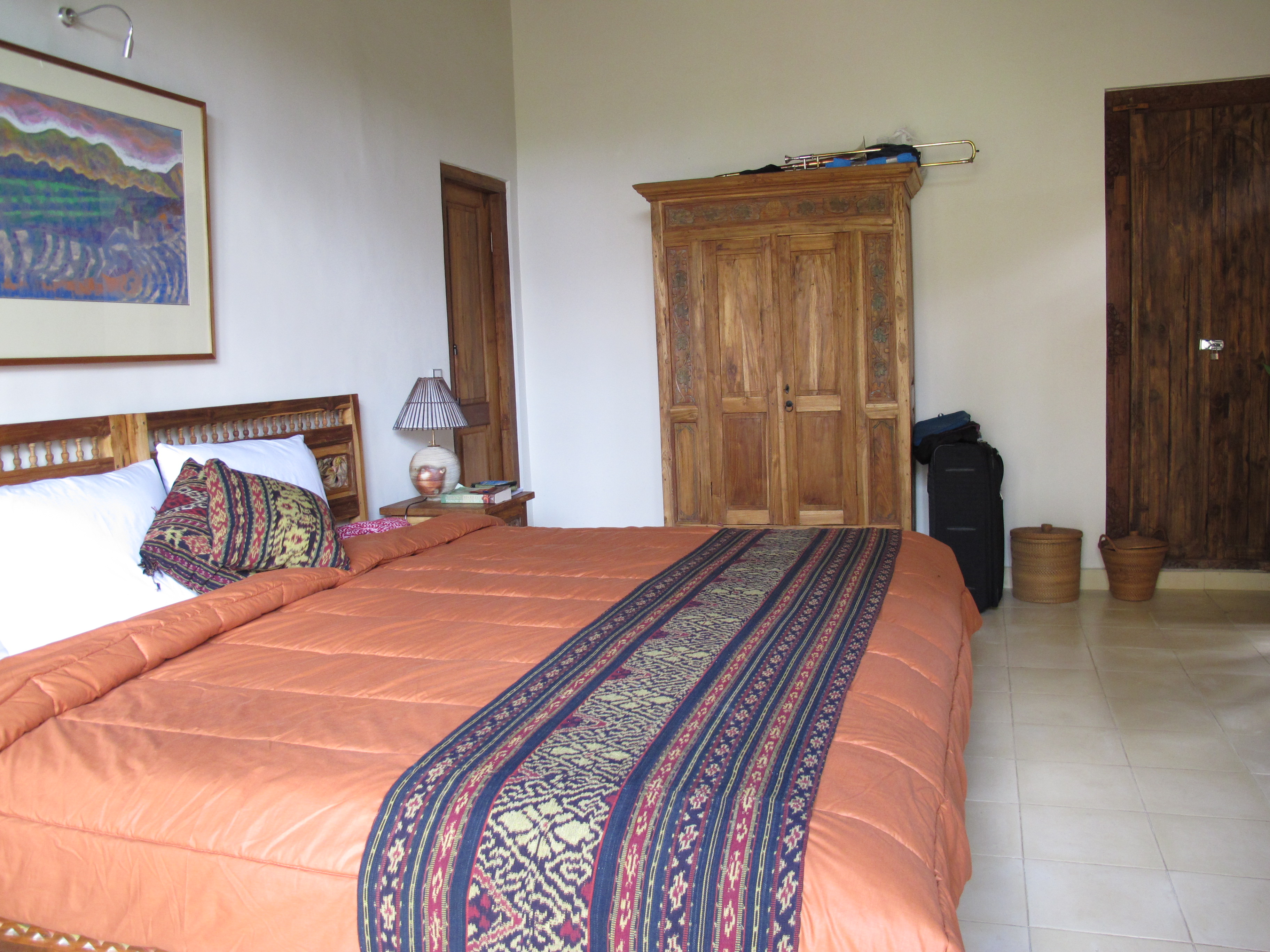
The huge bed could easily accommodate four people without unintended intimacy. Anyone interested? Note the trombone on top of the wardrobe – but more of that later. The villa has been built on the site of a walled garden leased from the royal family.
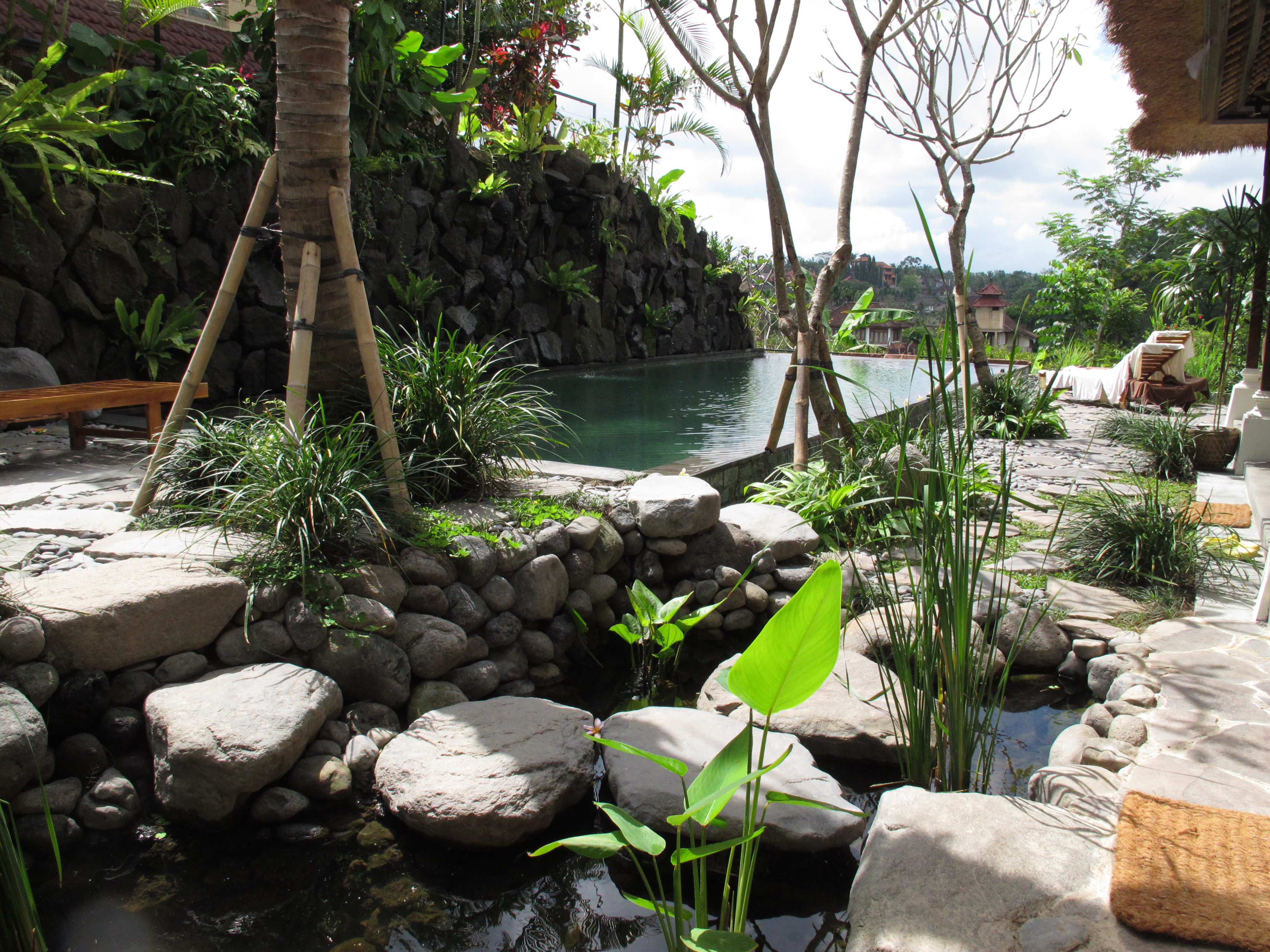
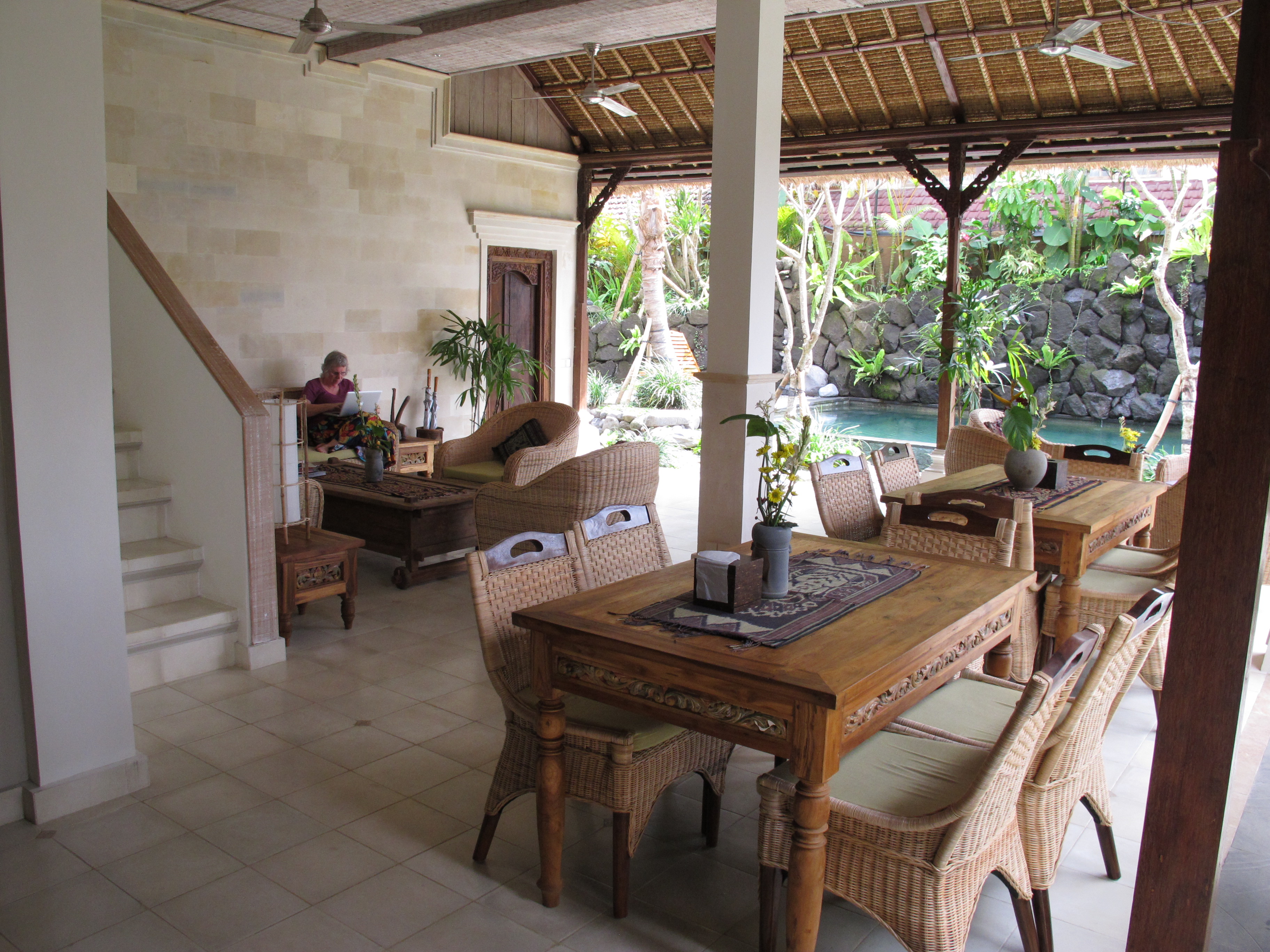
It is the vision of Bruce McWhinney, an Australian potter who has built five traditional high ceilinged thatch roofed rooms around a breezy communal dining and lounging area. Only traditional materials and craft skills have been used. All of the crockery is wood fired Bizen style by Bruce, and the villa is at the forefront of the partly successful movement to ban unnecessary plastic packing materials from Ubud. One of the cute little innovations of this movement is fabrication of shopping bags from recycled newspaper.
.
Seems that last Saturday was seen as a particularly auspicious date for cremations, as there was a procession of more than sixty “lembu”, or sarcophagi in the shape of black wooden bulls, carried out of town by bearers. In some cases the sarcophagus is small and only symbolic. In most cases the sarcophagus will hold the disinterred remains of the deceased. The bulls were carried by many bearers and were sometimes ridden by a young boy or an old man.
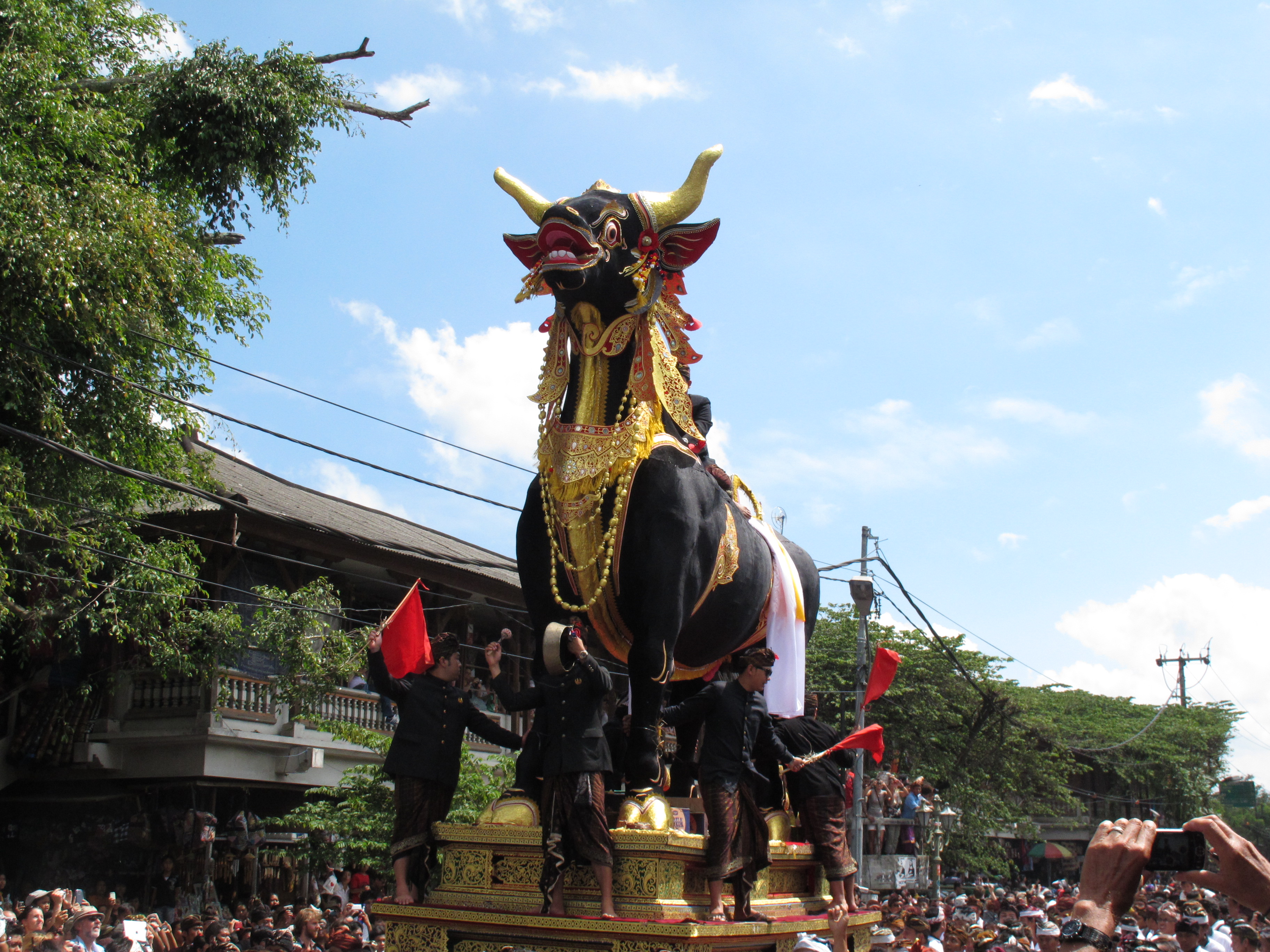
The main attraction on the day was the funeral and cremation of a nephew of the king of Ubud. A crowd of maybe 300,000 locals and tourists positioned themselves on stairs, balconies, and footpaths in anticipation. Because the nephew of the king was very important, he had to be carried to the cremation site near the top of a very grand hearse or “bade” Involving an operation rather similar to placing an astronaut in a rocket. And, being so important, he would have to be cremated in an extremely big black wooden bull. So, the order of the procession: Gamelan bands, a long line of elaborately dressed women in gold, bearing offerings, 3 princesses dressed in purple, riding a high black and gold carriage sheltered by 4 very high little black and gold umbrellas, then the big black bull, towering over the two story shops as it passed, carried by about forty and, even bigger, a temple extravaganza, and finally the incredibly high bade, carried on the shoulders of a team of about sixty men.
The width of the bamboo undercarriage of the bade stretched across the street, fully from one kerb to the opposite. The mood of the bearers and bystanders is not one of somber mourning, but rather one of excitement and sheer physical challenge – as in a boisterous Scottish tug-o-war match. The bearers are managed from the upper deck by shouted commands from men in black waving red flags. The tower teeters and wobbles as the bearers struggle for control and the crowd is bull-dozed off the kerb against each other and into the shops. There are pit stops every hundred yards, when a fresh team of bearers in white t shirts, at a command from the head man in black wobbles the tower aloft and with grunts and cheers move on at a fast walking pace, followed by a sea of people stretching more than a kilometer. We left the entourage at that stage having had more than a usual days quota of excitement, leaving the electric men to reconnect the power lines that had been taken down to allow the bull and the bade free passage. Now regretting not staying for the fiery end, particularly given my history with fires. Some Dutchmen from the villa who stayed on gave glowing reports of the finale.
 scatterbrook
Thanks Rob for the latest instalment from your very interesting life.
Bernadette & Michael (Loire Valley 2010 fellow travellers)