
Home in France for the next two weeks is in the SW of France in the province of Landes. Not too far from Pau and Biarritz and the Pyrenees, a couple of hours south of Bordeaux. We are staying in a ‘maison de maitre’ or house of the master. Maison de Maitre is a bit of an elastic term but usually refers to a largish two-story house. Ours is probably a couple of centuries old, set on 1½ acres of rolling lawn and mature trees with a large swimming pool and well developed veggie garden. English owners Helen and Phill bought it 7 years ago ‘with their hearts, not their heads’ and have spent their early retirement since then beautifully renovating. Allowing us to enjoy such luxuries as a library/ reading room where this email is being written and a shower with a rose as big as a dinner plate and six side jets as well.
The immediate village is Monsegur, consisting of a church, a corner store and a recycled rubbish collection point, all set on the ridge of lovely idyllic rolling pasturale. Nearest real village is Hagetmau, ten minutes away by car. We have the fondest memories of village weekly morning markets, and were eagerly looking forward to the Hagetmau market on Wednesday morning to lay in supplies of the finest choice comestibles, perhaps nice soft T shirts as well. Smaller scale than some, only one cheese truck, a small fish truck, many clothing stalls, a good selection of fruit & veg, but no meat or charcuterie, no wine to speak of. Delightfully authentic village market ambience, but unfortunately, a little light weight on substance. Would have to rely to the Intermarche at the edge of town to stock up for the week. Surprised to find such quality, range and economy. €3 a bottle for quaffable local wine, €9 a bottle for exotic Jacob’s Creek. Fish, meat and charcuterie to normal market standards. Colombian bananas €2.50 a kg, fruit & veg well presented & cheap. No ambience and social chit chat at all. Embarrassed to confess that we sold our soul to Intermarche. But our farmers lunches of pate, terrine, jambon, 4 sorts of cheese on baguette washed down with vin de pays and tarte de jour to follow – all as good as ever. The world is moving on, enjoy the village market atmosphere while it lasts. Somewhat similar result at the St. Sever market, a village further on, Bought a sack of cheese and strawberries direct from the farm on principle, and retired to the café for an espress or café au lait.

Street in St Sever
St Sever is an absolutely beautiful, very old, and still very living village. Big enough to have to think carefully to remember where the car was parked. At the centre, of course, stands the church, or, in this case, the cathedral St. Sever sur-Adour. The cathedral was built by degrees since the year 965. Not pretty, an in-your-face huge building, it lacked the elegance of the magnificent cathedrals of a few centuries later. No finesse, it was just incredibly stoutly over engineered. So stout that the lumbering flying buttresses might appear superfluous. But the high ceiling of the nave is simple heavy barrel vaulting, piling stones on stones to brutally erect the biggest edifice possible. Never-the-less, an impressive tribute to the faith and ambition of people before the renaissance and long before the time of steam engines, unions & oc. heath & safety regs.
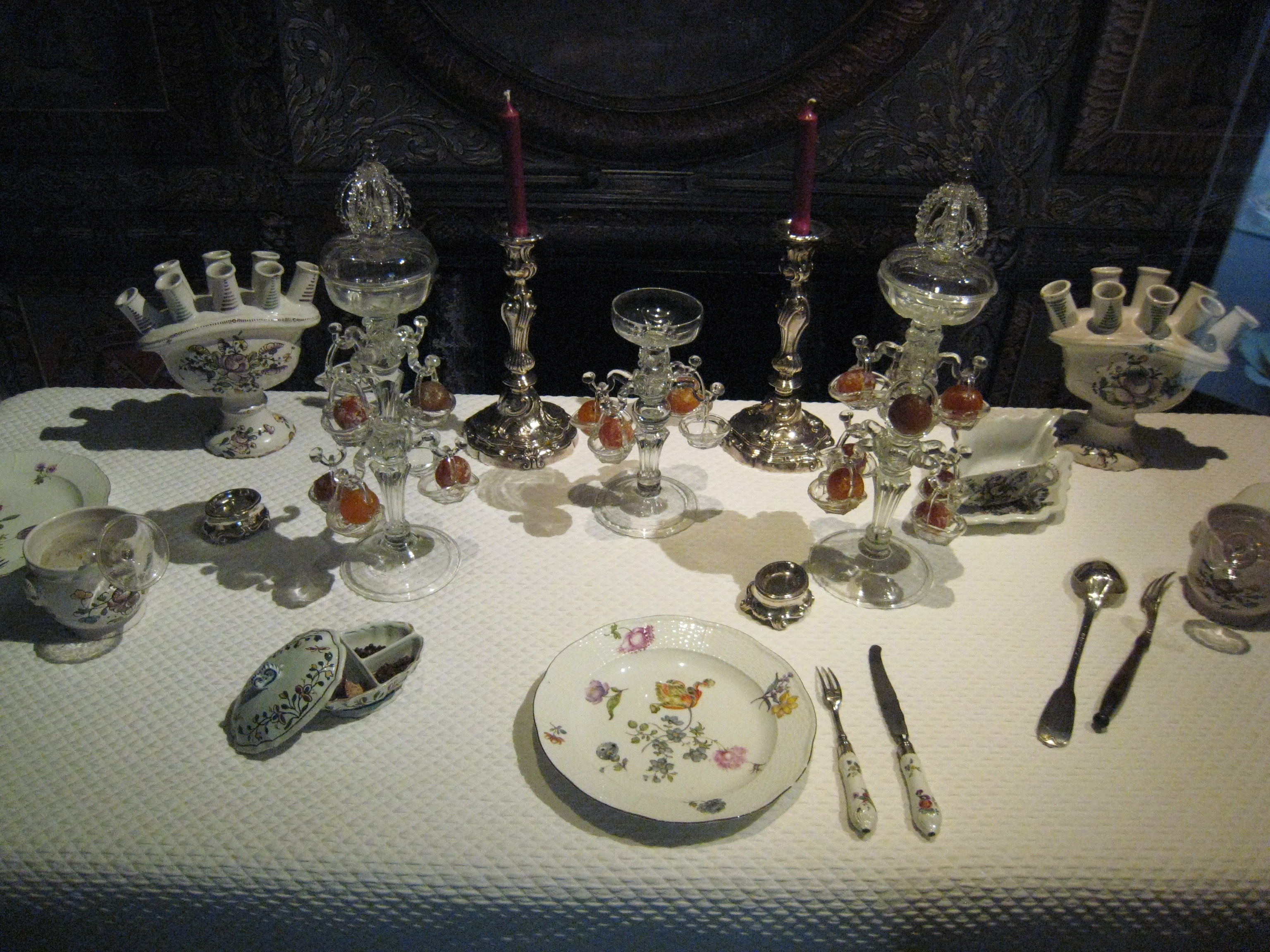
Another much smaller village nearby is Samadet. In the early 18th cent. Samadet was the centre of an active Faience industry. There are still a couple of practitioners in the village producing this characteristically frilly white earthenware for the table, which is still decorated with the same floral motifs that were used centuries ago. Most of the decoration is still hand done by brush, using the original mineral oxides for colour, but a few plates and bowls are decorated in bright colours with the new high tech synthetic over glaze stains. Chaque’un a son gout. On the edge of town is an impressive museum devoted to placing Faience in perspective against other forms of pottery such as Majolica, Terre Vernisee, stoneware and porcelain. All free, as is the adjacent chocolate and coffee museum – lovely free coffee & chocs, with the opportunity to buy a piece of current local Faience ware.
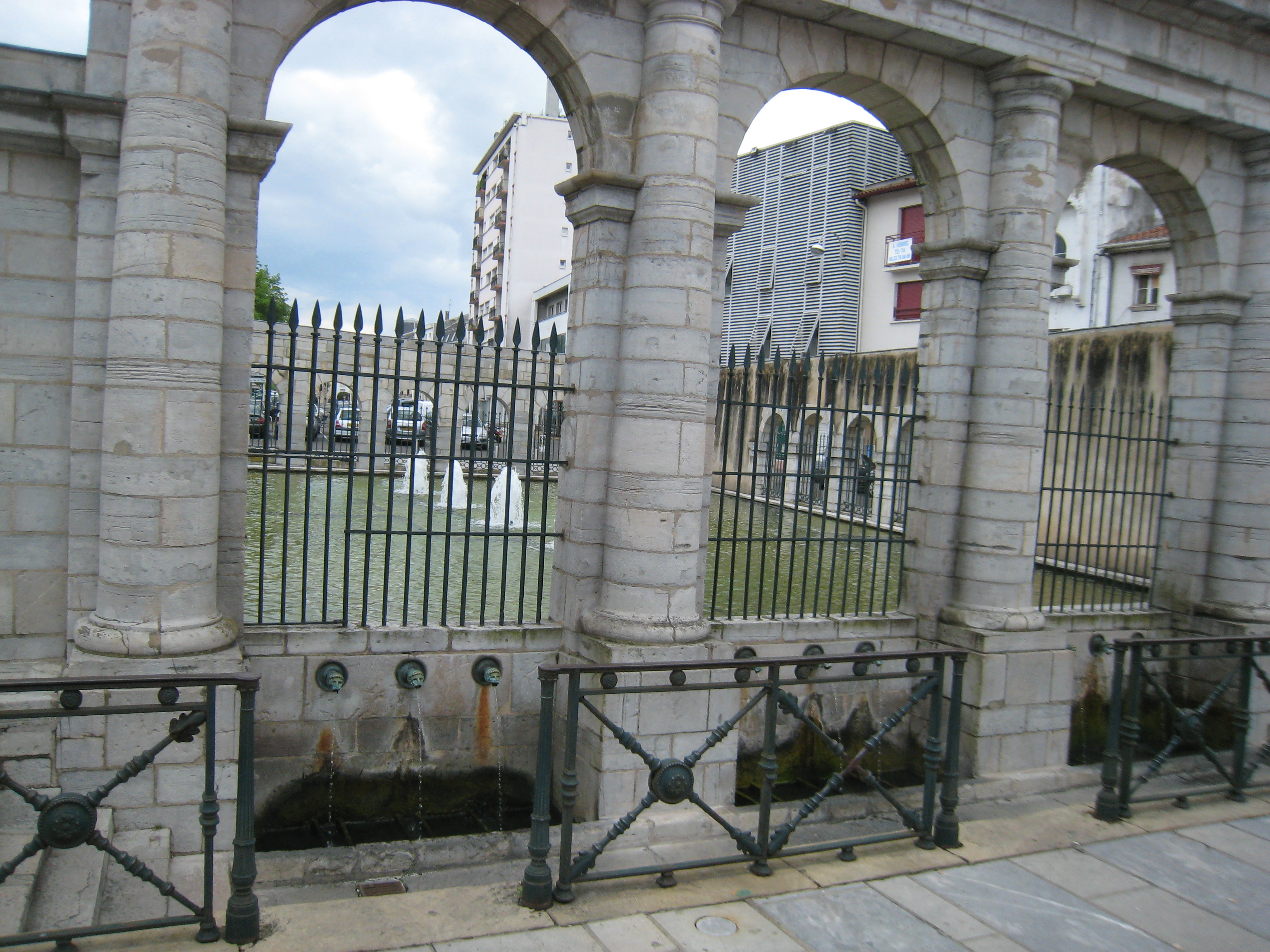
Roman hot springs at Dax
Next village is Geaune centre of the local wine industry. Tastings failed to woo us from the busy Intermarche cellar. Have so far failed to make a good connection with a local “Cave”. Maybe at the next house swap in Aix-en-Provence. The ladies were moved to take the waters at Dax, the ancient Gallo-Roman thermal springs town an hour away across country. Since Roman times hot water has continued to gush at various placed around the town, the source being 2 km. below ground level. Temperature at discharge is currently 62 deg. C. At the old Roman thermal baths, the hot water discharges for public consumption through a half dozen ornate bronze spigots. Due to the temperature and the mineral content, corrosion is fairly advanced and we think that the spigots are a recent feature. The ladies took the waters while George & I circumnavigated the lake talking secret men’s business.
Car park of the house serves as the domestic Petanque pitch. But the lovely pebbles camouflage the jack or cochonet. Margaret has achieved devastating form in practice, which is yet to be seen in battle, but we live in fear. Local rules: cherry tree & the grass are out of bounds. Hitting the car on the full is frowned upon.
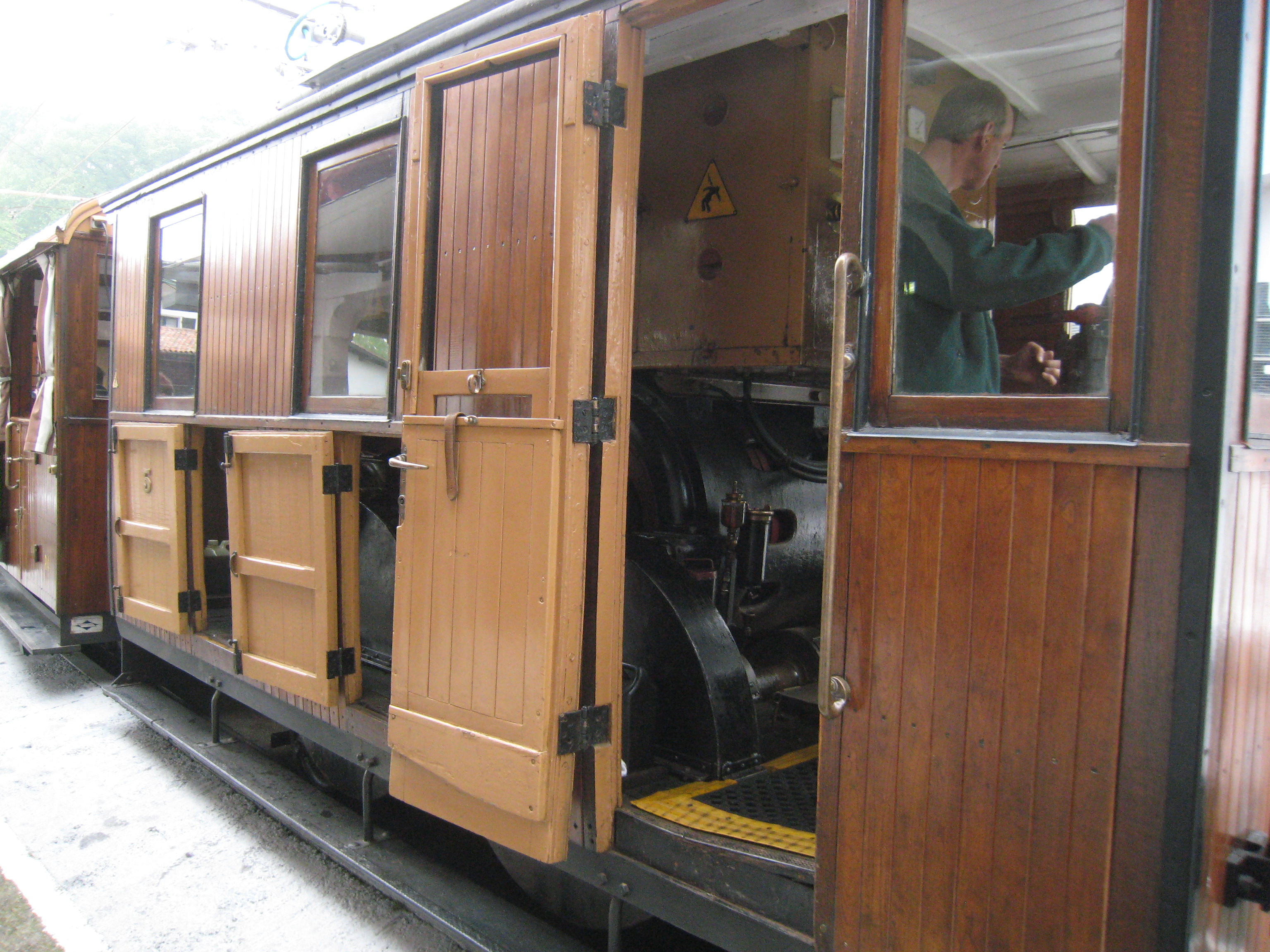
The Rhune train
Part of the attraction of coming to the Pyrenees again was to ride again the little yellow train high in the Alps. Before arriving we found that train is only a summer sport, running June to August. Touching down at Lourdes in April, the distant mountains were clearly seen, draped in heavy white lace – no place for the jolly little yellow train. Another little train, a cog railway does start running at Easter. The Rhune railway runs high up into the Atlantic end of the Pyrenees. The weather here in paradise has not been particularly brilliant. So, after patiently waiting a week, the hills above Biaritz were the target for the day. The engine and carriages are simple cubist constructions from the 1920’s – think Thomas the tank engine made of varnished wooden planks. Powered by a couple of massive olde worlde electric motors. Were told at the outset that the whole mountain is smothered in dense fog and a prominent sign declares that the railway company is not responsible for the ‘meteorologie’. Of course we rode the rails, it was freezing, we saw the swirling fog, we saw many others watching the swirling fog. Like forlorn gamblers we held to the image of delightful lunch in a chalet above the clouds, overlooking distant snow capped peaks. Nope. Nothing.
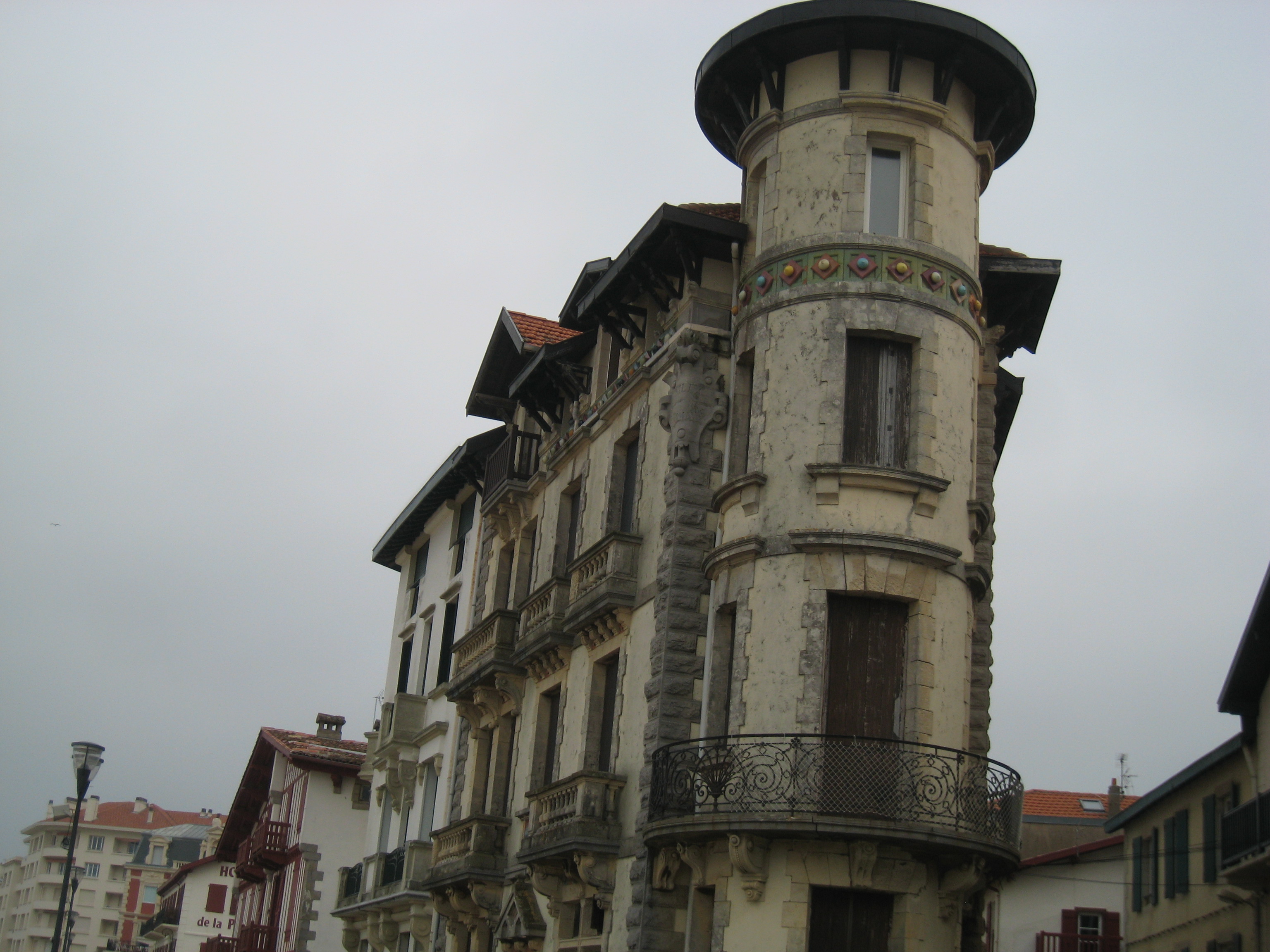
St Jean-de-Luz
A quick Croque Monsieur before checking out the Basque town of St Jean-de-Luz, down the hill at the seaside. Street signs and restaurant menus are bilingual Basque/French, which makes for slow progress. In Basque there are lots of ‘X’s, ‘Z’s, ‘Y’s and ‘K’s. Cute Mamselle in the ice cream shop told us that ‘tx’ is pronounced ‘ch’. Lovely ice cream. On the lookout for singing fishermen in stripey blue & white tops with berets and piano accordions. Very tourist positive, but giving a romantic glimpse of another world. On the mantle, back home in Monsegur, sit detailed wooden carvings of Don Quixote and Sancho Panza. Why are they there? Of course! The ‘X’ in Don Quixote! Don Quixote came from the Basque area near here! Quick check of Wikipedia revealed that Don Q was written in old Castilian, a bit like Basque, but all the consonants got changed along the way to make proper modern Spanish. La Mancha alas nowhere near here. The Basque must be a stubborn people, not only holding on to their ‘X’s and ‘Z’s but opting to be burnt alive in hundreds rather than renounce their faith in centuries gone by. But today, lots of tourist action. Large crowd of Poms bizarrely dressed in a hundred different shades of pink with false straw hair were taking a crowd of underprivileged kids for a treat at the beach. Singing all the way.

gourmet ice cream
Took an hour and a half to walk around the man-made Lac on the other side of Monsegur. A number of fishermen had set up shop with a little tent each and 4 rods each, hopefully propped in a row. What was the tent about? No home to go to? Nearby sign said only 3 rods each, but the boundaries are pushed by about the same margin as speed limits on the roads. The Lac was made as recently as 1995 in a joint attempt to secure ‘hydraulique securite’. Lovely clear day for a walk, might even have been a good day for a view from the alps, sigh. And to lunch in St. Sever. All quiet except the unassuming little restaurant called Jacobins Table. Undecorated, but with promisingly stiff linen tablecloths and napkins. The special is a €10 ‘menu’. Finely chopped & dressed tomatoes for entrée. Crispy slow roasted duck with pate for main. Tricky, we were waiting for the patay (squishy duck livers), we now know that pate without the acute accent is pronounced parta & means pasta. The pasta was in fact very tasty, cooked in a slightly creamy sort of stock. Chocky mousse for afters, all lubricated with a jug of Rose de Pays included in the price.
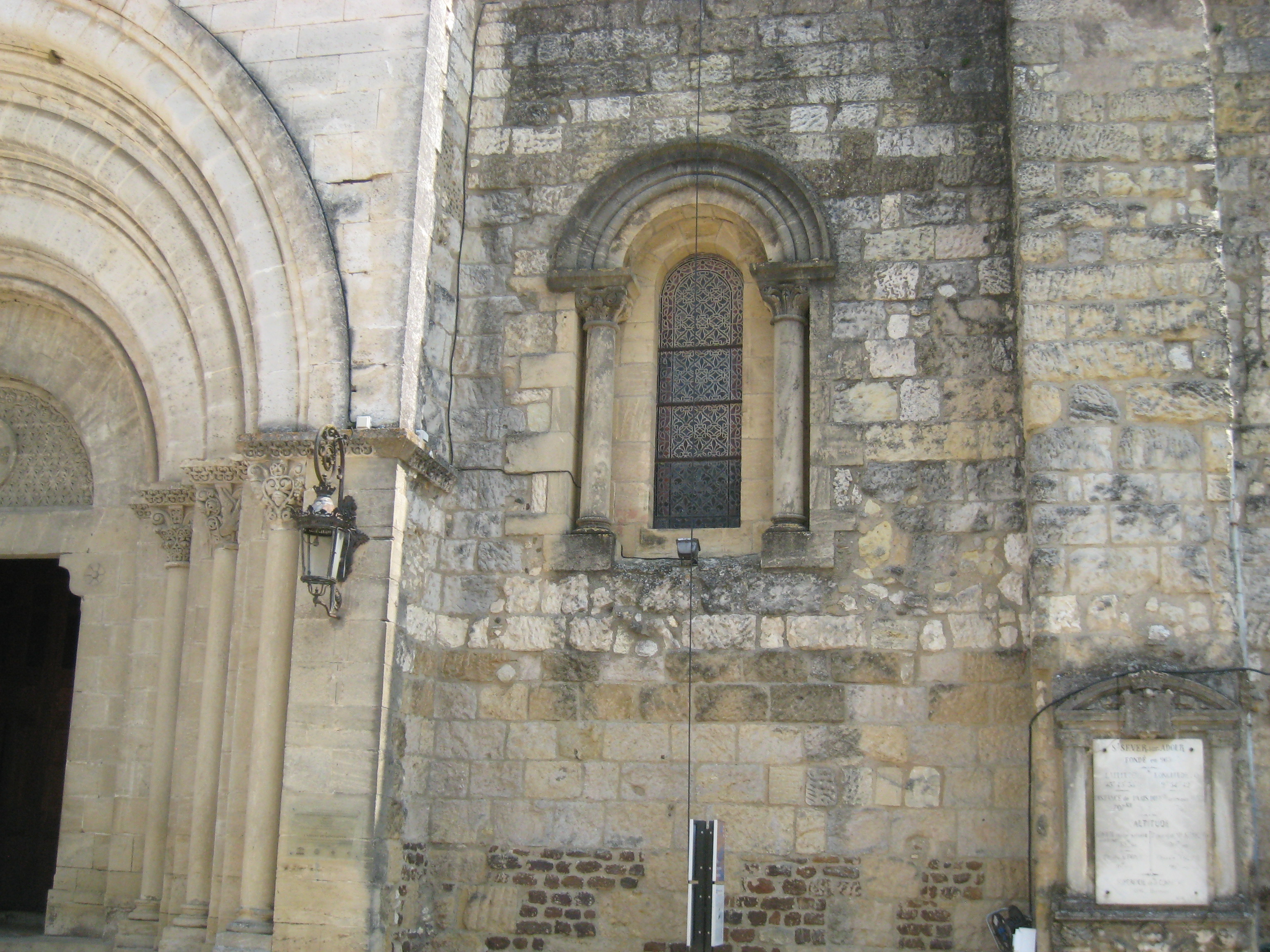
St Sever Cathedral
Another look at the St Sever cathedral. The French tend to build their houses to last then modify and add on rather than demolish and start again. And so it was, very much so, with the cathedral. The oldest stonework has large, badly weathered, hand cut blocks of stone from the 10th or 11th cent. More recent repairs and additions have been made with bricks or rubble fill or finely cut sandstone, sometimes ornately decorated or crudely executed stonework, sometimes rendered. Not a particularly uplifting effect, on the whole, but a reminder of a sort of heritage.
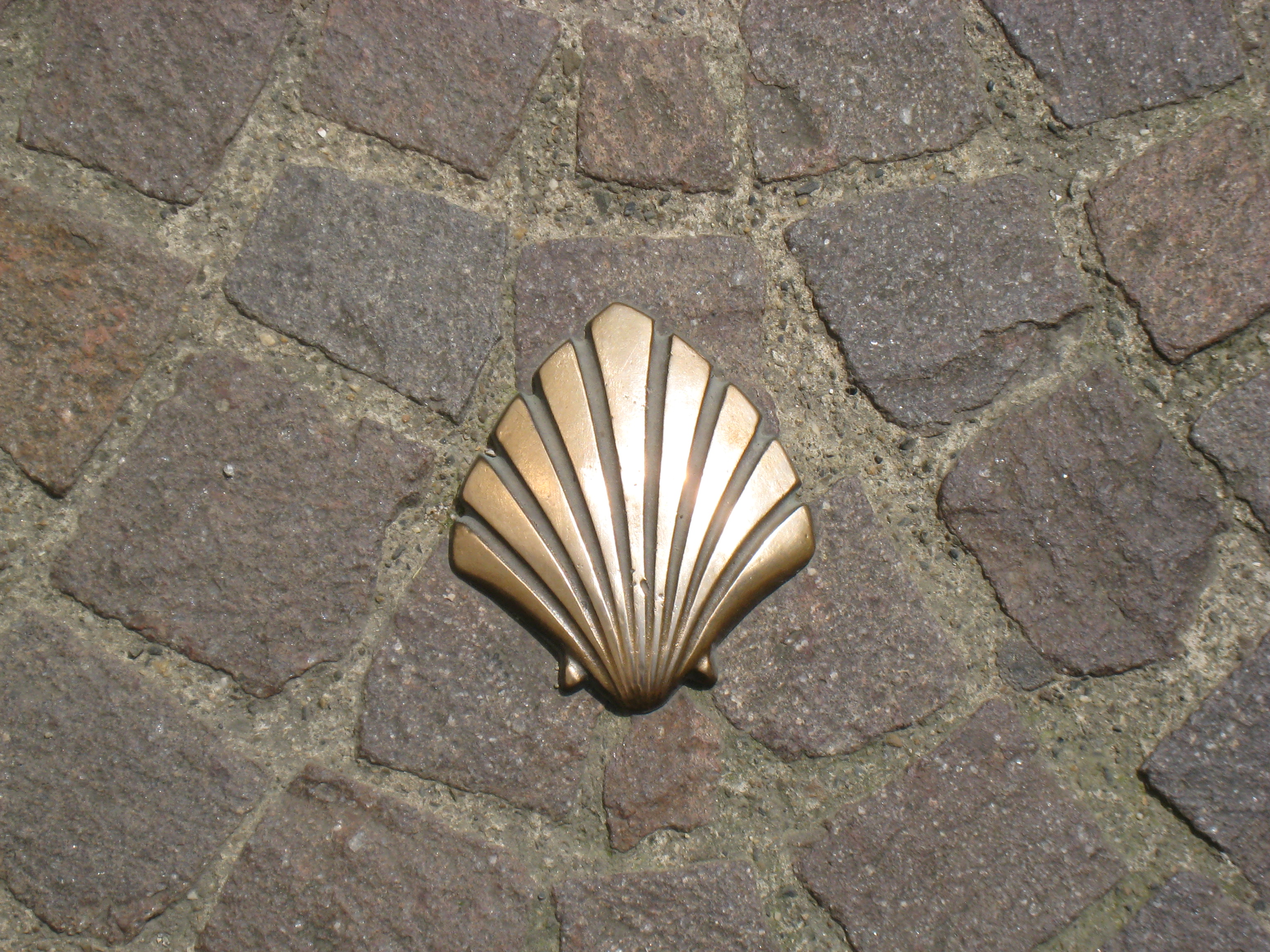
This is still part of the Camino de la Compostelle pilgrim trail. In times gone by, there was an obligation to provide pilgrims with food & shelter, now, the pilgrims are offered a bowl of soup and the protection of the reliquaries in return for a donation to the church. Under the ancient cloisters, an unlikely place for a boutique shoe shop. Alas, the pair of sleek Mephisto sandals that winked at me were a perfect fit. Weak sod.
Quite a history of Brits and others buying real estate in rural France. Sometimes a holiday shack, sometimes a simple retirement sea-change and sometimes a project. Phillip & Helen’s Maison de Maitre, where we are staying in Monsegur, was a project based on a house only a couple of hundred years old. A project that was dutifully followed to completion over about five years. Project of an entirely different feather is Pete & Rosie’s tower near Lombez a couple of hours away. Stayed at the tower for a few of weeks a couple of years ago. On this occasion just an overnight visit to keep contact & check the progress. The tower is about 70 ft. high, monstrous, built by steps & stages since the 12th cent. Walls a metre thick, ceilings 20 ft high, many of the rooms of ballroom scale. Crumbling. Around the grounds are ruins of several buildings, which have been steadily decaying for eight hundred years. Pete & Rosie have been working on restoration and modification for about seven years now. Apart from their own vast living quarters, there are two apartments for use of visitors and a super ultimate luxury apartment to be. The super apartment is better than it was, (think Montsalvat meets Bauhaus), but at present rate of progress, will probably take another two years till it is ready for the first honeymoon couple. Decay of the buildings is frustratingly nearly as fast as the repair work. Over the centuries the walls have been built by various stonework techniques then rendered to give a clean surface. From time to time the clean surface breaks down revealing a fascinating mix of stonework and brickwork, giving the opportunity to strip back, clean up and present yet another feature wall. Furnishing a place like this requires museum scale furniture. Rosie is an enthusiastic & effective Ebay buyer of everything. Mainly very big and very old, but including china, cutlery (in particular hundreds and hundreds of Georgian silver spoons), chairs, beds, light fittings, bathroom fittings, machinery, appliances, curtains, in short, stuff without end. Two Border collies, Poppet and the other one preside over law and order. The fifty acre farm can’t be actually used for anything because of tax implications. So a long meandering walking path to the far reaches has been ride-on-mowed. The orchard provides pears and plumbs for preserving and for wine and the garden provides strawberries and veggies for French cooking. Funny, crumbly, delightful sort of paradise.
Travel has been easy. Borrowed car. Freeway or “Autoroute” for speed and the back roads for pleasure. On the way back from Pete & Rosie’s, got off the freeway at exit 19 to saunter the rest of the way gently home. After half an hour and not recognising any place names, we found ourselves back at exit 19. Least said … On the last day before moving on to Aix-en-P, thought we’d do a nice Sunday lunch. Maybe Jacobins table at St Sever again. Digression. A Jacobins museum in a very old building nearby suggested a religious order, but the ‘Jacobin’s Club’ was a sort of leftish organisation set up during the revolution and disbanded when Robespierre was past his use by date. Lunch. Jacobin’s Table was closed, as was everything except a bar with the lonely proprietor reading the paper. Ah, not only Sunday, but also May Day holiday. All quiet in Hagetmau also, but the number of parked cars indicated something. In the middle of town is a very big market building called the “Rotunde”. It had been laid out with trestle tables and over 300 people were enjoying a communal lunch together. Host Phillip said that they usually attend and that at Festival time the village closes for a week of such partying, obviously with quite a lot of plonk & Petanque on the side. Wonder if that sort of thing could catch on in Oz? Enormous marquee on the footy ground at Ferny Creek or Olinda?
Four of the locations on this trip, France, France, Prague and Brussels have been arranged through the Homelink web based house-swapping organisation. We have been using them for many years and thoroughly recommend. Check out www.homelink.com.au and explore as a visitor. To actually make contact with the locations, an annual sub of about $250 is involved. For more info email me, happy to give the glowingest reference and further info. The process is brilliant at many levels. Economic, but that doesn’t mean the travel costs less – you just do more of it. Avoiding hotels & mass accomm, YES! Allows exploring from the inside, getting to know the locals & live as they live. Starts to give an insight as to what live might be all about. An initial reaction is “but what about my things and the house? Will they be safe?”. I think the Muslim advice is “trust in Allah by tie up your camel”. We have never had a problem. The most important thing that is learned is that a great time can be had with very little stuff. The 20kg (max) of the stuff brought along is actually ‘home’. Some of the exchange homes will provide ideas and inspiration for what to do back home. With some, you might miss some of the familiar tools of the ‘everything drawer’, and then the neat touches are discovered, like how the garden and out door eating arrangements work, the fantastic, overhead, water wasting showers. Sometimes, like now, the wi-fi is brill, other times email is tricky. Probably asking a lot, but if house swapping, and culture swapping really caught on, the world might be a better place. AND you get to meet lots of nice people & make lasting friendships.
 scatterbrook
Love hearing about your travels, insights and adventures. 🙂
Wonderful travel log Bobby. A bit hard to get past Aida – and all of the other songs she had posted. The icecream looked amazing and loved all of the detail.
Thanks for taking the time
NH