
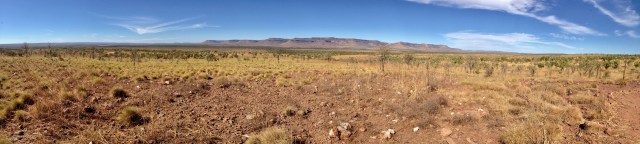
For years, starry eyed adventurers returning from the Kimberley have been in raptures as they told us of the Gibb, the Tanami, the Bungles, the cattle runs, the majestic ranges, the birds, flowers, big water, bush tucker, Boabs, anthills, the Argyle, endless plains sweeping to infinity with the curvature of the earth. Tempted for so long to follow, but deterred by the prospect of driving over corrugated roads for days to get to the good bits. Eventually, able to resist no longer, we joined a soft camping tour with Kimberley Wild at Broome to check out the fantastical scenery, plants and animals.
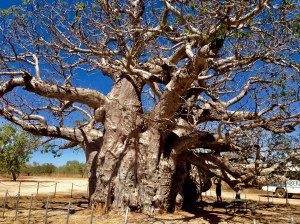
Annelies and Niki, our guides with Kimberley Wild, look like a couple of teenagers but claim to be a bit older. They do the cooking, driving, wood wrangling, tour guide chat, story telling and more. Everything is beautiful, and there is no problem that can’t be fixed with duct tape or a joke. Annelies is a treasure, revealing the bush lolly shop, she finds all this weird bush stuff for us to taste. Petals that are bitter sweet, a bit like cumquat. And green ants, if you hold them gently and put their bright green bottom on your tongue there is a sharp citrus sensation, mainly lime but a bit lemonish. Haven’t tasted termites yet, but they are great little builders. Using just mud and termite spit, their constructions somehow manage to be safe against cyclones, flooding rains, fires and attacks by other critters. Wondered what ceramic properties termite nests might have. Happily left them in peace. However, there is abundant pottery inspiration out here, some of it may surface in time for the October open studio.
.
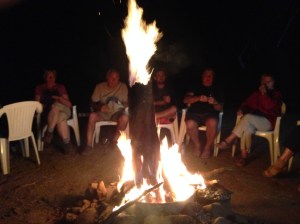
Way out of my comfort zone to be rising at 5.30 every morning, but necessary to enjoy the best of the day, doing gorges and stuff all day, By 6 at night the sun has given way to the campfire ritual. Swags under the stars one night, on another we had a hollow tree standing propped up in the middle of the fire as a sort of chimney.
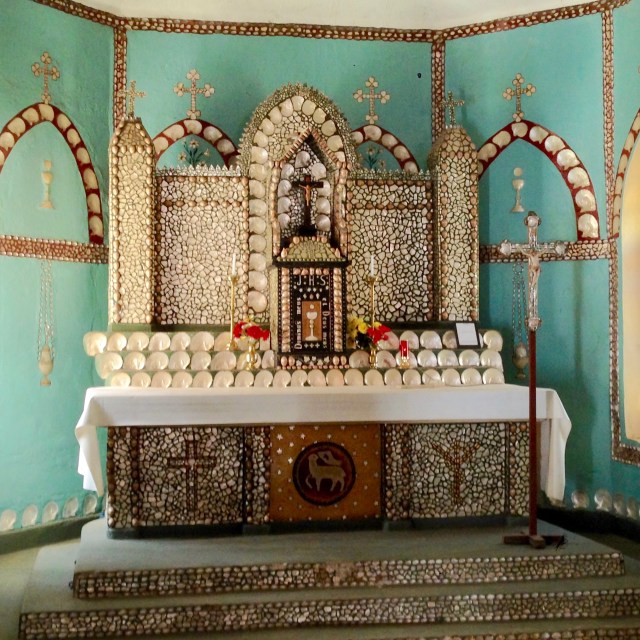
Up here the terms aboriginal and indigenous are not considered polite. Black fellas and white fellas are the inhabitants. There were waves and waves of invaders to the Kimberley. Seeking feed for cattle, gold, pearl shells, pearls, minerals and the missionaries were perhaps seeking to save the souls of the black fellas. The French Trappist monks brought Christianity to Beagle Bay in 1890 but left when they found that monastic life did not appeal to the black fellas. Then Pallottine missionaries came from Germany. When WWI broke out in 1914 the Germans of the area were interned at Beagle Bay. They spent the time building a church to resist cyclones, termites and bush fires, famously decorating it with pearl shells.
Surprised to learn that the black fellas made ceremonial use of pearl shells long before the arrival of the pearling luggers. And that only about one in ten thousand oyster shells in the wild actually contains a natural pearl. So the real money for the pearl luggers of the late 19th century was in supplying shells by the shipload for production of mother of pearl buttons. Had the great good fortune to hear Terry Hunter, a fourth generation black fella pearler, talk about the long and often dark history of the pearling industry. Terry’s adventurous English great grand father came to Broome in the late eighteen hundreds, joined the pearlers and produced seventeen children from three black fella “wives”. These were the dark times when young black fellas were rounded up (black birded) and forced to dive from the luggers.
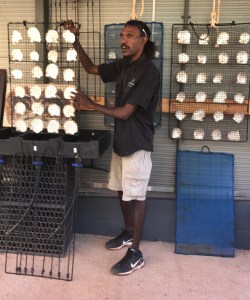
Dean Brown came to Broome in 1946 founding the Cygnet Bay Pearling company. About that time plastics saw the end of mother of pearl buttons. The future of the company then lay in discovering how to cultivate pearls, a secret jealously guarded by the Japanese. They succeeded. At the school provided by Dean, Terry became best buddies with Dean’s grandson James. Like regular naughty little boys they played marbles with pearls and occasionally used pearls for slingshot ammo. Now that Terry’s ancestors have paid their dues in the company, he is employed as a first class raconteur to inform and entertain the guests.
.

There is a amphibious vehicle called Sealegs. Basically a big rubber boat with three retractable hydraulically driven wheels. Walking pace on land but 40 knots out on the bay. Takes us out to the real boat, a rigid inflatable. Passengers for the wild ride sit on two lines of saddles and hold on to pommels. The coast from Broome to Cygnet bay is said to be host to the highest tides in the world. An unbelievable eleven metres low tide to high tide – the height of a four story building. Out among the islands of Cygnet bay the inrushing cooler water forms a blanket over the warmer low-tide water. Great clumps of warm and cool water change places with spectacular eruptions and whirlpools. Sadly, mouth open and too stunned to think of recording the event.
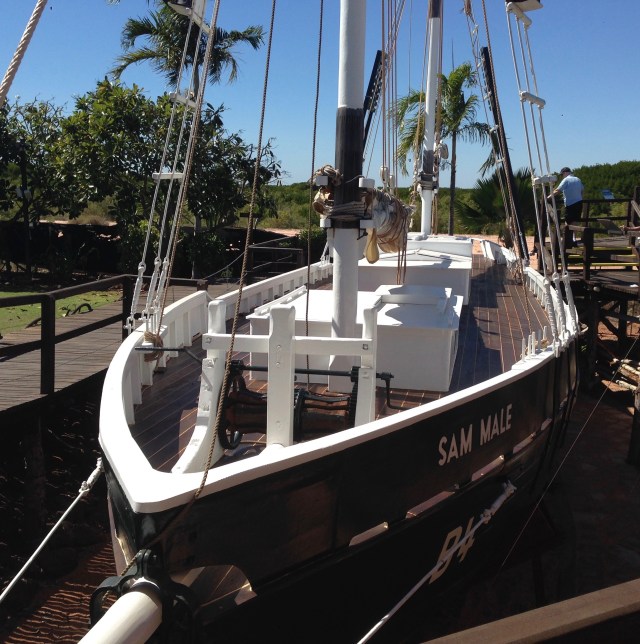
A black and white documentary film produced in the fifties presents a picture of pearl shell fishing as almost romantically happy industry. The reality of course was far different. At first oyster shells were gathered from the shore, then shallow water and deeper and deeper water without equipment. Pregnant women and children were found have the best capacity for holding their breath under water. Illness, injury and death prevailed. A very unhappy situation.
Crocs rule. The freshies eat little things and the salties eat big things, thankfully, no salties on the trail so swimming was OK. The pond at Galvan’s gorge even had a Tarzan rope swing demonstrated by Annelies. Whistfully said that “I couldn’t do that”. They chimed in chorus “Of course you can!”. Surprised to find that I could.
.
Camels have made their mark too, countless thousands of them, Dozens have been tamed for the tourists to ride. Sooo romantic, watching strings of them float people along Cable Beach Broome, into the sunset. The vision possibly more romantic than the ride. Music by courtesy NHB
 scatterbrook