
The Germans are famous for being good organisers rather than good lovers or good cooks. But being good followers gets them into trouble from time to time. Think WW II. More recently the lack of progress on the new Berlin airport has been an embarrassment. Since ground was first broken in 2006, almost everything that could go wrong with Europe’s largest airport construction project has gone wrong. Just three and a half weeks before the grand opening ceremony, with posters already up around the city, came the announcement that the fire safety system wasn’t working, and the airport’s first flight would be delayed indefinitely. It emerged that the person in charge wasn’t an engineer, but people thought he was, so he didn’t bother to contradict them. The project has already gone a staggering €3.5 billion over budget, and the latest bail-out will push costs to almost €6 billion. Completion not in view at all.
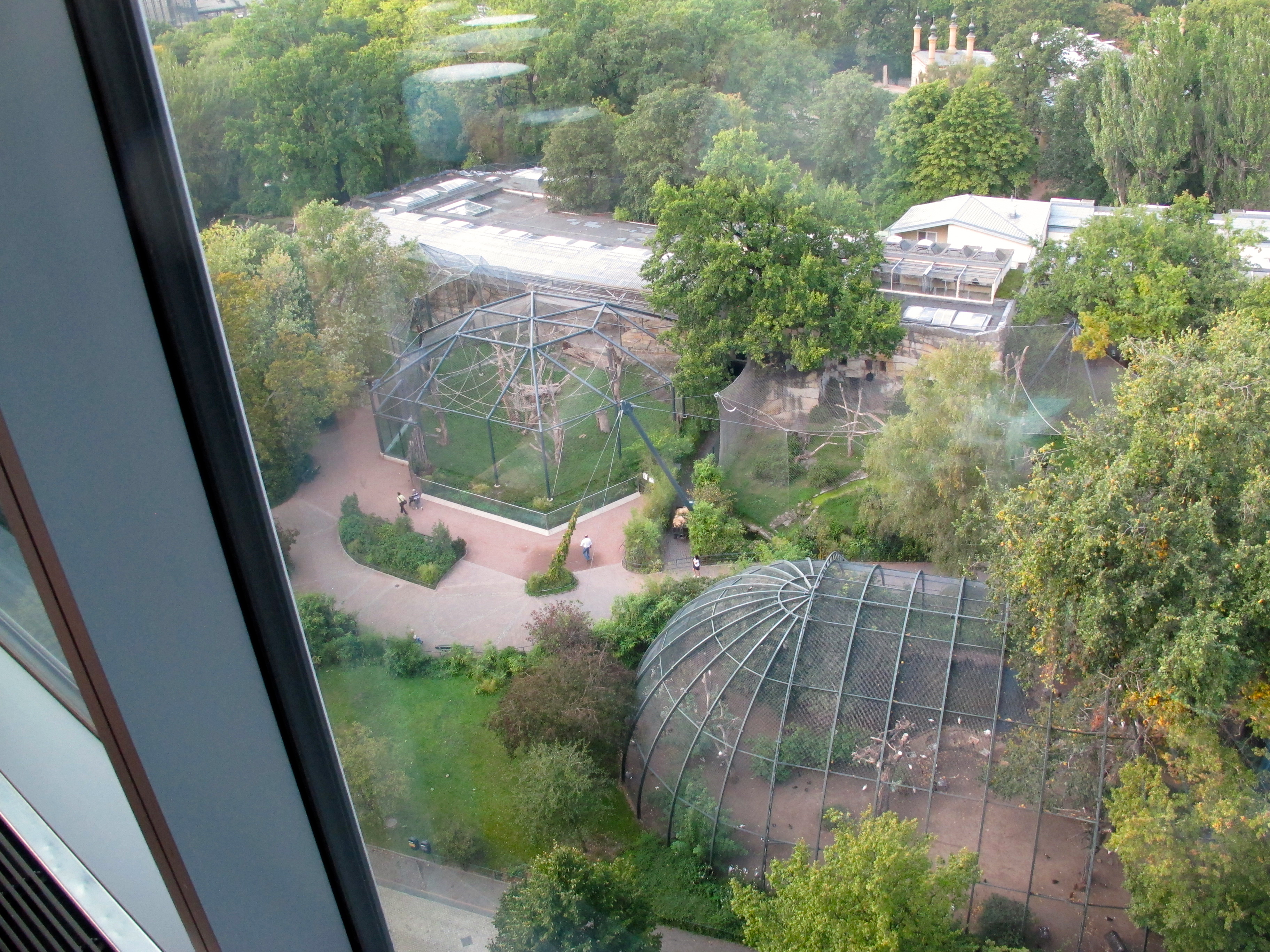
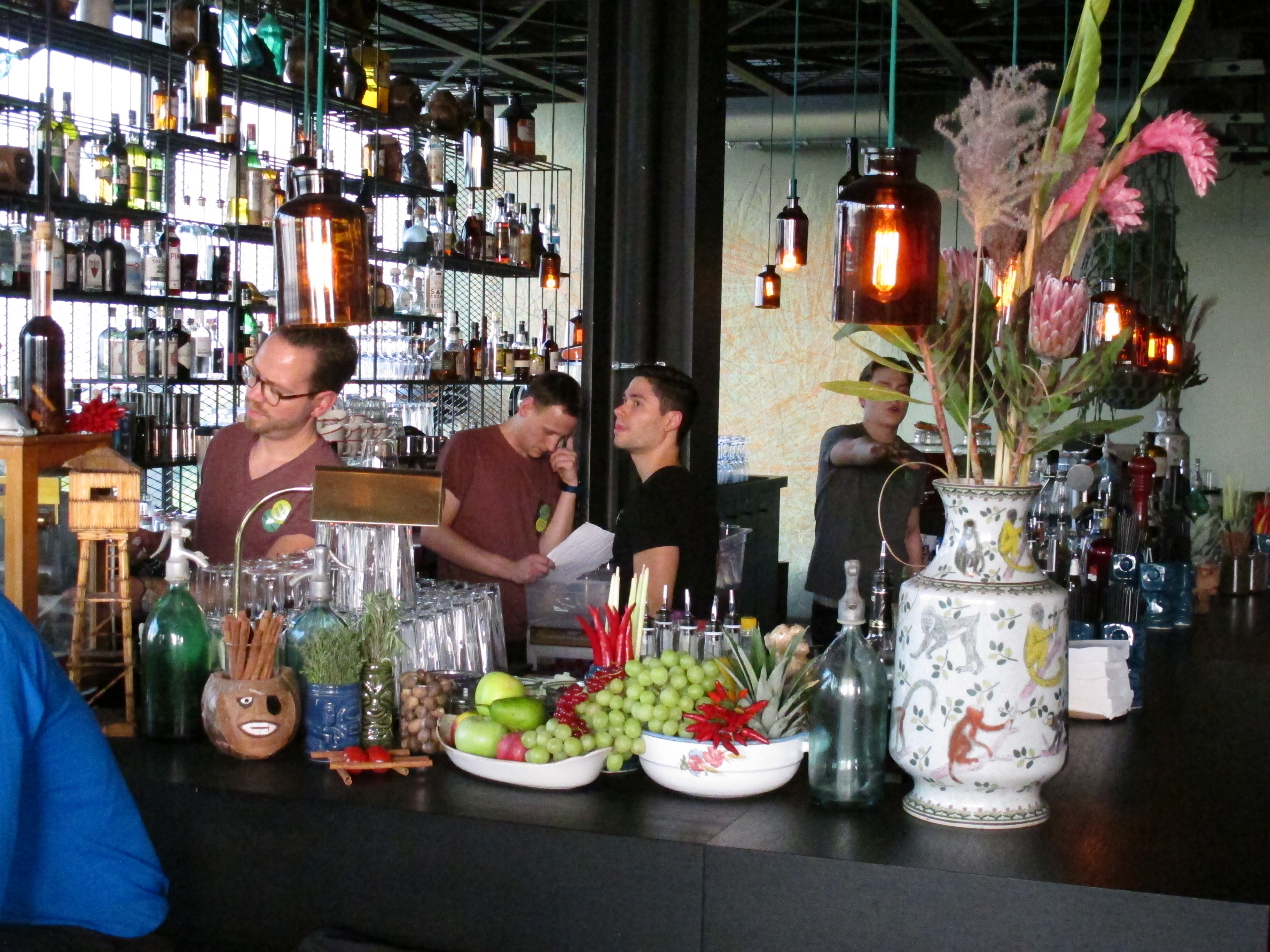
Currently high on the list of cool club venues is the Monkey Bar. Panoramic view of the city from atop a 10 storey hotel, overlooking the Zoo. Lounging about on cushions with nibbles & drinks, it is possible to watch the Orangutans at play, to see in the distance the column celebrating victory in three 19th century wars, and the Reichstag, scene of a more recent ugly defeat.
In late April 1945 the beleaguered German defenders were holed up in the impenetrable Zoo Flak tower on this site, shelling the Russians who were about to fly their flag over the Reichstag.
Another way to see the sights of Berlin is to go aloft in the World Balloon. The Helium filled balloon is tethered by a stout cable and ascends to height of 150m above ground level. When we are nearly to max height, the pilot explains that this is the safest form of air travel, and that even if the cable should break we will not die. It is obvious that if the cable breaks, we will go up, not down. But how do we descend, and where? There is no life jacket drill, and, in fact, no life jackets. The cable is very thick, so we are not nervous. Docking on return to earth is another matter. About 5m above ground the balloon appears to be caught in changing wind and thrashes about, so we ascend about 10m to stabilize. We manage to safely dock on the third attempt. No so easy as just pushing an ‘up’ button or a ‘down’ button.
.
.
There are many hectares of Kleingartenkolonien or Little Garden Colonies on the fringes of Berlin. They consist of garden allotments on which a small shed or cottage is erected. They are available to families at reasonable rental. There are two conditions. 1. If you don’t use it and keep it tidy, you lose it. And 2. If you live in the cottage you lose it. There is a waiting list, and Germans obey rules, so the gardens are tightly held. Since the difficult times following the war they have provided an opportunity for families who live in apartments to grow food and flowers.
.
In Potsdam visited Sanssouci, summer palace of Frederick the great where he could spend time “without a care”. As a young man Frederick had a taste for the finer things. But his father had other ideas, giving him a cruel military upbringing. History shows that he managed a balanced life as a king. Quoted as saying “I speak French to my friends, Latin to my God and German to my horses. He introduced potatoes to Prussia as a food reserve in case of hard times. To this day, we can report, it is a custom to leave a potato on his grave in the grounds of his beloved Sanssouci.

Excess. I guess that excess appears in places other than Berlin. But the Berliners are good at excess. Fasbender and Rauch is believably the largest Chocolaterie in the world, with 3 metre long chocolate models of the Titanic and the the Reichstag in two of the front windows. Inevitably we pigged out at the chocolate restaurant upstairs. Anything is available in chocolate, even mobile phones. As a safety measure, to deal with the expected level of excessive indulgence, a defibrillator is prominently mounted in the foyer.
KaDeWe, the largest shop in Europe is also a bit excessive, as are the Pergamon Museum, astonishing in the magnitude of dug up and plundered treasures and the Gemaldegalerie of old masters. But some of the smaller things are interesting too.
.

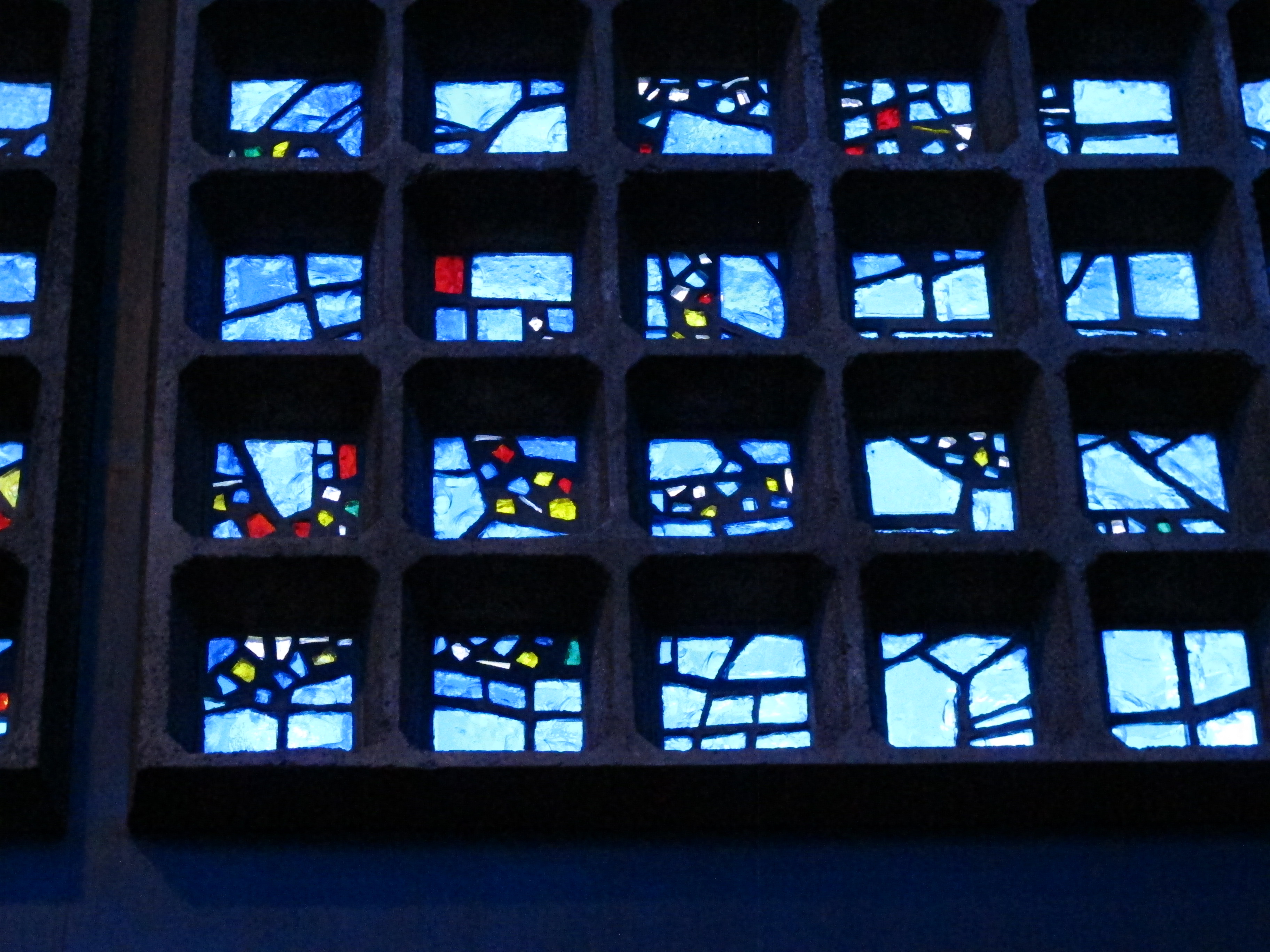
The new Kaiser Wilhelm kirk is not as grand as some, but it is a significant spiritual centre in Berlin. Surrounded by an octagon of stained glass with nearly 1200 individual panels, it is quietly inspiring. The bombed ruins of the old church next door are a reminder of hard times.
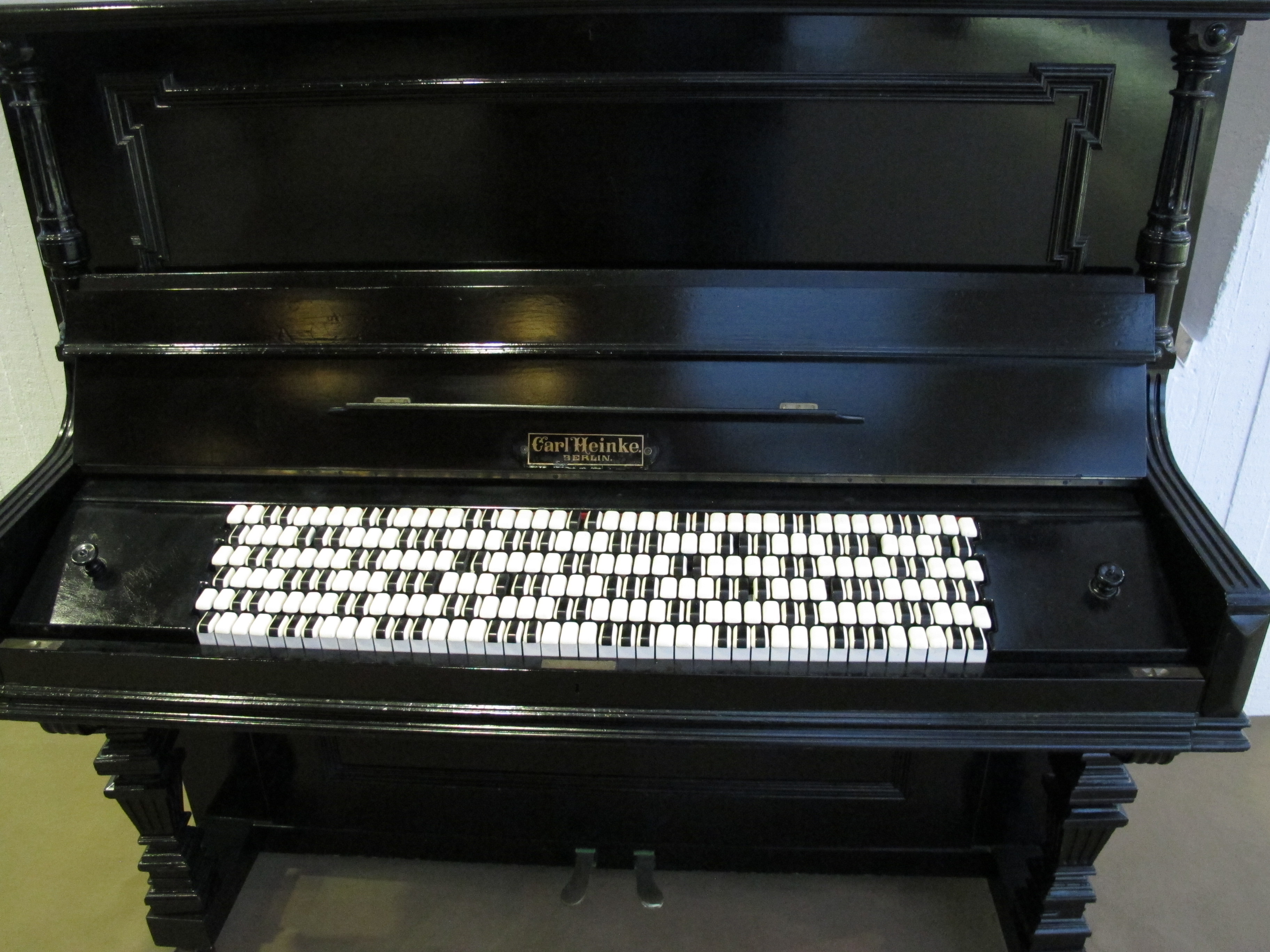
Music is big in Berlin, of course, sacred and secular, opera, jazz, cabaret, street music and the famous Berlin Phil. Luckily we were able to catch the charming curly white haired Simon Rattle conducting Schumann and Brahms. Has to be absolutely as good as it gets. In these works the horns really shine. At the final curtain call when Sir Simon acknowledged the principal horn, the crowd went wild, very nearly ballistic, definitely on another planet from polite clapping. Lots of weird music making gadgets in the Berlin music museum. Many beautifully crafted innovations that somehow just didn’t catch on. Can’t imagine what the inventor of this piano had in mind.
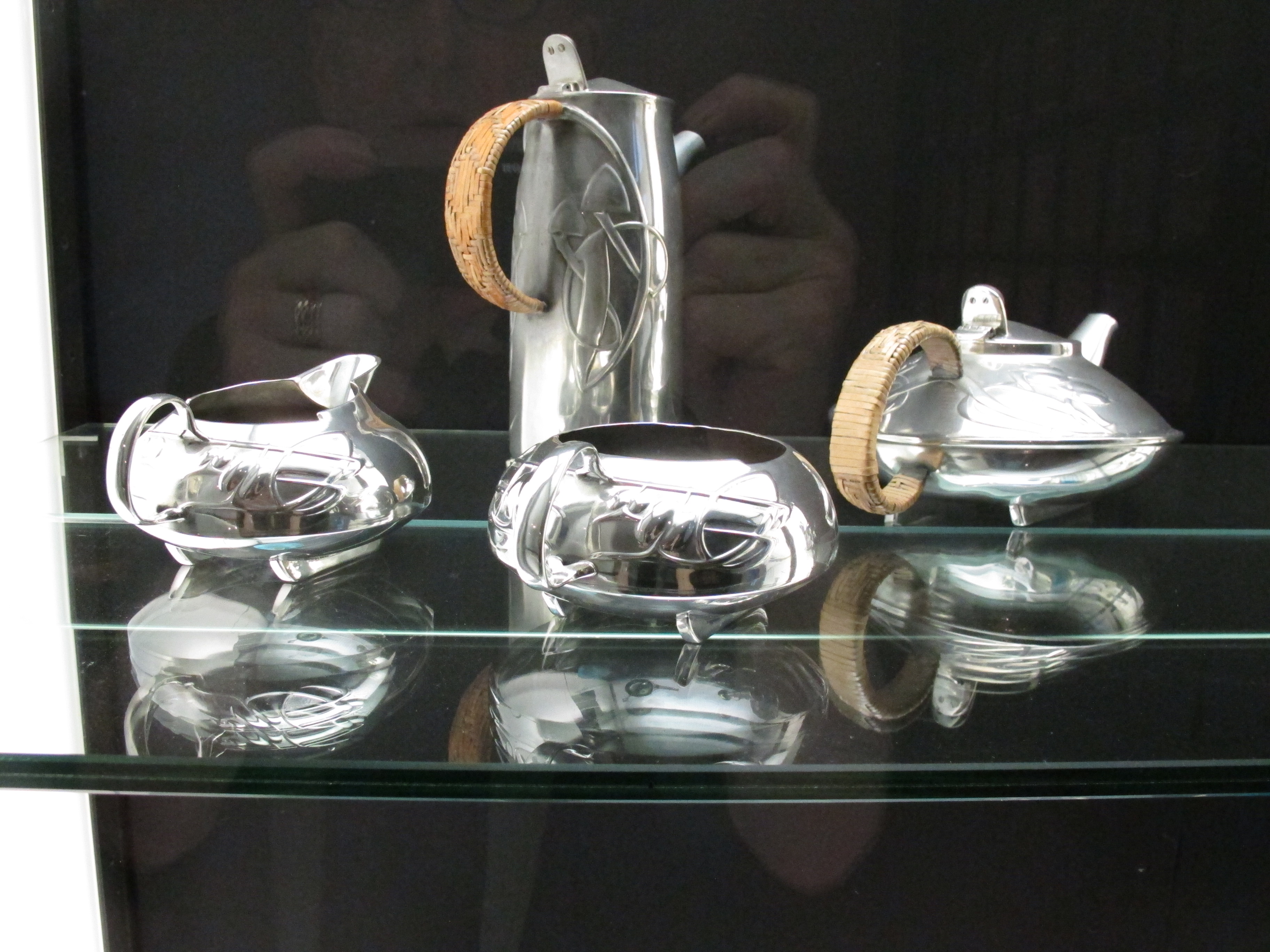
The Bröhan Museum houses a body of Art Nouveau decorative art that was collected by Karl Bröhan. Furniture, table ware, early electric appliances, ceramics and glassware. The emphasis is on everyday use rather than the grand statement.
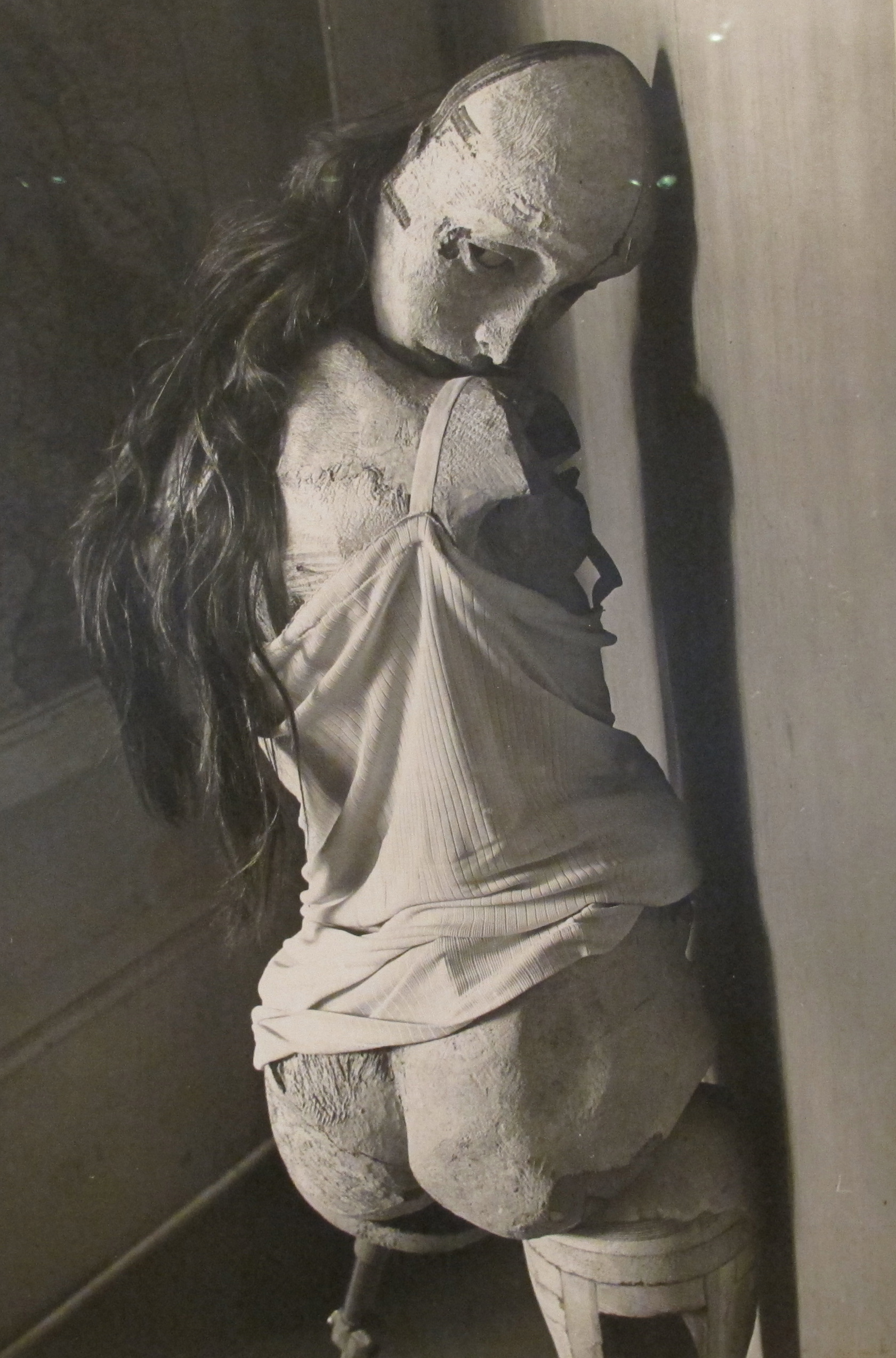
Next door to the Bröhan, is the Berggruen museum of modern classical art which contains many of Picasso’s works and some spindly Giacometti bronze figures . Over the road, the Sammlung showcases a complete survey of surrealist art, starting with the Prison series of Piranesi drawings. Then follow, Dali, René Magritte, Max Ernst. They have an interesting piece by Hans Bellmer called “The Doll”, which is simultaneously disturbing, sad and flirtatious.
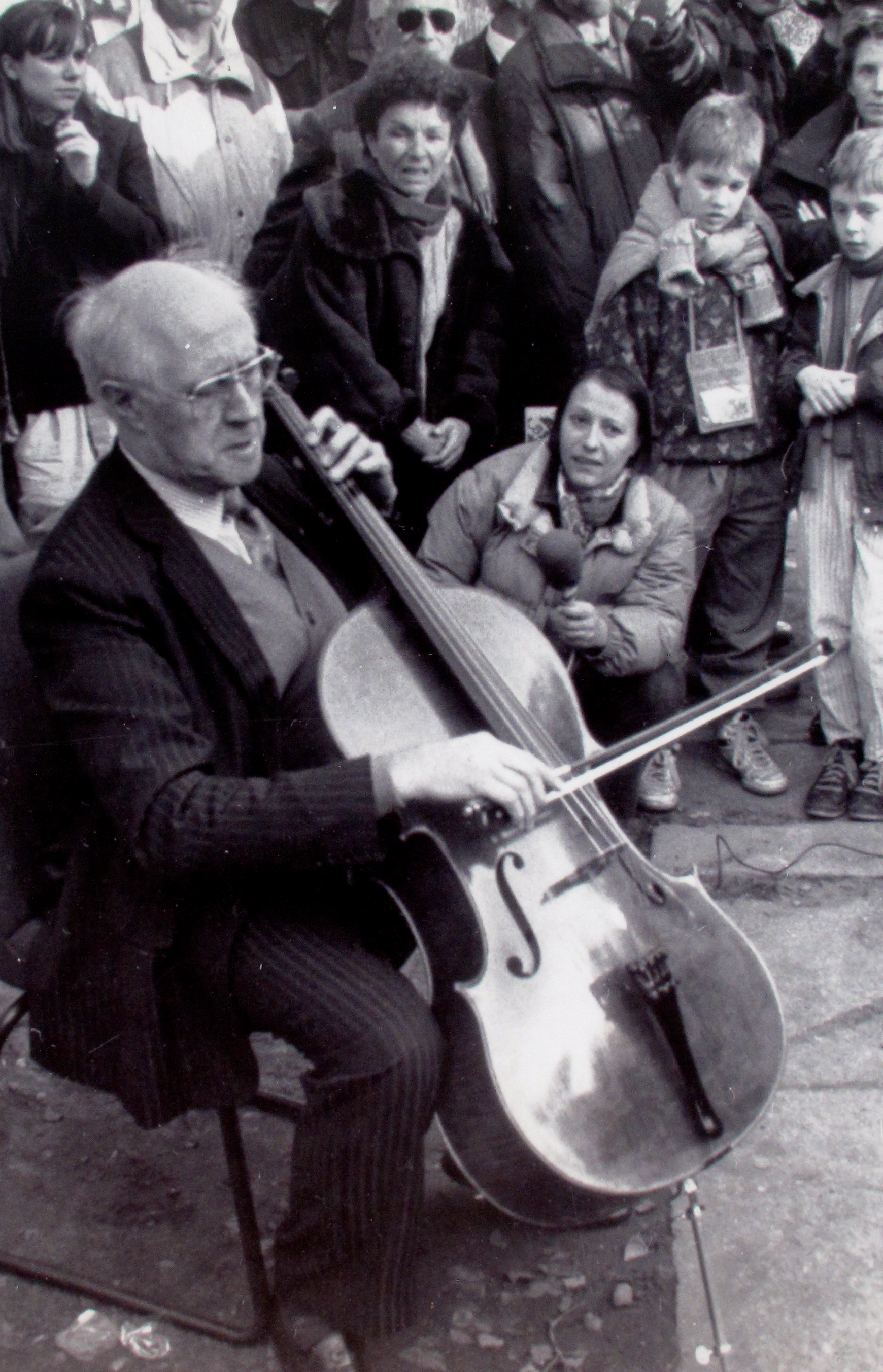
For our last Supper in Berlin we returned yet again to the Augustiner beer hall. No frills, just two floors of non-stop action. Hearty serving of sausage, mash and sauerkraut. And big beer. Served by athletic young chaps in very tight fitting lederhosen and charming young women with tightly laced saucy upper garments. In saying farewell to Berlin, the over-riding impression is one of enduring culture. Here we see Rostropovich who was banished from Russia for daring to criticise the regime. He is celebrating the fall of the wall by playing Bach at the Friedrichstrasse border crossing.
 scatterbrook