
Mother nature vs. Gothic architecture.
Continually drawn to piles of old stones. Castles, Cathedrals, Abbeys, even piles of stones assembled by Mother Nature.
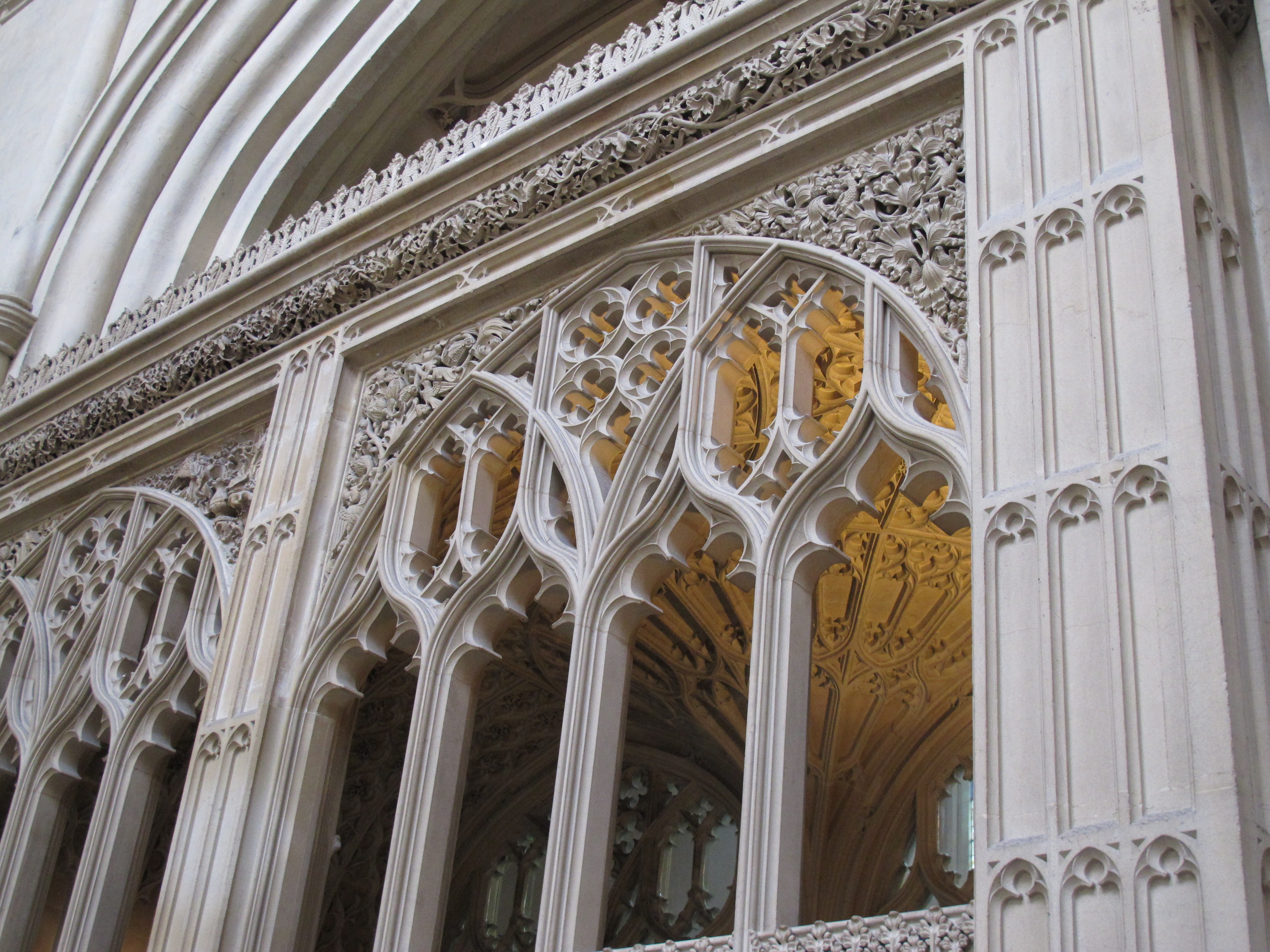
Bath Abbey
Visited Bath Abbey a few days ago and was impressed again by the quality of the stone tracery. This Abbey is very much a tourist attraction, just over the way from the Roman Baths. But, for all that, it remains actively, the spiritual and pastoral centre of the city. Progressively over the last few hundred years, utterly all of the available wall and floor space have been covered with memorials, from small and discreet to very grand indeed. Included is an Australian flag wafting above a plaque honouring one of Bath’s famous sons, Capt. Arthur Phillip the first Governor of New South Wales.
Tintern abbey, on the other hand is quite dead. The fact that it survives in the shape that it does is a testament both to the stonemasons of the time and the conservation work done in the last hundred years. When late 18thcentury artists like J.M.W. Turner started painting and sketching the ethereal romantic ivy covered ruins of Tintern they triggered a wave of enthusiastic tourism. At that time little was known of either the builders or the original inhabitants of the buildings. Nor was it appreciated that the cute covering of vines, moss and lichen was in fact accelerating the aging process.
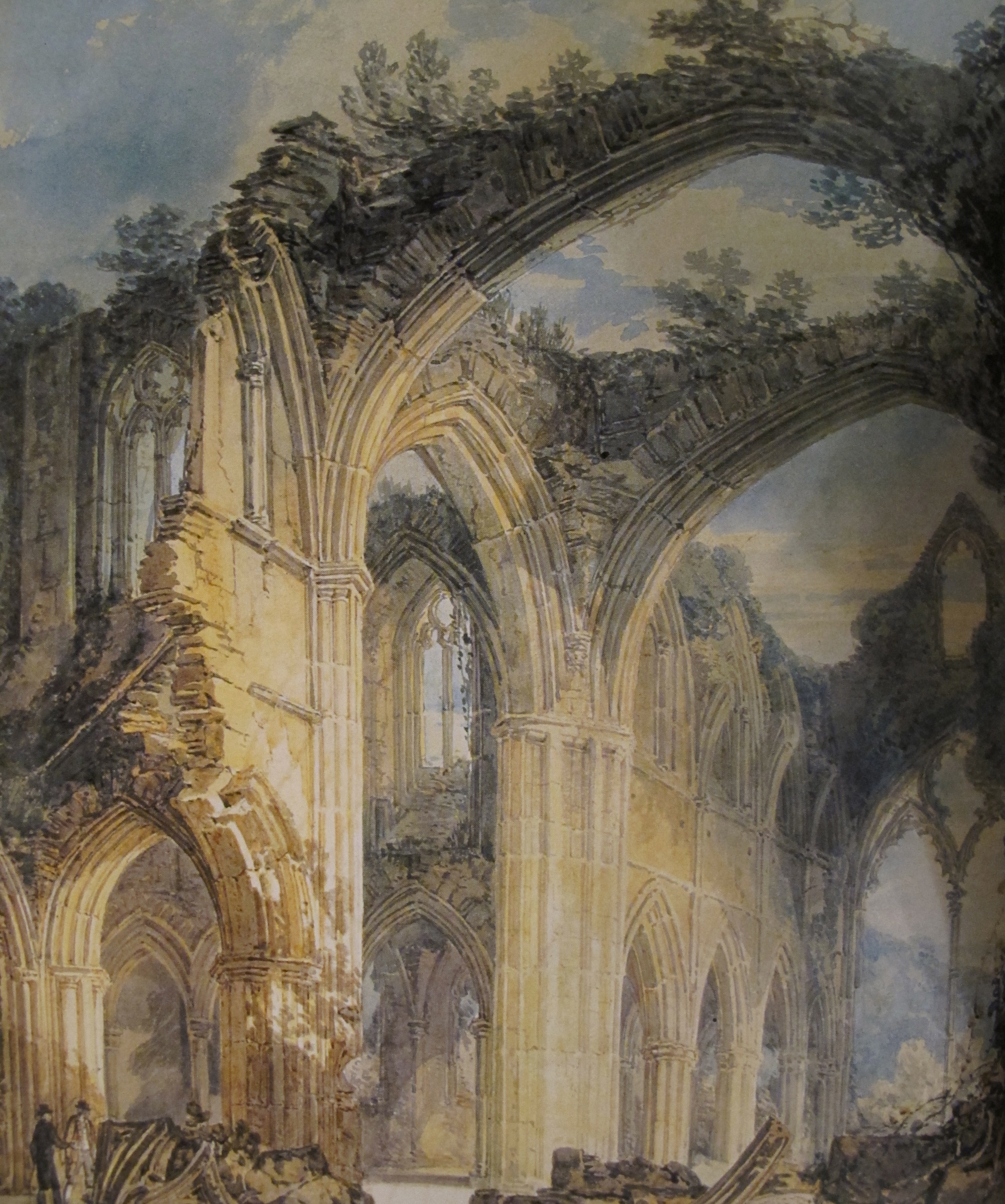
Turner’s Tintern
When the Cistercians arrived on the site in the 12th century, the community consisted of an Abbott, 12 monks and perhaps twice that number of lay brothers who did not follow the prayer and study regime but did provide labour for the farms and building programs. How did it happen that these people, who were pledged to live under the most austere and abstaining conditions, could have built or caused to have built this indescribably grand edifice less than a century later? By 1230 they had built an impressive Romanesque church. And in the thirty years following that, most of the shell of the then new gothic church was erected over the old church, and in 1301 the new abbey church at Tintern was consecrated. Progressively over the next 50 years the remains of the earlier Romanesque church were removed and a grand new Abbotts residence was built. The greater part of that Gothic church remains standing. The Monks had a really good life till 1534 when Henry VIII became supreme head of the church in his realm. Monastic life ended in 1536 when the abbey was surrendered to the king’s visitors and a year later the Abbey and surrounding land was grated to Henry Somerset earl of Worcester. All down hill after that. Till Turner & friends arrived. Now state-owned and carefully maintained.
.
Hidcote
It took the eccentric American Lawrence Johnston nearly 40 years to create his garden at Hidcote. He set to work soon after his mother Gertrude Winthrop bought the Gloucestershire estate in 1907. It became his life’s work, becoming one of England’s most influential 20th-century gardens. To provide shelter from the wind he planted evergreen oaks and hedges of holly, hornbeam, beech and yew. These divided the garden into a series of compartments or ‘rooms’, built around two main corridors that gave breathtaking views over the surrounding Cotswolds countryside. Johnston followed the design principles of the fashionable Arts & Crafts movement, but including some French and Italian influence. He intentionally made those areas close to the house formal in design and structure, shaping those further away in an increasingly naturalistic fashion.
.Meldelssohn by Zoe & Amir
At Hidcote since before Johnston’s time there has been an on-going tussle between a magnificent old wisteria grandiflora and a garden shed. At present the score seems about even.
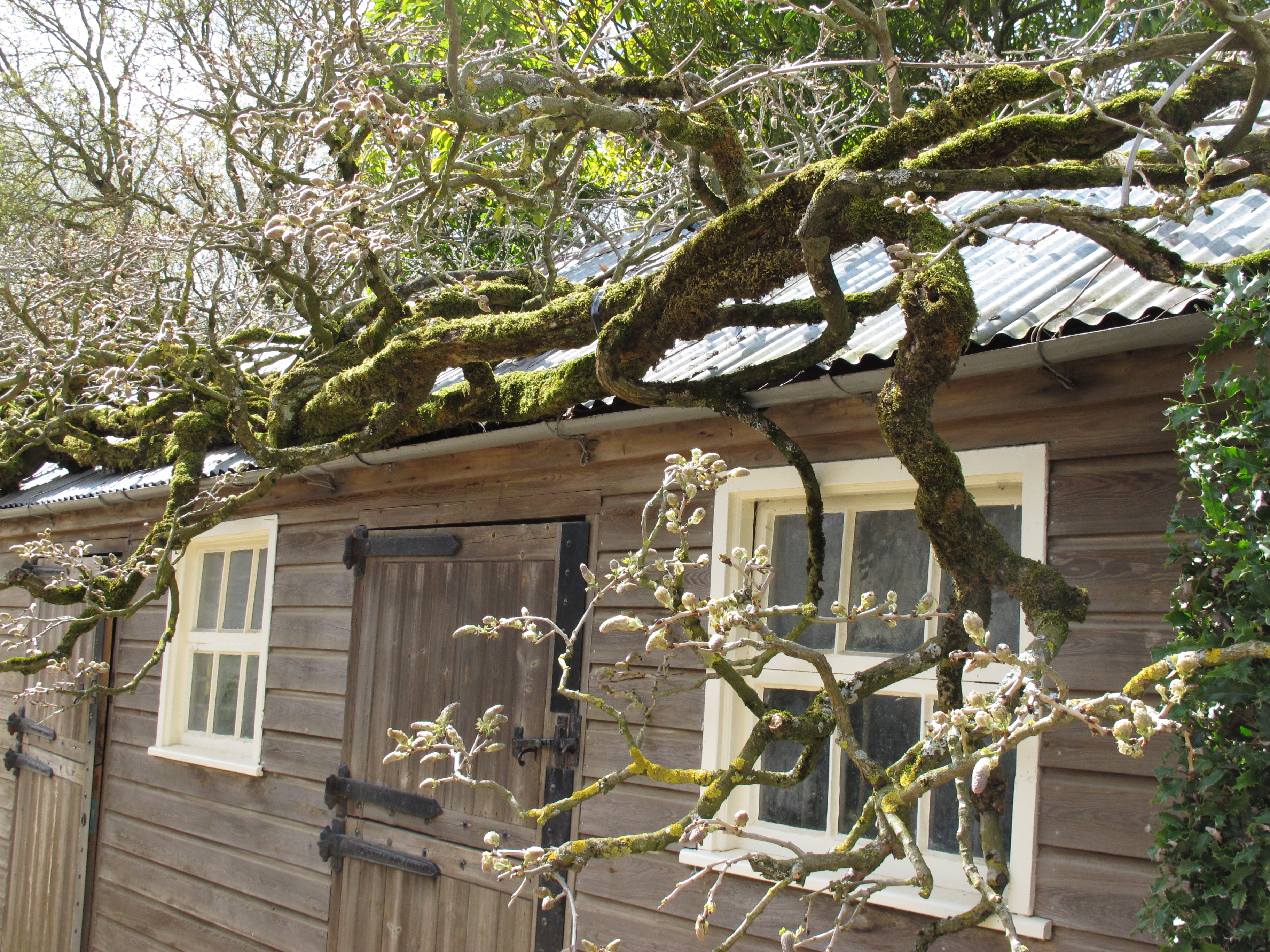
the Hidcote wisteria
.
Another wisteria, this time at Balliol College Oxford, seemed much more contained, elegant and refined in its quest. Oxford is sort of nearly at the edge of the cotswolds, just an hour away. Our day there happened to be bitterly cold and wet, but by no means the worst that the region can present. However, as expected, the best of bookshops provided the most civilised of books, coffee, tea and cakes.
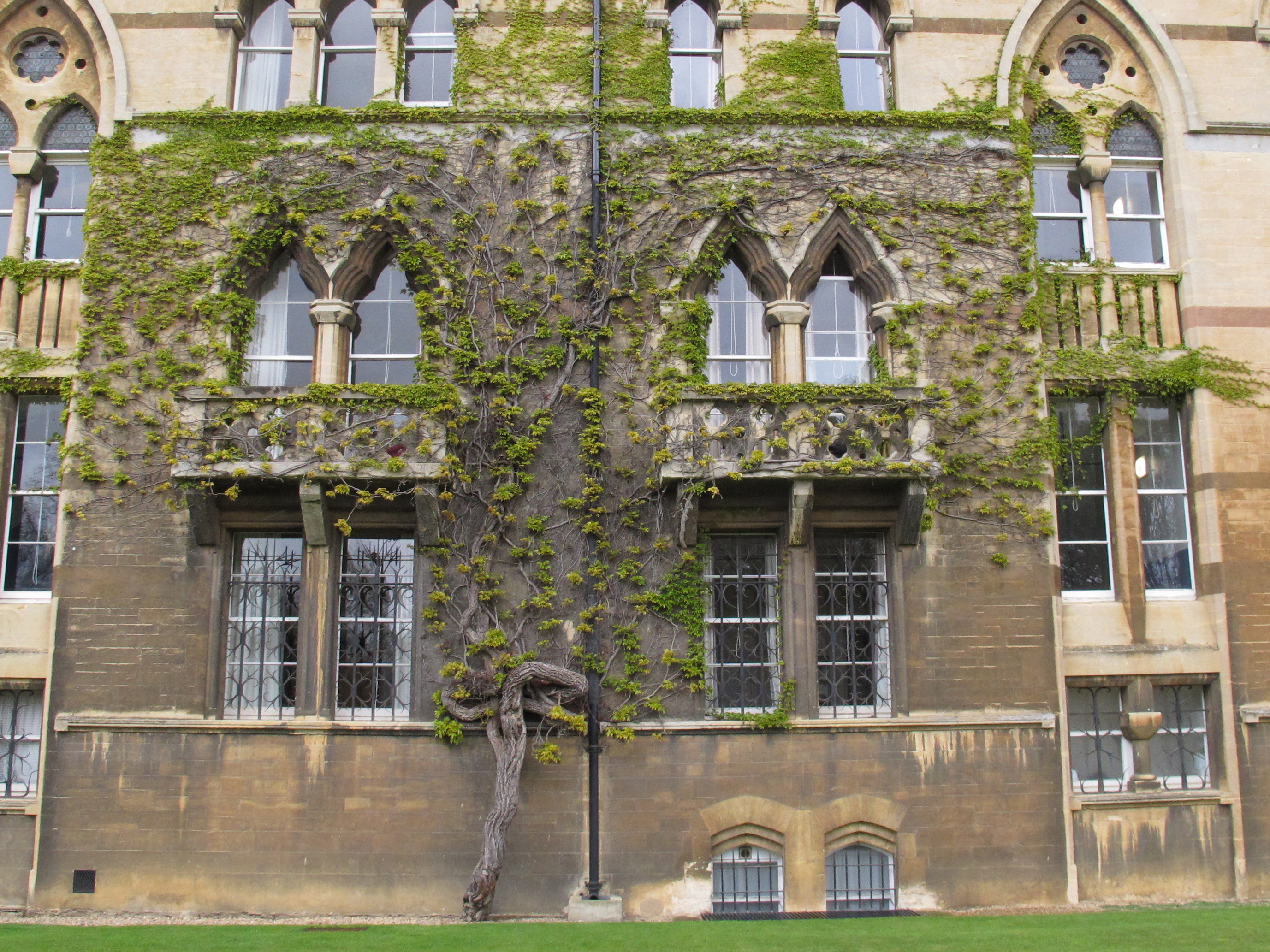
the Bailliol wisteria
Slimbridge
The Slimbridge wildfowl and wetlands reserve was established in 1946 by the late Sir Peter Scott, son of the famous Antarctic explorer. Peter Scott was an enthusiastic photographer, birdwatcher and very active advocate of wetland conservation. This vast and immense reserve is an impressive credit to his memory. Sir Peter had a thing about Flamingos. There are many large colonies of different species living happily un-caged in these wetlands. One of the attractions of the reserve is the facility for hiring a canoe to paddle about the waterways to commune more closely with the creatures. The grandsons were excited. Sweetiepie & I took a change of clothes & braced for random unexpected havoc and total immersion. Turned out that the canoes are virtually unsinkable and brilliant for creeping up on mother ducks leading the little ones out on adventures.
Freddy Kempf and the RPO
Thirty years ago little Freddy made his debut as a pianist with the Royal Phil. at the age of about eight. Last week at Cheltenham Town Hall he was with them once more, this time directing Beethoven’s 4th and the Emperor from the piano. It is difficult to imagine anything new being found in the Emperor. With eyes closed, it would have sounded enthusiastic and competent. But visually it was mega entertainment with Freddy leaping up and down from the piano with and without baton. A bit distracting from the music, but a great performance. The premiere performance of the 4th was Beethoven’s last public appearance as a pianist. Totally deaf by that time, of course he wouldn’t have heard a note, by one account, being turned around by someone so that he could see the audience approval. Beethoven would have enjoyed seeing Freddy in action. Opinion of chatterers on the web remains divided as to whether Freddy is related to Wilhelm. Wilhelm would probably have told Freddy to sit down and get on with it.
The Bells
A second bell ringing lesson this week. They say that an inexperienced ringer could cause destruction among the hardware upstairs, so I wasn’t allowed to attempt to ‘get it up’. But did get to pull ropes and make noise. Sorry, no movie – both hands were fully occupied!
Isle of Man rendezvous
Couple of delightful days on the island as guests of Andy and Liz. Andy is a nearly retired marine biologist who admits to being the foremost authority in the world on scallops. Of course we had scallops – ‘queenies’ floating in a buttery chorizo sauce, divinely cooked & presented by Liz. Their current passion, apart from lots of grandchildren, is beekeeping. They have all of the necessary high tech gear and are treating the bees with the sort of tender loving care that is enjoyed by grandchildren. In a place like the Isle of Man one expects to find excitingly eccentric people. Seems that, on this island anyway, there are rendezvous points for drone bees. This is convenient for virgin queens whose biological clock persuades them to start a new family. Now, on the island there is an excitingly eccentric beekeeper. She thought it would be a neat idea to show beginner beekeepers how the process works, so she fashioned a contraption in which a helium balloon carries aloft a little cage holding a virgin queen. Bee, presumably. The Isle of Man beekeeping association foregathered to witness the process. For convenience they chose one of the more active drone rendezvous points, which happens to be at the Port Erin golf course. When the inventive demonstrator, with the device tethered aloft, led a party of a dozen beekeepers onto the golf course, the local drones keenly sprang into action. The golfers were apparently not best pleased and asked the beekeepers to leave. The beekeepers insisted that this was a public right of way. The angry golfers won the day and the beekeepers with queen, having uncertain state of virginity, were forced to trudge off in search of another venue. Much more effective demo at the second site. Would never happen at home.
 scatterbrook
As ever, I feel like I’m there! You guys really set the benchmark for traveling – can’t wait to see the full range of pics and a demonstration of bell ringing on your return. See you soon! Zobido
Thanks Rob for your wonderful descriptions of places to behold.
Just returned from France following yet another wonderful experience with Jane.
Travelled through the Provence area of France and attended five nights of the ‘Jazz in Vienne” festival. Fantastic.
Regards
Bernadette & Michael