
As Queen Helen is about to embark on another adventure as a volunteer in Bali next month, it seemed timely to recall last years Bali sojourn.
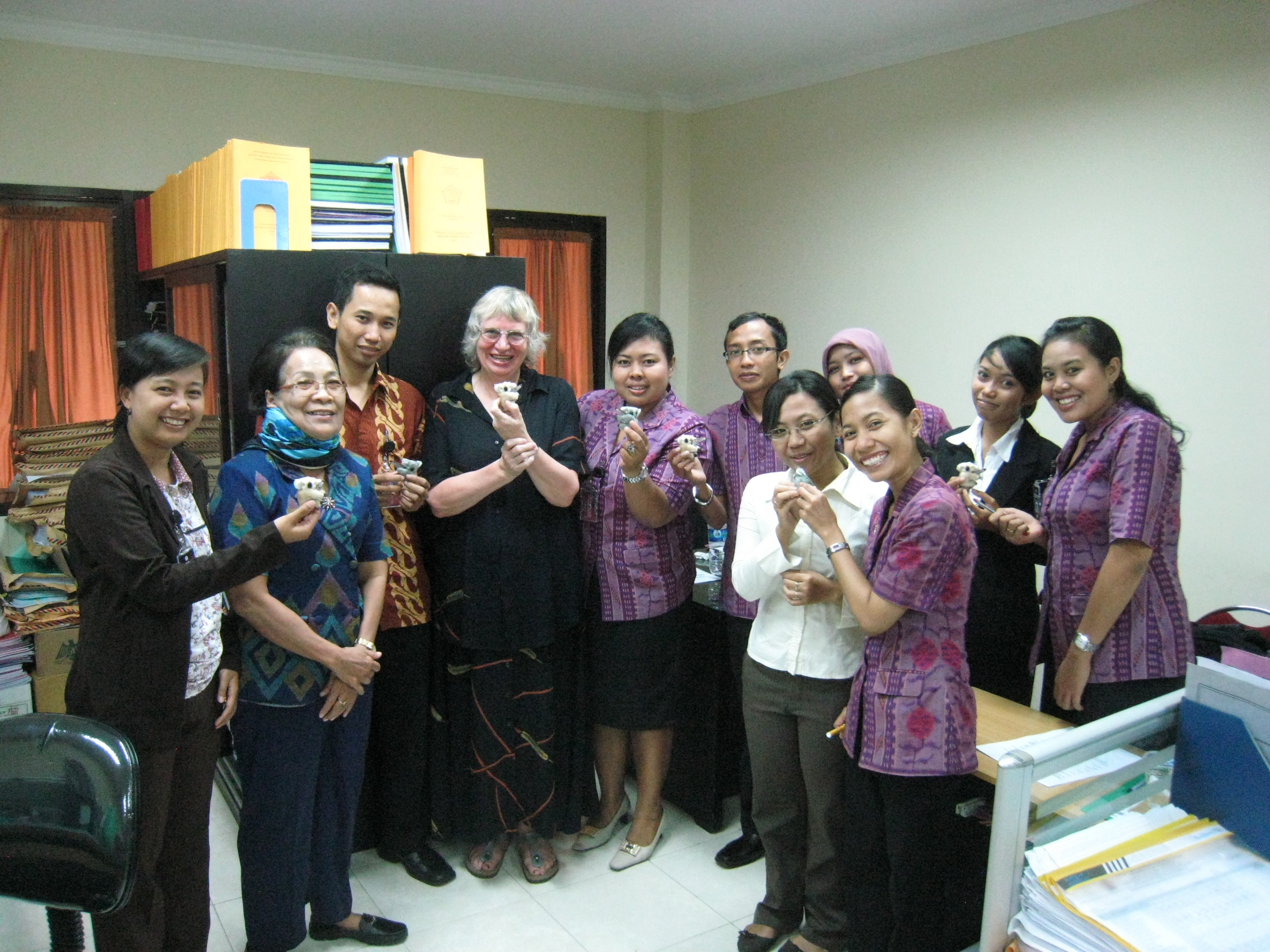
Queen Helen and followers
In September 2010 Queen Helen had been hard at work in Bali. A gig as a volunteer with Australian Business Volunteers, working with the College of Nursing to develop a new curriculum. Must have been successful as she has been used as the keynote speaker at a graduation ceremony and is now generally known as Queen Helen of Bali.
From Queen Helen’s base camp in an apartment in a once grand Villa, a brief jaunt to Hardy’s three-story emporium of stuff for expats was a 10 minute Bemo ride. On the way out of the store, after some half-hearted shopping and the purchase of some nice flip flops, we won the STAR prize! That means a digital camcorder, a week holiday for two in a resort somewhere, or US$500 cash, all for listening to a one hour blurb. Feeling magnanimous, in mind of our uncommonly good luck, we sort of agreed. Arriving at the resort we were shocked & stunned to find that we were not the only winners of the STAR prize that morning. There were, in fact, so many winners that there was not space enough for us in the lecture theatre. But that was OK they were prepared to give us the prize anyway. I had already imaged the idea of filming the grandsons on the camcorder at length after luxuriously dining out on the US$500. But deep in my heart I knew that when, under the eyes of the supervisor, I tore away the gold foil it would be revealed that I had won the resort holiday. Yes, it was the holiday. For an admin fee of $100 one gets the use of a broom cupboard for a week. Sir would like to have a room? A bed? Food? Bla bla. Transferable though, so anyone fancying a week in a broom cupboard, let us know.

Vishnu
Try to imagine a sculpture as tall as the statue of liberty or the Eiffel tower. Gigantic bronze Vishnu riding winged Garuda mounted on a plinth the size of a ten story building. The project was commenced many years ago at the Garuda Vishnu Cultural park near Jimbaran south of Denpasar. There is general confusion as to the reasoning or purpose behind the project. There is, however, agreement that the reason for the pause in progress is due to lack of funds. President Susilo Bambang Yudhoyono has vowed to complete the project. The site is a limestone mountaintop, which has experienced excavation of biblical proportions to reveal a majestic amphitheatre, above which the sculpture is hoped to rise. Bronze work on the site so far includes the torso of Vishnu, 2 arms of Vishnu and the head of Garuda, as yet without body or wings. While not quite of the scale of the Segrada Familia in Barcelona, the original concept is brilliant, the work undertaken so far, impressive and the commitment to completion – bizarre?
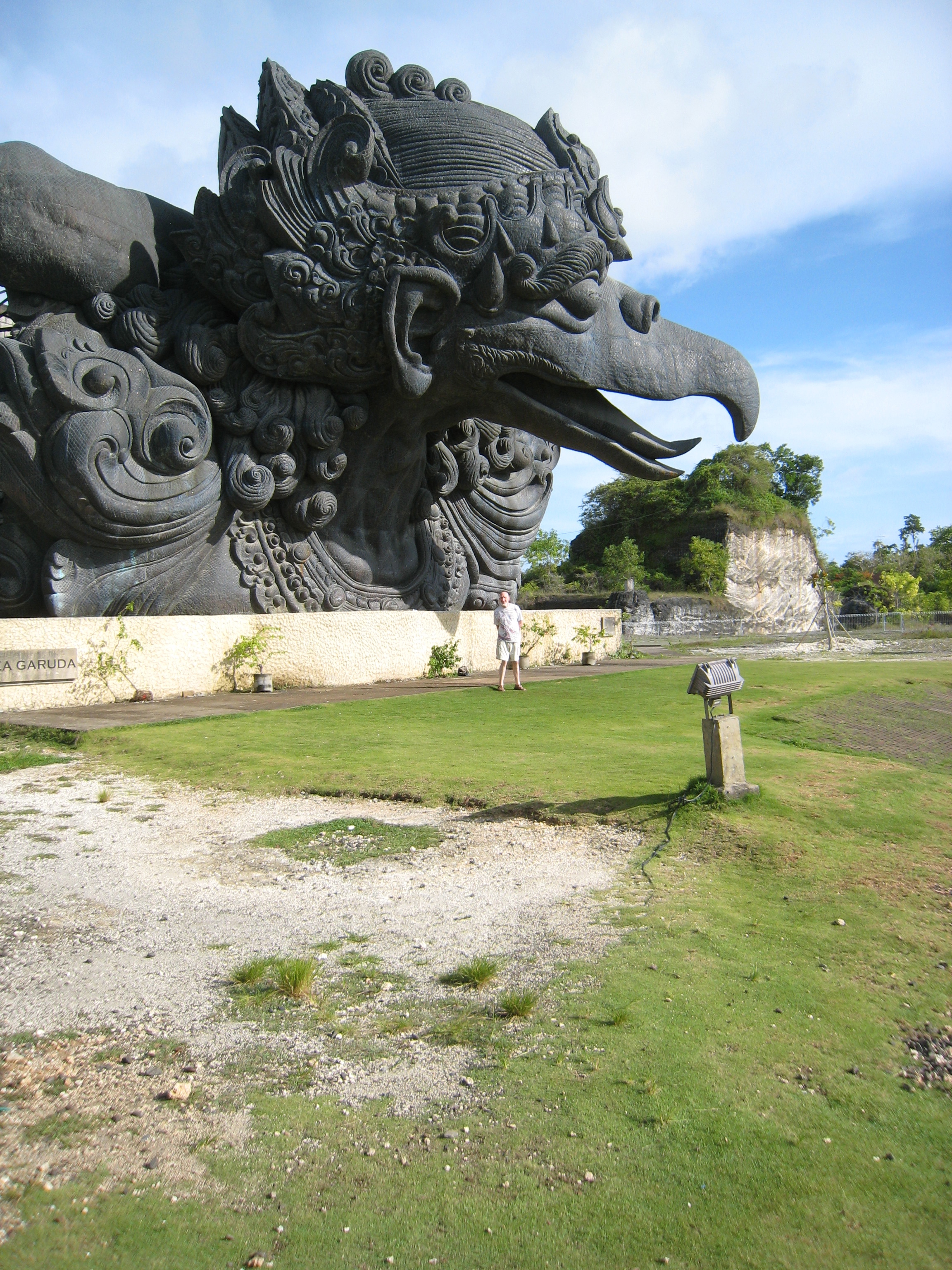
Garuda
Heroic beyond belief? And why? Stories and myths abound. Maybe the bronzes so far are the work of Bali’s most famous sculptor Nyoman Nuarta. Maybe the plinth is to be a ten story shopping complex. Maybe the amphitheatre in the shadow of Vishnu and Garuda will be the venue for vast theatrical extravaganzas. Meanwhile one can motor to the far corners of the complex by quadbike or Segway. Felt obliged to show off on a Segway and embarrassingly fell off while trying to execute a complicated backwards turn. Shins & dignity slightly damaged.
Theatrical treat of a lesser scale. Kekak dance presentation accompanied by 70 voice male á capella choir. A tale of lust, treachery, greed and revenge with cast of beautiful princess, evil king, white monkey hero, three fat clowns and someone pretending to be a pathetic old cripple but who was actually being tricky and managed to steal away with the princess.
Great stuff. All in the light of a purple and red sunset over the nearby temple on a cliff top. Polished off the night on the beach with the sort of seafood supper where you point at a tank of live seafood and say “Can I have that one please” The live ones cost a bit more than the dead ones of course. But as the fishermen are still hauling in the catch from nets cast into the surf, freshness is sure to be OK.
One of the volunteers here is called Dane. He works for VIDA (volunteers for international development Oz) using community radio as a vehicle for health promotion. A young man with vision, courage and generosity of spirit who is ready to go to the terrorist threatened trouble spots of the world as needed. There was talk of the cheeky monkeys at the temple by the Kekak dance at which he said that the monkeys in the monkey forest in Ubud have been getting very threatening. When asked to compare monkey forest with the threat from terrorists that he is ready to face, claimed that “no way” would he go into the monkey forest. Driving past the monkey forest on the way in to Ubud, tourists were crowding the entrance. The monkey forest could be a pleasant place for a walk. Hmmmm.
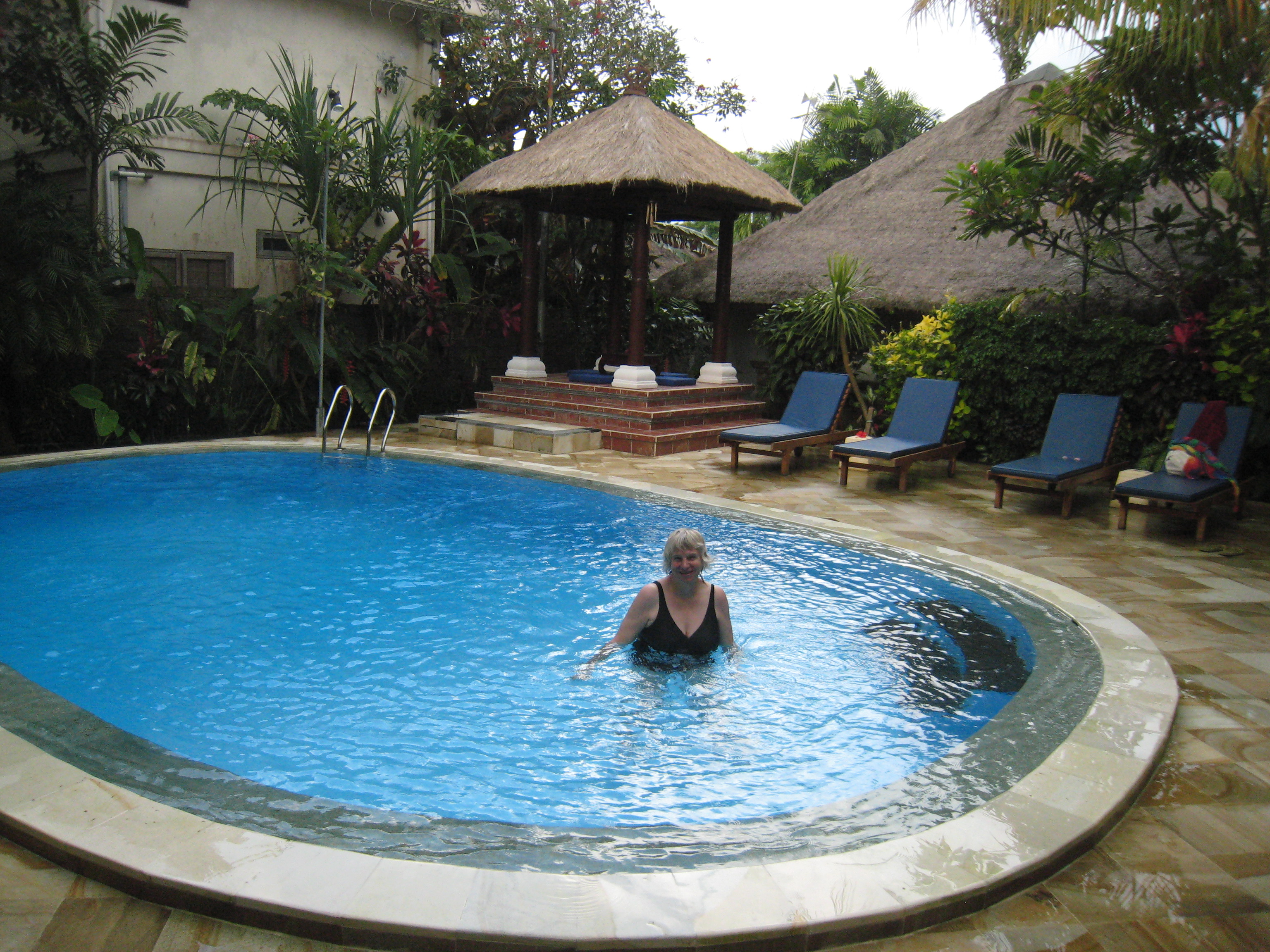
the Samas cottage pool
Home in Ubud for us is the Samas cottages, a jungle oasis tucked away off Jalan Bisma. Nothing grand, but comfortable, with lots of locals dancing attendance. Sit on the verandah with a book in the morning and be asked “what would madam like for breakfast”. Swimming pool in a clearing in the coconut palms pleasantly just cooler than body temperature. In the middle of town, a short walk from the market, the palace, the temples, the royal museum and a safe distance from the monkey forest.

at the Neka gallery
Not surprisingly, there are still signs that the Dutch have been here. Ari Smit was born in 1916 and came to Bali in the 30’s and befriended the local artist and collector Suteja Neka. When Neka visited Europe in the 50’s, he was surprised to see such a wealth of Balinese art, which was no longer to be seen in Bali. It had been bought, stolen or sequestered by the Europeans. He resolved that treasures like these should be available for all to see in Bali. With the cooperation of Ari and others he established the Neka Art Museum as an educational resource. Among the many buildings there is an Ari Smit pavilion where many rare and valuable art books are on show and available for visitors to use. Some of them are rather the worse for wear due to heavy visitor use, but true to the intent of Neka they remain a great educational resource.
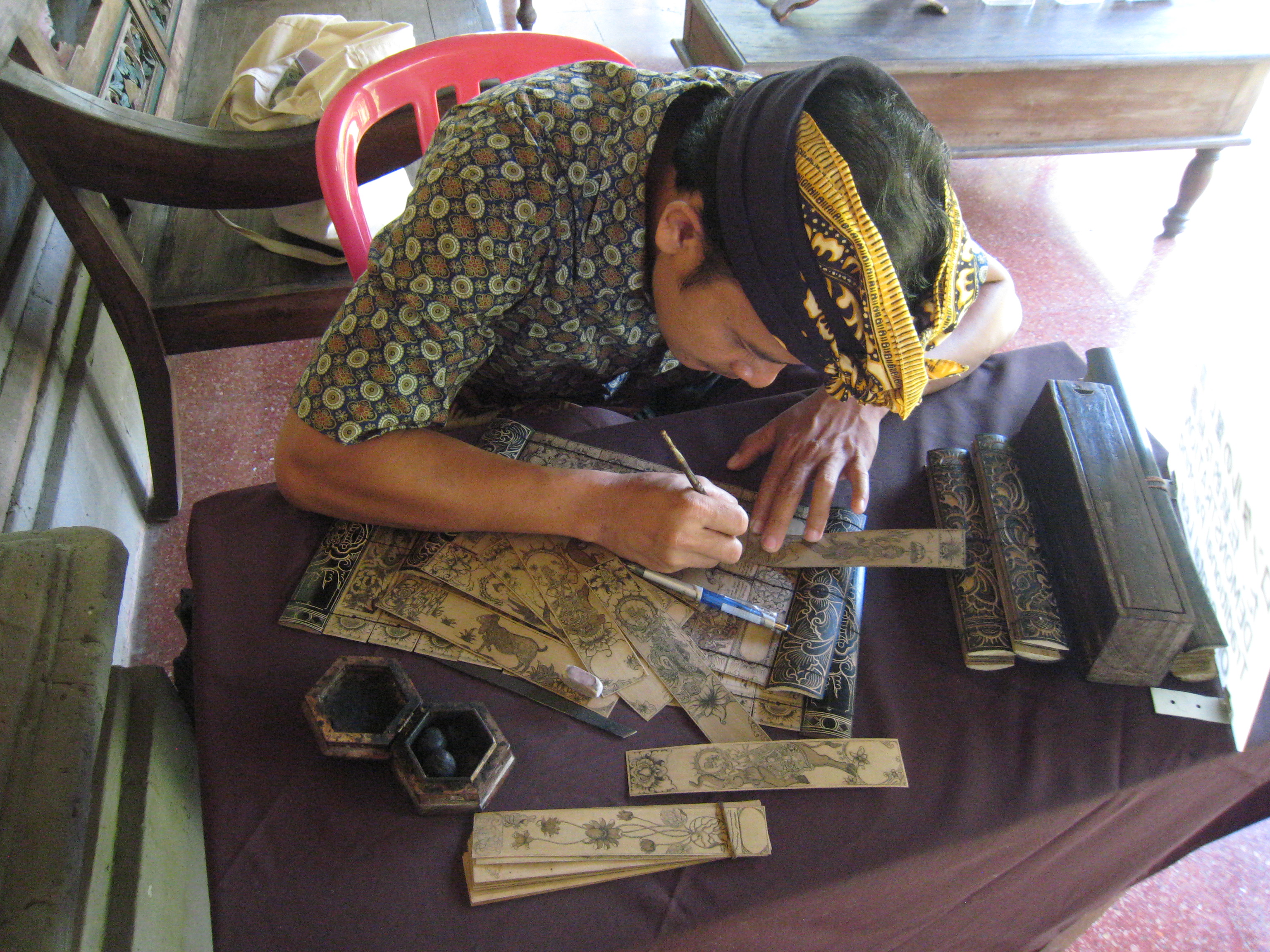
bamboo “book” artist
Another Dutchman, Rudolph Bonnet was in favour with the royal family and helped establish another art gallery The Agung Rai Museum of Art in Ubud to honour past and present native artists and visitors. This museum is also the home of a fine collection of Balinese art by There is a particularly strong collection of elegant figurative wood carving in a relaxed contemporary style, but with definite traditional references. A wing of the building is currently given to a stunning photographic exhibition. Piezo graphic prints by a Japanese group that was inspired by a visit to Bali. Have to find out about this process. Printing in very fine definition in vivid colour onto paper, wood or canvas.
A dance performed by masked actors was staged a little way out of town. Grand venue, but some imbalance, in that there were seven people in the audience, and the ten masked actor/dancers were accompanied by a 25 strong Gamelan band. Very much a Balinese take on the pantomime format. The theme being discord in the royal household. Prelude, a mime of a fussy old man doing the usual type of grandpa stuff with stylized hand and foot movements. Two clowns who prattled on in English to the audience and Balinese to each other and the King who said nothing. Kings first wife also gracefully said nothing, but wife number 2 was a tricky piece of work, arguing the toss with far too many words. The ensuing bitch fight, belting each other with shrubbery, was not the sort of thing that would have been expected in this quiet corner of the world. But the giants came in and it all ended happily ever after.
Seduced by the Gamelan band, Queenie pie enrolled us for a Gamelan lesson in the grounds of the royal museum. The teacher is patient and has charts that make it easy for foreigners. Pentatonic scale, of course, and we learn a couple of easy tunes. The notes are dong deng dung dang ding and you start again with dong. Which is sort of like an octave, or same sounding note. Guess it must be a sextave? But that is just a wild guess. In any case, Trombone lessons are sooo last week. The tricky part is that the notes resonate for a really long time. As the geologists type hammer in the right hand strikes a note, the still ringing previous note must be damped by the fingers of the left hand. Multi tasking proving all too taxing, the ringing of lots of notes merges with ambient bird, traffic and people noises. Teacher demonstrated how much effect the resonator tubes have in prolonging the sound. Tempted to fiddle with pipes, gongs, hammers and the pentatonic scale back home.
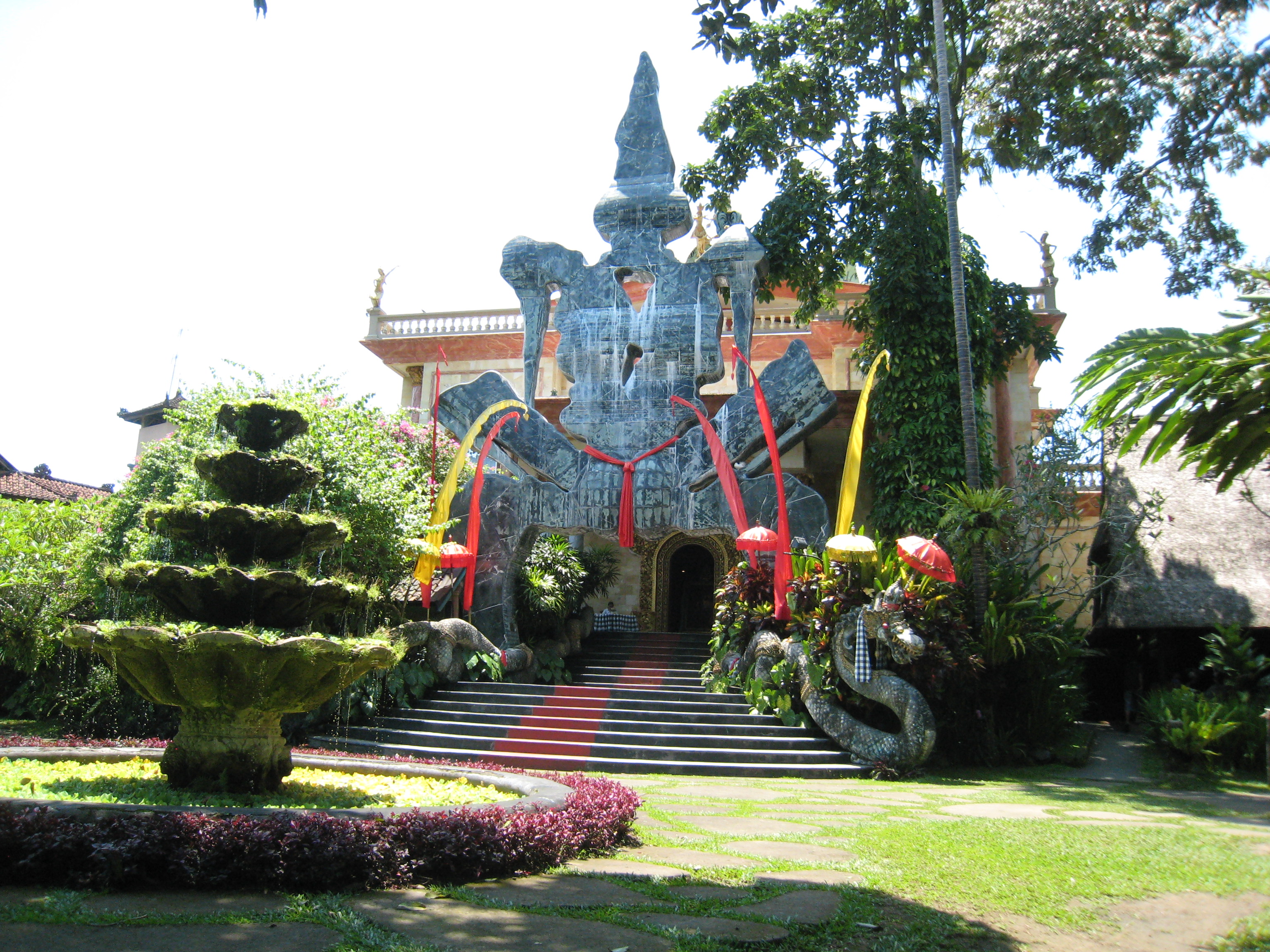
Antonio Blanco’s grand gallery
Antonio Blanco was an expat artist of an entirely different feather, of Catalan origins via the Philippines. He studied art formally at the National academy in New York, travelled widely and eventually settled in Bali in 1952. Later the king of Ubud gave him a parcel of 2 hectares of land which he progressively developed while cultivating friendships with the rich and famous – King Juan Carlos of Spain and Michael Jackson to name but two. He married the famous Balinese dancer, Ni Rondji who died just this week. Antonio died some years ago. He is survived by son Mario who carries on the traditions, perhaps a little more seriously than his father. And three daughters, two of them currently living in Perth W.A. Antonio radiated an air of being flamboyant and eccentric if not totally barking mad and set about establishing himself as the resident “Dali in Bali”.
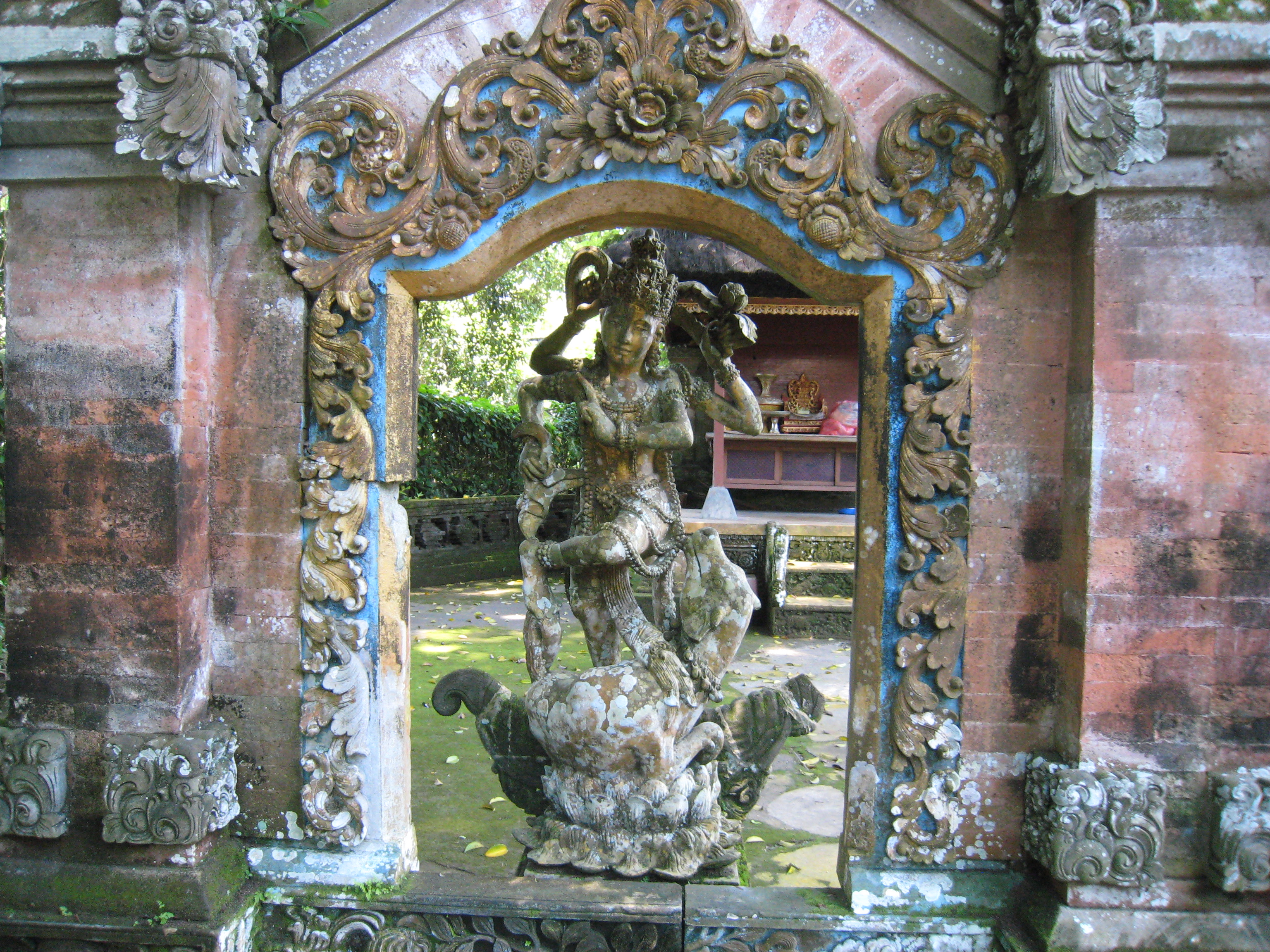
temple in the grounds of chez Blanco
Much of his art concerns his profound adoration of “God’s most beautiful creature” which he expresses in his own brand of bombastic romantic impressionism. Some years ago Antonio designed a grand two-story museum topped by a stained glass dome in a style that might be described as Nuevo Italianate Rococo Excess. Meanwhile, King Juan Carlos awarded him the Cruz de Caballero, which permits use of the “Don” title. Alas Don Antonio did not live to see the completion of the museum, but he will be long remembered around the world.
Down the monkey forest road, one of the treats is a “fish” foot massage. Put your feet in a big tank of tiny fish and they eat away the nasty bits between your toes and under your toenails. O.K. but what about Oc. Health & Safety? Are they healthy? What if they eat bits they are not meant to? What if it hurts? Naaah! Better thrills to be had elsewhere.
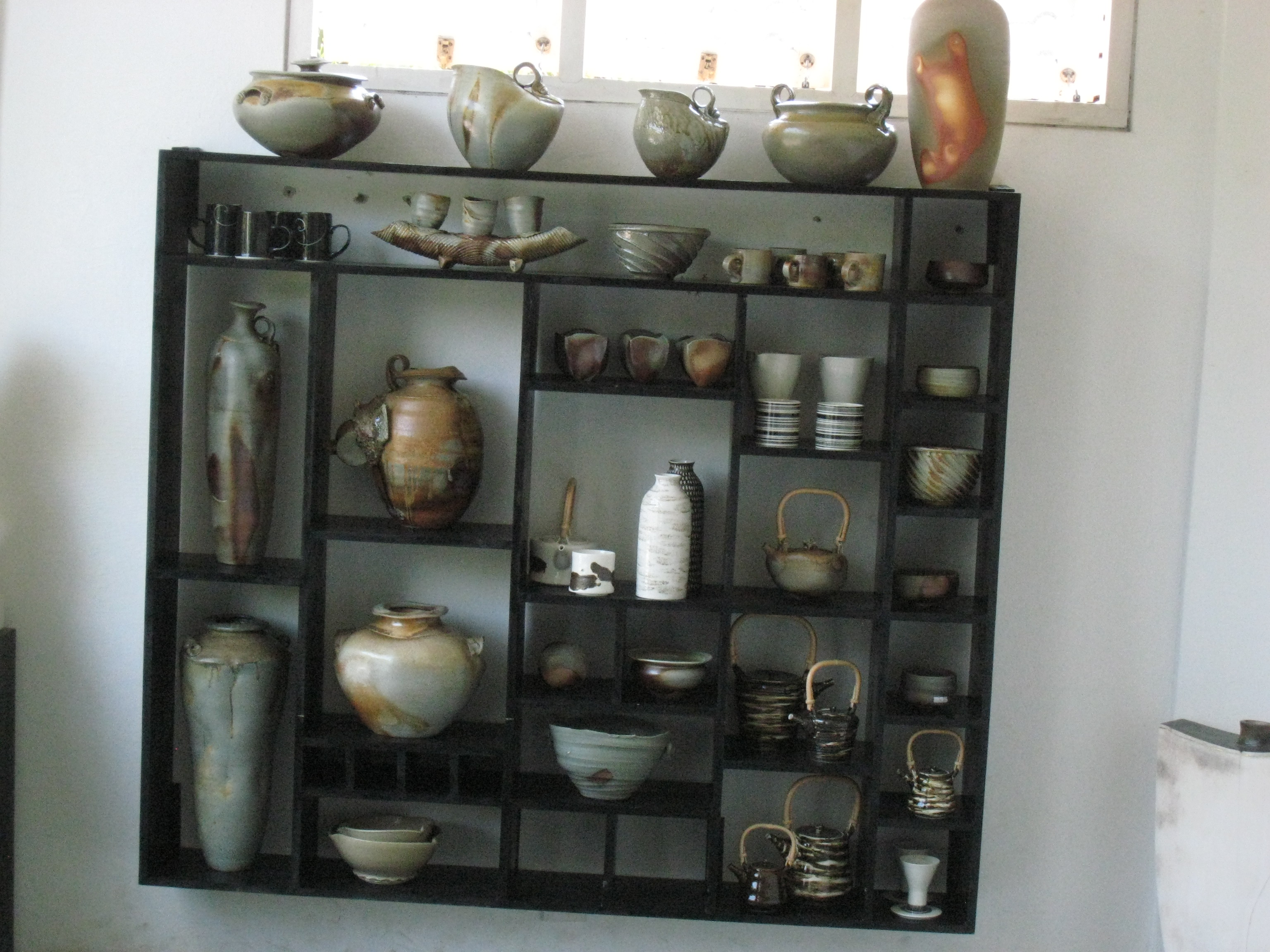
Display of visiting potters
There is a business in Ubud called Gaya Ceramic, which is a large producer of studio pottery. The scale of operation is such that, in a western situation, mechanization like jigger & jolly or press molding would be used. In their case, labour-saving devices are totally pointless, as they have labour in abundance. And they wish to maintain a “hand-made” rather than machine made image for the business. There is currently a backlog of six months of orders from local restaurants & hotels that need nice arty crafty crockery. There is also a component to the business where tourists in town can engage in retreat type ceramic fantasies.
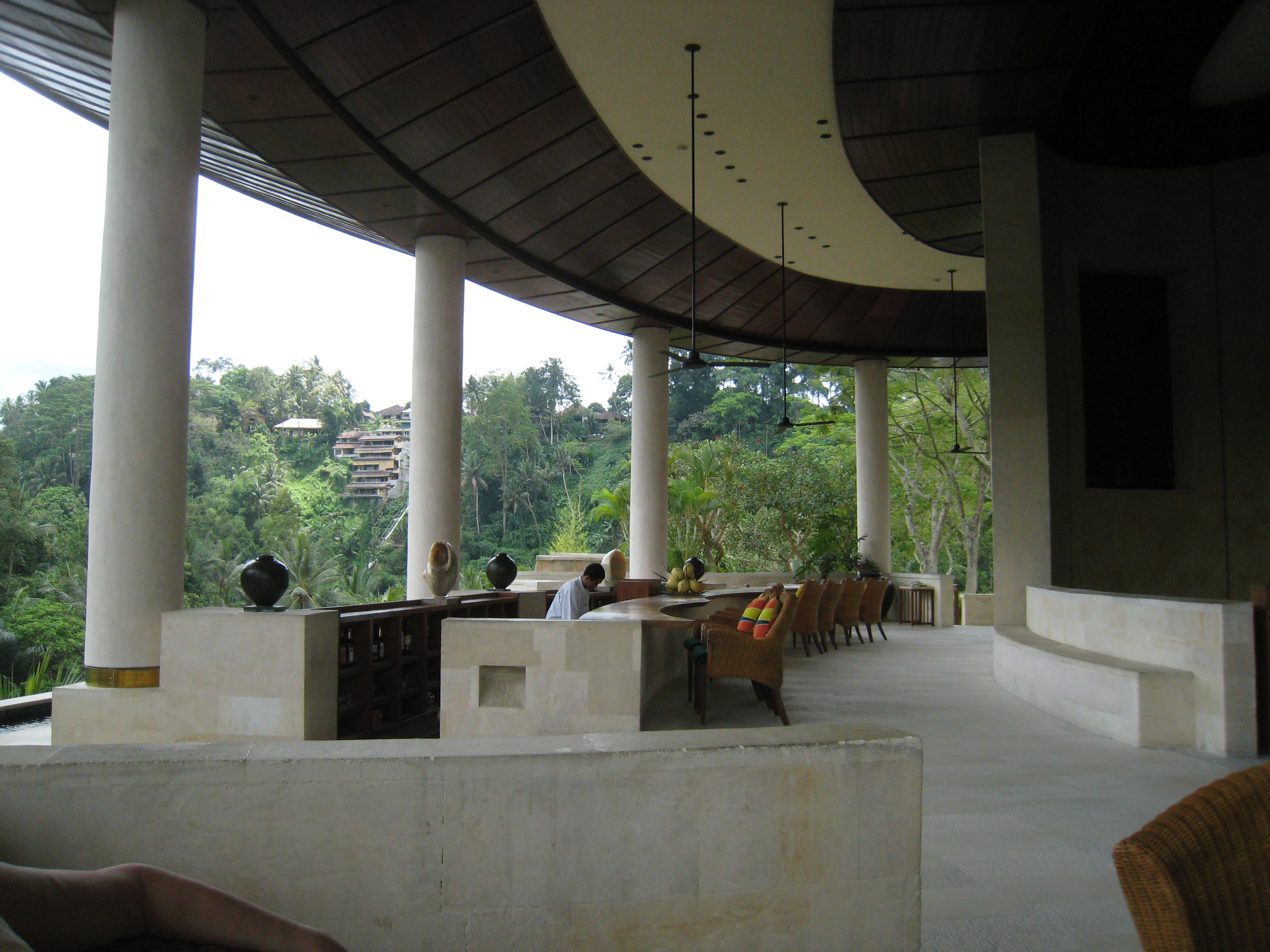
4 seasons hotel in the jungle
Probably the grandest hotel in town is the Four Seasons. The big names at the Ubud writers festival stay there, and Julia Roberts booked the three bedroom royal suite while she was here for three months for the shooting of “Eat Pray Love” at a mere $3800 a night. Queen Helen and her trusty retainer settled for a lovely fruit juice in the lounge while they took in the opulent civilized ambience amid the surrounding virgin jungle.
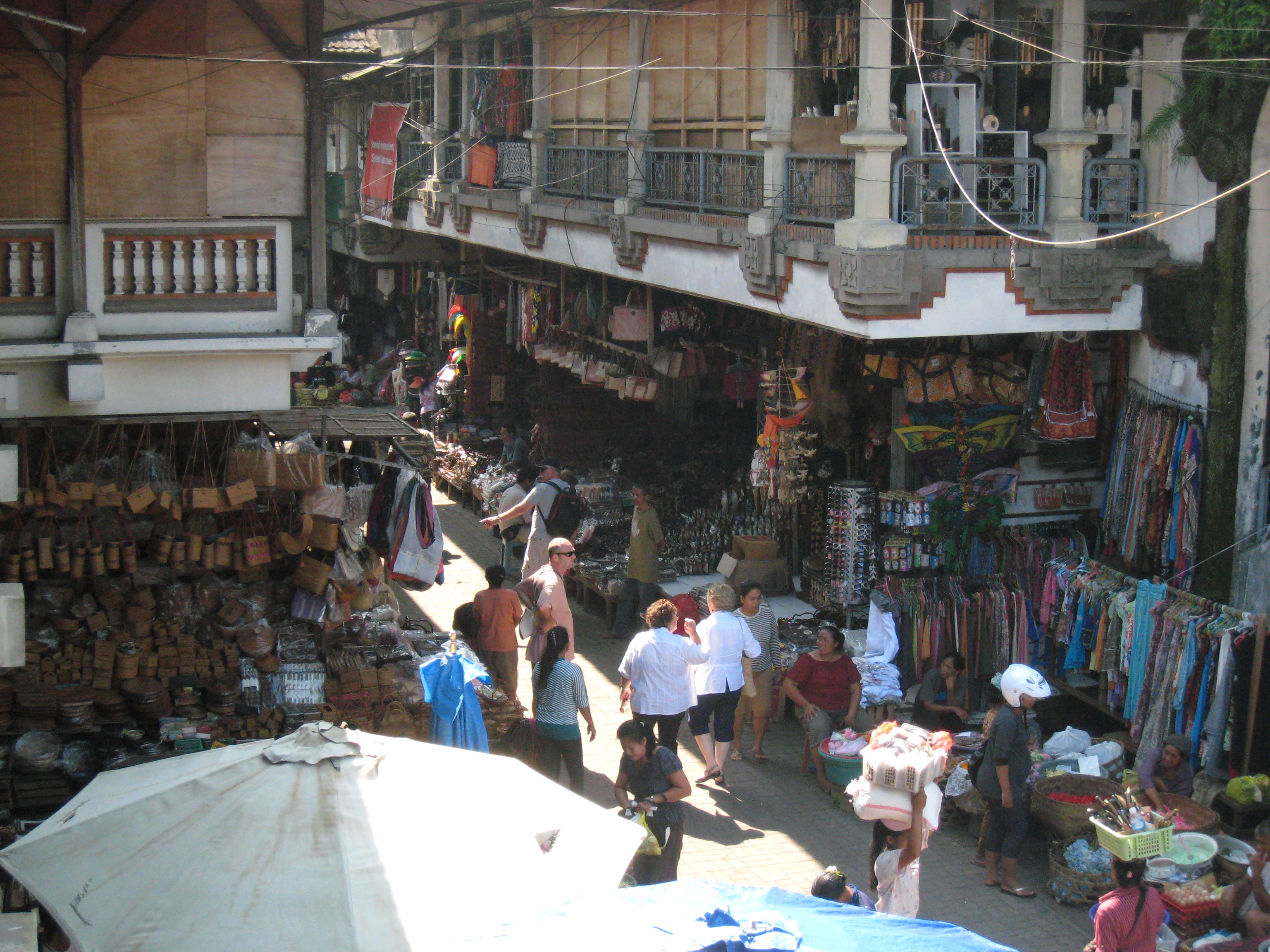
Other end of the scale has to be the vast market in the middle of town. All day, every day. Clothes & textiles, jewelry, nick nacks, wood carvings, woven bags, T shirts and food. About 90% of the market is souvenirs. This is the dense, pushy, clattering and haggling side of tourist Bali. Bargaining is expected. Prices are seldom marked in the market and asking price is often twice or thrice the acceptable price. We can easily afford the asking price, but it is a game. Buyer and seller both eagerly play with a smile. Part of the game is the poor sad face of the seller in negotiation, which gives way to the happy face after money changes hands.
DVD and CD shops are everywhere around town – pirate copies which are a mere $1 a disc off the mountain are fixed price at $1.50 in Ubud. Hardly due to transport costs. Maybe a matter of supply and demand? There are those who say that the cost of corruption is high in Ubud.
Only minutes away from the market, a gap between shops leads up a stony track to one of the rice paddy walks. This is the old Bali as it has been for hundreds and hundreds of years. Not much buffalo ploughing these days. A sort of walk-behind chug chug tractor is used in a family occupation, generation by generation. It is surprising to find that, although a vast area appears to be under successful cultivation of rice, Bali is still a net buyer of rice. Sons and daughters find it more attractive and rewarding to serve the tourists than to work on the farm. The tourist season reaches a frenzied pitch in June, July and August. Meanwhile, life goes on at the farm, the farmer threshes the rice by hand, minds the ducks, regularly jangles the bird scaring machine to little effect, driving bales of rice into town two at a time on a 100cc motorbike, while the women in town shift building materials in baskets on their heads 30kg at a time. It’s a hard life, not quite as romantic as the one in the Ari Smit and Rudolph Bonnet paintings of the 30’s.
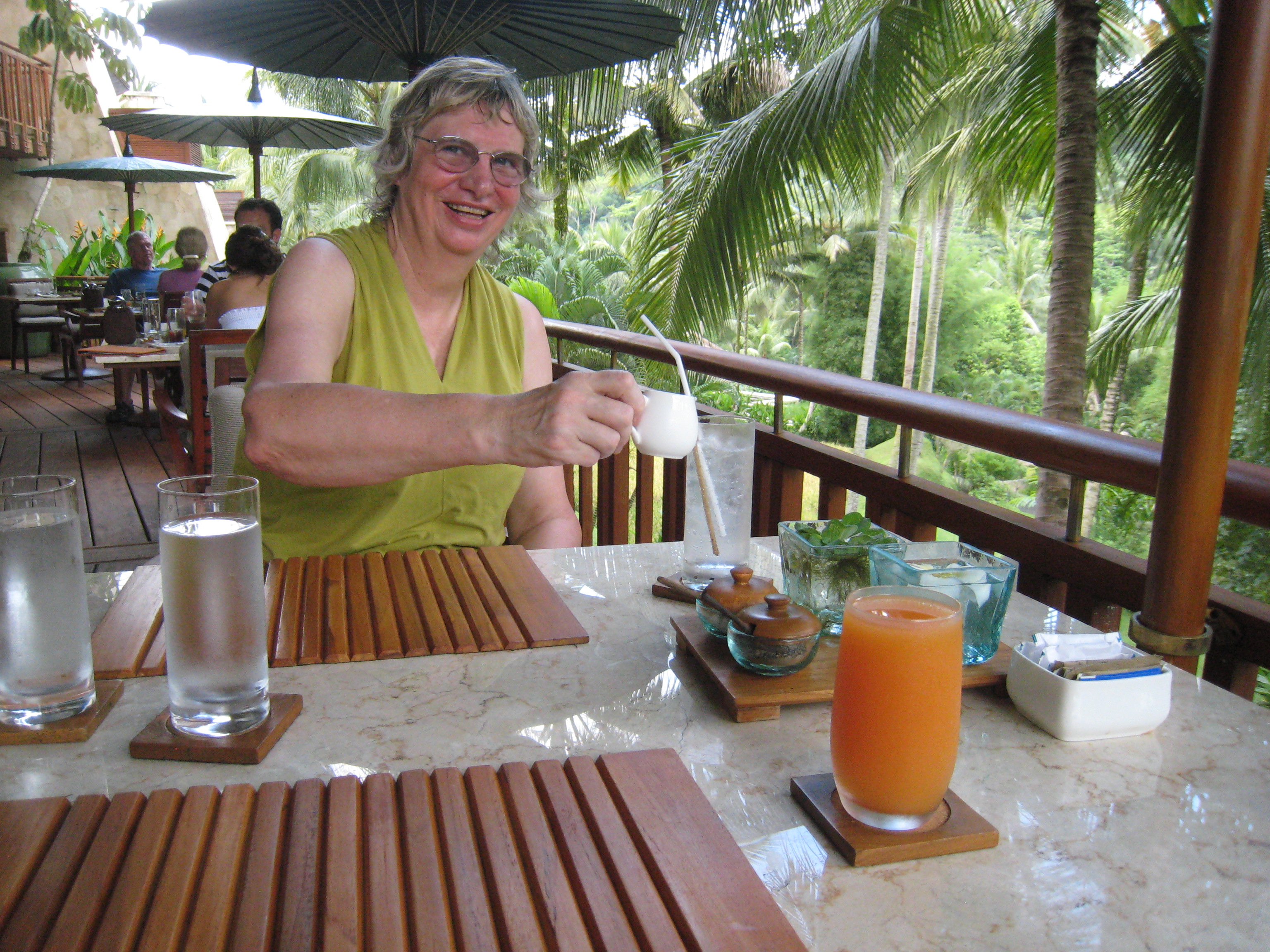
the good life
And the post colonials lazily sit in the comfort of the Café de les Artistes, sipping their Cappuccino and Orange Grenadine as they send off emails by WiFi.
 scatterbrook