
Birmingham 2011
Time travel is still possible in Birmingham. From pre industrial revolution Tolkien’s water wheel flour mill, to a Victorian Sewer Pumping museum, to the National Space Centre an hour away in Leicester.
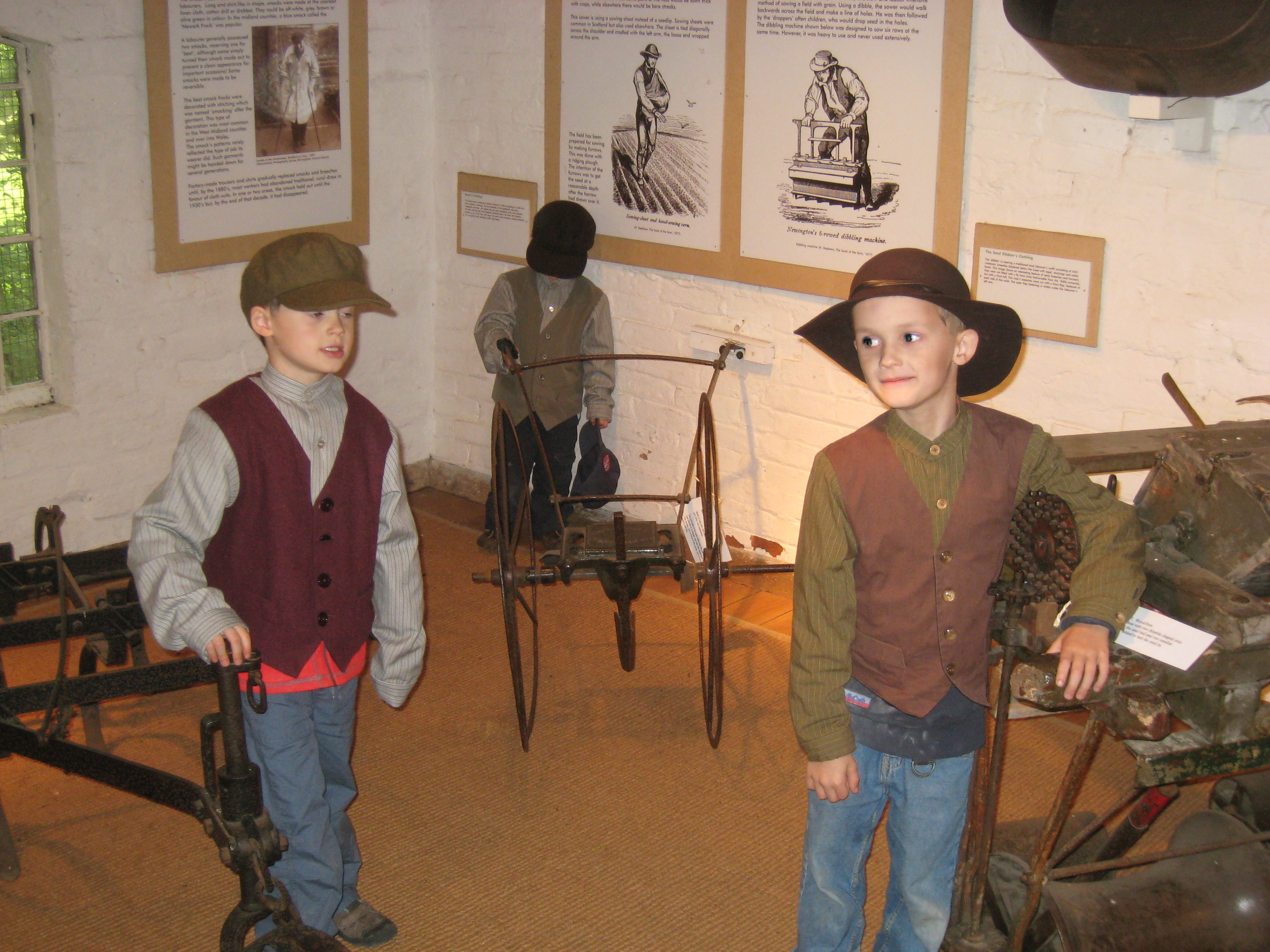
the Hobbits
J.R.R, often called the author of the century, lived in Sarehole at a formative time of life, and remembered it with enormous affection. The Mill in particular occupied an extraordinary place in his memory – the pool where he used to play with his brother and annoy the miller on a regular basis came to represent for him, much of what he valued of “old England”. This feeling was intensified and validated, in his own mind at least, by the effective destruction of the village of Sarehole as the City expanded. This caused him intense grief, but he was to live long enough to see the beginning of the restoration process. Were he to see it today, he would probably find much to disapprove of (as he disapproved of most things modern) but it would be nice to think he would at least take pleasure in the preservation of the mill and its surrounding ponds and field. The flow of water in the mill race was chancy then, as now to the Sarehole Mill ,
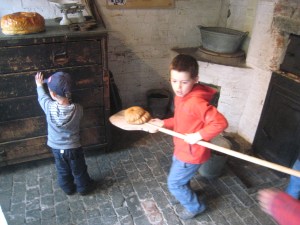 and in the Victorian era a steam engine was installed to augment the water power. The mill is now a museum, with Mick the Miller operating the mill powered by water. The kiddies can dress in period and pretend to be bakers by loading loaves into the wood fired oven. And walk the riverside path that Bilbo walked. The Moseley Bog nearby does feel very Hobbity.
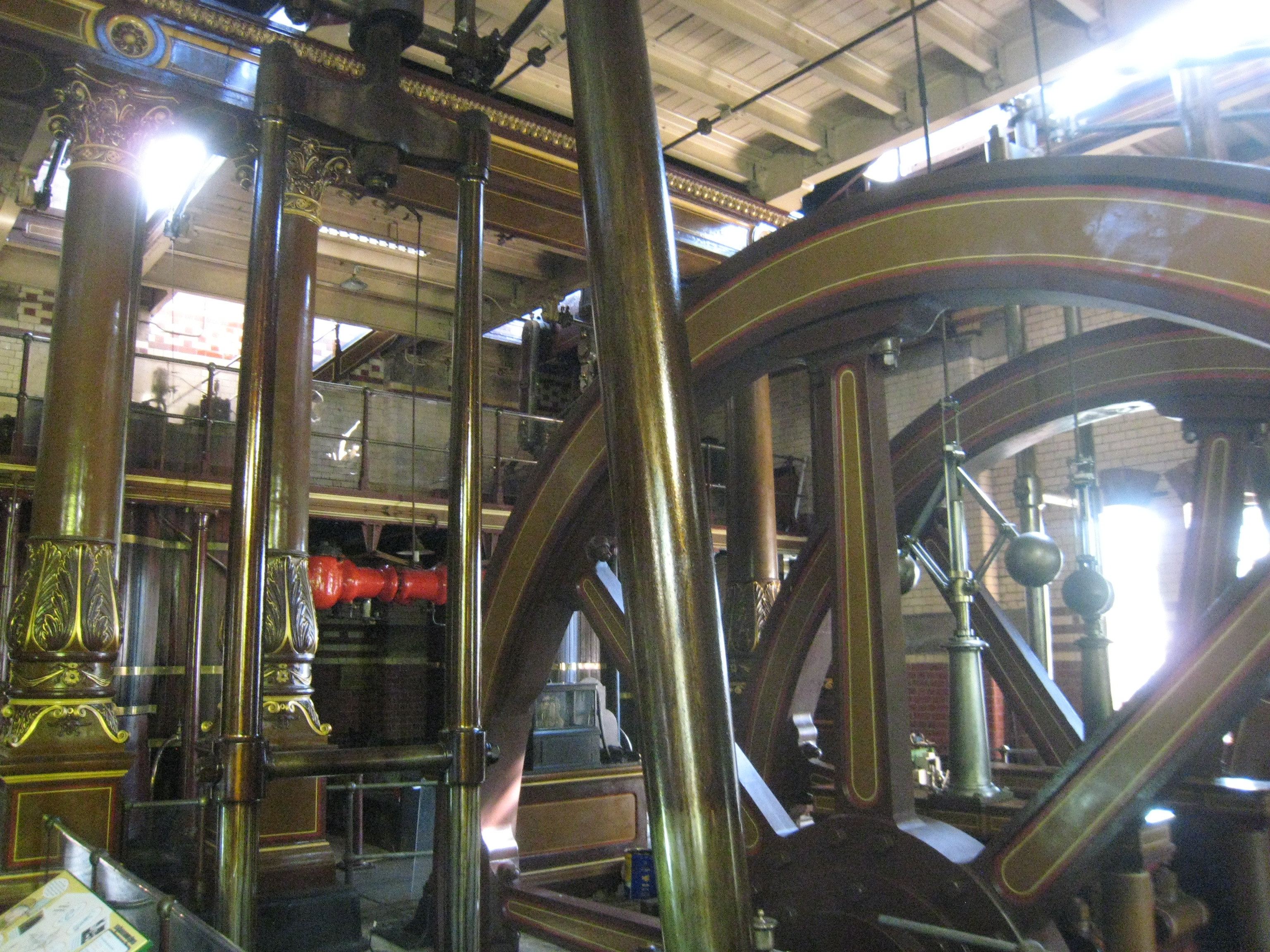
one of the pumps
The Abbey Pumping Station Museum in Leicester had a free open day, so, attracted by the tall chimney and old machines in the yard, we peeped in the gate to see what was pumped and to where. Sewage. This was where the waste of the city was pumped up-hill to a distant processing plant in Beaumont Leys, So? How to make an interesting museum of that? For a start, there are the three story high beam engine pumps, steam powered from the coal fired boiler house with its tall tall chimney. The four steam engines were built in Leicester by Gimson and Company and today are rare examples of Woolf compound rotative beam engines. Rated at 200 hp, at 12–19 rpm, they pumped 208,000 imperial gallons of sewage an hour. Well how ’bout that? Three of the four engines have been restored back to working condition. Then there is the collection of vintage chamber pots, a collection of old flushing toilets. There was an interesting cutaway section of a complete toilet system, seat, bowl, S bends, drains and connectors to other toilets, all with simulated contents. Needless to say the little guys were fascinated and had to be discouraged from hands-on investigation from the outlet end. Little boys. Funnily enough, the functioning toilets of the museum were outdoors, had a vintage brass plaque, but were functionally disappointingly boring. Rest of the show was well worth the entry price. Interesting that the tall old chimney faintly suggested a space rocket, because over the road was…
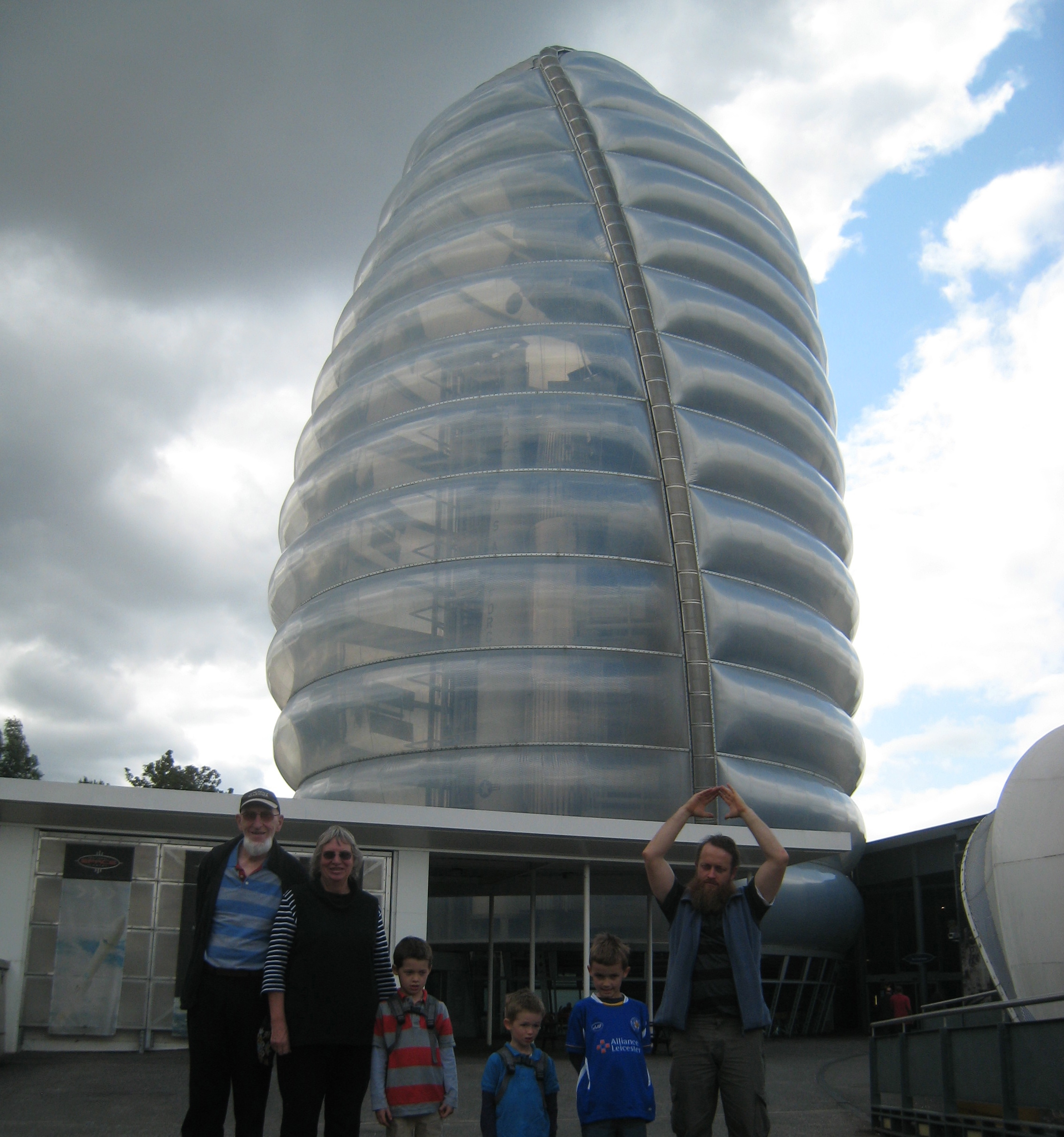
The Space Centre
The National Space Centre. Primarily an interactive educational resource, it is really intended for kids of all ages, from tots to the separate building directed at more serious programs for high school students. This was a school day and the whole place was just humming with busloads of eager kids
of all ages, which was unfortunate, as some of the big kids were keen to go on the rides, push the buttons and pull the levers, but were a bit shy to push forward.
.
Lower level is given to history of the universe, middle level to the history of rockets and the upper level gives an account of the race to the moon, which gives the Russians their due credit, but marks them down a couple of points for not bringing Laika back alive. This floor has an ancient silent black & white movie of the Jules Verne saga. With gentlemen in frock coats all arriving exhausted and lying down for a rest, covering themselves with conveniently handy blankets. There was also a reconstruction of a sitting room of the time, with furnishings and appliances, including an old T.V. replaying the famous ‘One small step’ sequence. Very grainy and fuzzy, but I’m sure he really was landing on the moon.
There was a hemispherical planetarium with lay back seats for wrap around vision. Ran through an animation of the CERN synchrotron near Geneva, probing the mechanics of big bang and the origin of the universe. There are lots of these 3D planetaria around the world, but, how do they achieve such a stunning 3D effect without using image separation glasses?
Then there was the simulated landing, on Saturn, I think it was. Not recommended for the faint hearted. More of a thrill ride in 3D than an enactment of a likely successful landing. Being jarred and tilted as our vessel bounced off ravine walls at increasing speed and crashing through glaciers, sending ice rocks every which way. The little boys thought it was great but said it was a pity we had such a crummy driver. And at home, they did their own Spacemen sequence in dad’s cricket helmets.
 scatterbrook