
Talked about cheap airlines in the Prague blog. Being committed to the idea of a bargain, and determined not to be discouraged, we have continued to get good value from a number of so-called cheap airlines, including the one that we think might have been referred to in this video clip
Scotland is a great place but has a reputation for challenging weather. In late May we had the optimism to expect sunny late Spring days leading to the onset of Summer which up there has very long days if not a reputation for high temperature. The “Gabs o’ May” refers to the stormy weather that normally comes to the North East at the beginning of May. Came a bit late this year. Parked way back from the sea wall at Cruden Bay. The car was doing a little dance in the 130 km/h wind as we stepped out to experience the chill factor. Beat a hasty retreat as the car was blasted with dry salt spray froth. The Storm
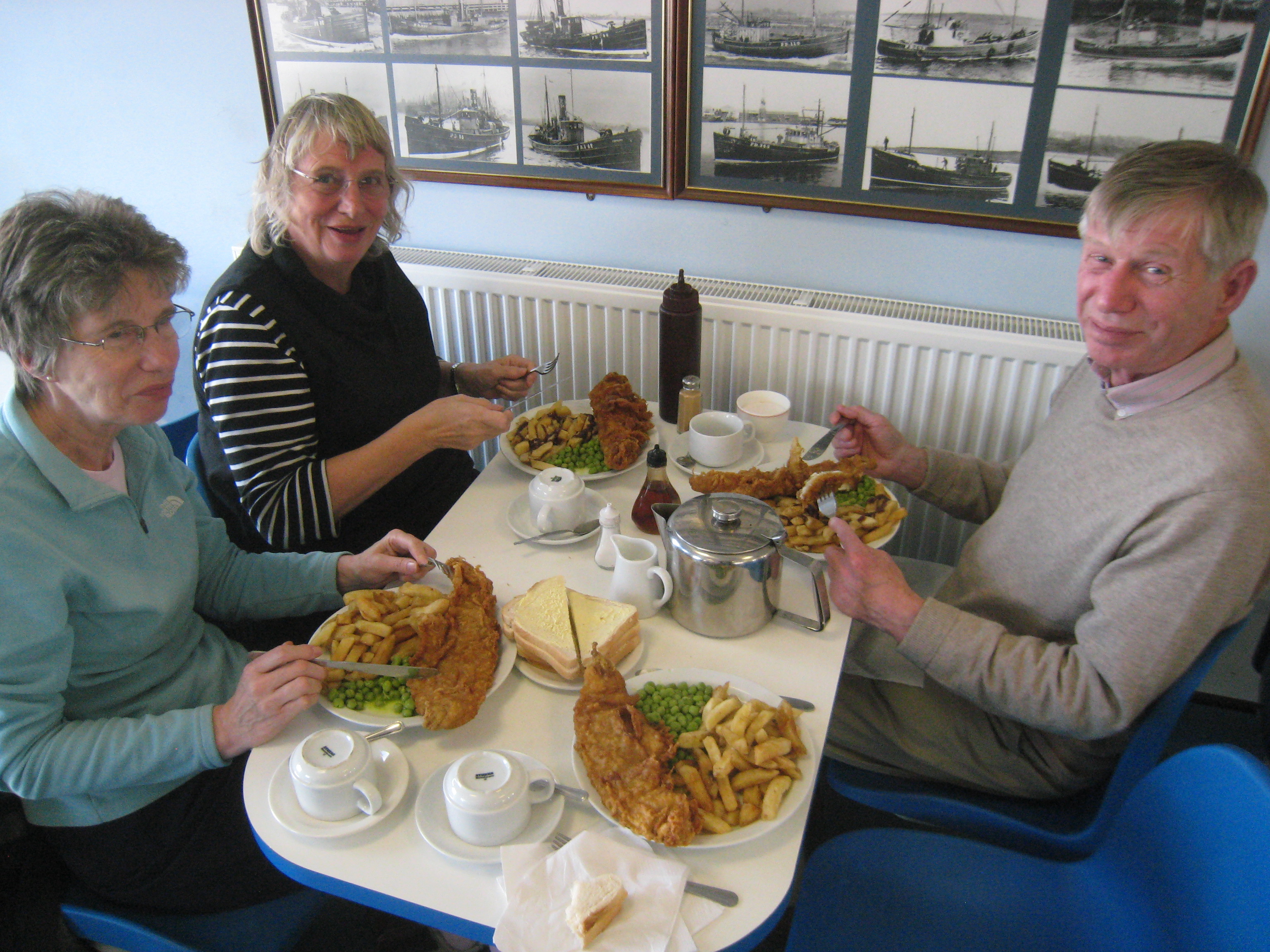
Fish n chips
Love some of the place names, often not pronounced by English protocol, Auchmacoy, Bogbrae, The Skares, Wether Leask, Kinknockie, Mains of Tarty and Hill of Ardiffery to name a few. All clustered around Peter Head the big harbour and fish town. Had fish and chip lunch at The Dolphin, which is owned and run by a retired sailor of the old school. As expected, the fish is the pick of the catch and cooked just so. Over the years the trawlers have changed, so that today, the little boats are gone and one haul of the net of one of the much fewer, much bigger boats might yield more than 500 ton of fish. All in the name of economic rationalism and efficiency. Scottish authorities and the E.U. have input to stipulate quality and quantity of catch, but this sometimes means that the market has to refuse to accept a whole boat-load, which might then have to be dumped. And this at a time when fishing licenses are being bought back to ensure sustainable fishing. Perhaps this is what it means to be living in the age of “post-truth politics”.
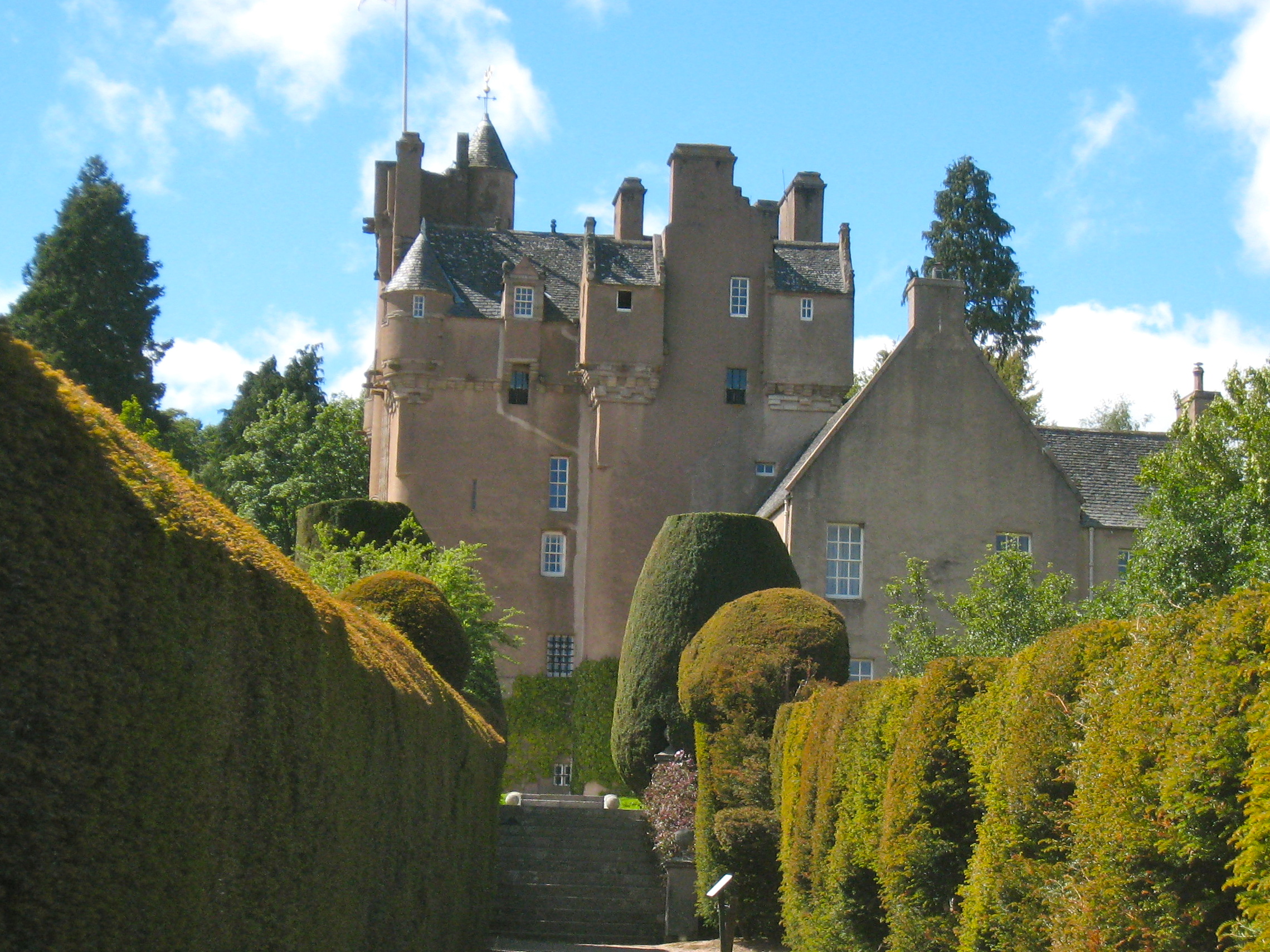
Weather continues to be appalling in the North East, but on one of the rare pleasant days visited Crathes castle, well, not really a castle, actually a tower. Crathes is the seat of the Burnett, Burnet, Burnard or Bernard clan. A family with a formidable spelling problem, but nevertheless, with good connections. In the 14th century Alexander Burnard was granted lands on the banks of the river Dee for services to Robert the Bruce. It is on this land that Crathes is built. In the 17th century, Gilbert Burnet did not favor the exclusion of Charles II’s Catholic brother James from the succession. Burnet’s solution for the exclusion crisis was that James should keep the crown but that the Protestant William of Orange should exercise power as protector. When the exclusion was defeated, Burnet fell out of favor and left England for France. In 1688 he accompanied William on his invasion of England and was made bishop of Salisbury. So the family did quite well, inhabiting Crathes until quite recently when they gave it to the National trust.
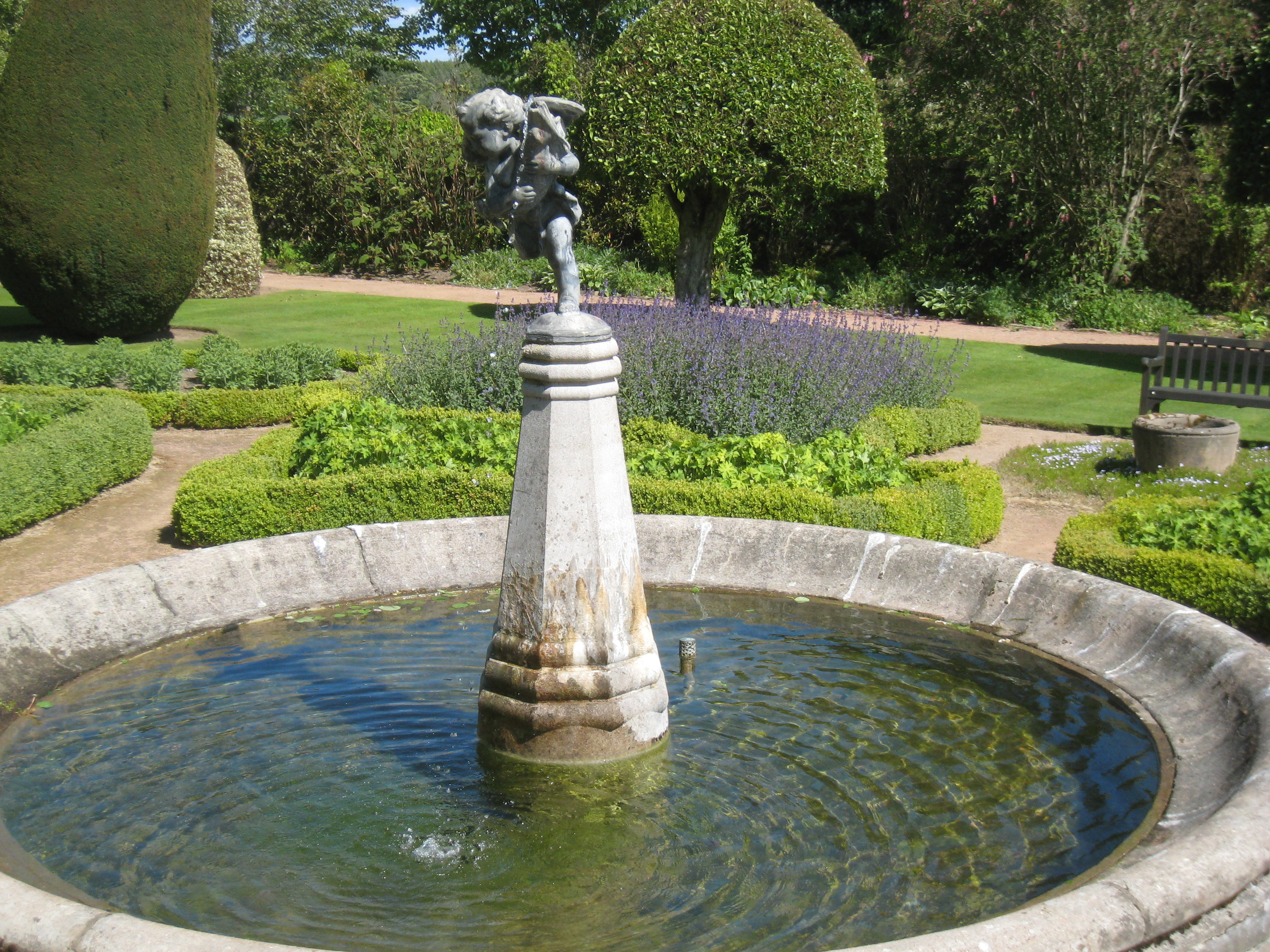
The Garden at Crathes
Birmingham.
Yunus, Idris and Yusha are now age 7, 5, and nearly 4. They provide great joy and ongoing challenges to Grandma and Uncle Robert. They are home schooled with a mixture of National curriculum and their own brand of curiosity driven research. A technique for making cardboard turtles was introduced, by courtesy of the children in the Belgian Family. Surprised to find that Yunus, with the help of David Attenborough, is a turtle expert. Turtles are apparently not just turtles, we were told that there are boy turtles and girl turtles and babies and eggs and ….. too much information for Grandma. On a visit to sea world, not only turtles, but otters being fed and trained, starfish and anemones to poke, a big tank where people can go under the fish, the sharks and rays (not the sting kind).
Life on the allotment continues to be a mélange of picking strawberries, warfare between pirates and knights of the round table, spreading compost, a sort of composite of football and cricket, watering the courgettes, riding bikes, making wind breaks, weeding, flying kites and gliders and digging up ants nests. They tell me that there is a war going on between the golden ants and the black ants and the winner gets to marry the queen. One of the useful features of the communal area is an enormous blackberry batch growing in and around apple trees. This means that in late summer, the ingredients for blackberry and apple pie can all be picked while standing on the same spot. Never thought that I would be guilty of encouraging blackberries, but it seemed reasonable to transplant a row of blackberry tendrils to make an edible windbreak to shelter the strawberries and beans from stormy weather. Yet to see if they perform better with, or without, chicken manure. Work continues on convincing the chickens to stay in their designated work-stations. The Produce

table centre piece
The Jewellery quarter can be found a short bus ride from the centre of Birmingham. Fascinating window on another world. Precious metals have been worked in Birmingham since the 14th Century but the industry really prospered from 1660. King Charles II returned from exile in France after the Civil War and brought back a taste for fancy buttons and shoe buckles. Metal workers and artisans turned out trinkets for the masses, thousands of pieces, first in steel then in silver and burnished gold, inlaid with coloured glass and gemstones. Matthew Boulton, the famous industrialist played a key role with his Soho Manufactory and his successful mission to establish Birmingham’s own Assay Office. By the early 20th Century the jewellery trade employed 30,000 people. Supporting trades occupied as many again. Throughout its history, it was quite a closed community with people living and working there. It wasn’t until later in the 20th Century that shops began to open to the general public. And now the precinct is a tourist attraction with many of the old buildings refurbished, including the Smith and Pepper factory, which has been turned into a museum.
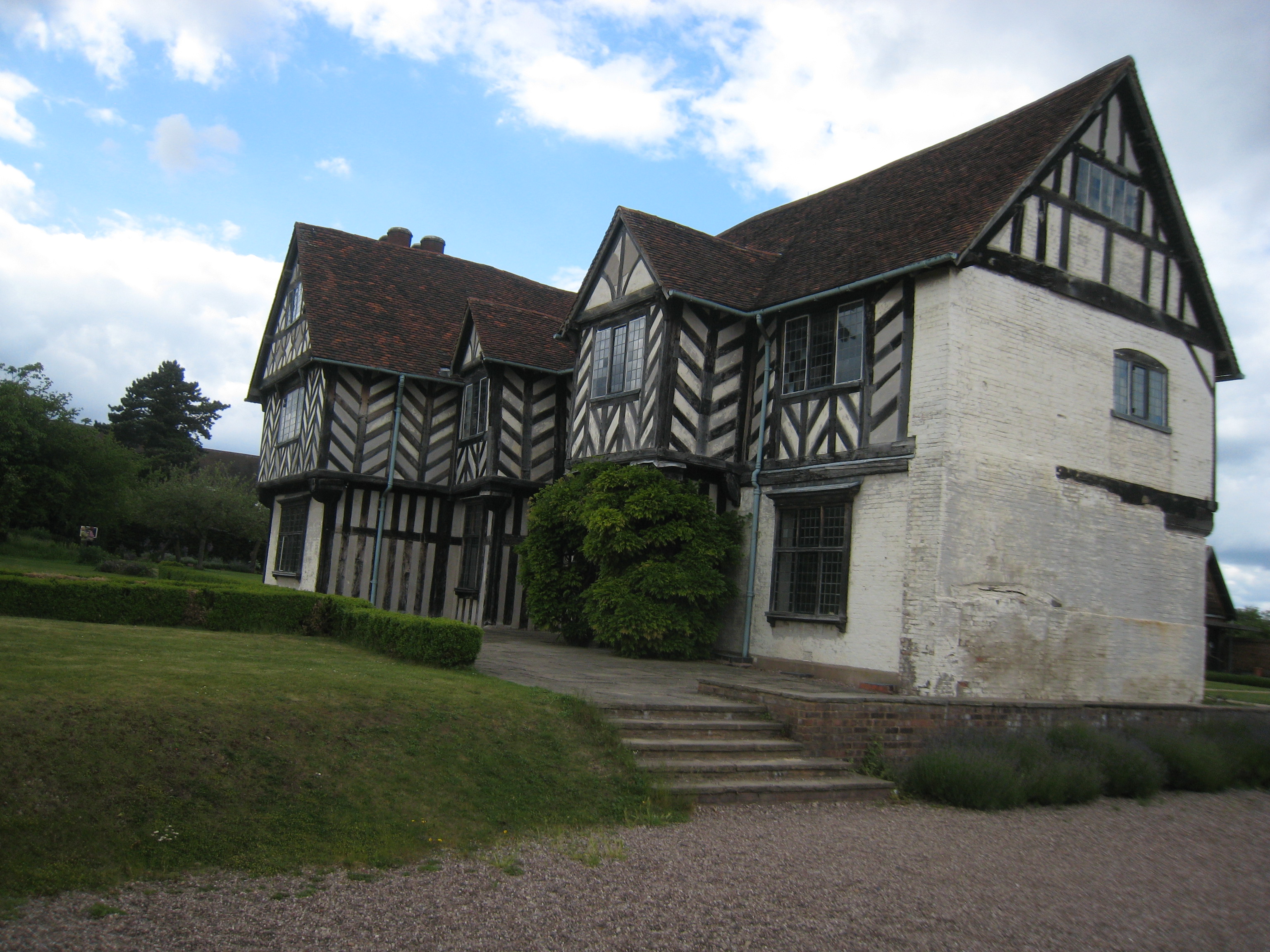
Blakesley Hall
Blakesley Hall has survived remarkably intact since Tudor times. Has changed hands many times, has been derelict for periods and suffered bomb damage in the forties. But now embraced, restored and maintained by a Birmingham body for public use. Activities include a program of historic and children’s activities. The boys had a happy time making mobiles of paper insects. Tudor insects, of course.
.
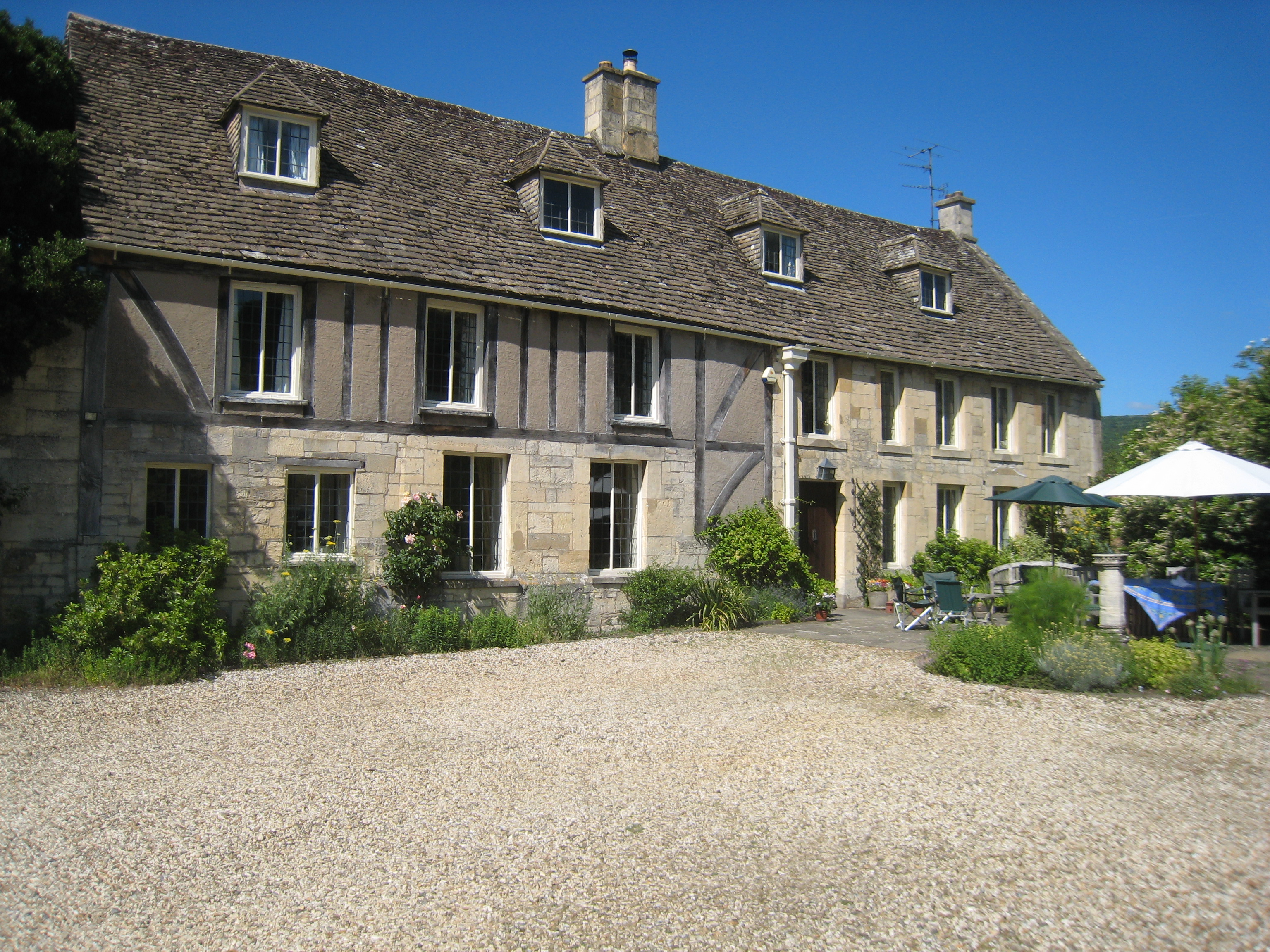
the priory
Cheltenham is only a forty five minute train ride from Birmingham, so this was an opportunity to meet Bruce and Maggy. They are to exchange houses with us for a month next year. For about twenty years they have had “the Priory”. In the 14th century it was part of the adjacent Abbey, and was effectively just a moderately large refectory hall. At that time the important lords of the land were patrons of the abbey, giving it tracts of land and funding building programs. They did this because the Abbot, being a great spin-doctor, had convinced them that they would go to heaven rather than hell, if they would pay handsomely for their sins. The Lords were so keenly aware that they had become rich and famous by doing lots of bad things, so they coughed up hugely. Some quite impressive architecture was achieved with this symbiotic connection. But then Henry VIII changed the ground rules, sacked the Abbots and sold off the land and impressive architecture to farmers to fund the on-going disagreements with France. Oh, and to marry his sweetheart of the time. The Farmer who bought the Priory thought that the building was a bit useless, and was able to fit three levels of living space within the previously soaring height of the refectory. The height of these rooms is only about seven foot, but they are cute & cosy. This was the 16th century, so he added on a modern wing with paneled walls and state of the art stonework. Looking forward to having this as a home base to catch up with old friends, and to revisit places like Bath

In down town Birmingham, along from the Bullring shopping complex and in the shadow of St Martin’s Church and Selfridges nestles a Jamie Oliver restaurant called Jamie’s Italian. So impressed that we have eaten there twice. Possibly seating as many as two hundred, it doesn’t look uncomfortably big because of the way the space is divided. As expected, the emphasis is on healthy nourishing food based on local in-season produce. Prices reasonable. Service good. Staff young, enthusiastic, well trained but genuine. Food well prepared and presented. A picky foodie might dock them a mark or two, but good value. AND the espresso was spot on. Temped to see if they could manage a good one and a half shot laté. Obviously a well patronized trough.
 scatterbrook
Jolly good