
Brussels.
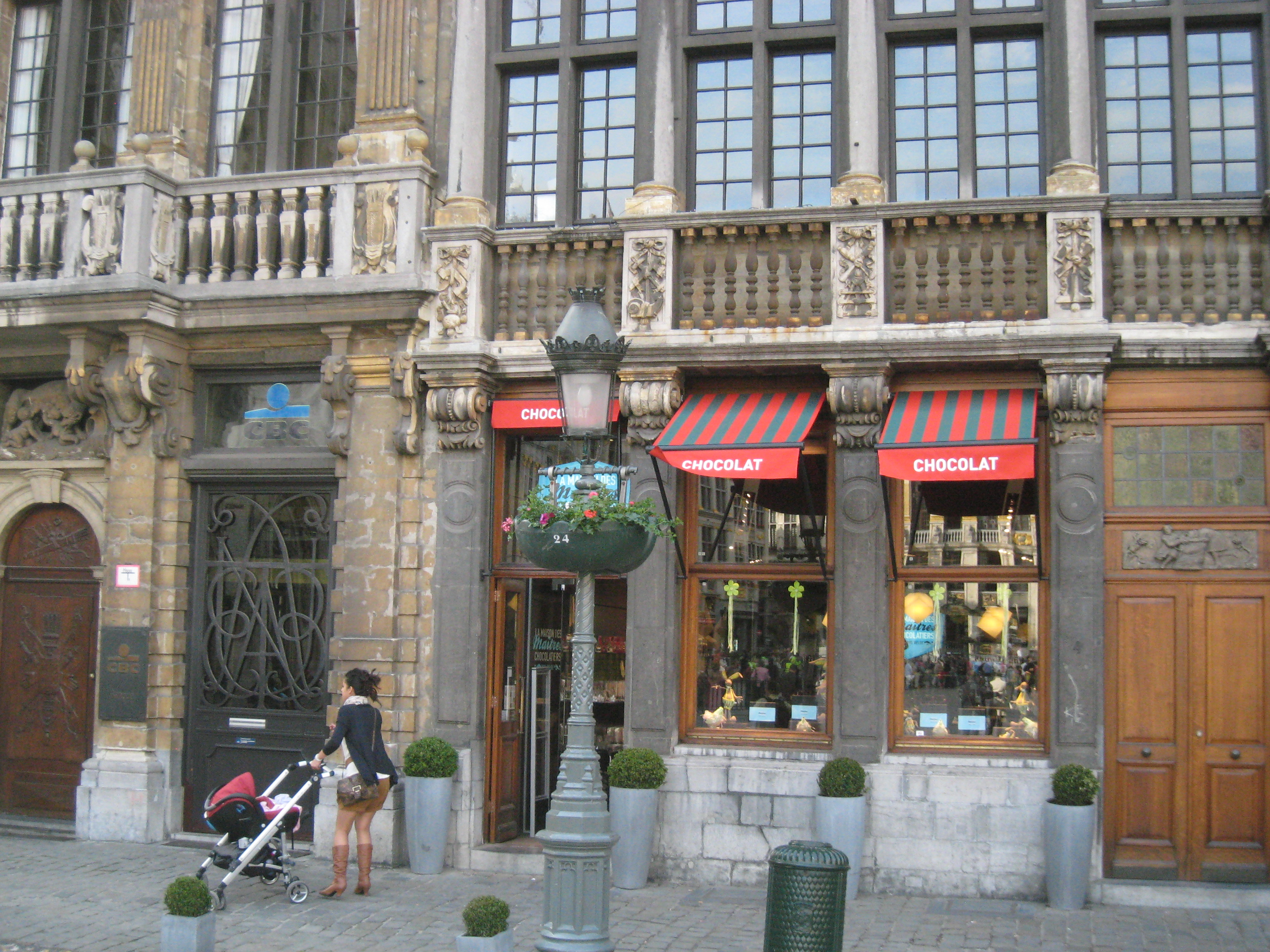
chocolat at its best
Think tall thin houses, chocolate, cigarette butts all over the streets, hot chocolate, Fast trains, the finest lace. And beer. Shops and shops full of chocolate and truffles, even little chocolate models of Manneken Pis. We are staying in the tall thin house of Tanya and Mathias, who stayed in our house last year while we were in Bali. Ruisbroek is a village near Brussels. We can walk from our door, catch a train and be in the centre of Brussels all in quarter of an hour, and minutes later sitting out front of a sidewalk café on the Grand Sablon, great area of town to hang out, take a coffee or beer and watch the passing fashions.
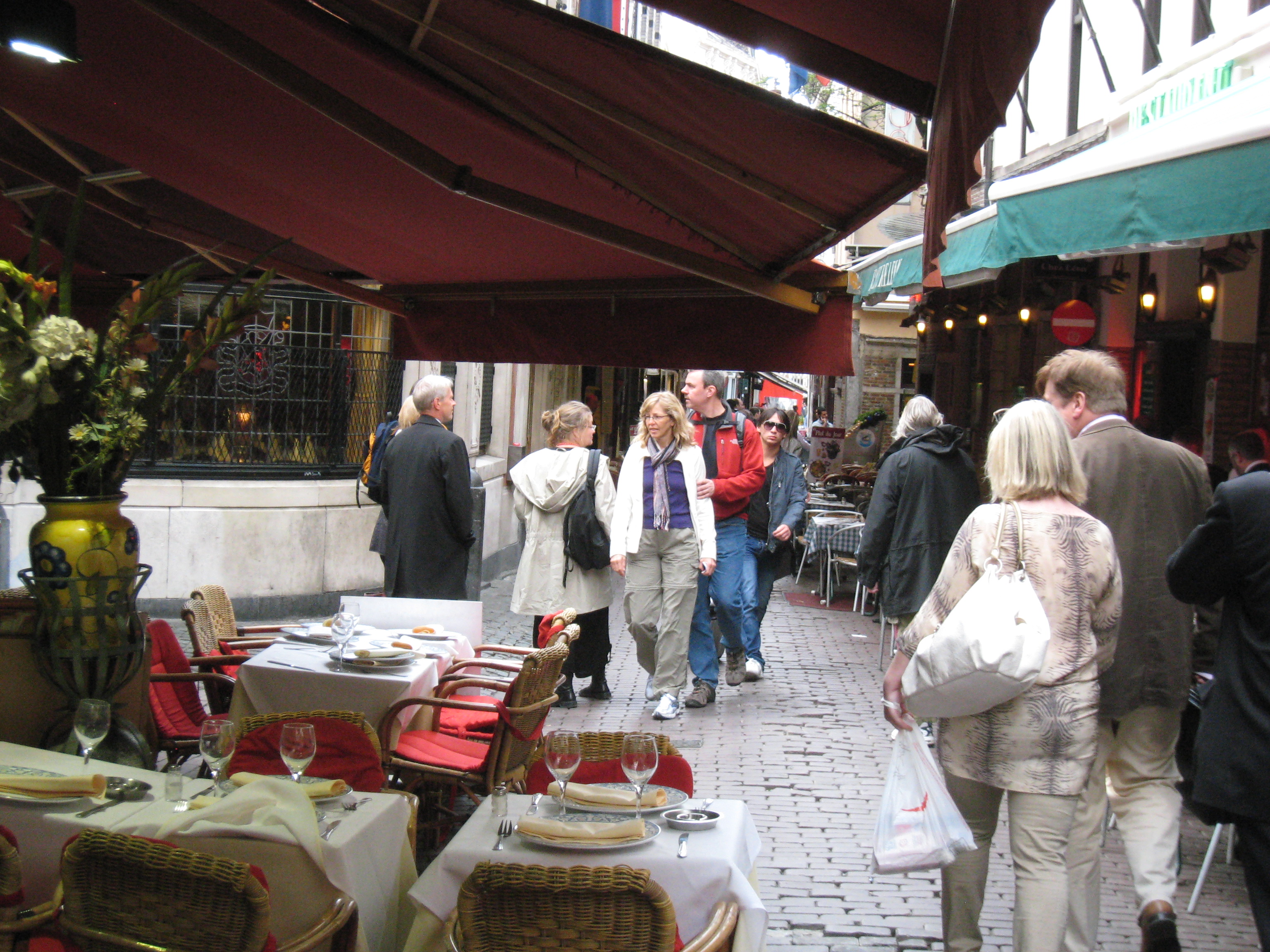
grand sablon alleyway
Along from Grand Sablon is the pretty little church of Our Lady of Sablon and across the road, the Petit Sablon which is a large formal garden surrounded by trees and statues of some of the famous sons of Brussels, including the famous Mercator who did a great projection.
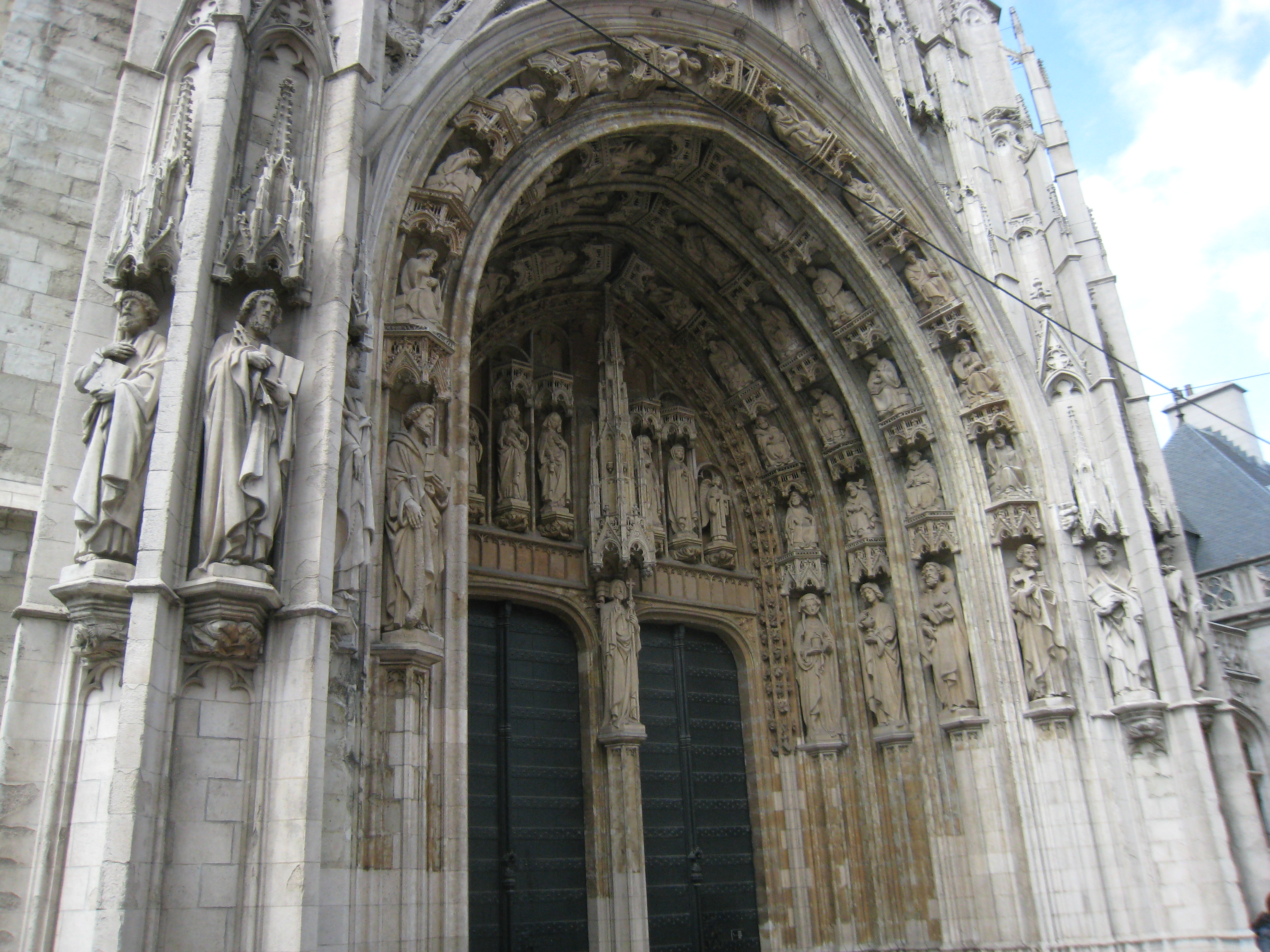
our Lady of Sablon
It seems that every second shop is a chocolaterie, but there are also many lace shops. Cheap lace can be found in the street markets, but is coarse and uneven, made in Asian sweat-shops. The boutiques sell many forms of lace, hand made in Belgium including Bruge ‘bobbin lace’ made with many tiny bobbins and so so fine and precise. Given the skill, hours of work and detail of the fine lace, the price is more reasonable than the cheap imported item. Can’t quite escape the feeling that there may also be Belgian workshops that are not completely “fair trade”. The Hot chocolate varies from OK to superb, and with the cup comes a large sugar bowl. By comparison with Australian taste, even the beer is sweet. One of the street cafes had an inviting €14 three course lunch menu. Sweetiepie had Herring Rollmops and steak, I had soup and Flemish style Rabbit.
“salad sir?”
Why not?
“And to drink, sir?”.
Small beer?
“No small beer sir, just medium”.

Half a yard
Medium happens to be a half a yard of ale – or half a metre in the new measure. New experience for both of us. The salad and the beer each cost more than the meal, but who is counting?
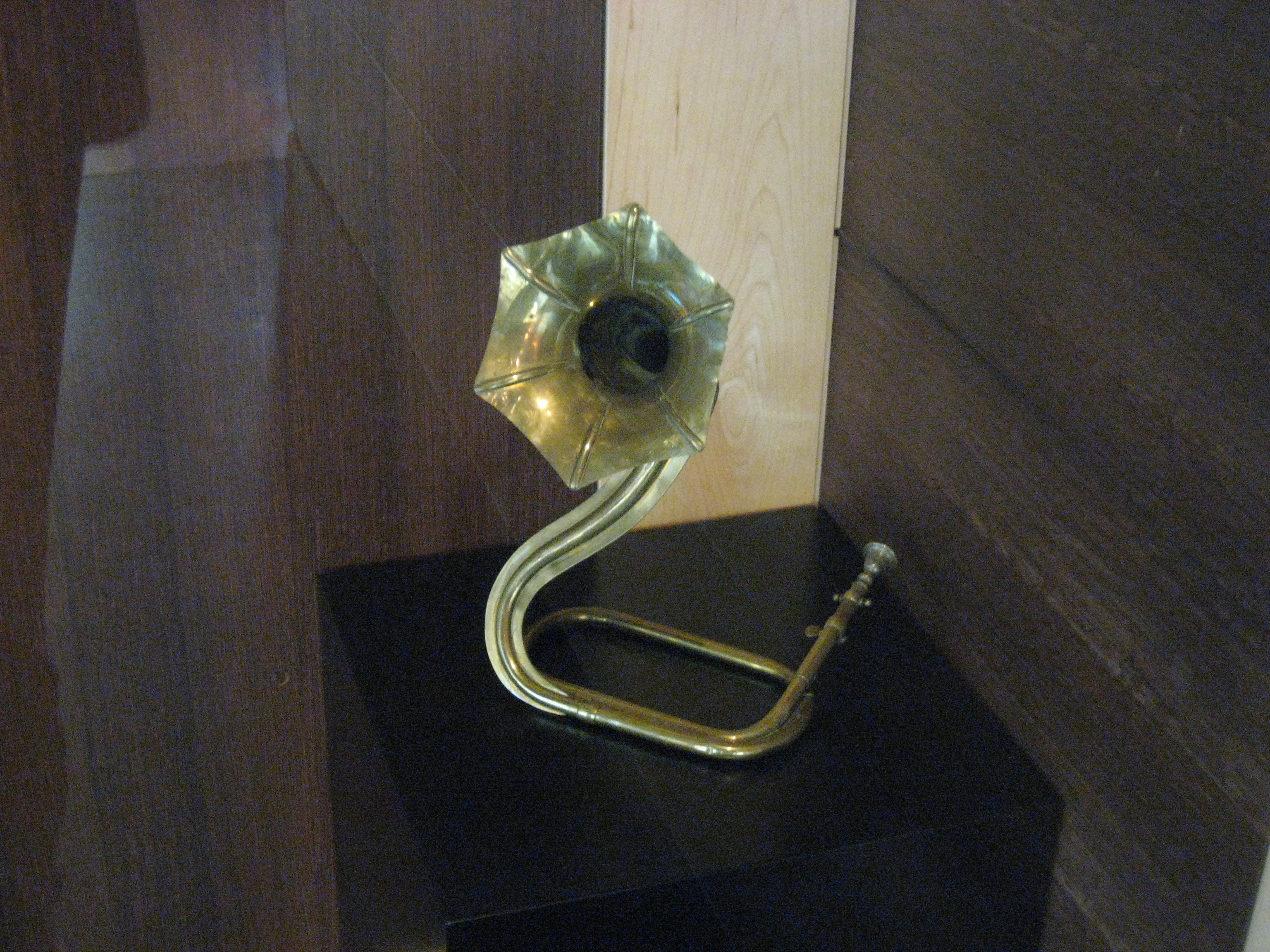
what a cute little trumpet
The Music museum has a richly deserved reputation for diversity and information. Four floors of the weirdest instruments ever to be seen. Along with activity rooms for students. Wireless headphones come with the admission price, and are automatically activated when standing in one of about eighty marked areas. Recordings of the displayed instruments give an idea of the sound. Disappointed not to hear a recording of my favourite in their collection – a seven bell trombone. A whole floor of variations on keyboard instruments including manual and pedal keyboard of a carillon.
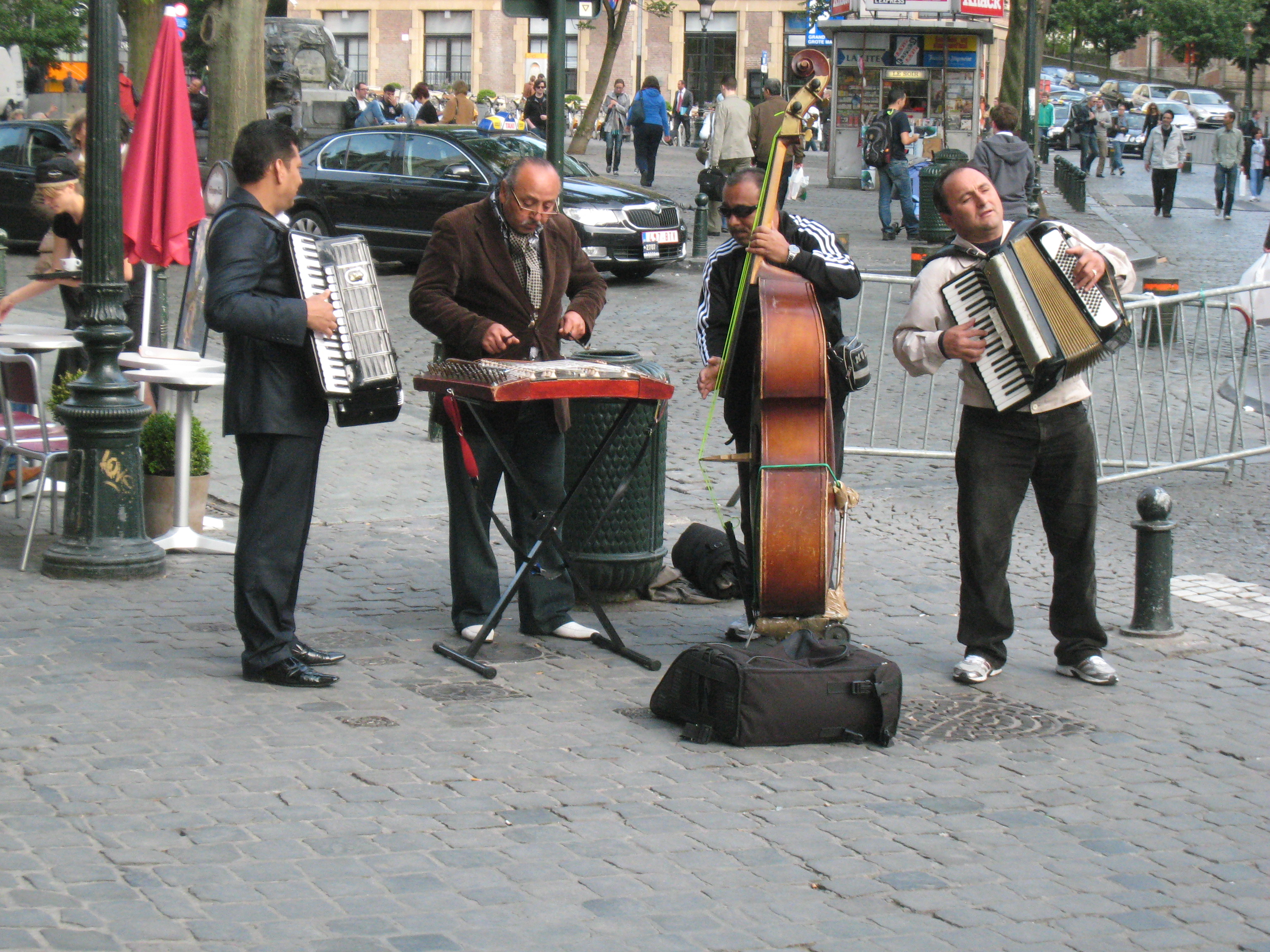
the gypsy band
Occasional music on the streets as well. Gypsy band playing outside the St Hubert Galleries arcade had two accordions, hammered dulcimer played wildly by a hunched little old man with white shoes, and a great sound from a crappy old double bass. The double bass was a work of art. Strung with only three strings of the luminous brush cutter variety, and having an under carriage of taped–on wheely bin wheels for easy mobility. They were giving joy to a small audience and harm to no one when a team of four police moved in for the kill. The lead muso protested that they were causing no disturbance. The head honcho in blue quietly said ‘move’. And the wheels of the double bass were rolling.
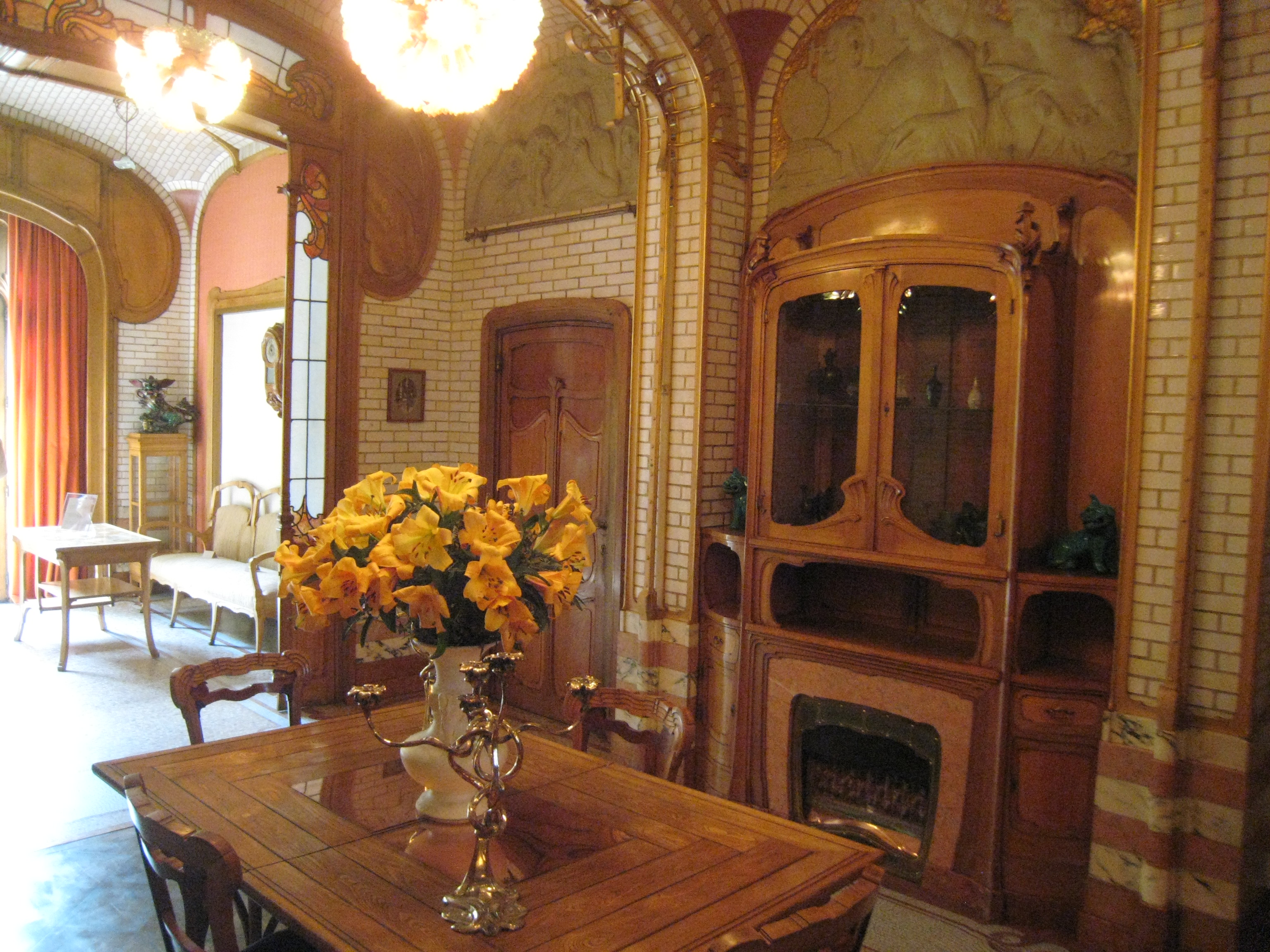
the Horta house
Viktor Horta is something of a Belgian equivalent to Gaudi of Barcelona. The large private house that he designed for his family, inside and out, is now a showcase of the height of art nouveau. Light floods the house from a Tiffany type stained glass ceiling above the broad stair well. Furnishings in quiet homely good art nouveau taste, there was plenty of opportunity for him to show off in his many public buildings. Photos strictly not allowed, but these give an idea of what you might have seen if pics were allowed.

the horta house stairs
Belgians appear to have lifted stubbornness to an art form. The failure to form a coalition has left the country without a government for over a year. Previous government still in caretaker mode. Apparently due to a combination of language difference, political difference and black belt stubbornness. Belgian shopkeepers who can speak many languages might, for whatever reason, choose to use one not spoken by the customer. And who else but the Belgians would have the cars and the trams driving on the right side of the road and the trains driving on the left side of the tracks.
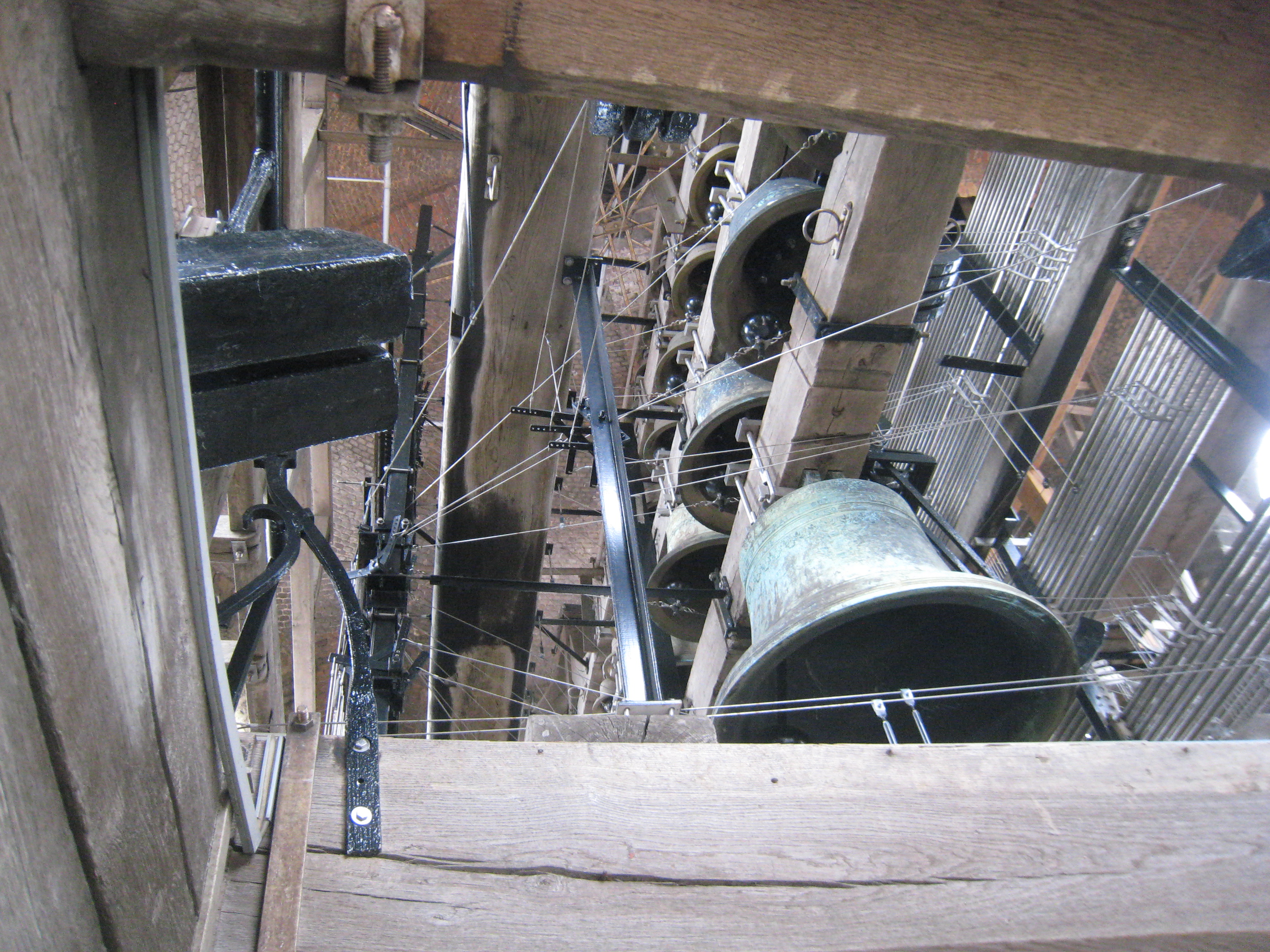
some of the 47 bells
We had seen the film, so had to go to Bruge for the day to walk about, take in the quaintness and climb the tower. 153 spikes to get to the platform on the famous Gloucester tree in Western Australia, 260 steps for the St Vitas cathedral, but 366 steps to get to the top of the Bruge belfry tower which has cast a shadow over the market square since 1300. Disappointed not to encounter the stubborn gate-keeper who appeared in the film. But the surprises were macro scale clock mechanism and the 47 bells operated by a 2m diameter barrel with moveable pegs that might serve as a giants music box. A carillonist also gives concerts by stomping and punching the levers. Tour of the canals in a little motor boat showed off to a treat the moss and ivy covered old buildings that the assassin in the film got so excited about.
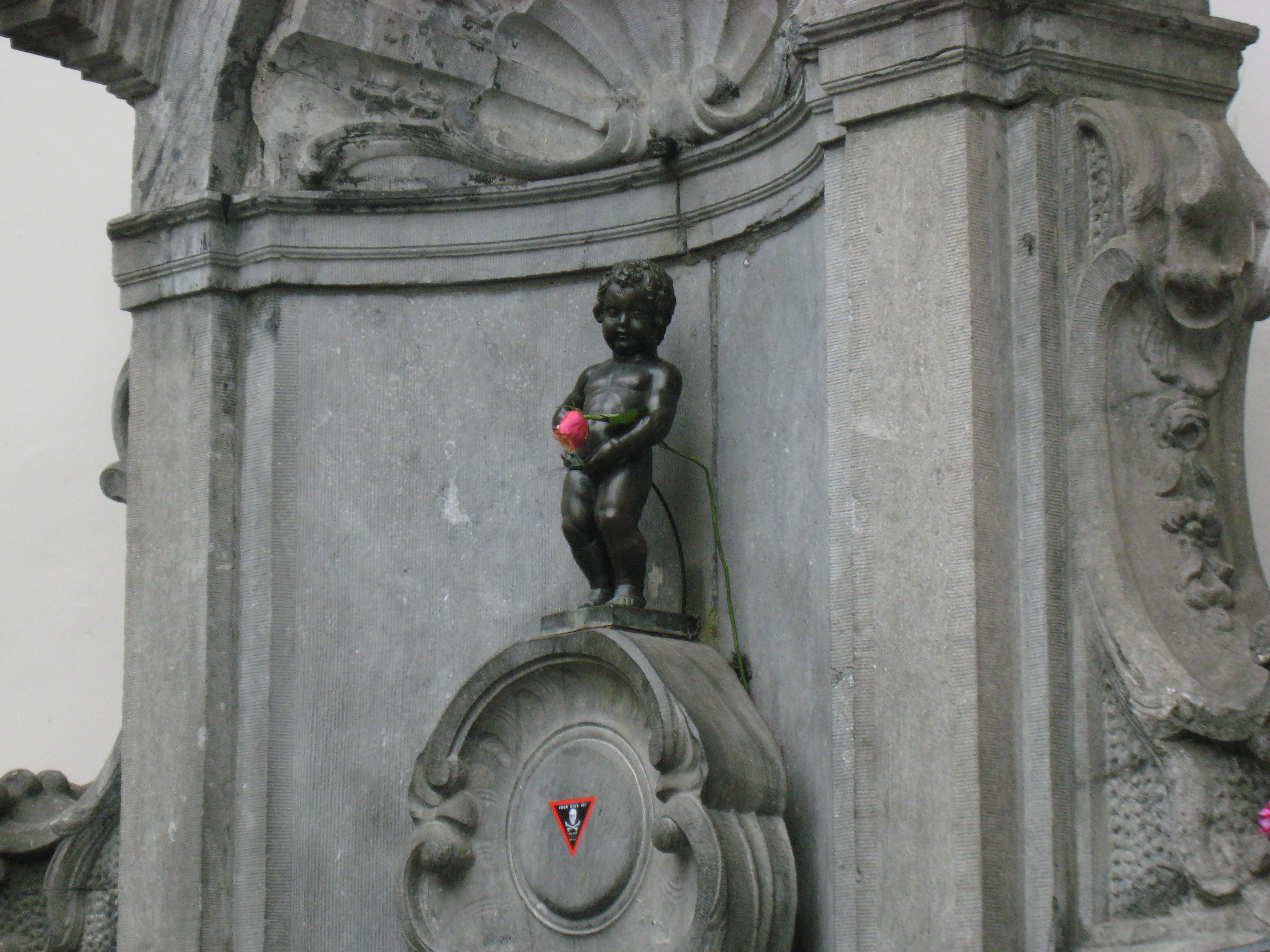
the little pisser
A crime to visit Brussels without paying homage to Manneken Pis, but were surprised to see the diminutive stature of the little chap. It is said that in 1142, the troops of the two-year-old Duke Godfrey III of Leuven were battling against the troops of the Berthouts, the lords of Grimbergen. The troops put the infant lord in a basket and hung the basket in a tree to encourage them. From there, the boy urinated on the troops of the Berthouts, who eventually lost the battle. Another legend claims that in the 14th century, Brussels was under siege by a foreign power. The city had held its ground for some time, so the attackers conceived of a plan to place explosive charges at the city walls. A little boy named Julianske happened to be spying on them as they were preparing. He urinated on the burning fuse and thus saved the city. Yet another was that a small boy went missing from his mother when shopping in the centre of the city. The woman, panic-stricken by the loss of her child, called upon everyone she came across, including the mayor of the city. A city-wide search began and when at last the child was found, he was urinating on the corner of a small street. The story was passed down over time and the statue erected as tribute. The statue is dressed in costume several times each week from a wardrobe consisting of several hundred different costumes.
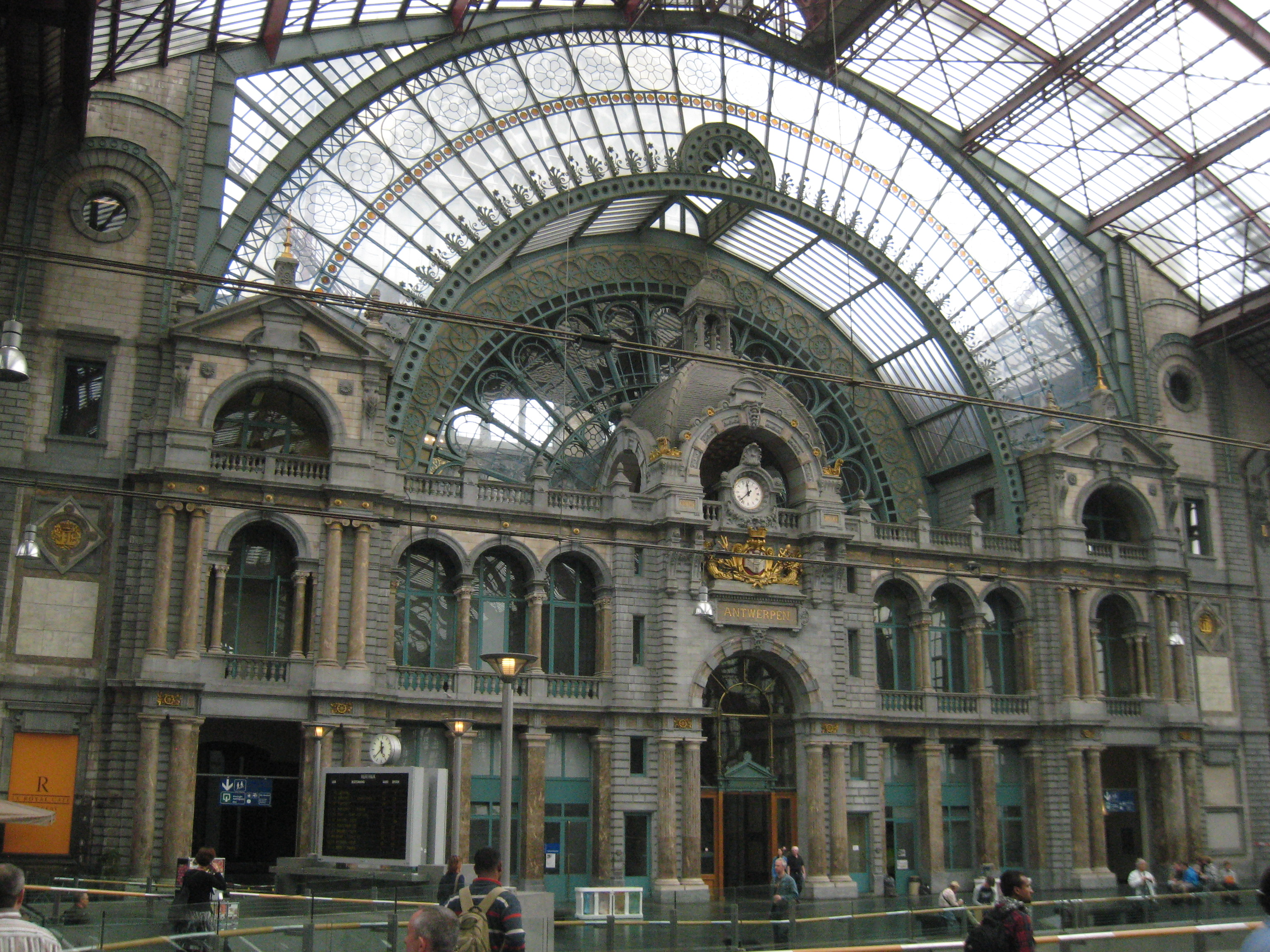
antwerp train station
The diverse attractions of Antwerp for Sweetiepie were Diamonds and Rubens. Antwerp with its port has long been the working hub of Belgium. The diamond museum tells of 12,000 workers cutting some of the 80% of the worlds diamonds that pass through Antwerp, and gives a picture of formation of the stones deep in the magma.
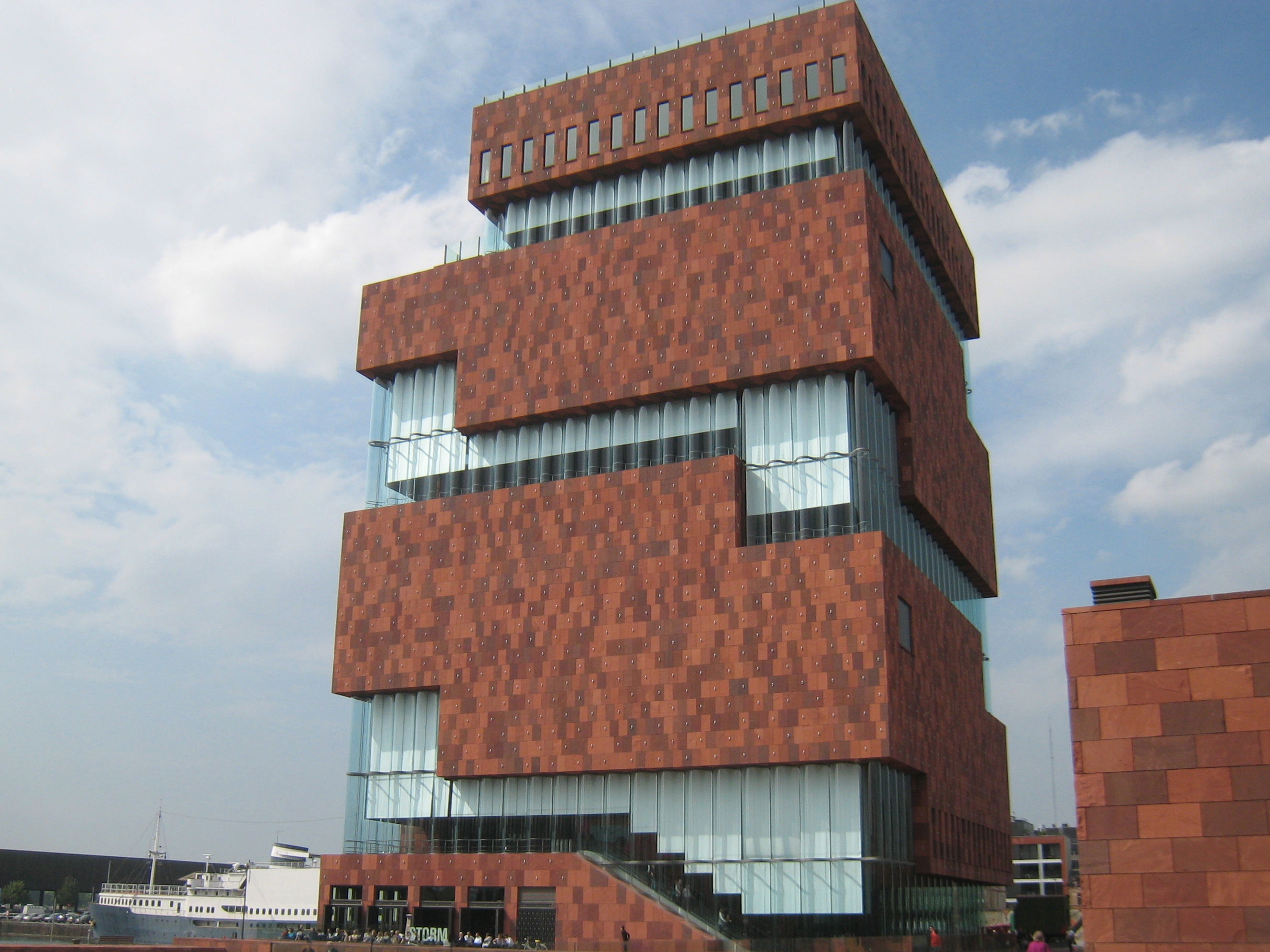
The Mas Museum
The Mas museum had only open for 4 days when we called, coffee shop not even open yet. But striking architecture, ten story high brick cube with spiral façade of wrinkly glass, giving the appearance of a Jenga tower about to collapse.
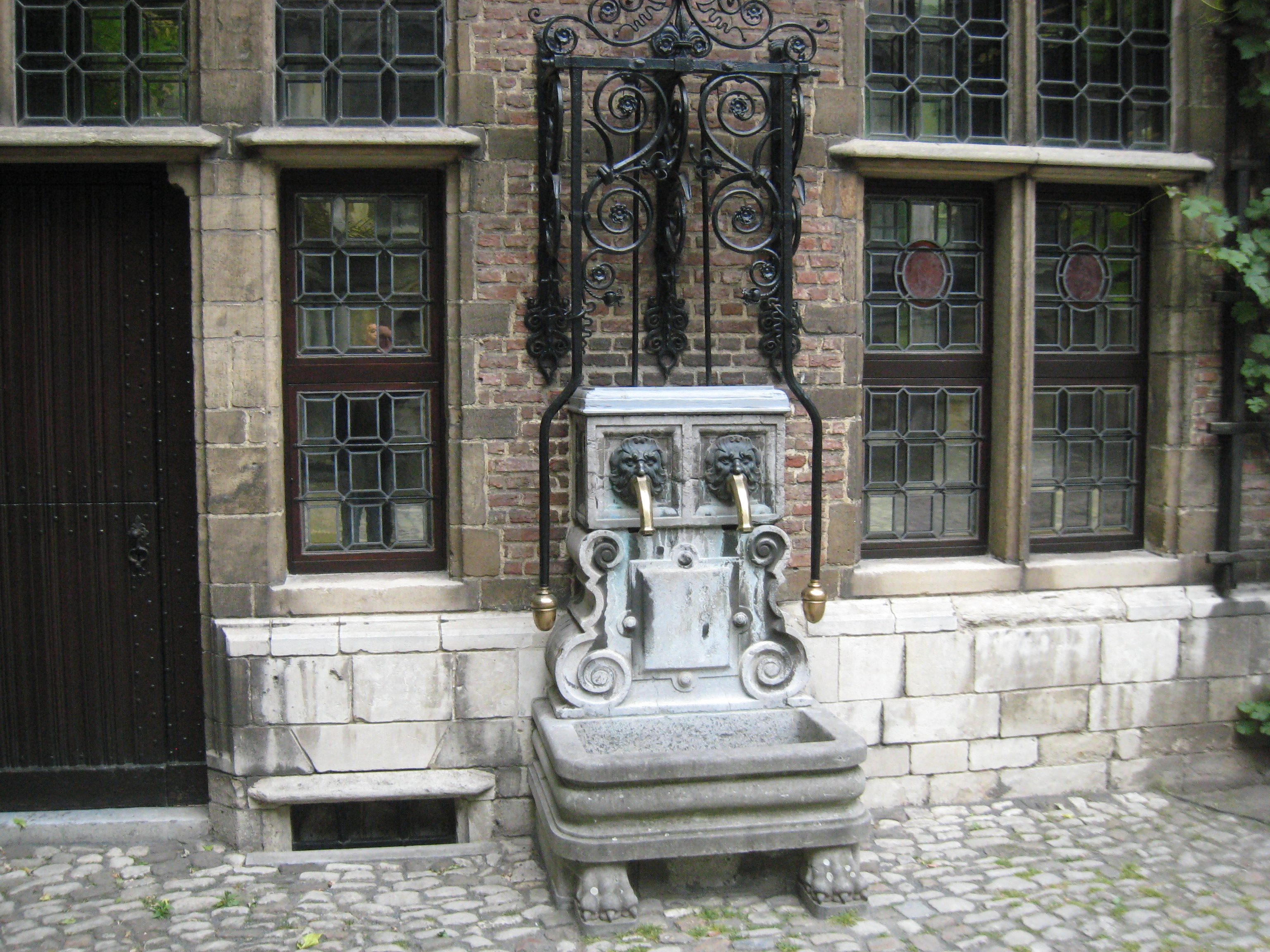
in the Rubens house
The Rubens house was a gem of another order. Hardly any of his own works on show, an early Adam and Eve, but alas no well upholstered ladies, but some work off his associates and employees could be seen. The house was out of the families hands a generation after his death. Only recently the state has taken it over and turned it into a museum filled with the sort of furniture and ornament that appeared in his paintings, much of it looking just like a real life 3D painting of the period. In the 17th century Rubens and his team painted frescos on the walls and barrel vaulted ceiling of the St Charles Borromeus church nearby. A fire in the church in the 18th century destroyed all of the work of Rubens. The restoration includes the statue of a finely arrayed Madonna holding aloft the infant dressed as a king. Was somehow reminded of another well dressed statue of an infant on the other side of the country.
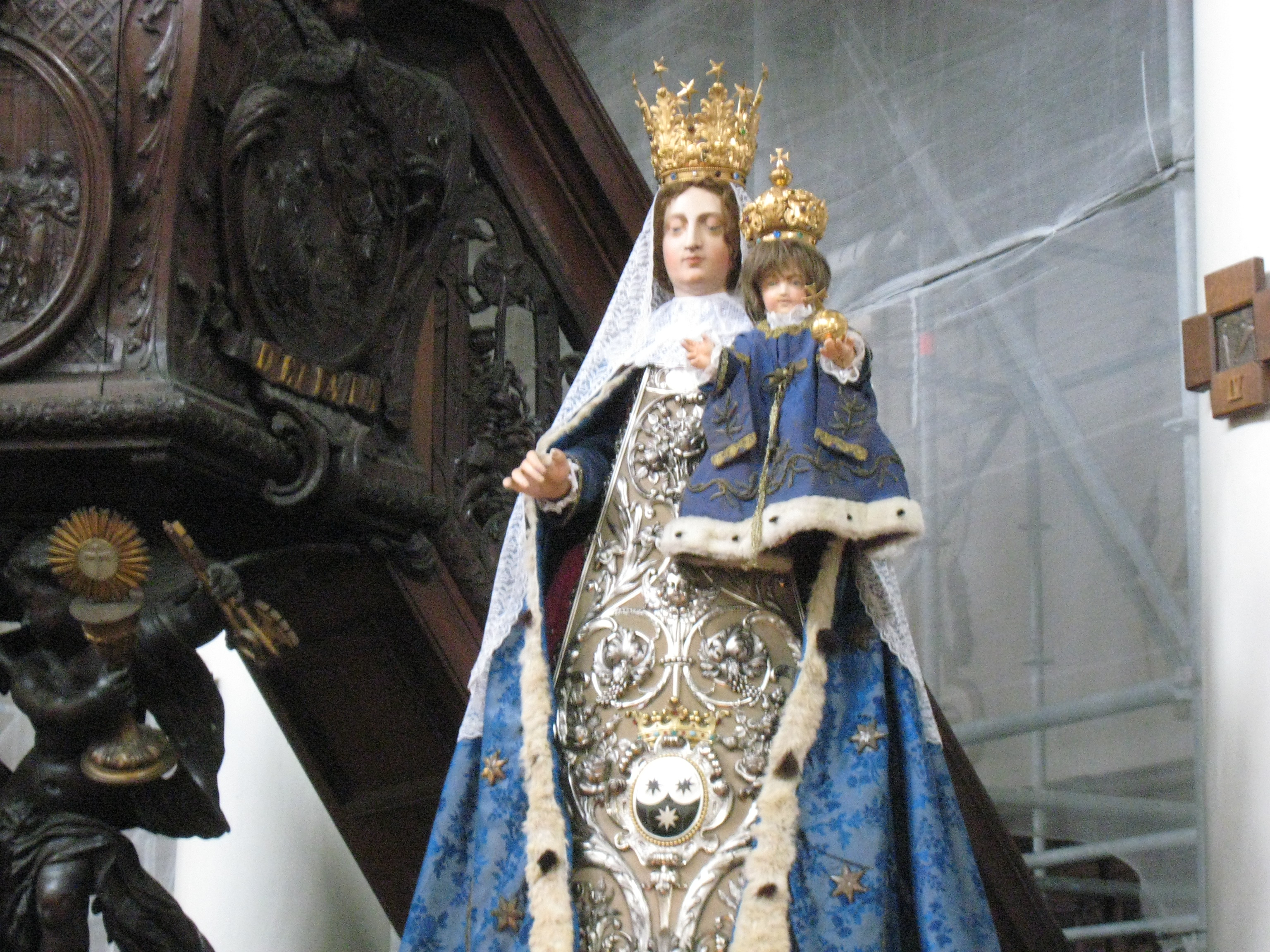
Madonna of St Charles Borromeus church with Infant
 scatterbrook