
Jana & Honza from Prague used our house in Belgrave as a travel base last year. Jana’s grand house is the base for her pensione and car hire business. From our 3rd floor window we look up to the floodlit next-door mansion owned by a tennis player reported to be the 5th wealthiest man in Prague. OK neighbourhood.
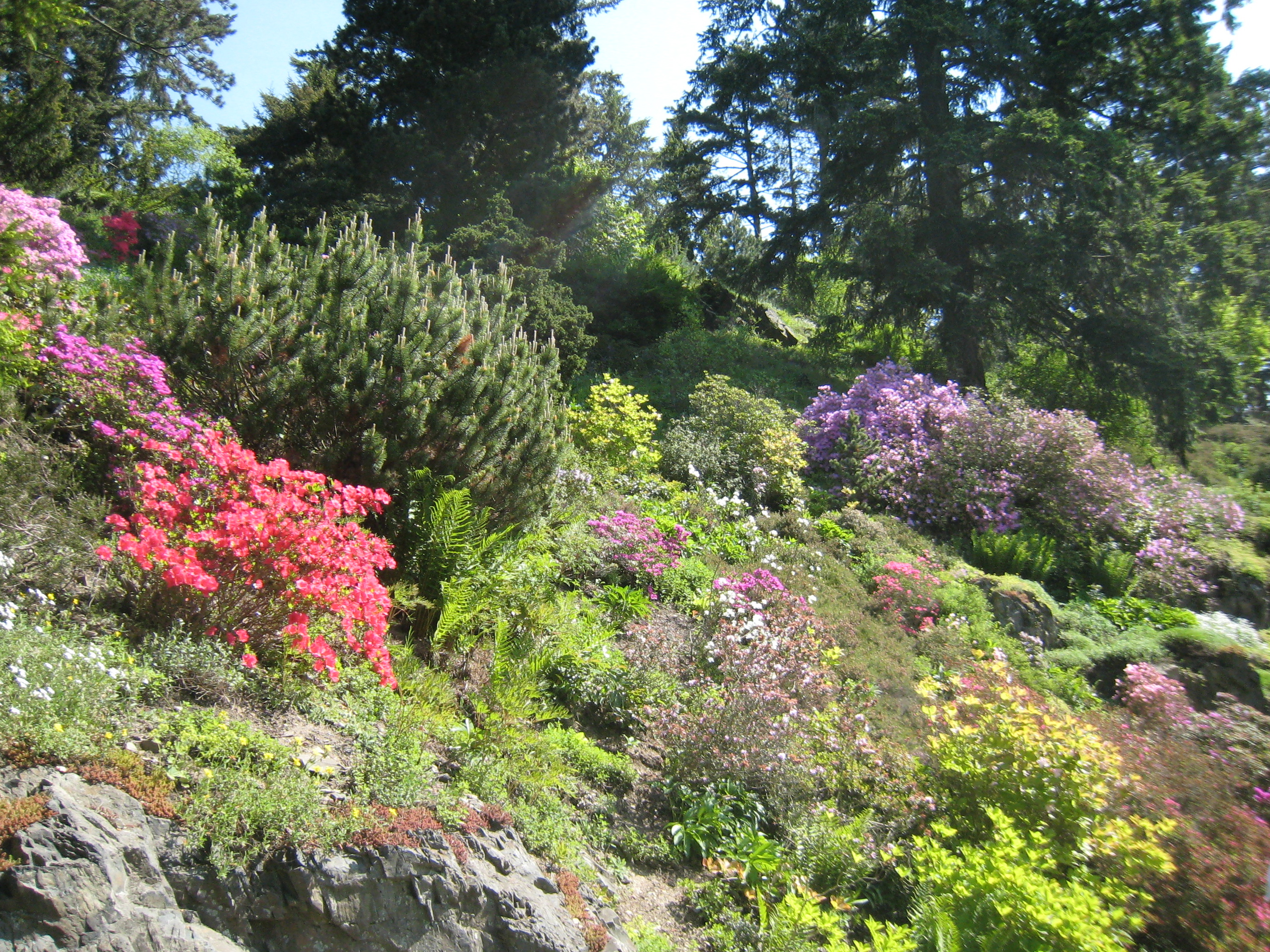
Pruhonicky garden
Only four days scheduled for Prague, so the visit will be intensive, sleeping can happen elsewhere. The currency is Koruna, about 18 to the dollar, cuisine – think goulash, sausage, dumplings and beer, language inscrutable but sounds lovely, something like talking with ones mouth full of goulash and dumplings. Written language difficult to pronounce with its strings of Slavic consonants and funny accents, so glad not to have to navigate and drive. Public transport is quite slick, quick and cheap. In Oz we took Jana & Honza to the Olinda Rhodo gardens. The first day in Prague, they took us to the Prohonicky Park gardens with even more acres of Rhodos, bigger lakes, and of course, a castle. Castles everywhere.
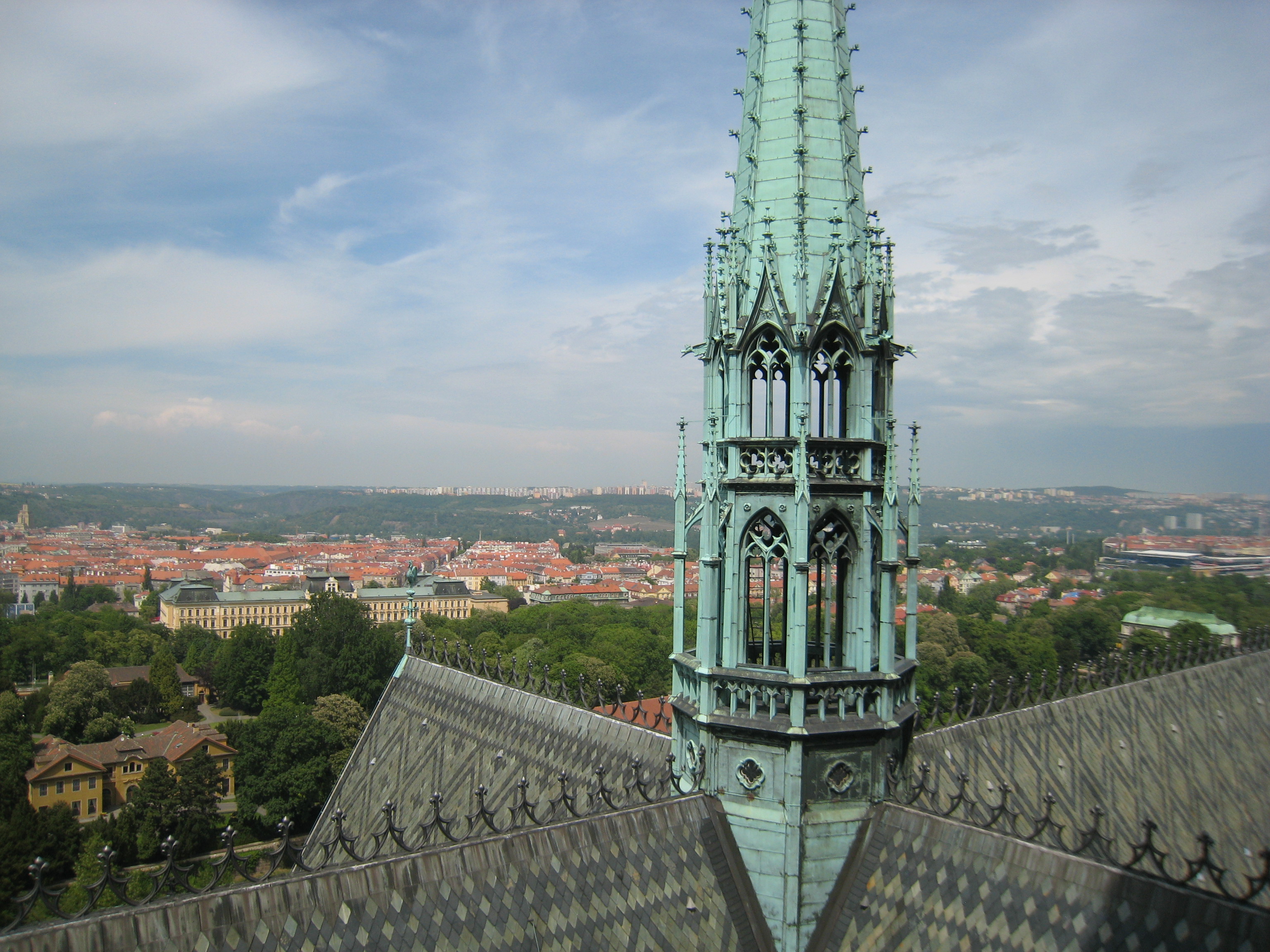
from St Vitus’ tower
Prague has a reputation for music of all sorts. First encounter was a concert in an unusual venue. Czech strings chamber orchestra performing on the landing of the great stairway of the national museum to the audience mostly seated on cushions on the stairs. After a few German lollipops they settled in to the main meal. Smetana, Dvorak and Hungarian Brahms for afters. The Moldau, or “Vltava” the second symphonic poem of Smetana’s ‘My Country’ suite has iconic status, being played on most important occasions. On this occasion, lightness of touch and deep patriotic passion, but no wishy washy sentiment. Stirring. And afterwards on to coffee & cake at the famous Black Madonna building and café set in the Prague cubist museum building.

St Vitus Cathedral
The main castle on the hill above Prague has world heritage status, being the largest castle complex in the world. Focal point of the site is the St Vitus Cathedral, big, gothic, stained black stonework outside, dark inside but rich with gold and silver deco. This is not yet high season, but the tourist queue at St V’s in particular was long and fast moving to shift the bus loads and bus loads of foreigners & school kids. The giddy limit of excess would have to be the tomb of St Jana (John) of Nepomuckeho all in solid silver, rising in layers of rococo twiddly bits to the coffin about 4m above the floor, all protected against assault from above by dusty rich red draperies supported very high above by four huge bulbous silver cherubs. Bell tower has 276 steps and worth the grind for the peek at the bells, the view – nothing higher in the whole city, and the great agricultural sort of clock mechanism. The cathedral has been a long time, some 600 years, in construction, to be completed as recently as 1920. As a finishing touch, a modern “gold door” was installed only three years ago. Crypt closed today, but lots of dead kings there. Other features of the complex include the old royal palace, the Basilica, and many palaces that have been taken over by the police or army in less monarchist times. Over the years since the Russians moved out the damage has been progressively repaired.
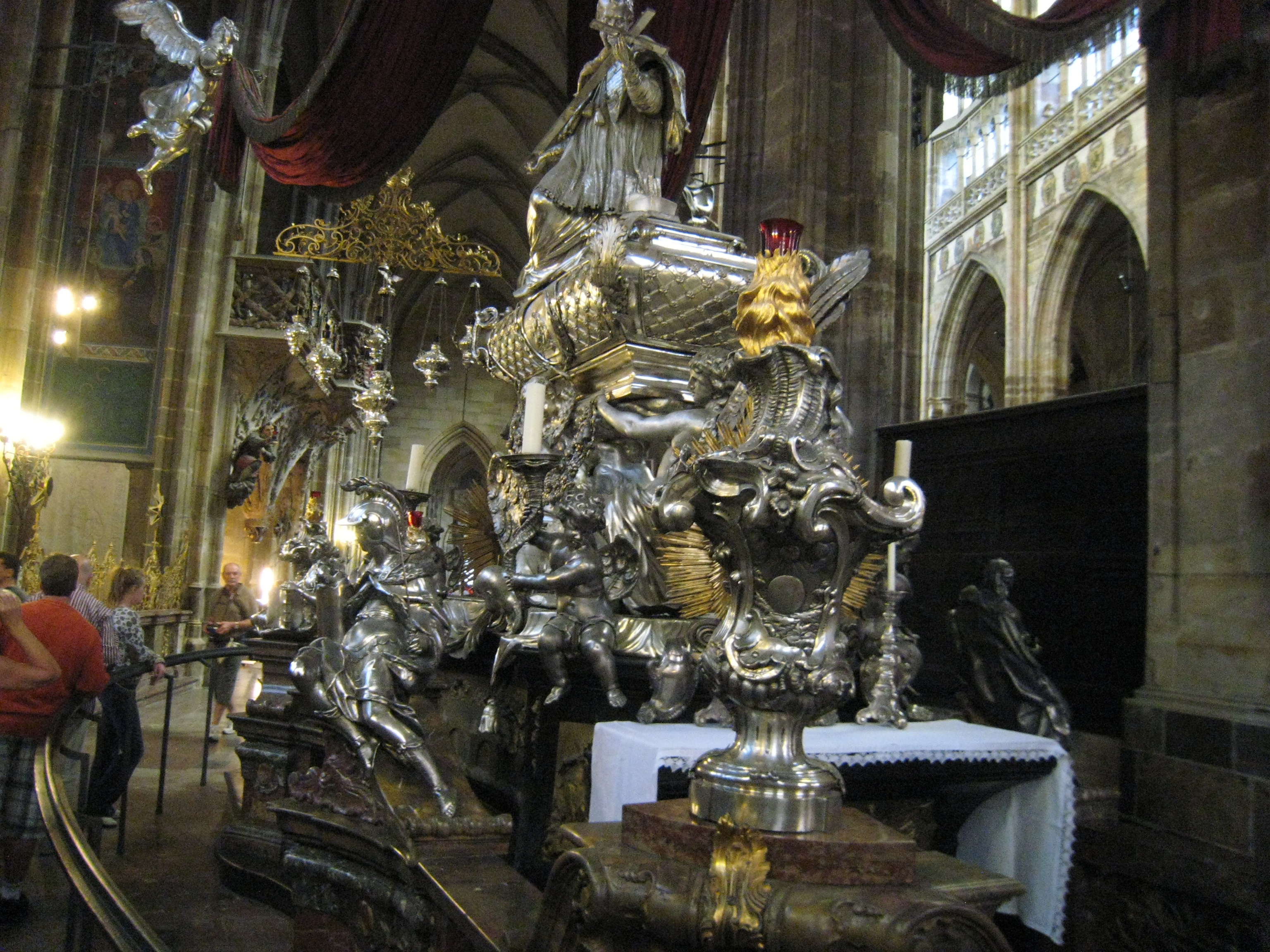
Tomb of St John of Nepomuckeho
Arguably, the best of times for the Czechs was under emperor Charles IV in the 14th century when he chose Prague as the seat of the Holy Roman Empire, partly because Prague had escaped the worst of the black death. This was a period of turmoil when as many as three Popes were contesting the holy seat in Rome. But Charlie was a great one for the main chance, choosing well in marriage to spread the influence of the Holy Roman Empire, and choosing to stay out of the faction fighting in Rome. Alas, all down hill from there. The Czechs were only a pawn in the Habsburgs hands and didn’t get to play their own game till quite recently.
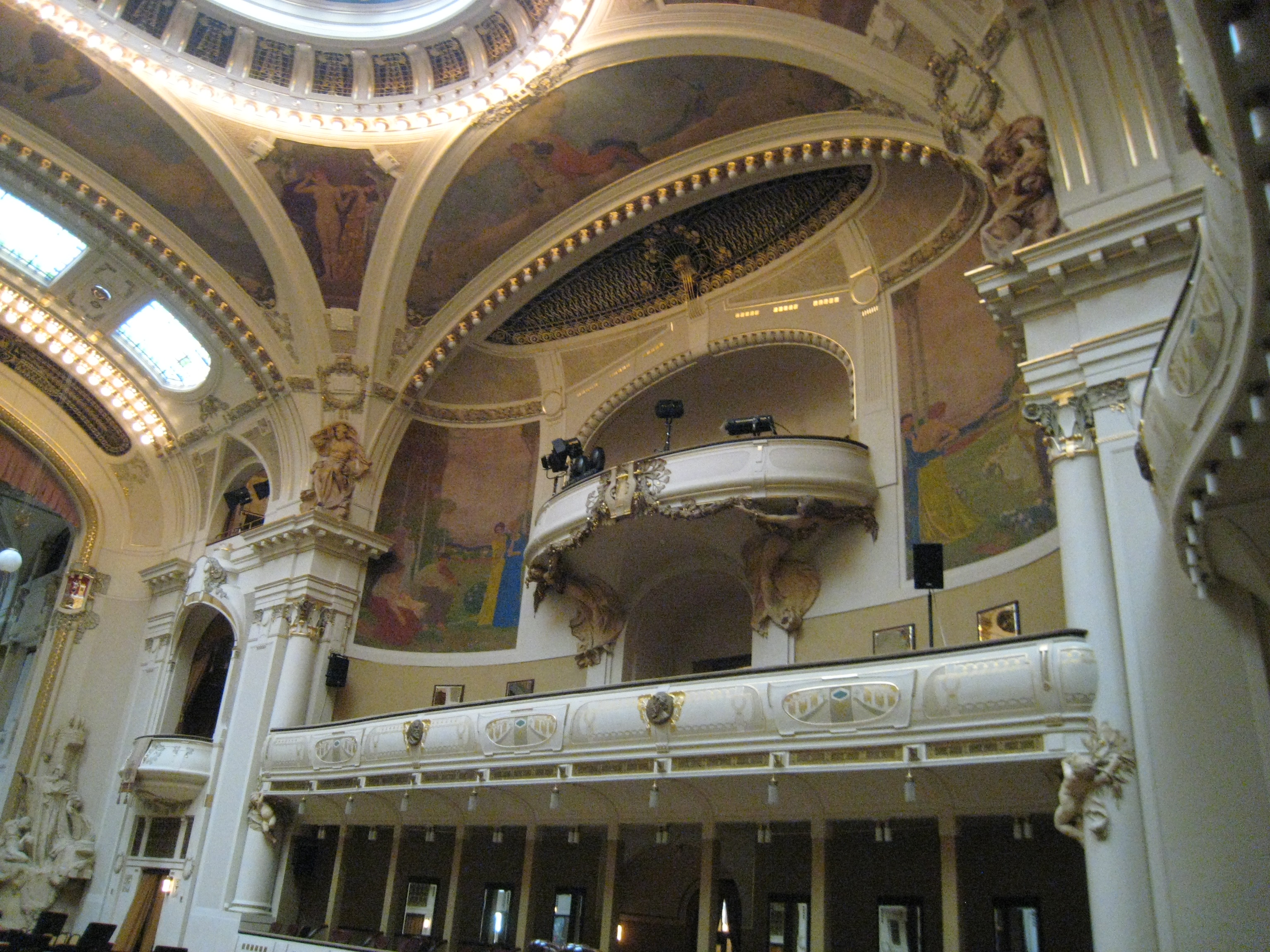
Obecni Dum Theatre
In the late 19th and early 20th centuries a Czech artist called Alphonse Mucha made his mark by designing interiors, art nouveau posters and theatre sets for opera & ballet. He reached the height of his popularity working in Paris, but made quite an impact in Prague. About 1910 he designed the stunning art nouveau interiors for the Obecni Dum theatre complex. A high point of civilized excess which survives intact. Mucha skyrocketed to fame after he created a life size poster for Sarah Bernhardt’s play, “Gismonda.” The poster, which differed from current artistic trends, made him a household name and earned him a six-year contract from Bernhardt. About that time he was close to the Cerny family who had three musical daughters. Mucha was particularly fond of the ten year old Zdenka who was a promising young Cellist, offering to design the poster for her debut concert whenever that might happen. When she turned eighteen an international tour was planned for which Mucha designed the poster. Unfortunately, the year was 1913, and the tour, along with many other things had to be cancelled. If you Google Zdenka Cerny, you will see a copy of the famous poster for the concert that never was – available from Allposters.com for $300.
After Kaiser Wilhelm there was of course Hitler and then Stalin, but in 1968 the Czechs wrongly thought there was a good chance for a revolution against the Soviet. The establishment and wealthy estate owners had long gone. The mini revolution was of course brutally stamped out by Russian, Polish and Hungarian troops who stayed till the end in ’89. According to Jana, now a feisty entrepreneur, who lived through it all as a young girl – this was the worst of times. In the last twenty years, the remnants of the families have drifted back to claim what remains of their tattered businesses and estates. Now there is coffee and cake and wines of the best to be enjoyed in the most pleasant of surroundings. Music, goulash and beer too. Skoda is low profile, having been taken over by Volkswagen, higher profile is the prominent Maserati showroom. They say that shop rental in the central boutique area is the 18th highest in the world.

the astronomical clock
Along from the classy shopping mall is the old town square with its famous 600 year-old astronomic clock. And on the other side of the square, the Tyn church. Nothing tinny about this church. Tyn is an old Czech word for enclosure, referring to the surroundings. The protestant Hussites occupied the church from the 15th cent till the recatholicisation in the 17th cent. From that period gilt baroque trimmings abound from the 1673 Mundt organ to the 19 altars and side chapels. The no photography rule is respected here, reminding that this, after all, remains a place of worship. On the other hand, in the St Vitas cathedral there are clear no photography signs which are totally ignored in the babble and thrust of the tourist hoard – clearly a popular place, but not really sacred. No photography allowed in the Obecni Dum either, but photography permission may be bought for 55 Koruna. However, photographers enjoy an open season on the old heavily ornamented Charles IV bridge, lined with souvenir, craft and caricature sketching stalls.
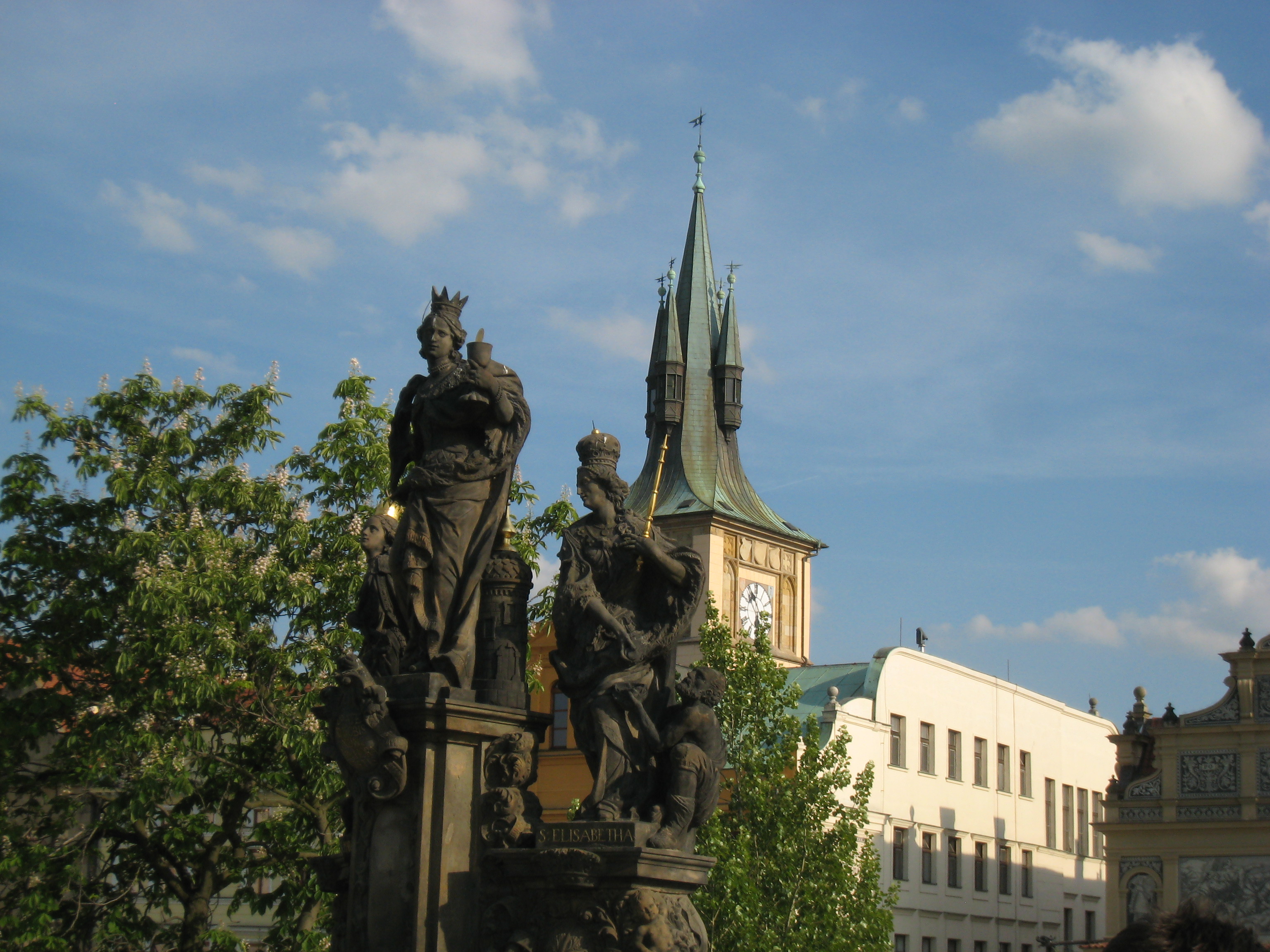
Charles IV bridge decoration
On our final night in Prague there was a change of plans and there was a sort of impromptu gathering of fourteen relatives & friends to celebrate Jana’s birthday. That was OK because Honza likes cooking. The Czech happy birthday song seems much more musical than ours. Privileged to be part of a great event.
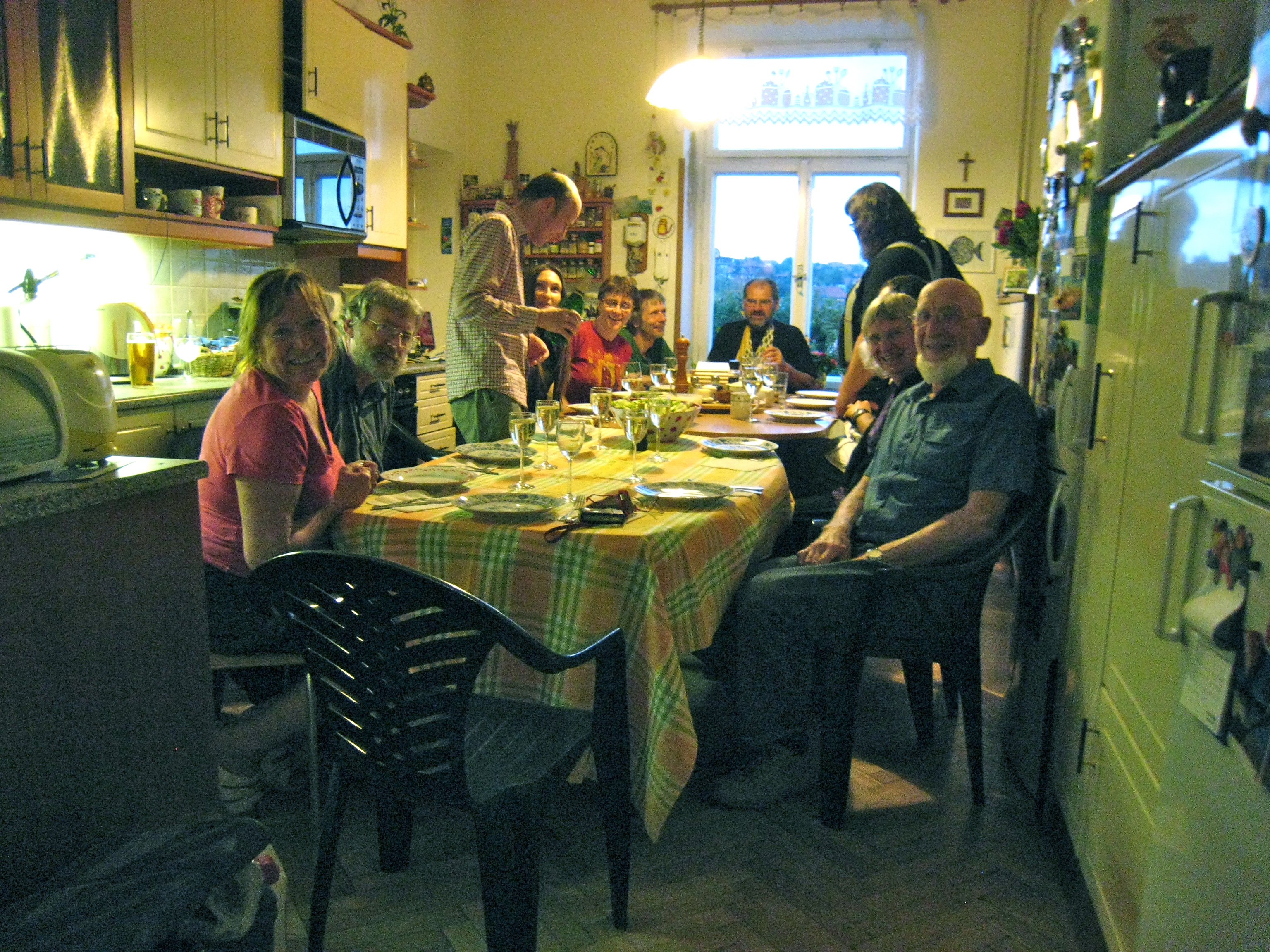
the party
Tosca. Performed at the State Opera in Italian, with Czech and English sur titles. Utterly evil uber villain Scarpia was shocked and stunned to be stabbed to death by a woman, and to make matters worse, by a woman he pretended to love. The well-upholstered Tosca did indeed sing convincingly. All this in a classic 19th century opera house with tiers of boxes lining the side walls. The guide book recommended dressing up, black tie mode. Actually, smart casual is the rule with the women parading their prettiest. After champagne and canapés at the second interval, back to our seats for the kill. Tosca tells true love Mario to do a good job of pretending to be shot. But Scarpia, the animal, before being stabbed gave orders for live ammo to be used, leaving Tosca no option but to go for the big jump before being executed. Get the idea?
Every year since 1946 there has been a Prague spring festival of drama, art and music. Events all over town for a week. Part of the festival is an instrumental competition, big prize money attracting internationals from all over. Each year two instruments feature on a rotating cycle of 4 or 5 years. Would you believe? This year the instruments are Piano and Trombone! The finals were held in the grand Rudolfinum, adjudicated by a panel of eight eminent musos. Four trombone finalists play off, being selected from 95 musicians of 26 countries after 3 rounds. The trombonists have to each play a sonata by Matej and a concerto by Wagenseil. Surprised to see our favourite, the leader of the orchestra on the stairs, is in the accompanying orchestra for the comp. In our session, a polished young Russian and a tall nervous Frenchman, a few years older do their best. The standard was way above anything I could comprehend, but was moved to do some more blurting practice on the mouthpiece back at Jana’s place. Judges decided no first prize would be awarded, but gave second prize to Sweetiepie’s favourite – the Frenchman, with my choice the Russian coming in third.
Arose at 4 am to catch the 6 am flight to Brussels on the suspiciously named Wizz airline. Our flight had already been shifted by a day against our wishes, and we had been warned that Wizz have a reputation for delaying flights for a couple of hours then cancelling without recourse or refund. So on the announcement at 6.10 that the flight had been delayed, more information available at 7 am, I was becoming nervous but Sweetiepie was not interested in contemplating alternatives. Calloo Callay and much rejoicing at about 6.45 when boarding was announced. What – me worry? In Brussels for breakfast.
 scatterbrook